Feeds:
Posts
Comments

The nonpartisan Campaign Legal Center, a nonprofit government watchdog group that supports strong enforcement of federal campaign finance laws, has released a 40-page report that breaks down affecting early voting and voting by mail legislation passed by 39 state legislatures, including Louisiana, on or before June 30, 2021, in response to the 2020 presidential election.

While two states, Illinois and Washington, received perfect grades for protecting voting rights, four others that passed restrictive vote-by-mail and early voting laws would have been subject to preclearance if the John Lewis Voting Rights Advancement Act was in effect. Preclearance would have required those four states – Louisiana, Alabama, Georgia and Florida – to prove to the U.S. Department of Justice that their restrictive laws would not discriminate against voters of color.

“The John Lewis Voting Rights Advancement Act (VRAA) would prevent many states from erecting barriers that have a discriminatory impact on racial minorities,” the report says. “Originally, the Voting Rights Act operated to require certain jurisdictions with a history of racial discrimination to get approval, or “preclearance,” from the federal government for all election-related changes. This helped ensure that election rules did not impose racially discriminatory barriers. Since the Supreme Court struck down Section 5 of the Voting Rights Act in Shelby County v. Holder in 2013, the Department of Justice has not had the tools it needs to hold states with a history of discrimination in voting accountable for passing election laws that erect barriers to the polls for voters of color.

If passed, the VRAA would restore Section 5 of the Voting Rights Act and provide a new coverage formula to determine which states with a history of racially discriminatory voting practices will be subject to federal government oversight. Specifically, the VRAA’s new coverage formula would require federal oversight for each state that has had a history of freedom-to-vote violations in the last 25 years that would continuously update based on each states’ future conduct.

Under the new formula provided by the VRAA, Alabama, California, Florida, Georgia, Louisiana, Mississippi, New York, North Carolina, South Carolina, Texas and Virginia would likely be subject to preclearance under the VRAA.

In Louisiana, the news was both good and bad. The legislature “took steps backward” in its 2021 session by passing SB 224, which would have required voters to have photo ID to vote by mail, but Gov. John Bel Edwards vetoed, a veto the legislature was unable to override. On the plus side of the ledger, the legislature did extend the number of early voting days for presidential elections to 11 days, giving the state an overall 6 of 10 possible scoring points.

Alabama, probably to no one’s surprise, had the worst grade of any state in the country following its 2021 session, finishing with a dismal score of 2. “Alabama did nothing to improve voting conditions,” the report says. “Indeed, Alabama codified its ban on curbside voting, which was the subject of litigation during the 2020 elections.

Mississippi, the only state with a higher percentage of black citizens (38.5 percent to 33.4 percent), made no changes to its vote-by-mail policies during the 2021 legislative session and continues to have some of the worst vote-by-mail policies in the country. It remains one of only three states analyzed without any form of an online ballot-tracking system.

“The Louisiana State Legislature passed a number of restrictive voting bills that were subsequently vetoed by the governor,” the report says. Among these bills was SB 224, which would have required photo ID to vote by mail. Louisiana, graded as Restrictive, is one of the few states that continues to require voters to have an excuse to vote by mail. The governor vetoed this bill, “because it would make the application to vote absentee by mail more stringent than what is currently required to actually vote absentee by mail.” In a subsequent veto-override session, the legislature declined to override the governor’s veto. A new law requiring photo ID for mail ballots would have undoubtedly been subject to preclearance under the VRAA.

“Out of the 39 states in this report whose legislative sessions have adjourned for 2021, two received perfect grades—Illinois and Washington—and no state received a 0/10,” the report says. “Seven of the 39 states changed their vote-by-mail and early voting laws for the worse, while nine states changed their laws for the better. Unfortunately, many of the states that changed their laws for the better still fall short of the suggested best practices for vote by mail and early voting used in this report. The nine states that improved for vote by mail and early voting are Illinois, Kentucky, Maryland, New Jersey, New York, Oregon, Vermont, Virginia and Utah, and the seven states that passed restrictions are Alabama, Arizona, Arkansas, Florida, Georgia, Iowa and Louisiana.

“Under preclearance, covered states would have to submit any new voting law to the federal government or federal court system for a determination that the law does not have the impact of discriminating against racial minorities. Many of the voting laws covered under preclearance would include policies related to vote by mail and early voting.”

The nonpartisan Campaign Legal Center, a nonprofit government watchdog group that supports strong enforcement of federal campaign finance laws, has released a 40-page report that breaks down affecting early voting and voting by mail legislation passed by 39 state legislatures, including Louisiana, on or before June 30, 2021, in response to the 2020 presidential election.

While two states, Illinois and Washington, received perfect grades for protecting voting rights, four others that passed restrictive vote-by-mail and early voting laws would have been subject to preclearance if the John Lewis Voting Rights Advancement Act was in effect. Preclearance would have required those four states – Louisiana, Alabama, Georgia and Florida – to prove to the U.S. Department of Justice that their restrictive laws would not discriminate against voters of color.

“The John Lewis Voting Rights Advancement Act (VRAA) would prevent many states from erecting barriers that have a discriminatory impact on racial minorities,” the report says. “Originally, the Voting Rights Act operated to require certain jurisdictions with a history of racial discrimination to get approval, or “preclearance,” from the federal government for all election-related changes. This helped ensure that election rules did not impose racially discriminatory barriers. Since the Supreme Court struck down Section 5 of the Voting Rights Act in Shelby County v. Holder in 2013, the Department of Justice has not had the tools it needs to hold states with a history of discrimination in voting accountable for passing election laws that erect barriers to the polls for voters of color.

If passed, the VRAA would restore Section 5 of the Voting Rights Act and provide a new coverage formula to determine which states with a history of racially discriminatory voting practices will be subject to federal government oversight. Specifically, the VRAA’s new coverage formula would require federal oversight for each state that has had a history of freedom-to-vote violations in the last 25 years that would continuously update based on each states’ future conduct.

Under the new formula provided by the VRAA, Alabama, California, Florida, Georgia, Louisiana, Mississippi, New York, North Carolina, South Carolina, Texas and Virginia would likely be subject to preclearance under the VRAA.

In Louisiana, the news was both good and bad. The legislature “took steps backward” in its 2021 session by passing SB 224, which would have required voters to have photo ID to vote by mail, but Gov. John Bel Edwards vetoed, a veto the legislature was unable to override. On the plus side of the ledger, the legislature did extend the number of early voting days for presidential elections to 11 days, giving the state an overall 6 of 10 possible scoring points.

Alabama, probably to no one’s surprise, had the worst grade of any state in the country following its 2021 session, finishing with a dismal score of 2. “Alabama did nothing to improve voting conditions,” the report says. “Indeed, Alabama codified its ban on curbside voting, which was the subject of litigation during the 2020 elections.

Mississippi, the only state with a higher percentage of black citizens (38.5 percent to 33.4 percent), made no changes to its vote-by-mail policies during the 2021 legislative session and continues to have some of the worst vote-by-mail policies in the country. It remains one of only three states analyzed without any form of an online ballot-tracking system.

The Louisiana State Legislature passed a number of restrictive voting bills that were subsequently vetoed by the governor.51 Among these bills was SB 224, which would have required photo ID to vote by mail. Louisiana, graded as Restrictive, is one of the few states that continues to require voters to have an excuse to vote by mail. The governor vetoed this bill, “because it would make the application to vote absentee by mail more stringent than what is currently required to actually vote absentee by mail.” In a subsequent veto-override session, the legislature declined to override the governor’s veto. A new law requiring photo ID for mail ballots would have undoubtedly been subject to preclearance under the VRAA.

“Out of the 39 states in this report whose legislative sessions have adjourned for 2021, two received perfect grades—Illinois and Washington—and no state received a 0/10,” the report says. “Seven of the 39 states changed their vote-by-mail and early voting laws for the worse, while nine states changed their laws for the better. Unfortunately, many of the states that changed their laws for the better still fall short of the suggested best practices for vote by mail and early voting used in this report. The nine states that improved for vote by mail and early voting are Illinois, Kentucky, Maryland, New Jersey, New York, Oregon, Vermont, Virginia and Utah, and the seven states that passed restrictions are Alabama, Arizona, Arkansas, Florida, Georgia, Iowa and Louisiana.

“Under preclearance, covered states would have to submit any new voting law to the federal government or federal court system for a determination that the law does not have the impact of discriminating against racial minorities. Many of the voting laws covered under preclearance would include policies related to vote by mail and early voting.”

Turns out that Bobby Jindal, Scott Walker, Sam Brownback and Rick Scott were just the warmup acts, the amateurs hoping to move up in the comedic pecking order.

The headliner, of course, turned out to be a TV reality show personality with an overblown ego and decidedly short-changed IQ – a kind of one-man Abbot and Costello, Laurel and Hardy, Martin and Lewis act, only not nearly as funny.

You do remember a guy named Bobby Jindal, right? He was the wunderkind who was anointed by Gov. Mike Foster as the future of Louisiana. Rush Limbaugh was so taken with the boy blunder that he gushed that it wasn’t a matter of if he was destined to be president, but rather just a matter of when.

Of course, after he devastated the Louisiana economy, closed centers for the treatment of the mentally ill, slashed taxes for the rich (and even refused to renew an existing tax because, he insisted in some twisted Republican logic, that it was a new tax), gutted the Office of Group Benefits reserve fund, decimated public education in favor of charter schools for the wealthy, cut funding for higher education (forcing tuition hikes that made a college education cost-prohibitive for many in the state), he capped it all off by launching a pitifully inept run for the Republican presidential nomination. He never received more than 1 percent in the Republican primaries and caucuses.

Scott Walker was so controversial in Wisconsin that a recall movement was initiated against him. It failed, and Walker, thus emboldened, led an EFFORT to gut the powers of Walker’s Democratic successor in the Madison statehouse and in what would become a presage to future Repugnantcan efforts to restrict early voting in other states.

Brownback, like Jindal, took a wrecking ball to the Kansas economy – except he did an even more thorough job than did his Louisiana counterpart. But worse, going back to 1996, when he ran for the U.S. Senate to succeed Bob Dole who resigned to become the Republican presidential candidate in an effort to deny a second term to Bill Clinton, he showed anyone who was paying attention just how underhanded the Republicans can be and in so doing, offered a hint of things to come. Fines were levied against the Brownback campaign and against his in-laws for improper campaign contributions. But worse was the tactic ripped from the David Duke playbook by Brownback when his supporters, posing as pollsters, contacted Kansas voters to ask those expressing support for Democrat Jill Docking if they would change their vote if they knew that “Jill Docking is Jewish.” Docking, who is indeed Jewish, lost. Funds for the “push polls” were traced back to Koch Industries.

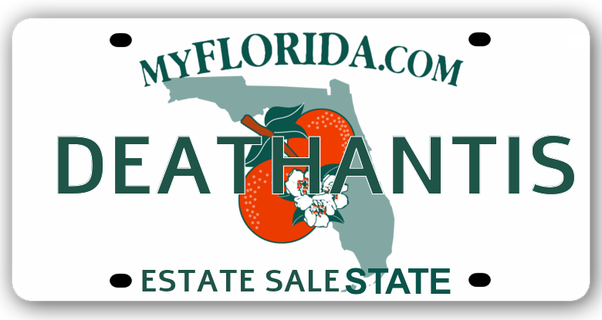
Rick Scott, who preceded current Florida Gov. Ron DeSantis, laid the groundwork for Deathantis but not even Scott could envision the path the current governor would take in condemning Floridians to the Delta Death. I mean, all Rick Scott did was take $300 million in stock, a $5.1 million severance package and a $950,000 per year consulting contract from COLUMBIA/HCA, his former hospital company when it was being investigated by the feds in 1997. But while he was taking the money. He said he took responsibility for a settlement the company reached with the government in which it admitted to 14 felonies related to fraudulent billing, practices, and kickbacks to doctors in exchange for referrals – even as he denied any knowledge of wrongdoing. The company ended up paying $1.7 billion in fines (at the time, the largest health care fraud case in the country). And of course, the good people of Florida rewarded him by electing him governor and later to the U.S. Senate.

Those are the warmup acts. The headliner, of course, is one Donald John Trump, the person whom the foregoing men only aspire to be. In the entertainment industry, be it musicians or comics, the warmup, or feature, act always hopes to move up to the headliner spot, mainly because it leads to bigger venues that pay more.

And then there are the wannabes. Again, reference the entertainment parlance, these are the opening acts or worse, the open mic acts who think they have something to offer. Sometimes they do, often times they don’t.

In the political arena, these would be people like governors Deathantis, Greg Abbott of Texas, Mike Parsons of Missouri (he who can’t find the time to address a possible commutation for KEVIN STRICKLAND who has languished on death row for 43 years for a murder that now even the district attorney says he didn’t commit but who fast-tracked the pardons of those gun-waving redneck ST. LOUIS LAWYERS who were so terrified of black marchers that they felt compelled to come outside waving their weapons and looking utterly ridiculous) and Doug Ducey of Arizona; U.S. Reps. Marjorie Taylor Greene and Andrew (“they were only tourists”) Clyde of Georgia, Matt Gaetz of Florida, Mo (“you can’t sue me”) Brooks of Alabama, Gym Jordan of Ohio, Devin (“I’m suing everybody”) Nunes and Kevin (Trump is moving my lips”) McCarthy of North Carolina, Lauren (“Crazy Lady”) Boebert, Madison (“I can out-lie anyone but Trump”) Cawthorn, Elise Stefanik of New York, Clay (“Super Cop”) Higgins, Steve (“David Duke protégé) Scalise and Mike (Family Values) Johnson of Louisiana, Sens. Josh Hawley of Missouri, Ted (Aruba-bound) Cruz of Texas and John (Foghorn Leghorn) Kennedy of Louisiana, and Attorney General Jeff Landry, also of Louisiana.

I’m sure I missed some, but there’s room for only so many backstage, what with all the seltzer bottles, pies, clown outfits and other props necessary for this spectacle.

But I’m reserving a special place in my heart for Ron Deathantis, who has sentenced an untold number of his constituents to an agonizing death as they fight for air that won’t be there as their respiratory systems shut down. A lot of them will be school-age children but Deathantis is determined to keep local guvmint out of Floridians lives by issuing a state executive order that says funds will be withheld from any school system that mandates masks.

It’s somewhat ironic that a Repugnantcan who advocates less guvmint control would be so heavy-handed in his efforts to placate his mentor and fellow Floridian Trump. It’s also more than a little weird that Trump wants desperately to be credited for developing a vaccination for COVID that he didn’t develop and that he can’t bring himself to recommend to his brain-dead base.

“There are really only two places on the planet where it’s (the viral load) higher” – Louisiana and Botswana, DR. JONATHAN REINER, a professor at the George Washington School of Medicine and Health Sciences, said on CNN Sunday.

“It’s so high in Florida that I think if Florida were another country, we would have to consider banning travel from Florida to the United States,” he said

So, now we have the governor of Florida fighting logical efforts to fend off a deadly virus. And Deathantis isn’t the only one. Next door to Florida, South Carolina Gov. Henry McMaster says mask mandates are illegal and inhibit a student’s ability to learn. That’s a novel argument – almost as absurd as the minister I heard one recent Sunday say that there are political leaders who wish to deny our right to worship.

What a crock. He was referring to Gov. John Bel Edwards and his mask mandate and limits on public gatherings of several months ago which slowed collections attendance at local churches. That in no way was an attempt to infringe on anyone’s right to worship. Edwards is a devout Catholic. It was a sensible approach to a very real problem that posed a threat to the entire population because no vaccination had been rolled out at the time. It was, to be perfectly blunt, a stupid, selfish argument.

And right here in Louisiana, our very own Joke Landry, who likes to masquerade as attorney general, actually filed suit against a small private medical school in Monroe after it mandated the coronavirus vaccine for its students. Landry WITHDREW the state as a plaintiff after a Trump-appointed judge questioned the validity of the state even being a party to the suit filed by three students. Such is life in the fantasy world of Shane Jeff Landry.

But the bottom line here, folks, is the frightening dearth of common sense in addressing a pandemic that is fast approaching the U.S. death toll from the Spanish Flu pandemic of a century ago and which has already matched the death toll of the single most deadly war in this country’s history – the Civil War in which 600,000 Americans died.

It was only 174 years ago – 14 years before the start of the Civil War – that Hungarian physician Ignaz Semmelweis first advanced the preposterous (at the time) notion that the spread of disease could be halted, or at least slowed, by the simple act of washing hands.

The idea of hand hygiene to prevent the spread of germs was ridiculed by the scientific establishment. Some may have even said it inhibited learning or violated constitutional rights and individual freedoms. But the good doctor persisted, noting that during the Black Death of the 14th century, the Jews of Europe had a far lower death rate, leading to the belief that their religious practice of hand-washing most likely served as protection during the epidemic.

But none of that really matters right now because the show must go on and while the headliner’s act has become stale, there’s a roomful of unimaginative hopefuls who, lacking any semblance of originality, would love the chance to duplicate his Vaudevillian schtick.

op·por·tun·is·tic

/ˌäpərt(y)o͞oˈnistik/

adjective

  1. exploiting chances offered by immediate circumstances without reference to a general plan or moral principle.

And when there is a chance to use any situation – ANY situation – for political gain, there is always an opportunistic, brazen, fear-mongering politician ready to take full advantage – and to make a pitch for campaign contributions, of course.

Such a person is U.S. Rep. Mike Johnson of Louisiana’s 4th Congressional District.

“Over 80 migrants were just dropped off in Shreveport, and many more busloads are expected to come in the next few weeks,” read his hysterical, but timely, fundraising letter to a constituent recently. “Not one phone call was made to any local officials to give them a heads-up or any clue as to who these people are, where they’ve come from, or where they’re going.”

He went on to say that Republicans “need to continue our fight to stem the flow of illegal immigration and complete the border wall.

“The only way we can do that is if we rebuild our majority in the House, and I need your help.

Can you help me stand up against Joe Biden’s dangerous agenda? Your $10 today can help me stop the flood at the border.”

That, folks, is unabashed opportunism by a brazen opportunist.

grandstanding

/ˈɡran(d)ˌstandiNG/

noun

  1. the action of behaving in a showy or ostentatious manner in an attempt to attract favorable attention from spectators or the media.

Of course, not to be outdone, U.S. Sen. Bill Cassidy was quick to jump into the fray without learning any of the facts behind the coercion and exploitation and greed.

“The White House cannot dump groups of Haitian refugees into Louisiana communities with nowhere to go, no photo ID, and no money,” Cassidy said. “It appears Washington told ICE to just ‘send them somewhere,’ and apparently gave little to no notice to state and local officials. Horrible mismanagement. Do President Biden and Vice President Harris care about communities, immigrants, and controlling the border?”

“I can’t help but think that the reason they have the problem is because they have an overflow of people in detainment. And they just have to do something with them. And so their normal operating procedure just got busted,” Cassidy told a Shreveport TV station.

What’s even more repulsive about Cassidy’s grandstanding is that he apparently thinks it will negate the ill feelings in the Trump camp following his impeachment vote last January. He should know Trump better than that.

Fifth District U.S. Rep Julia Letlow was just as indignant, adding, “I am deeply troubled by the numerous reports of immigration detainees being released… I am outraged that neither Immigration and Customs Enforcement or the Department of Homeland Security notified my office of these releases and neglected to inform other relevant federal, state, and local officials.”

Yes, they’re all here illegally – just like the ones who pick your fruit and vegetables and do your yard work and perform roofing and carpentry work – jobs that would not be available to them if there wasn’t someone to hire them. Like drugs, if there wasn’t a market, there wouldn’t be a supply. Nothing like a little hypocrisy to keep the political pot boiling.

The surge at the Shreveport depot caused volunteer advocates for migrants to scramble to get them on their way by bus and airplane to their sponsors across the U.S.

Frances Kelley with Louisiana Advocates for Immigrants in Detention says those sponsors are on the migrants’ paperwork. They are usually relatives, but they may also be friends or immigration organizations.

Kelley said the vast majority of the released detainees have claimed asylum. But they are not staying in the Shreveport area, despite Johnson’s hysterics.

Kelley says her group and others have filed a civil rights complaint against ICE for breaking their transportation standards.

“They’re supposed to provide transportation to a public transportation hub for free. And they’re supposed to allow all of the immigrants who are leaving detention to talk to their families before they get out in order to arrange transport to the address that they’re supposed to go,” Kelley said.

But, she added, “In most cases we’re actually picking them up directly from the detention centers because ICE is not providing the transportation that they’re supposed to provide. In many cases they’re requiring the families to pay taxis up to $600 to leave from the detention centers.”

Then there’s State Rep. VALERIE HODGES of Denham Springs. She wrote a bill targeting immigrants and has been an outspoken critic of illegal immigration. Yet, when her husband purchased two flood-damaged rent houses in my neighborhood, who do you suppose he hired to perform the renovation?

But for the worst example of blatant denial of human rights and political grandstanding, one would have to look to our neighbor to the west and Texas Gov. Greg Abbott.

Ass-clown Abbott issued an executive order allowing Texas authorities to stop and even confiscate the vehicles of anyone providing free transportation to released detainees – precisely what the Louisiana and Mississippi volunteers LouisianaVoice has been writing about this week have been doing.

Abbott’s action was something like what Donald Trump might have come up with had he had the ability to put two cognitive thoughts together. Frankly, I’m surprised that Steven Miller didn’t put that bug in Trump’s ear.

At least Federal Judge Kathleen Cardone, a George W. Bush appointee, recognized Abbott’s ploy for what it was – political opportunism – and BLOCKED his executive order after the Biden administration FILED SUIT against Abbott on the claim that the order, a first-cousin to the widely-abused asset seizure law, was “contrary to federal law and cannot be enforced.”

And yes, again, they entered illegally instead of coming through the processing centers the way they were supposed to. But you can blame the former guy for bottling up the system, making it virtually impossible to come into the country legally. But where is it written that we must treat them as something less than human?

Letlow, Johnson and Cassidy, perhaps you would care to volunteer your time, your automobiles, your money, to help these individuals get where they are trying to go, by attempting to help people less fortunate, the same way LA-AID has, quietly and without fanfare.

Or at least, refrain from using these people for political posturing and fund-raising.

It might make you feel a lot better about yourselves if, rather than standing around pointing fingers and begging for political contributions, you would do something constructive for a change. Somehow, what you’re doing and saying is just damned tacky and it smells bad.

And it certainly wouldn’t hurt for the U.S. attorneys in the appropriate federal jurisdictions to initiate an investigation into these sordid practices that prey on the most vulnerable. The fact that the victims are not U.S. citizens has little bearing on the shameful fact that it’s profiteering at its worst that drives such illegal activity – not unlike price-gouging for water, gasoline and other basic human needs in times of hurricanes and other catastrophes, and we know how angry that makes us.

So, where’s the outrage now?

Sixteen separate humanitarian organizations in Louisiana and Mississippi have petitioned federal authorities to intervene in the manner in which nine Immigration and Customs Enforcement (ICE)-run detention facilities in the two states allow the gouging of detainees’ families of exorbitant taxi fares in lieu of available free transportation services for detainees upon their release.

The six-page letter by the organizations was addressed to Secretary of Homeland Security Alejandro Mayorkas, Homeland Security Officer for Civil Rights and Civil Liberties Katherine Culliton-González, Inspector General Joseph Cuffari, Acting Ombudsman David Gersten, Acting ICE Director Tae Johnson, Haiti Foundation Against Poverty Acting Assistant Director Todd Thurlow, Southern Poverty Law Center Interim Field Office Director Dianne Witte, Housing and Urban Development Deputy Field Office Director Curtis Davis, ICE Supervisory Detention and Deportation Officer Quincy Hodges, ICE Assistant Field Office Director John Harnett, and Jena/Lasalle Detention Center Warden Shad Rice.

The text of the letter in its entirety is as follows:

We submit this complaint with grave concerns regarding the blatant violations of the ICE Performance-Based National Detention Standards 2011 regarding release protocols in Louisiana and Mississippi, causing serious harm to the well-being and safety of those being released.

The ICE Performance-Based National Detention Standards (PBNDS) 2011, with which all but one of the facilities in Louisiana and Mississippi are supposed to comply, clearly state the following expectations under the Admission and Release” section:

“The time, point and manner of release from a facility shall be consistent with safety considerations and shall take into account special vulnerabilities. Prior to release, the detainee shall be notified of the upcoming release and provided an opportunity to make a free phone call to facilitate release arrangements.

Facilities that are not within a reasonable walking distance of, or that are more than one mile from, public transportation shall transport detainees to local bus/train/subway stations prior to the time the last bus/train leaves such stations for the day.

If public transportation is within walking distance of the detention facility, detainees shall be provided with an information sheet that gives directions to and describes the types of transportation services available. However, facilities must provide transportation for any
detainee who is not reasonably able to walk to public transportation due to age, disability, illness, mental health or other vulnerability, or as a result of weather or other environmental conditions at the time of release that may endanger the health or safety of the detainee.

Detainees will be provided with a list of legal, medical, and social services that are available in the release community, and a list of shelter services available in the immediate area along with directions to each shelter.

Detainees will be released with one set of non-institutionalized, weather-appropriate clothing.” [emphasis added]

Not a single one of the nine ICE detention centers in Louisiana or in Mississippi are within walking distance of public transportation:

1. Jena/LaSalle Detention Facility in Jena, Louisiana           
2. Winn Correctional Center in Winnfield, Louisiana

3. Jackson Parish Correctional Center in Jonesboro, Louisiana                    
4. South Louisiana Detention Center in Basile, Louisiana                
5. Richwood Correctional Center in Richwood, Louisiana                           
6. Pine Prairie Correctional Center in Pine Prairie, Louisiana          
7. River Correctional Center in Ferriday, Louisiana                                       
8. Allen Parish Public Safety Complex in Oberlin, Louisiana.

9. Adams County Detention Center in Natchez, Mississippi.

To be in compliance with the ICE PBNDS 2011, all of these detention centers should be providing free and safe transportation to the nearest public transportation center for every individual released from detention, before the last transport from that transportation hub is scheduled for the day.

Furthermore, on March 27, 2020, in response to growing concerns regarding the COVID-19 pandemic, Executive Associate Director Enrique Lucero issued a memorandum on a COVID-19 “Action Plan” to all ICE detention wardens and superintendents. According to the memo, facilities are further instructed to:

●“facilitate safe transport, continued shelter, and medical care, as part of release planning,”
●“provide information regarding any potential community resources to promote continuity of care,” and
●“facilitate transportation coordination through a family or friend.”

Despite the clear guidance laid out by the PBNDS 2011 and the 2020 COVID-19 Action Plan, the ICE detention centers in Louisiana and Mississippi have demonstrated a total disregard for standards compliance and basic public health. We have documented undue hardship, anxiety, and
danger for immigrants and their families due to this negligence.

Since March 2021, Louisiana Advocates for Immigrants in Detention have documented a substantial increase in the following types of dangerous releases being reported to us:

●Dozens of individuals have reported to us that they have been released from ICE detention without first having an opportunity to contact their families to inform them of their current location, impending release, and to communicate with them about arrangements made for their travel.

●In several instances, individuals have been left waiting for hours or overnight in a detention center lobby or outside the detention center without being able to contact anyone, and were unable to communicate with the detention center staff due to unavailability or language barriers.

For example, ICE release papers (available only in English) at Jackson Parish Correctional Center (as pictured above) blatantly lie to detained individuals and state that the detention center will provide transportation for released individuals to Monroe, when in reality this has not been documented once in the past year. This document also asks obligors to purchase bus tickets from Ruston Greyhound station, which is in fact permanently closed. Individuals being released
from Jackson Parish are in fact told by staff that they must pay for a taxi or have someone drive to pick them up.

●ICE and its contractors have been providing incorrect or misleading information regarding private paid transportation upon release.

○Individuals and their families have been told by the officials arranging their release that they would not be released unless they paid for a taxi, even if detention facility documents state otherwise (see photograph). Eight of the nine ICE detention centers that we monitor in Louisiana and Mississippi currently “require” that detained individuals, their families, or sponsors pay an average of $200-$300 for a taxi to the nearest city with an airport or bus station if they do not have someone who can drive directly to the detention center to pick them up.

There is at least one documented instance in which an individual was forced to pay $600 due to “wait time” caused by the delay in their release.

Individuals being released from the ninth detention center, Richwood Correctional Center, are also forced to pay for taxis.

○Some individuals have been asked by ICE officials arranging their release if they want to take a taxi without being provided information about the cost of a taxi or where it would take them.

○Taxis have been called for individuals who do not have the money to pay for them, without their families first being contacted.

●There are numerous safety and financial concerns relying upon private paid
transportation upon release.

○Taxi drivers have left Individuals stranded at airports that close overnight.

○Sponsors have been required to demonstrate to ICE that they had purchased a plane ticket in order for the individual to be released, but then the individual misses the flight because they are not released on the day that the flight was purchased for.

●Individuals have been released without critical documentation and/or medications, again in blatant violation of the PBNDS 2011:

○Individuals have not been given the necessary paperwork by ICE to be able to pass through Transportation Security Administration (TSA) to take a flight home, or the quality of the photographs in their paperwork are considered by TSA to be too low quality for acceptance.

○Individuals have been released without the results of their most recent COVID-19 tests.

○Individuals, including ones with mental health or psychiatric disabilities, have been released without their prescribed daily medication.

○At least four individuals who have either an intellectual disability or a serious mental health condition have been released without the required post release plan for continuity of care. One of those four individuals was dropped off at a bus station without money or a phone, without his friends, family, or our volunteer group being notified.

●In response to these contraventions of ICE detention standards, local community volunteers are driving hours every day, sometimes up to 18 hours a day, to pick up individuals being released from detention. However, despite our greatest efforts, local community volunteers are woefully unable to facilitate safe transportation for every individual who is being released, and in any case, it is ICE’s clear-cut responsibility to do so per the PBNDS 2011.

○There have been several instances when volunteers have arrived at a detention center to learn that individuals who were told they would be released that day are not in fact being released that day.

As a contrast, in several other states, other ICE field offices are closer to compliance with the PBNDS 2011 regarding release protocols, with the result that released individuals are transported either to a public transportation station or to a shelter run by a local nonprofit that provides services:

– In Arizona, individuals released from Eloy Detention Center and La Palma Correctional Center in Eloy and the Florence Service Processing Center and Florence Correctional Center in Florence are transported to the Phoenix bus station or to the International Rescue Committee shelter in Phoenix.

– In Georgia, individuals released from Stewart Detention Center in Lumpkin are transported to either Columbus, which has a bus station, or Atlanta, which has a bus station and an airport.

– In Texas, individuals released from South Texas Residential Center in Dilley, Karnes City Residential Center in Karnes City, and South Texas Detention Center in Pearsall are transported to the San Antonio bus station or airport.

– In California, individuals released from Otay Mesa Detention Facility in San Diego are transported to the San Ysidro transit station.

– In Nevada, individuals released from the Nevada Southern Detention Center and the Nye County Jail in Pahrump are transported to Las Vegas.

We demand that the ICE New Orleans Field Office take immediate steps to ensure compliance by all ICE detention centers under its jurisdiction with the post-release transportation responsibilities outlined in the ICE PBNDS 2011 and the 2020 COVID-19 Action Plan. This would entail:

●requiring facility staff to provide humane, ethical and safe transportation to individuals being released, to either a full-service bus station or an airport;

●providing access to interpreters and translated materials to inform them of their post-release transportation options and during the entire release process

●facilitating free communication with families or sponsors about releases prior to their happening.

●There should also be public, accessible materials outlining the post-release transportation options for each of the nine detention facilities in Louisiana and Mississippi.

Louisiana Advocates for Immigrants in Detention volunteers are willing to coordinate with ICE to meet released immigrants at the airports and full-service bus stations to provide post release services and assist individuals in making their travel arrangements, particularly those without funds or those who have special vulnerabilities.

●For the well-being and security of individuals being released, we urge ICE to engage in regular and transparent communications with Louisiana Advocates for Immigrants in Detention and other local immigrant rights groups about the timing and volume of releases so that these groups can provide post release support, coordinate with out-of-state families and sponsors, and help facilitate safe transportation.

For example, at the Alexandria “bus station”, which is located in a laundromat, immigrants are not able to get the tickets that their families purchased for them printed out. Many of the “bus stations” have very limited hours or do not have onsite staff. In contrast, the Shreveport, Baton Rouge and New Orleans bus stations are considered “full-service.”

We request a response to these demands by July 30, 2021, and expect the ICE New Orleans Field Office to ensure that free, safe and secure transportation is readily available to all individuals being released from detention in Louisiana and Mississippi by August 13, 2021.

Sincerely,

Louisiana Advocates for Immigrants in Detention (LA-AID)
A Community Voice – Louisiana Asylum Seekers Sponsorship Project
Casa de Paz
Casa Marianella
Church for the Highlands (Shreveport, Louisiana)
Contigo – Mountain Vista Unitarian Universalist Congregation
Freedom for Immigrants
Haitian Bridge Alliance
Home is Here NOLA
ISLA (Immigration Services & Legacy Advocacy)
Justice and Beyond Coalition
Natchez Network
Northminster Church LA-AID (Monroe, Louisiana)
Southern Poverty Law Center
Transition to Freedom Ministry (Eunice, Louisiana)
Voces Unidas: Louisiana Immigrants’ Rights Coalition

Co·er·cion

/kōˈərZHən,kōˈərSHən/

noun

  1. the practice of persuading someone to do something by using force or threats.

Louisiana Advocates for Immigrants in Detention (LA-AID) is a volunteer organization that works with eight Immigration and Customs Enforcement (ICE) facilities in Louisiana and one in Adams County, Mississippi. Among the services is provides is free transportation to bus stations and airports – and when necessary, housing and food – for detainees upon their release from one of the facilities.

Included in the ICE Performance-Based National Detention Standards (PBNDS) operations manual of 2011 (and amended several times since then) is a section entitled “Releases or Removals.

Among the procedures outlined in the manual is one that says the detainee “shall be permitted to change into his or her own clothing in a private part of the processing area, within earshot but not eyeshot” where the facility staff “shall instruct the detainee to remove all facility-issued clothing and to dress in his/her personal clothing.”

The manual further stipulates that “Facilities that are not within a reasonable walking distance of, or that are more than one mile from, public transportation shall transport detainees to local bus/train/subway stations prior to the time the last bus/train leaves such stations for the day.”

LA-AID provides free transportation for many of these detainees. Other are not so fortunate.

“Detainees,” the manual goes on to say, “will be provided with a list of legal, medical, and social services that are available in the release community, and a list of shelter services available in the immediate area along with directions to each shelter. Detainees will be released with one set of non-institutionalized, weather-appropriate clothing.”

On many occasions, however, detainees are not given their personal clothing back and are released still wearing institutional clothing. Moreover, they are not always wearing “weather-appropriate” clothing. Some, like those release earlier this year were released in near-freezing temperatures in T-shirts. If they receive “appropriate” clothing, it is often provided by volunteer groups like LA-AID, not ICE or the private prison company that runs the facility.

Detainees are often dropped off at bus stations long after the stations have already closed for the night and the detainees are left to their own devices, often not even knowing what city they are in. Recently, officials at the airport in Alexandria, realizing about 50 detainees would have to otherwise sleep on the sidewalk outside the airport, allowed it to remain open all night so they could sleep inside.

Even more disgraceful, most are told that they must use taxi services or they will not be released, a clear violation of several regulations and a practice that is clearly coercion and intimidation.

Exploitation

ex·​ploi·​ta·​tion | \ ˌek-ˌsplȯi-ˈtā-shən

noun

  1. the act of selfishly taking advantage of someone or a group of people in order to profit from them or otherwise benefit oneself.

Taxis, waiting like vultures, literally poach fares from LA-AID. In contrast to the free service provided by LA-AID, taxis charge $200, $300, $400 – whatever they can get out of the unsuspecting and uninformed victims of what has become a practice of mass exploitation.

The way the system works, prison officials will contact a detainee’s family with instructions to deposit the money into the detainee’s commissary account at the detention center. Nor are the taxis from the immediate community. One company in Opelousas, for example, routinely picks up detainees as they are released from Jackson Parish Correctional Center in Jonesboro, 140 miles to the north.

When LouisianaVoice inquired of Vinson Taxi Cabs in Opelousas the cost of transporting a detainee from Jonesboro to the bus station in Shreveport, we were told the cost would be $400 – per person. That would be a round trip of about 430 miles. Land and Drive Transport of Shreveport quoted us a price of $275 for the 150-mile round trip.

When the owner of Land and Drive was asked if he had a contract with the facility or with ICE, he said there was no contract. “It’s just the luck of the draw,” he said. “I guess they have my name on a list and they call me when my name comes up.”

Lawrence Higginbotham of Ruston who volunteers with LA-AID, said he was scheduled to pick up three detainees at the all-female Jackson Parish Correctional Center. “One of the women got into my car and was trying to call out to the others who were getting into a taxi,” he said. “I went over to tell the guy he was picking up my riders but he refused to give them up.”

Higginbotham pointed out another potential major problem. “At Winn Correctional Center (in Winnfield), they only let one car at a time inside the gate and the driver has to know the name of the detainee and his number before they’ll let them pick him up. At Jackson, which is all-female, there is no one to check on the drivers’ credentials and the women are all released at one time to get by the best they can. Some of these women are young and attractive. It’s a recipe for human trafficking,” he said.

Elisabeth Grant-Gibson of Natchez agreed, but added that the threat of human trafficking wasn’t limited to females. “Some of the male detainees are young and attractive, too,” she said. “They’re vulnerable, as well.”

Grant-Gibson related an incident in which one detainee took a taxi thinking he was getting a free ride from a volunteer organization only to be dumped unceremoniously in Alexandria with no money, no phone, no place to stay and unaware of where he was.

Greed

/ɡrēd/

noun

  1. intense and selfish desire for something, especially wealth, power, or food.

In another case, a taxi service from Alexandria picked up three detainees from Richwood Correctional Center and delivered them to the Monroe bus station, less then 10 miles away – for $200 per passenger.

Is someone inside these facilities taking a cut from the taxi companies? It’s impossible to say, but it certainly wouldn’t be at all surprising. From all appearances, we have a situation where an opportunity has presented itself to unscrupulous individuals who have no compunctions about taking advantage of helpless people.

When helpless people are coerced into taking a taxi in lieu of the free transportation from volunteers and are charged extortion-like prices, that’s a motivation anchored in pure greed.

It might be appropriate at this point to identify the private prison companies who operate these facilities in conjunction with ICE.

Our old friend, LaSalle Corrections of Ruston runs four of the facilities. Three were named earlier: Jackson (capacity 1,252), Winn (1,576) and Richwood (1,129). The fourth is River Correctional Center in Ferriday (cap. 602).

GEO Group operates Jena/LaSalle Detention Facility in Jena (1,000), South Louisiana Detention Center in Basile (1,000), and Pine Prairie Correctional Center in Pine Prairie (1,094).

As far as can be determined, the sheriff of Allen Parish runs the Allen Parish Public Safety Complex in Oberlin (200) and CoreCivic operates Adams County Detention Center in Natchez (2,567).

Altogether, the total capacity of the nine facilities in Louisiana and Mississippi is 10,420. Nationally, ICE maintains about 34,000 beds even though in 2019, ICE’s daily detained population exceeded 52,000. When you multiply that by the fees charged by the taxi services, you’re talking about substantial rip-offs.

Taking that even further, figures released in April indicated that ICE has cumulatively held more than 138,000 DETAINEES, continuing to book an average of about 8,400 per month – even as public health experts have repeatedly called for the release of detainees.

That’s potential for greed and that greed, in turn, encourages coercion and exploitation on a grand scale.

Scam

/skam/

noun

  1. a dishonest scheme; a fraud.
