Feeds:
Posts
Comments

What’s with these Buford T. Justice-wannabe redneck sheriffs and their ignorance/disregard of the First Amendment of the U.S. Constitution?

What do they think gives them the authority to arbitrarily decide—and enforce—some obscure (actually, non-existent) law that makes it a criminal offense to exercise our freedom of speech laid out in the Bill of Rights very First Amendment?

Way back in August 2016, before the election of Ass-clown Trump, Terrebonne Parish Sheriff Jerry Larpenter had a local man arrested for daring criticize the sheriff on the man’s web blog.

Not only was he arrested, but the sheriff’s department, armed with a warrant, DISPATCHED SIX ARMED DEPUTIES TO THE BLOGGER’S HOME where he was arrested on the basis of Louisiana’s criminal defamation statute. Deputies seized two of his laptops in the process.

(The full story of this episode is covered in my book, Louisiana’s Rogue Sheriffs: A Culture of Corruption, available for $30 by contacting me at louisianavoice@outlook.com)

Four years later, St. Tammany Parish Sheriff Randy Smith did the same thing when another local man was critical of the lack of progress in the investigation of the murder of a St. Tammany Parish woman, Nanette Krentel, a murder, by the way, that still has not been solved.

The problem in both the Larpenter and Smith actions was the law on which they based their arrests had been declared unconstitutional in 1981, nearly four decades earlier. In Larpenter’s case, it cost the sheriff’s office about $250,000 in a court judgment and should have caused embarrassment to Judge Randal Bethancourt who had issued the warrant.

In Smith’s case, Assistant District Attorney Collin Sims ADVISED THE SHERIFF that the arrest of Jerry Rogers was unconstitutional. Smith, though, ignored the advice and had Rogers arrested, handcuffed and booked into parish prison where he was strip-searched, calling to mind Forrest Gump’s proclamation “Stupid is as stupid does” and handing Rogers a slam-dunk lawsuit in the process.

Fast forward to today and head up to Perry County, Tennessee, where Sheriff Nick Weems apparently thinks he is heir-apparent to another Buford (Pusser, in this case). His problem is, however, he picked on the wrong guy: a retired cop.

Larry Bushart, who spent more than three decades in law enforcement, was arrested in September on a charge of threatening mass violence at a school and was held for 37 days because he was unable to post $2 million bond. Only widespread media attention and public backlash got the charges dropped.

His specific offense? He re-posted a meme that featured a photo of Yam Tits Trump reacting to a school shooting at Perry High School in Iowa and Trump’s quote “We have to get over it.” Alongside that comment, Bushart posted, “This seems relevant today.”

NOT SO, SAID HIGH SHERIFF WEEMS who, confusing his geography, somehow managed to take the reference to the Perry, Iowa, shooting as a threat to Perry County, Tennessee High School and claiming that Bushart had thrown the Perry County residents into a panic.

Local police paid Bushart a visit at his home around 8 p.m. on September 21 to warn him about the post “insinuating violence.”

Bushart told sympathetic officers that he was not going to take his post down and officers left.

About three hours later, they returned, this time with an arrest warrant even as an officer acknowledged he’d done nothing illegal.

Weems said the arrest was justified because Bushart’s post caused “mass hysteria” in the community, though his office still has not responded to public records requests for evidence of such hysteria.

As a result of the sheriff’s b.s., Bushart says he lost his job, missed his wedding anniversary and the birth of a grandchild during the 37 days he spent behind bars.

Times like this I’d love to be a lawyer—specifically Bushart’s lawyer.

Folks, this is what we are beginning to encounter more and more frequently. From capitulation to Trump by major news networks, control of licensing, to approval of mergers and acquisitions, this administration is already flexing its muscle to get its way. There is no better illustration of this than Sunday’s spiking of a 60 MINUTES SEGMENT by Bari Weiss, the head of CBS News.

I mean, who needs Faux News now that Trump has The Washington Post, CBS and ABC eating out of his hand?

Now, if we wish to play by the rules of Sheriff Weems, then we are forbidden from saying anything negative about the dead lest we set off a public panic. Accordingly, Trump now must have his fat ass thrown into jail under a multi-billion-dollar bail (mere millions would hardly be a deterrent for him, given how much money he’s grifted in his one year back in the Oval Office) for disparaging the name of Rob Reiner.

Let’s keep the playing field level.
I’ll be the first to admit that I know precious little of the details of the alleged BID-RIGGING INDICTMENTS of two Baton Rouge officials and an Arizona company’s executive.

But I am going to stick my neck out and suggest that when the dust has settled, there will be no convictions or plea bargains in this little matter.

Why do I feel this way? Simple.

Attorney General Liz Murrill is the one bring the charges and if you remember, she once worked for one Bobby Jindal when Jindal attempted—and failed—to similarly prosecute then-commissioner of the Louisiana Office and Tobacco Control (ATC).

That was way back in 2013 when I PREDICTED that Jindal was attempting to frame Painter as a way of reprisals against Painter for not bending the rules of his agency to conform to the wishes of the governor and one of his major contributors, New Orleans Saints owner the late Tom Benson (gee, does that tactic sound familiar today).

Turns out I was correct. Not only was Painter subsequently FOUND NOT GUILTY on all counts, but the state had to pony up a couple hundred thousand dollars to pay his legal fees for the wrongful prosecution.

The Jindal administration not only blew that case, but the state completely mishandled another case involving a state contractor who won a $20 MILLION LAWSUIT against the state over attempted shakedowns by state employees only to have it overturned by a questionable ruling by an appeals court that would later come under a serious ethical cloud.

As I pointed out above, Murrill worked in the Jindal governor’s office before moving over to the attorney general’s office and eventually getting herself elected to succeed Jeff Landry as attorney general. It now seems that she is taking dead aim to be Landry’s successor a second time when his time is up as governor.

Look for history to repeat itself in the current legal soap opera. She’s even admitted she went after one of the local individuals only as a means of getting to Sustainability Partners’ Jason Hewitt. First of all, a good prosecutor should never admit such strategy openly. Second, it illustrates a weak case against the locals and a waste of state resources. Thirdly, and most important, if a prosecutor goes after a minor figure, aka a small fish, and if there is actually evidence of wrongdoing, that’s one thing. But if you, as a prosecutor, are simply grabbing headlines without tangible evidence, you’re just another political hack who doesn’t care who you hurt so long as it advances your career.

Time will determine which Murrill is.

One thing you have to say about Louisiana’s two US senators is that they are near perfect models of consistency.

In fact, when it comes to voting to confirm the Mango Mussolini’s 16 cabinet nominees, Bill Cassidy and John N. Kennedy each racked up perfect scores of voting “yea” on each one.

On 22 additional non-cabinet posts, Kennedy kept his string intact by voting “yea” on each of those. Cassidy also was perfect but for two occasions when he cast a “not voting” each time—for Navy Secretary John Phelan and National Security Advisor Mike Waltz. Both were confirmed, Phelan by a 62-30 vote and Waltz by a considerably closer vote of 47-43.

Perhaps Cassidy, by at least not voting against the two, he feels he still has a shot at securing Mar-A-Largo Fats’ endorsement for reelection next fall. Yeah, good luck with that after having voted to impeach PEDO-POTUS in 2021.

Regardless, the record for the two Louisiana senators is 72 yesses and two no-votes. That, my friends, is consistency.

It’s also big-time major, if shameful, sycophancy. One could justifiably be accused of loyalty to a person or a political party as opposed to a patriotic duty to an oath of office to put country first before all else.

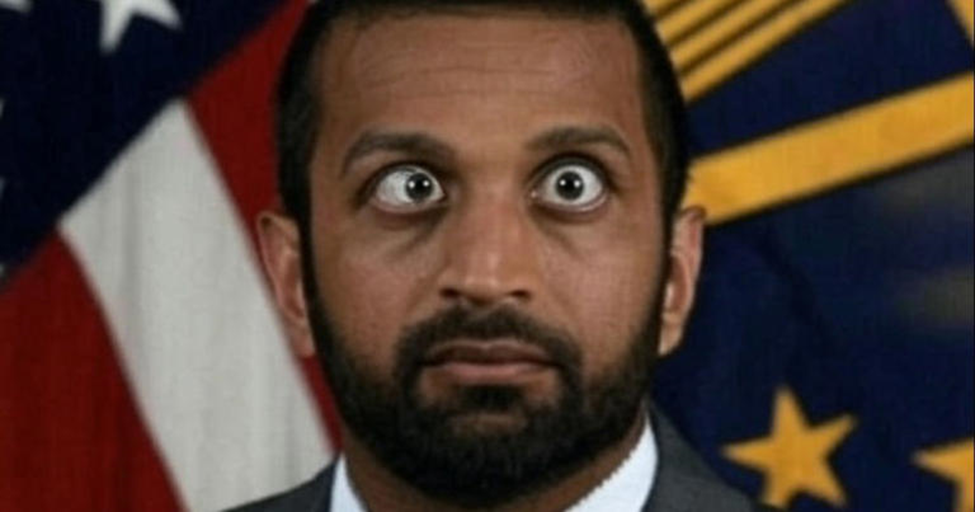
The tightest confirmation votes involved those of Secretary of De Bottle Pete Hegseth (50-50, with Hillbilly Vance casting the deciding vote), the 48-47 vote in favor of confirmation of Deputy Chief of Staff Stephen Miller and FBI head Kash Patel (51-49). Just think, by either of our senators’ switching votes on Hegseth, they might possibly have prevented his future conviction and sentencing for murder on the high seas.

Miller’s has just got to be the most controversial appointment in the history of mankind. And yet…yet, our two senators fell into line like the Repugnantcan robots they truly are and voted to confirm America’s foremost racist/bigot. (There’s something to be said for anyone who would support that monster but I try to keep it clean so I can’t print it here.)

Also of some interest is the number of wealthy (mostly billionaires) whom Agent Orange has appointed to cabinet and other key positions:

  • Commerce Secretary Howard Lutnick;
  • Education Secretary Linda McMahon;
  • Treasury Secretary Scott Bessent;
  • Interior Secretary Doug Burgum
  • Department of Government Efficiency (DOGE) co-head (temporarily) Elon Musk;
  • Uk Ambassador Warren Stephens
  • Special Envoy to the Middle East Steve Witkoff
  • NASA Administrator Jaed Isaacman
  • Social Security Administrator Frank Bisaganao;
  • Ambassador to Turkey Thomas Barrack, Jr.;
  • Ambassador to France Charles Kushner (son-in-law Jared Kushner’s father);
  • DOGE co-head Vivek Ramaswamy;
  • AI and Crypto Czar David Sacks;
  • SBA Administrator Kelly Loeffler
  • Administrator of the Centers for Medicare and Medicaid Services Dr. Mehmet Oz.

With all that moneyed interest floating around, making decisions that affect Americans, whose interests do you really think they represent? Not working Americans, that’s for damned sure.

I mean, a wrestling promoter for education secretary? A host of Fox News personalities for secretary of defense? Transportation secretary? UN ambassador? Ambassador to Israel (Mike Huckabee)? Border czar? Ambassador to France? Seriously?

As for Patel, well, we’re still waiting for him to blink.

What’s going on in the Baton Rouge Family Court these days?

If you think there’s a glut of personal-injury attorneys out there competing for clients, you should see the online advertisements and web pages for family practice attorneys.

That’s not to disparage either specialty because there probably wouldn’t be such a supply if there were no demand. Couples split every day and usually, the kids wind up as pawns in a legal chess match between parents who suddenly hate and wish to somehow hurt each other—and it’s invariably the children who suffer.

And the courts do little to alleviate the emotional strife and in fact, often do considerable additional injury. Two reports, released simultaneously, do little to clear the air with each reaching contrasting conclusions about the way family courts are administered.

LouisianaVoice usually receives contacts from disgruntled parents about every two weeks or so and we are reluctant to wade into the fray that is sure to be fraught with bitterness, he said-she said back-and-fourths, revenge motivations and heartbreak.

But when allegations include stories of child and/or spousal abuse, that gets our attention.

More alarm bells went off when a whistleblower from the Louisiana Department of Children and Family Services (DCFS) went on record as saying new departmental policies in prioritizing online reports of abuse have resulted in significant delays, prompting fears that “children will die.”

But for now, attention will be focused on family courts and one report, to say the least, is withering in its criticism of East Baton Rouge Parish’s four family court judges as a collective group, if not individually while another appears to smooth over the festering problems.

In the 2024 regular session of the Legislature a resolution by State Sen. Cleon Fields (D-Baton Rouge) and Rep. Kathy Edmonston (R-Gonzales) was passed unanimously that requested that the Louisiana Supreme Court study the East Baton Rouge Family Court and to make recommendations to address any problems it found.

Co-sponsors of the resolution included Reps. Kimberly Coates (R-Ponchatoula), Kellee Hennessee Dickerson (R-Denham Springs), Peter Egan (R-Covington), Shane Mack (R-Livingston), Dixon McMakin (R-Baton Rouge), Charles Owen (R-Rosepine), and Jerome Zeringue (R-Houma) and Sens. Valerie Hodges (R-Denham Sprints) and Larry Selders (D-Baton Rouge).

The state’s high court appointed retired First Circuit Court of Appeal Judge James E. Kuhn to “observe and collect tata and information relative to the Family Court and to preside over any of the court’s divisions.”

The result was a 35-PAGE REPORT by Kuhn that did little to lay the issue of concern about the court to rest.

That’s because there was push-back from the judicial administrator as well as a sitting Louisiana Supreme Court justice on most of Kuhn’s recommendations.

For instance, Kuhn found that:

  • Family Court needed a hearing officer to make findings of fact, conclusions of law and recommendations regarding child support cases. Instead, the judicial administrator’s response was: “Considering the comments of the Family Court judges, including the manner in which child support cases are handled, we do not recommend the hiring of a hearing officer.”
  • Family Court should “develop and implement” a plan to ensure that self-represented litigants receive fair and uniformly consistent treatment. Response: “Overall, it appears that the Family Court’s programs for self-represented litigants meet or exceed what other Louisiana courts currently provide.”
  • Family Court’s process of assigning judges to address emergency orders encourages “judge-shopping” by litigants and attorneys. In response, the Family Court adopted a new local rule whereby all emergency rules/motions are referred to the judge who is already assigned the case. Response: “[T]here is no recommendation on this matter.”

Kuhn also noted:

  • A practice of judges holding discussions and status conferences outside the presence of the parties involved. He recommended that while it is a standard practice to move cases forward, judges should “take special care to have the attorneys summarize any negotiations, settlement discussions, etc.” that take place outside the presence of the parties on record “in front of the parties to better their understanding and participation in the process.
  • Closing courtrooms during family proceedings should be done in compliance with law and done “sparingly and only with good cause.”
  • A conflict with state law by charging an administrative fee of $5 plus $6.50 per page for transcripts of court proceedings. Kuhn referenced state law that says in part, “In all civil and criminal cases a fee not to exceed one dollar and fifty cents per thirty-one-line page and twenty-five cents per copy reported and transcribed shall be charged by and be paid to the court reporter who reported and transcribed the testimony.

The report prompted an immediate report by State Supreme Court justice Jeff Hughes who compiled a list of his own, much harsher recommendations to the Family Court—including the eventual abolishment of the court itself.

Hughes, in his six-page response, was critical of what he perceive as:

  • A closed “club” between judges and a small group of lawyers;
  • Actual as opposed to Kuhn’s “perception” of favoritism. A “line has been crossed,” including the calling of a night status conference at a restaurant where alcohol was served. “Non-favorite” attorney withdrawing from representation, telling client she “could not compete” with the paring of a particular attorney’/judge pairing.
  • “Club” vs. outcasts (pro se parents treated as pariahs), including staff members “smirking, rolling their eyes and calling ‘Security, Security!’ when certain litigants approach.”
  • Attorneys who use delay as a weapon and who control the pace of a case instead of judges doing so. In cases in which an attorney “puts up a good fight,” specious grounds are employed as a means of disqualifying the attorney, leaving the parent without legal representation “at critical moments.”
  • Status conferences employed to intimidate and coerce litigants—clients being told they must accept a judge’s “recommendation” or the result will be more severe. In cases where there is a prior contempt finding, clients are told they will go to jail.
  • Contempt charges are used as a weapon as a means to “beat the non-favored parent into submission” and that “it’s all about the money, not the best interests of children.” Attorney fees in contempt cases routinely run between $10,000 and $20,000 and one was nearly $80,000. “It cannot be in the best interest of the children for one parent to have to pay $80,000 to the other parent’s attorney,” Hughes said.
  • Economic pressure is applied to some parents via the cost of therapists, counselors and psych evaluation. In one case, an attorney began to tell a judge that a psychological evaluation had shown favorable result when the judge cut him off, saying he only wanted to know if the evaluation was “completed.” The “content of the report doesn’t matter—only that the ‘hurdle’ has been imposed,” Hughes said.
  • Narrative-smearing without evidence through letters, emails and status conferences, suggesting a parent has problems, needs counseling or are dangerous—without life testimony or cross-examination. This results in long delays and no actual hearing.
  • Closing courtroom to isolate and threaten litigants with screaming and threats of jail.
  • Procedure at the judge’s whim. Motions for contempt are filed by a parent who isn’t getting visitation are invariably met with counter-motions from the favored parent and the first-filed motion is never set for hearing. Instead, if there is a hearing, both motions are heard together so that the original complainant loses the “moral force” of bringing the violation to the court.
  • Family law has been turned on its head. The best interests of the children and facilitating relationships with both parents should be paramount. Instead, there is endless litigation that “mainly enriches attorneys, often back by a wealthy family on one side.” Moreover, community property and equity become targets because attorney fee judgments “can be attached to them.” Routine requests are met with discovery, experts and stacks of largely irrelevant exhibits with the “abuser” bein openly told they’ll be made to pay for everything, including the other’s legal fees. “Sacrificing children to make money is immoral,” Hughes said.

Hughes concluded his report by recommending:

  • Criminal investigation where quid-pro-quo favoritism can be shown;
  • Limit closing of custody hearings;
  • Mandatory live-streaming of EBT Family Court;
  • Cease temporary restraining order/proclaimed offender continuances;
  • Change the “abuser pays everything” statute.

LouisianaVoice reached out to EBR Family Court judges (Pamela Baker, Erika Green, Charlene Day and Kyle Russ) and each of the legislators for comment on the reports.

Only Rep. Kathy Edmonston responded: “I am very concerned about the issues and complaints that have been raised by the public about the East Baton Rouge Family Court; which was the reason I co-authored Senate Resolution 81. 

“I am considering drafting legislation in the following areas: 1) introduce cameras / live-streaming in the courtroom; 2) addressing the contempt of court issue; and 3) addressing the issue of the cost for transcripts.

“Finally, I want to state that I highly respect and appreciate Justice Jeff Hughes’ assessment of the situation.  As an attorney for 47 years as well as a Louisiana Supreme Court Justice, he is more than qualified to make the recommendations outlined in his report.”  

It was on this date 64 years ago, Dec. 11, 1961, that the U.S. Supreme Court overturned the convictions of 16 Southern University students who had been arrested for participating in a SIT-IN AT THE KRESS DEPARTMENT STORE in Baton Rouge the previous year..

Sadly, it took a Mississippi non-profit NEWS SERVICE to commemorate the anniversary of that landmark case. Louisiana media, particular those located in Baton Rouge, somehow let that date slip by unnoticed.

Following a sit-in Greensboro, N.C., the all-white Louisiana Board of Education warned that any student taking part in a similar protest would face “stern disciplinary action.”

The board could not have pulled off a greater blunder. All that did was to spark a united sense of determination among seven students who headed to Kress’ lunch counter on Third Street in downtown Baton Rouge on March 28, 1960. They were promptly jailed and nine other students conducted a sit-in at two other locations and they, to, were arrested. That prompted a march through Baton Rouge to the State Capitol by 3500 students.

Southern’s President Felton Clark, most likely under duress from the Jimmie Davis administration and in fear of his job, expelled the 16 students who had participated in the sit-inns and NAACP attorney and future U.S. Supreme Court justice Thurgood Marshall enrolled to represent them and the Kennedy administration filed a friend of the court brief in support of the students who were subjected to humiliation and cruel treatment at the hands of whites.

Sit-in participants have raw eggs cracked over their heads by white segregationists.

After their convictions were overturned, more sit-ins and another mass demonstration followed, leading to more arrests of 23 protestors, including CORE Field Secretary Dave Dennis.

Even more protests and demonstration followed until in 1963, the lunch counters were eventually desegregated. A half-century later, Southern University bestowed honorary degrees to the expelled students.

While Davis had run for governor on a promise to uphold segregation, his predecessor, Earl Long was far more insightful, despite his notorious 1959 mental breakdown.

Even as the state was in the throes of the tumultuous civil rights movement, Long knew desegregation was inevitable even if people like firebrand Leander Perez of Plaquemines Parish did not. Exasperated at Perez/s persistent legislative battle to enforce segregation, Long shouted at Perez, “Whatcha gonna do now, Leander? The feds got the atom-bomb!”