Feeds:
Posts
Comments

Archive for the ‘LSU’ Category

It looks as though Bobby Jindal’s former commissioner of administration Kristy Nichols will finally have to comply with state regulations. Or maybe not.

The Louisiana Board of Ethics, in typical fashion first put the kibosh on any effort by Kristy Kreme to lobby state government on behalf of her new employer—and then promptly withdrew the opinion.

The board was essentially neutered by Jindal during his rush for ethics “reform” in his first days in office back in 2008. Because of those “reforms,” the board lost considerable steam and all its enforcement powers and it now appears it is missing a spine.

And one has to wonder if the Jindalistas had any influence on the decision to withdraw the unfavorable opinion.

Nichols served as Jindal’s commissioner of administration for three years, from October 2012 to October 2015. Those years were marked by consistent budgetary shortfalls, cuts to higher education and health care, the contentious revamping of premiums and benefits for state employees, retirees and dependents through the Office of Group Benefits and the equally controversial privatization of the state charity hospital system.

She also was sued twice by LouisianaVoice over her failure to produce public records in a timely manner. It was in that area that she enjoyed her greatest success by breaking even. She prevailed in the first lawsuit but lost the second one. She still owes a judgment of $800, plus attorney fees and court costs. She chose to spend even more state money in appealing the decision to the First Circuit Court of Appeal.

She announced in September that she would be going to work for Ochsner Health System as a lobbyist. Well, technically, her new title is vice president of government and corporate affairs. While state law precludes her lobbying the legislative or executive branches for two years, there appears to be no prohibition to her lobbying local governments (parishes and municipalities) on the part of Ochsner.

She contacted the ethics board on Nov. 5 through attorney Kimberly Robinson of the Baton Rouge law firm Jones Walker.

Robinson was recently named by Gov-elect John Bel Edwards to be the new secretary of the Department of Revenue and Taxation.

The board last Thursday (Dec. 17) addressed six specific areas about which Robinson sought opinions. The board shot down four of those and took no position on the remaining two because of what it termed insufficient information, according to Walter Pierce of the INDReporter Web site. http://theind.com/article-22377-Ethics-Board-blocks-Nichols.html

A spokesman for the ethics board, however, told LouisianaVoice on Monday that the opinion has been “withdrawn” and the entire matter re-scheduled for the board’s Feb. 19, 2016, meeting.

The opinion initially would have barred Nichols for two years from:

  • Direct transactions or communications with the Division of Administration;
  • Participating in any transaction, researching or preparing materials for use in or in support of a direct act or communication with a legislator;
  • Communicating or having a transaction with the Department of Health and Hospitals, and
  • Assisting Ochsner in communications or transactions with LSU. The LSU Board of Supervisors currently oversees the public-private partnerships between the state-run hospitals and private health care providers.

There was no immediate explanation of what the remaining two questions from Robinson concerned.

There are several areas of concern in allowing Nichols to lobby state government on behalf of Ochsner, not the least of which is the agreement between the state and Ochsner during her term that allowed Ochsner to partner with the state in running the Leonard J. Chabert Medical Center in Houma.

In 2013, the LSU Board of Supervisors signed off on the contract containing 50 blank pages. That contract handed over operation of state-owned hospitals in Lake Charles, Houma, Shreveport and Monroe. The blank pages were supposed to have contained lease terms. Instead, the LSU board left those details to the Jindal administration (read Commissioner of Administration Kristy Nichols).

Eventually details emerged about the contracts, including that of the Leonard J. Chabert Medical Center in Houma. And, thanks to the Louisiana Public Affairs Research Council, the picture began to come into focus.

Leonard Chabert Medical Center was opened in 1978 as a 96-bed facility with 802 employees but by the time it was privatized, it was down to 63 beds.

In 2008, a hospital-based accredited Internal Medicine residency program was begun. In 2011, the hospital’s revenue was 47 percent uncompensated care for the uninsured, 29.5 percent Medicaid, 13 percent Medicare, 5.5 percent state general fund and 6 percent interagency transfer from other departments with only 1 percent being self-generated.

When the Jindal administration moved to unload state hospitals, Chabert was partnered with Southern Regional Medical Corp., a nonprofit entity whose only member is Terrebonne General Medical Center (TGMC).

TGMC is slated to manage Chabert with assistance from a company affiliated with Ochsner Health System, Louisiana’s largest private not-for-profit health system with eight hospitals and forty health centers statewide. Terms of the agreement call for a five-year lease with an automatic renewal after the first year in one-year increments to create a rolling five-year term.

Though Southern Regional is not required to pay rent under terms of the agreement, the Terrebonne Parish Hospital Service District No. 1 is required to make annual intergovernmental transfers of $17.6 million to the Medicaid program for Southern Regional and its affiliates.

The cooperative endeavor agreement (CEA) calls for supplemental payments of $31 million to Ochsner. Small wonder then that the Houma Daily Courier described the deal as “a valuable asset to Ochsner’s network of hospitals” and that the deal expands Ochsner’s business profile.

Between 2009 and 2013, Ochsner’s revenue doubled from $900 million to $1.8 billion and the deal would mean more revenue for Ochsner, the Daily Courier said. http://www.houmatoday.com/article/20140325/articles/140329692?p=3&tc=pg

There has never been a reasonable explanation as to why the LSU Board signed off on a blank contract that the Jindal administration would fill in after the fact. Was it just by chance that Nichols, as Commissioner of Administration, was responsible for that task? And was it just happenstance that two years after Ochsner received that $31 million, it saw the need to bring Nichols aboard just as her employment with the Jindal administration was winding down?

LSU Board of Supervisors handed over University Medical Center in Shreveport and E.A. Conway Medical Center in Monroe to the Biomedical Research Foundation (BRF) even though the CEO of BRF was a sitting member of the LSU board at the time.

Within two years, that deal fell apart and the board and BRF are now involved in complicated litigation.

Meanwhile, the Center for Medicare and Medicaid Services has yet to approve the Jindal/Nichols privatization plan.

 

Read Full Post »

Just as there are many deserving nominees for Boob of the Year, so are there those who deserve to be recognized for their work to bring the actions of those boobs to public light. Their efforts have helped to expose corruption in lieu of an ineffective State Ethics Board that Jindal gutted as his first action upon becoming governor.

And for those who think we’re too negative, here is our chance to put some positive spin on state politics. Unlike our Boob of the Year nominees, few of our nominees for the John Copes Beacon of Light award are public officials, though it would be unfair to say that no elected official is worthy.

Copes, a Louisiana Tech graduate, was one of the very first political bloggers in Louisiana, launching his website The Deduct Box in 1999. A resident of Mandeville, he died in October of 2006 at a time when his blog was getting about 10,000 hits per day.

Because any such list is subjective, some deserving candidates will be left out by oversight as occurred with our Boob of the Year nominees. Accordingly, you are free to make your own nominations.

So, with that in mind, here we go:

  • Former State Sen. Butch Gautreaux: All he did was to bust a gut in trying to save the Office of Group Benefits from certain corruption and mismanagement. He failed, of course, because Bobby Jindal wanted to privatize the agency and indirectly raid OGB’s reserve fund. Now the fund has been depleted, premiums have risen and benefits have been cut and Sen. Gautreaux has been proven correct.
  • State Sen. Dan Claitor: Claitor filed a lawsuit to nullify the illegal retirement increase of some $50,000 for State Police Superintendent Mike Edmonson. He won that suit and then filed a bill to make certain there were no more backdoor deals for Edmonson. He also objected to the administration’s less than ethical ruse to delay payment of Medicaid claims by two months, thus kicking the final two months’ problems into the next fiscal year—long after Jindal and his fraudulent cohorts will be gone. Sadly, Claitor’s objections to the move were ignored by the administration—and his fellow legislators who once again, allowed Jindal to have his way with them.
  • Lame duck BESE members Carolyn Hill and Lottie Beebe: Both stood up to State Superintendent of Education John White and both paid the price. Out of state money poured in for their opponents and both Hill and Beebe were defeated for re-election.
  • John Bel Edwards: It may be too early to call him a Beacon of Light. That will depend on what he does as governor. But he did fight Bobby Jindal for eight years and overcame mind boggling odds against a Democrat with little name recognition outside Tangipahoa Parish upsetting powerful (as in $10 million worth of power) U.S. Sen. David Vitter. While Jindal held onto his congressional salary right up to the time he took the oath as governor, Edwards has resigned from the Louisiana Legislature.
  • Tommy and Melody Teague: She was fired from her job (but won it back on appeal) for daring to testify before Jindal’s governmental streamlining committee; he for the audacity of taking over an agency (OGB) with a deficit of some $200 million and take it to a surplus of $500 million and then not falling all over himself to support Jindal’s proposed privatization of OGB. Jindal prevailed of course, and the surplus (reserve fund) was depleted, premiums increased, benefits reduced and many retirees now living out of state have lost their medical benefits altogether. At least Tommy Teague saw the danger way before the smartest man in the room.
  • Murphy Painter: As director of the Office of Alcohol and Tobacco Control (ATC), he refused to allow FOB (friends of Bobby) short circuit the regulations for an alcohol permit for Champion’s Square across from the Superdome. For insisting that the applicant comply with ATC regulations, he was fired and indicted on made up criminal charges. Rather than bene over and grease up, he fought back, was acquitted at trial and stuck the state with his legal bills of nearly $300,000.
  • Whistleblower Jeff Mercer: The Mangham, Louisiana contractor was harassed, coerced and intimidated when he refused to comply with a DOTD inspector’s demand that he give the inspector money and/or equipment (a generator). When he complained about the extortion attempt, more pressure was applied in the form of harsh inspections, delayed and denied payments for work performed. He went bankrupt as a result of the DOTD actions but determined to fight back, he sued and won a $20 million judgment from the state. A pity since the governor’s office was made aware of the inspector’s actions but chose to do nothing to avert the eventual courtroom battle.
  • Whistleblower Dan Collins: The Baton Rouge professional landman complained about things he observed in the Atchafalaya Basin Program and promptly got frozen out of future state contracts. Undaunted, he and his one attorney went up against the Department of Natural Resources and its four corporate attorneys and on Friday (Dec. 11, 2015) won treble damages totaling $750,000—all after complaints to the governor’s office had been ignored, leaving us with the unavoidable conclusion that the Jindalites would rather pay hefty lawsuit judgments than correct obvious problems early on. To paraphrase the title of Hilary Clinton’s book, sometimes It Takes a Pissed off Citizen….
  • Lamar White: This Alexandria native, along with Bob Mann, has been a persistent thorn in the side of our absentee governor, a couple of congressmen, and anyone else he sees tampering with governmental ethics. But more than merely badgering, Lamar thoroughly documents everything he writes. If any official has anything to hide, he will be outed by Lamar. He is the one who dug up the story about U.S. Rep. Steve Scalise’s close connections to David Duke. That story, said Baton Rouge Advocate reporter Billy Gunn, “exemplifies the power of the pen and its ability to challenge the mighty.” High praise for someone another blogger once ridiculed for his cerebral palsy affliction which makes it difficult for him to walk. “But there’s nothing wrong with his mind,” Gunn said. “He writes on subjects ranging from the rights of the disabled to racial inequity.” Walter Pierce, editor of the Lafayette news site The Ind.com, said, “He has a sort of selfless bravery.”
  • Bob Mann: Journalist/author/political historian Bob Mann holds the Manship Chair in journalism at LSU and has unflinchingly taken on the powers that be, including his bosses on the LSU Board of Supervisors. Mann, who writes a column for Nola.com and Salon.com, has become such an irritant that one LSU Board member, Rolfe McCollister, has even advocated Mann’s firing for his saying that the LSU Board was more loyal to Jindal than to the students at LSU. This is the same Rolfe McCollister, by the way, who publishes the Baton Rouge Business Report. So much for his defense of the First Amendment. McCollister quoted a “former seasoned journalist” as saying “Every good journalist knows that you cannot ethically cover the institution that pays your salary and the people who supervise the work you do for that salary.” So much for his defense of the First Amendment. But Rolfe, how about “ethically” serving higher education that your boss has tried to starve to death with repeated budgetary cuts that resulted in higher and higher tuition for students? How is that you’re able to “ethically” look out for the interests of students and faculty of LSU while giving $17,000 to Jindal’s campaign, serving as treasurer of his campaign, and treasurer of Believe Again, the Super PAC created to promote Jindal’s presidential campaign. I guess the question really comes down to who has the higher ethical standard, you or Bob Mann. We go with the Mann. Every time.
  • C.B. Forgotston: What can we say about this former legal counsel for the Louisiana House? C.B. has a political blog but he doesn’t post often. And when he does post, the dispatches are usually short. But what he lacks in verbiage, he more than makes up with impact. He is terse, to the point, and quite often vicious in his critique of anyone he sees in office who he believes is wasting time or state dollars. Most people who know him would rather be on the receiving end of volumes of criticism from Jindal and his minions than a single sentence of disapproval from C.B.
  • Lt. Gov. Jay Dardenne: for having the courage to cross party lines and endorse Democrat John Bel Edwards over Diaper Boy Dave Vitter. Dardenne took a lot of heat for that but who could blame him after Vitter’s carpet bombing of him and fellow Republican Scott Angelle in the first primary? Some will say his appointment as incoming Commissioner of Administration was the payoff. Perhaps so, but if anyone can come up with a better person for the job, we’re listening.
  • State Treasurer John Kennedy: His ill-advised endorsement of Vitter aside, Kennedy has been tenacious in his guarding of the state treasury, taking on Jindal and Commissioner of Administration Kristy Kreme Nichols time after time when they tried to play funny with the money. He would have easily walked in as Attorney General after the first primary had he chosen to run for that seat, which we encouraged him to do. Instead, he has chosen to remain as Treasurer—at least for the time being. Remember there is Vitter’s U.S. Senate seat that opens up next year and Kennedy would like that job. Whatever his motives for endorsing Vitter (many speculate had Vitter won, he would have appointed Kennedy to fill the remaining year, thus giving him the advantage of incumbency), no one can deny that he has been a splendid foil for the Jindalites for eight years.
  • Louisiana Trooper Underground: This unknown author or authors undoubtedly has/have reliable links deep within the upper echelons of the Louisiana State Police command in Baton Rouge. A relatively new entry into social media, this a Facebook page that posts the latest developments in the unfolding saga involving various troop commands and LSP headquarters itself.
  • Finally, all the others who have been Teagued: Tommy and Melody were the inspiration for the term but they are in good company with a long list of those who attempted to do the right thing and were either fired or demoted by a vengeful Jindal. Despite the obvious reprisals that lay ahead, each of them stood up for what was right and paid the price. They’re the silent heroes.

There are our nominees. You are free to write in your own favorite’s name. It is our sincere hope that the response to this will be as gratifying as that of the Boob of the Year.

Go.

Vote.

Read Full Post »

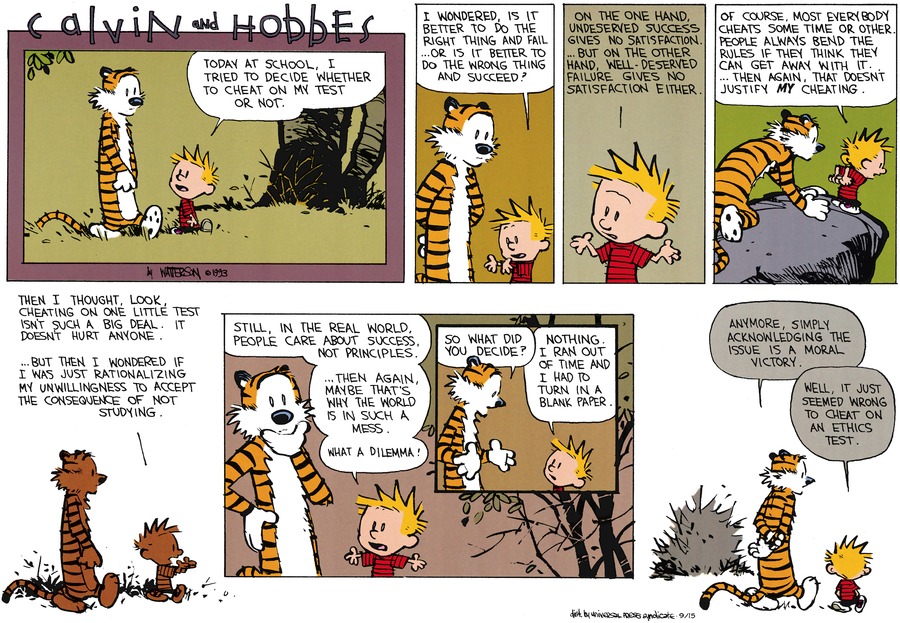
ETHICS DILEMMA

(CLICK ON IMAGE TO ENLARGE)

“No former elected official, including a legislator, no former member of a board or commission, nor agency head for two years shall assist another person for compensation in connection with a transaction, or render service on a contractual basis for or be employed/ appointed to any position involving the agency by which he or she was formerly employed or in which he/she formerly held office.” (LA Rev Stat § 42:1121)

“…Kristy Nichols is leaving the public sector to become Ochsner Health System’s vice president of government and corporate affairs, the Jindal administration announced today.” (Baton Rouge Business Report, Sept. 15, 2015)

So Nichols will be going to work for Ochsner as a lobbyist. And while state law precludes her lobbying the legislative or executive branches for two years, there appears to be no prohibition to her lobbying local governments (parishes and municipalities) on the part of Ochsner.

Kristy, anticipating the end of her boss’s rocky tenure in January, found her own golden parachute at Ochsner. We don’t know her salary at Ochsner, but we’re guessing it’ll be six figures. Taken at face value, that would normally be the end of the story.

But with this gang, there’s always more than meets the eye. And thanks to our friend C.B. Forgotston who helped us connect the dots, we’re able to shed a little more light into how she parlayed three years of repeated budget crises into such a high-profile private sector job.

Remember the great state hospital privatization fiasco and the contract with 50 blank pages? http://www.modernhealthcare.com/article/20130602/INFO/306029998

The contract obligated the state to long-term spending obligations that will extend decades beyond the Jindal years. Let’s ignore for the moment the fact that the Center for Medicare and Medicaid Services has yet to approve the deal. Instead, let’s explore the Nichols-Ochsner connection.

It was two years ago that the LSU Board of Supervisors signed off on that contract to hand over operation of state-owned hospitals in Lake Charles, Houma, Shreveport and Monroe. The blank pages were supposed to have contained lease terms. Instead, the LSU board left those minor details to the Jindal administration (read: Commissioner of Administration Kristy Nichols).

Eventually details about the contracts emerged, including that of the Leonard J. Chabert Medical Center in Houma. And, thanks to the Louisiana Public Affairs Research Council, that is where we’re able to bring the picture into focus.

Leonard Chabert Medical Center was opened in 1978 as a 96-bed facility with 802 employees but by the time it was privatized, it was down to 63 beds.

In 2008, a hospital-based accredited Internal Medicine residency program was begun. In 2011, the hospital’s revenue was 47 percent uncompensated care for the uninsured, 29.5 percent Medicaid, 13 percent Medicare, 5.5 percent state general fund and 6 percent interagency transfer from other departments with only 1 percent being self-generated.

When the Jindal administration moved to unload state hospitals, Chabert was partnered with Southern Regional Medical Corp., a nonprofit entity whose only member is Terrebonne General Medical Center (TGMC).

TGMC was slated to manage Chabert with assistance with a company affiliated with (drum roll)…..Ochsner Health System, Louisiana’s largest private not-for-profit health system with eight hospitals and 40 health centers statewide.

So what were the terms of the agreement? Five years with an automatic renewal after the first year in one-year increments to create a rolling five-year term.

Though Southern Regional is not required to pay rent under terms of the agreement, the Terrebonne Parish Hospital Service District No. 1 is required to make annual intergovernmental transfers of $17.6 million to the Medicaid program for Southern Regional and its affiliates. Here are the TERMS OF THE OCHSNER DEAL AT LEONARD CHABERT MEDICAL CENTER

Here’s the kicker: the cooperative endeavor agreement (CEA) calls for supplemental payments of $31 million to Ochsner. It’s no wonder the Houma Daily Courier described the deal as “a valuable asset to Ochsner’s network of hospitals” and that the deal “expands Ochsner’s business profile.”

Between 2009 and 2013, Ochsner’s revenue doubled from $900 million to $1.8 billion and the deal only means more revenue for Ochsner, the Daily Courier said. http://www.houmatoday.com/article/20140325/articles/140329692?p=3&tc=pg

We’re certain it’s just coincidence that the LSU Board signed off on a blank contract that the Jindal administration would fill in after the fact.

And it’s just by chance that Kristy Nichols, as Commissioner of Administration, was responsible for that task.

And of course it was just happenstance that Ochsner received that $31 million payment and a mere two years later, just as her reign at DOA was ending, saw the need to bring Kristy aboard as vice president of government and corporate affairs.

So there you have it. All you have to do is follow the money.

Read Full Post »

Louisiana, from Huey and Earl Long to Jimmie Davis, John McKeithen, and Edwin Edwards, has a well-earned reputation of electing colorful—and controversial—governors. It is, therefore, something of a paradox that the one who would aspire to play on the national stage would be described as a policy wonk with no personality and nothing in common with the others.

While Bobby Jindal is unquestionably intelligent, he, unlike the others, is woefully inadequate in his ability to relate to his constituents on a one-on-one basis or to field hard questions from a skeptical press. To put it bluntly, he simply lacks the skills to relate to the man in the street, forced instead to fall back on his time-worn but well-rehearsed rhetorical philosophy designed to appeal to his ultra-right-wing political base. Jindal perhaps is best described as Ben Stein (the economics teacher in Ferris Bueller’s Day Off) without the charisma.

Even when he does stray from his tightly-controlled script in an effort to draw a laugh, his efforts usually languish. In 2014, he made an appearance at the Gridiron Dinner in Washington and followed that the next night with an address to the Conservative Political Action Conference (CPAC) and set up the same joke about Attorney General Eric Holder at both events by saying, “I see Eric Holder is with us…” The problem was Holder was not at CPAC (nor would he ever have been expected to be) and the gag fell embarrassingly flat (cue the chirping crickets).

A good politician, like a good standup comic, always knows his audience. Lyndon Johnson once said he had no use for any politician who, thirty seconds after entering a room, could not tell who was for him and who was against him. Lyndon Johnson would have no use for Jindal. Nor would Edwin Edwards who could always be counted on for a quip appropriate to the crowd or the event. No one but Edwards would, after getting a hug from a nun in Monroe, dare say something like, “Careful, Sister, I don’t want to get into any habits.” Nor could Jindal ever get away with saying (as did Edwards) the only way he could lose an election (against David Duke in 1991) would to be “caught in bed with a dead girl or live boy.”

Instead, when Jindal talks, he comes across as stilted and decidedly wooden, inflexible. He cannot speak off the cuff; everything is rehearsed, which is why every speech sounds like all the others. He is unnatural and exhibits absolutely no understanding—or compassion—for the single working mom, for the working poor unable to afford health care insurance, or for the tax burden of the middle class, a result of his generous tax breaks to business and industry. His limp handshake only serves to underscore his disdain for pressing the flesh (to borrow a term from LBJ).

His railing against Washington and President Barrack Obama is vaguely reminiscent of Robert F. Kennon in his run for a second term as governor in 1963. I spent a day with Kennon in 1983 and he relayed an interesting story to me. He had crisscrossed the state during the ’63 campaign, repeating his familiar slogan: “Send Kennon to Baton Rouge and (President) Kennedy back to Massachusetts.” The slogan caught fire and Kennon surged to the lead in the polls ahead of key rival New Orleans Mayor deLesseps Morrison (that would be “Dellasoups,” to Uncle Earl). Public Service Commissioner John McKeithen, meanwhile, slogged along with his own aw-shucks slogan: “Won’t you he’p me?” Then, on November 22, the eve of the governor’s election, Kennedy was assassinated in Dallas and overnight, public opinion was turned on its head. Kennon was out, McKeithen finished second to Morrison and then won in a runoff. “Kennedy’s assassination beat me,” he told me 20 years later.

I also spent an entire day as a young newspaper reporter in 1971 riding with McKeithen near the end of his second term as he toured the LSU agriculture station in Homer in Claiborne Parish prior to an address to the local chamber of commerce that night. The tour was not one of those events where the politician breezes in, shakes a couple of hands and departs, leaving it to his press office to call it a “tour.” Instead, McKeithen, fascinated with innovations at the Ag station, spent the entire day learning about how the station personnel managed to get productive timberland to serve the dual purpose of grazing land for the farm’s cattle. “I’ve never seen cattle graze in timberland,” said McKeithen, himself a cattle rancher.

And during McKeithen’s entire visit at Homer that day, there was not a state trooper security detail anywhere in sight. Not one. Zilch. Jindal, on the other hand, never goes anywhere without a coterie of state police security, even during his presidential run which has taken him out of Louisiana for more than 45 percent of his final years as governor—all at the expense of Louisiana taxpayers.

Even in retirement, John McKeithen kept the common touch. In the late 1980s, I resided next door to his son, Secretary of State Fox McKeithen. The younger McKeithen had a pecan tree in his front yard and on many mornings when I walked outside to retrieve my Baton Rouge Advocate, there would be Big John walking around the yard picking up pecans. Somehow, it’s just impossible to conjure up an image of Bobby Jindal walking around picking up pecans off the ground. He’d almost certainly have a state trooper from his security detail performing that task.

Jimmie Davis not only was an immensely popular singer, but a spellbinding storyteller as well. He told a great one about Edwards. When Davis left office in 1964, he built a new home behind the governor’s mansion. Both the Davis home and the governor’s mansion were across the lake from the State Capitol and Davis said once he was in his back yard “knocking down dirt dauber nests, wasp nests, pulling weeds and killing snakes,” out of the corner of his eye he caught then-Governor Edwards strolling purposely toward the lake. As he watched, he suddenly realized that Edwards was intent on walking to the Capitol…across the lake. “He’s going to try to walk on the lake,” Davis thought. Sure enough, Edwards did indeed begin walking across the lake and made it about halfway before suddenly sinking. “There wasn’t anything I could do,” Davis said, “but walk out there, pull him up out of the water and carry him the rest of the way.”

We can thank Davis, by the way, for the Sunshine Bridge over the Mississippi River at Donaldsonville, for the current governor’s mansion, and for the implementation of civil service as protection of state employees from political patronage.

As a political junkie, I have followed Louisiana’s governors all the way back to Uncle Earl. I vividly remember Earl’s mental breakdown, his commitment to a couple of mental hospitals and his subsequent escapes. I recall his defeat of incumbent U.S. Rep. Harold McSween in 1960 only to die of heart failure ten days later. As a teenager, I read every book about Huey and Earl Long that I could lay my hands on. Rather than cut funding for services, Huey increased the miles of paved highways in Louisiana from 300 to 3,000. Rather than deprive the poor of health care, he built Big Charity Hospital in New Orleans that operated as a teaching hospital for Tulane and LSU medical schools while providing care for the poor. Instead of slashing appropriations for higher education, Huey made LSU a top tier university. Jindal, hell-bent on cutting taxes for industry and the rich, allowed the state’s infrastructure to crumble. He denied Medicaid expansion, thus depriving 300,000 of the state’s poor adequate medical care. Budget cuts under Jindal’s leadership proved disastrous to higher education, forcing tuition increases that were unaffordable to low income students.

But after all is said and done, it was Earl Long who was the real visionary. Jindal beats his chest, refusing to accept Medicaid expansion. He fought Common Core, defiantly boasting that he would not allow Washington or the liberal media to sway him. But even as Mississippi’s Ross Barnett, Alabama’s George Wallace, and Arkansas’ Orville Faubus were pledging “Segregation today, segregation tomorrow, segregation forever,” Earl saw the writing on the wall early on and prepared for the future accordingly.

When Orleans Parish legislators approached him in the 1950s about locating a public university in New Orleans, Earl readily agreed—on one condition: the school would be open to whites and blacks alike. Higher education was integrated in Louisiana years before James Meredith entered Ole Miss and before George Wallace stood in the doorway at the University of Alabama. Rather than cutting education, Earl originated the hot lunch program in Louisiana’s public elementary and high schools, providing students affordable lunches—his proudest accomplishment.

Earl refused to take political advantage of the fever-pitch emotions that were boiling over in Baton Rouge over the desegregation fight with the federal government. His most famous confrontation was with Plaquemines Parish political boss Leander Perez, who refused to acknowledge the changing times and attempted to pass sweeping legislation in Baton Rouge to resist the growing tide of desegregation. “What’re you gonna do now, Leander?” Earl shouted at his nemesis at one point. “The feds have the A-bomb!”

Dave Treen, the quintessential Republican, who served as governor from 1980-1984, proposed a $450 million tax on oil and gas to hold the industry accountable for damage to the state’s coastal marshes. The Coastal Wetlands Environmental Levy (CWEL), which he said would place no undue burden on any individual or group, fell twelve votes short of the necessary two-thirds approval in the House after being vehemently opposed by oil and gas interests and the Louisiana Association of Business and Industry (LABI).

That stands in stark contrast to Jindal, who, beholden to the oil companies for their financial support of his political campaigns, was in bitter opposition to (and eventually succeeded in killing) a lawsuit against 97 oil and gas companies by the Southeast Louisiana Flood Protection Authority-East (SLFPA-E) seeking to force the companies to restore the state’s damaged wetlands.

These are the personality and philosophical traits sorely lacking in Jindal’s psychological makeup. He cannot champion the working people of Louisiana—or America—in the manner of Huey Long. He could never negotiate the peace between warring factions the way in which Edwin Edwards could get both sides to comprise—and like it. Jindal, with his disconcerting rapid-fire speaking manner, is devoid of the ease with which Jimmie Davis could hold an entire room captive with his homespun humor. His response to Obama’s State of the Union Address in 2009 proved that beyond any doubt. He could never be relaxed after more than five minutes of visiting something as ordinary as an agricultural station in north Louisiana but McKeithen, on the other hand, was right at home. Earl may have had mental issues, but even in his deteriorated emotional state, he stood head and shoulders above Jindal in his ability—and willingness—to do for people what they could not do for themselves.

There does not exist a hole sufficiently deep to bury the differences between Jindal and any one of those six governors. To somehow think he is presidential timber is simply beyond comprehension. He would be wise to consider the human element of leadership over any poll results.

Read Full Post »

By Dayne Sherman (Special to LouisianaVoice)

Louisiana higher education has been cut by $750 million and is arguably the state with the worst budget cuts in America.

In addition, Louisiana has more schools on the American Association of University Professors Censure List than any other state. The disgraced schools include LSU, Southern, SLU, Nicholls, and Northwestern.

Recently, Dr. Teresa Buchanan http://www.teresabuchananlsu.com/, an associate professor of education at LSU, was fired. In short, she was accused of using profanity on occasion. Despite never receiving a poor work evaluation in almost 20 years, and not being told exactly when and where and what she said that was so objectionable, and the administration using dubious anonymous student comments to substantiate their witch hunt, she was terminated.

Oh, I failed to mention that the faculty hearing committee said she had done nothing to warrant dismissal, despite the salty language. They called for remediation not termination.

This story, however, is a part of a bigger myth. Some say college professors and K-12 teachers are rarely fired. That’s baloney.

I know dozens and dozens of professors: tenured, tenure track, and instructors that were fired. A few were fired through the formal process, while most others were told to resign (retire) or face termination. I also know hundreds fired by “layoffs.” Not dozens but hundreds. It is constant and very common. Few fight it. They give up and move on, which is often smart.

Typically only tenured professors have access to any due process. Tenure track, lecturers, instructors, staff, and adjuncts are at-will employees with no protection unless they are discriminated against for First Amendment or EEOC-protected reasons (For example, a Jewish woman being fired for speaking out against campus crime would be illegal, tenure or no tenure).

Of course, the victims have to sue—a tall order because the institutions will spend a half a million dollars in state money to fight the suit. Remember LSU’s Ivor Van Heerden after Hurricane Katrina?

In higher education, folks are often given the old “two letter treatment”: sign this letter and willingly resign, or we’ll give you another letter of termination. Most people choose the former, and Human Resources forbids the staff from talking about the departure. Hence, the silence.

Right now, I am not proud that my graduate degree is housed in the http://talkaboutthesouth.com/wp-admin/chse.lsu.edu, which is headed by Dean Damon P.S. Andrew. The college is a joke, and it harms the reputation of LSU as a whole.

At the end of the day, I believe LSU will not prevail in firing Dr. Buchanan. There’s more to it than what is on the surface, more than one person saying a few salty words.

To join the fight, speak up. If you are able, please send a check to Professor Michael Homan, Treasurer, Louisiana State Conference AAUP, 215 S. Alexander Street, New Orleans, LA 70119. Checks made out to: LA State Conference-AAUP. On the Memo line write: “Teresa Buchanan Legal Fund (Academic Freedom).”

Together, we can beat this silly attack on Dr. Buchanan, LSU, and Louisiana.

Dayne Sherman is the author of the novels Zion and Welcome to the Fallen Paradise http://www.amazon.com/dp/B00V0O48T4, both $2.99 ebooks. He blogs at TalkAboutTheSouth.com

(Editor’s note): Dayne’s byline was inadvertently omitted from the original posting. Our apologies for the oversight.

Read Full Post »

« Newer Posts - Older Posts »
