Feeds:
Posts
Comments

Archive for the ‘Ethics’ Category

LouisianaVoice keeps trying to prod the Attorney General’s office into getting off its backside in the investigation of that RAPE of a 17-year-old girl by a convicted rapist in a Union Parish Detention Center cell in April 2016, but it seems Jeff Landry is far too occupied with some grand scheme that he thinks will ultimately land him in the governor’s office.

In our monthly tabulation, it has now been 19 months and counting since the girl, who was being held in a cell after being picked up on a drug charge, was raped not once, but twice, by an inmate who had already been convicted of aggravated rape in Claiborne Parish and was awaiting sentencing while being held in adjacent Union Parish.

To refresh your memory, because the district attorney is a member of the Union Parish Detention Center Commission which operates the center, DA John Belton recused himself and requested that the AG conduct an investigation of the incident. The victim has since filed a LAWSUIT over the incident and now Landry’s office is attempting to lean on that as a legitimate reason for not providing a status of its so-called criminal investigation.

Back on Oct. 17, we submitted our monthly request as to the status of the assault investigation to both the AG’s Public Information Office and to its Criminal Investigation Section. The next day, Oct. 18, we received following response:

—–Original Message—–
From: AG Landry News [mailto:aglandrynews@ag.louisiana.gov]
Sent: Wednesday, October 18, 2017 1:49 PM
To: Tom Aswell <azspeak@cox.net>
Subject: Re: QUESTION

This matter is under investigation.

Thanks!

Ruth

So, we did our obligatory monthly report of inactivity on Landry’s part. But then on Wednesday (Nov. 15), we received the following response from Assistant Attorney General Luke Donovan, Executive Division:

From: Donovan, Luke [mailto:DonovanL@ag.louisiana.gov]
Sent: Wednesday, November 15, 2017 4:30 PM
To: azspeak@cox.net
Cc: Dirmann, Shannon <DirmannS@ag.louisiana.gov>
Subject: PRR 17-0159 Tom Aswell, Louisiana Voice

Good afternoon Mr. Aswell,

In response to your public records request pursuant to La. R.S. 44:1 et seq, the information you requested has been processed. You sought records related to the following:​

… any documents or reports pertaining to the status of the attorney general’s investigation of the rape of the 17-year-old girl in the Union Parish jail cell last April. That’s the investigation 3rd JDC District Attorney John Belton asked the attorney general’s office to investigate because of a conflict of interests.

Louisiana’s Public Records Act, specifically La. R.S. 44:3(A)(1), exempts records held by the office of the attorney general which pertain “to pending criminal litigation or any criminal litigation which can be reasonably anticipated, until such litigation has been finally adjudicated or otherwise settled….”  

Therefore, the records which you seek are exempt from production at this time.

If our office can be of any further assistance, please let us know.

Sincerely,

Luke Donovan

Assistant Attorney General, Executive Division
Office of Attorney General Jeff Landry
Phone: (225) 326-6712  Fax: (225) 326-6098
www.AGJeffLandry.com

Well, that prompted my immediate response:

Your response is pure, unadulterated B.S.

That’s only because your boss is more interested in promoting his campaign for governor than doing anything on this case for the past 19 months. I’m not at all sure what you mean by “criminal litigation,” but I do know what “criminal investigation” and “civil litigation” are. The first is an investigation and, if warranted, an indictment and trial on criminal charges—and I suggest 19 months to investigate an assault in a confined area when the date, the victim and the assailant are all known to prosecutors is more than enough time to conclude an investigation and to indict. Any litigation would be a civil matter and completely unrelated to criminal charges as that would be a separate matter altogether. The information I am seeking is the status of the criminal investigation, i.e. has the alleged perpetrator been formally charged? If so, what was the charge and is there an arraignment/trial date?

To try and hide behind “pending criminal litigation” is a bit disingenuous. But then I would expect nothing better from Jeff Landry.

The only thing I neglected to say (and I wish I had, so I’ll say it here) is this:

Judging from the manner in which he can drag a matter out, perhaps Landry should consider offering his services as defense counsel for Roy Moore.
Read Full Post »

If Terrebonne Parish Sheriff Jerry Larpenter feels as if he is being squeezed these days, it is for good reason.

He is.

On the one hand, state district judges of the 32nd Judicial District are requiring that Larpenter perform the duties of his job.

On the other hand, federal investigators reportedly are looking into the manner in which Larpenter performs the duties of his job. Reports are the FBI recently completed two days interviewing one of Larpenter’s deputies. The nature of those interviews was not immediately known.

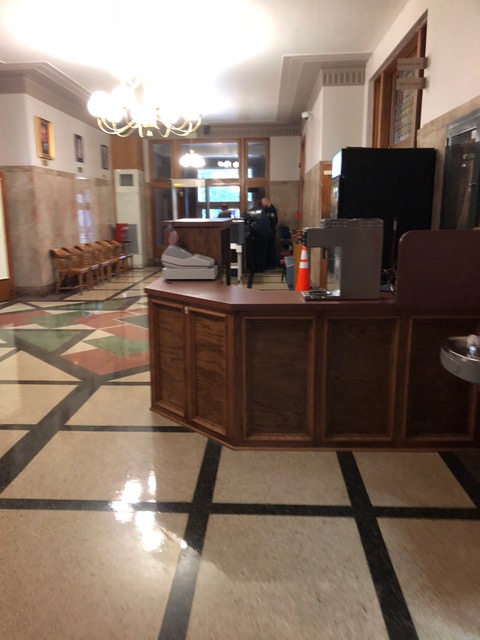
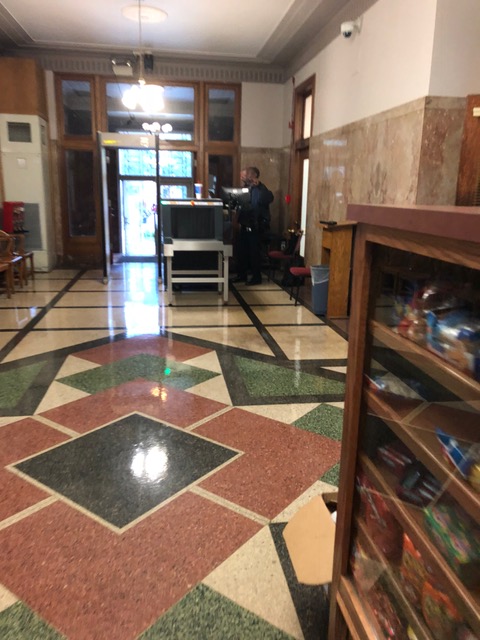
Meanwhile, two private security guards and a Houma police officer have taken over security at the Terrebonne Parish Courthouse following the high sheriff’s refusal to do so even though state statutes clearly say:

  • “Court criers are to be provided by the sheriff of each parish to each district judge.”
  • “The crier of a court (notice this is not restricted to Orleans) shall attend all sessions thereof, under the direction of the judge shall open and close court at each session, and maintain order and decorum in the court room, and shall perform such other duties as are assigned to him by law, the court, or the sheriff.” (emphasis added)
  • “Each sheriff or deputy shall attend every court that is held in his parish…”
  • “Security in the courthouse is the responsibility of governing authority (Gordon Dove), but an agreement may be made between the parish officers and the building to share the expenses.”
  • “The principal functions of the criminal sheriff are that of being keeper of parish jail and executive officer of the Criminal District Court.”

Larpenter tried to pull rank on the judges by refusing a request by Judge Randal BETHANCOURT to provide more security details assigned to the courthouse. Larpenter demanded more pay for doing so and the judges said no dice. That standoff more or less backed the judges into a corner by forcing them to retain private security and municipal police officers.

Following the dispute over additional security vs. additional pay, Larpenter took photographs of inmates being transported to court and being held in holding cells until being called for their hearings and arraignments.

Armed with the photographs, Larpenter called the State Fire Marshal down on the court, apparently for the overcrowded conditions in the cells.

A little background is in order here. The State Fire Marshal, like the State Superintendent of Police is a position filled by appointment of the governor but no governor in his right mind would do so independently, i.e. without the blessings of the Louisiana Sheriffs’ Association. Make no mistake, the sheriffs’ association dictates to every governor who shall fill the positions of Secretary of the Department of Public Safety and Corrections, State Fire Marshal and State Superintendent of Police. Ergo, Larpenter felt sufficiently confident to call in the big boys on the judges—big boys that his association props up.

Down and dirty politics at the local level? Damned right and normally that would be a lethal weapon given the formidable alliance of the sheriffs’ association, Secretary of Public Safety, State Superintendent of Police and State Fire Marshal. In case no one has been paying attention, those are the preeminent law enforcement agencies of the state. You generally don’t cross swords with that kind of power.

Larpenter then goes to the local press with his brainstorm for a great cost-cutting measure: video arraignments.

But that was only a temporary setback as the judges came back with their own “gotcha.”

First, they issue an order banning all video arraignments, thereby forcing Larpenter to bear the costs of transporting more than 150 prisoners for hearings two weeks ago.

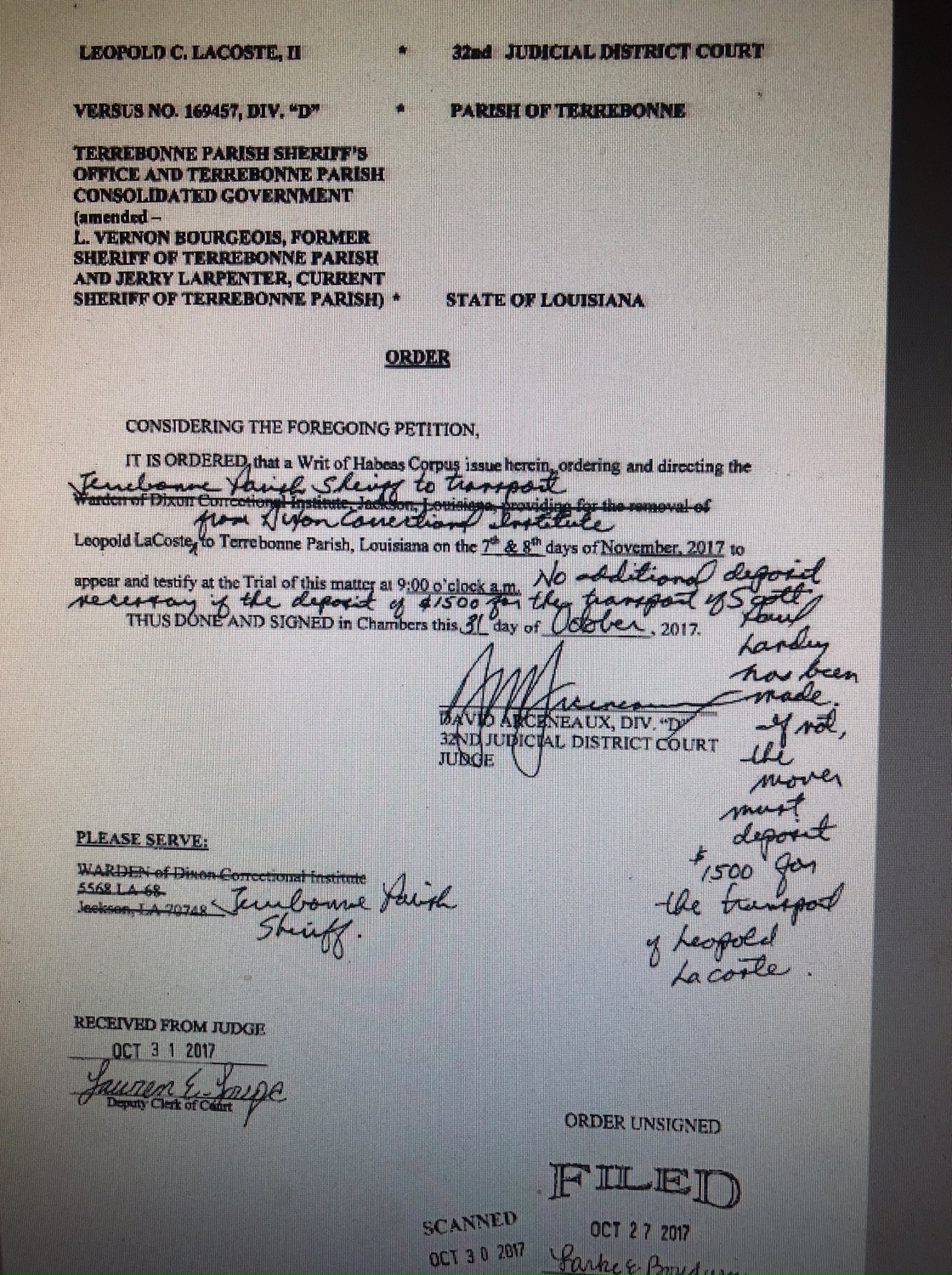
Then, Judge David Arceneaux signed an order in which he struck through language requiring the warden of Dixon Correctional Institute in East Feliciana Parish, 120 north of Houma, to transport a prisoner from the facility to Houma and back. Judge Arceneaux then wrote in longhand, “Terrebonne Parish Sheriff to transport from Dixon Correctional Institute,” adding that Larpenter was to deposit $1500 for the cost of transporting the prisoner.

Needless to say, all this has set off a minor war in the 32nd JDC. Larpenter sputtered and fumed but Bethancourt replied it was all Larpenter’s fault, supposedly for balking at providing more security for the courthouse.

Regardless whose fault it is for the situation to have deteriorated so badly, it has morphed into a very interesting little turf war that isn’t like to end soon—or well. And it promises to be a fight worthy of the sordid reputation of Louisiana politics.

The number two spectator sport behind football.

In other words, fun.


Read Full Post »

I was in attendance at one of my grandchildren’s school Veterans’ Day programs on Thursday and unable to attend the first meeting of the Louisiana State Police Commission (LSPC) in several months but suffice it to say something major is brewing with this newly-made over body.

And whatever it is doesn’t to appear to bode well for the Louisiana State Troopers’ Association (LSTA).

It was the first meeting of the commission since August which, coincidentally, was also the last meeting for former Chairman State Trooper T.J. Doss and former Vice Chair Monica Manzella. Both have since resigned and Doss, LouisianaVoice is told, has been on extended sick leave.

Doss was succeeded to the chairman’s position by Baton Rouge attorney Eulis Simien, Jr. and Dr. Michael W. Neustrom of Lafayette replaced Manzella as vice chairman.

But most puzzling was the executive session entered into by the commission.

When the motion was made to go into closed session the belated reason given was to discuss pending litigation—even though there is no pending litigation at the present time against the commission.

Upon exiting, however, commission legal counsel Lenore Feeney amended that reason, saying the executive session was for the discussion of “allegations of misconduct,” according to some in attendance.

And upon returned from behind closed doors, commission members were said to be in a much fouler mood than when they went in, an indication there may have been something a little more intense taking place out of sight of attendees.

Simien, normally an amiable sort, immediately launched into a lecture to those there about how business would be conducted differently in the future and that decorum would strictly adhered to.

If there is to be any investigation of “alleged misconduct,” it could be on one or both of two issues: that San Diego trip taken by State Police in October of 2016 and which resulted in disciplinary action against three troopers who have appealed their discipline to the commission.

The commission voted to consolidate the three appeals into one case and also decided to discard the non-report of Natchitoches attorney Taylor Townsend who was paid $75,000 to investigate and report on possible illegal campaign contributions by the LSTA to various politicians.

The campaign contributions were actually made through the LSTA’s executive director David Young’s personal checking account. Young subsequently billed the association for reimbursement in an apparent effort to circumvent state law prohibiting political activity by state classified employees.

Taylor’s contract, for which he was paid $75,000, called for him to investigate the matter and submit a report of his findings to the LSPC. Instead, he simply told the commission that he recommended “no action” be taken on the matter and the board, which had a completely different makeup at that time, accepted his report.

Since then, the entire board membership, as well as its executive director, has changed dramatically, with almost all the members resigning for various reasons.

Townsend has yet to submit a report the board even though he has been asked to do so on several occasions.

Now, apparently, with a new board in place—with the exception of two positions which remain vacant—a change of heart has taken place and the commission is at least acting like it is serious about investigating the contributions.

One thing is for certain, however:

If the commission was unsure of the real reason for Thursday’s executive session, that can only mean its purpose was illegitimate to begin with. There are specific reasons for executive sessions and the law is narrowly written so as to prevent abuse of the state’s open meeting laws.

To give one reason going into executive session only to change the reason upon exiting is subterfuge in its most blatant form and an action that thumbs its nose at the law itself—from an agency whose very purpose is to ensure compliance with the law.

If there is to be an executive session, public bodies in Louisiana are required to give notice in advance, as an agenda item—in other words, in writing—and to give the reason. Anything else is a lie. They can’t make up the rules on the fly. And they certainly can’t go into closed session and decide the reason for the secrecy after the fact.

Any legal counsel who advises a public agency, body, board, or commission should know the state’s open meetings law (R.S. 42:11) and the Executive Session provision (R.S. 42:16) forward and backward. That requirement comes with the job. http://parlouisiana.org/wp-content/uploads/2016/03/Open_Meetings_Law.pdf

We thought they had learned that in one memorable meeting several months ago when Townsend suggested an executive session and when asked the reason, said—with a perfectly straight face—“We don’t have to give one.”

Uh…yes you do. And it’s more than a little disturbing that it took a layman to inform him of the law at that meeting.

Read Full Post »

Welsh Alderman Jacob Colby Perry is the second defendant in recent weeks to prevail against the so-called SLAPP lawsuits and in so doing, may teach the plaintiffs a little economic lesson.

SLAPP is an acronym for strategic lawsuits against public participation or in a more familiar vernacular, they could simply be called frivolous or harassment lawsuits. There intent is precisely what the acronym means: to prevent critics from participating in public discourse by filing costly lawsuits against critics.

On Tuesday, 31st Judicial District Court Judge Steve Gunnell dismissed all four defamation lawsuits against Perry and in finding the litigation to be without merit, he assessed the four plaintiffs with court costs and Perry’s attorney fees.

An affidavit filed with the court by Perry claims those attorney fees to be $16,000, or $4,000 per plaintiff which would make the idea of a SLAPP suit seem somewhat counterproductive in that it cost the plaintiffs pretty tidy sums of money and they still didn’t shut him up.

Judge Gunnell held off making a decision as to whether or not the suit should be dismissed with or without prejudice until he conducts further research on the matter. With prejudice would mean the plaintiffs would be unable to resurrect the lawsuit while a dismissal without prejudice would leave the plaintiffs open to pursue the suit at a later date.

“The legislature finds and declares that there has been a disturbing increase in lawsuits brought to chill the valid exercise of the constitutional rights of freedom of speech and petition for redress of grievances,” Perry said in his Memorandum of Support for the Special Motion to Strike pursuant to the state’s anti-SLAPP legislation. “The legislature finds and declares that it is in the public interest to encourage continued participation in matters of public significance, and that this participation should not be chilled through abuse of the judicial process. To this end, it is the intention of the legislature that the Article enacted pursuant to this Ace shall be construed broadly,” his memorandum said.

LouisianaVoice recently prevailed in another SLAPP suit for defamation and was also awarded attorney fees, though substantially less than Perry’s award.

Perry has openly questioned the need of a town of 3,200 residents for 18 police cars, a budget of $593,000 for patrol, $295,000 for police communications and a projected police department expenditure for the entire year of nearly $1.1 million, or nearly $114,000 in excess of the department’s budget. That amount includes a $76,120 salary for Police Chief Marcus Crochet, an amount that represents a 37.5 percent increase in his base pay. And that doesn’t count the $6,000 in annual supplemental pay from the state.

Despite the fiscal drain on the city budget, Crochet created a separate account called “Welsh Police Department Equipment & Maintenance and has diverted more than $178,000 from traffic fines into that account instead into the city’s general fund—all with the acquiescence of the mayor, one of four plaintiffs who sued Perry for DEFAMATION.

Mayor Carolyn Louviere, her daughter, Nancy Cormier; her son, William Johnson, and Crochet all filed separate defamation suits and all four used the same attorney, Ronald C. Richard of Lake Charles, to do so.

Not only that, but Perry was on the receiving end of several other negative actions:

  • A recall petition was started against him while he was in Japan on military orders, serving his annual two-week training;
  • Postcards were mailed to Welsh residents that depicted Perry and Andrea King, also a member of the Board of Aldermen, as “terrorists” (See story HERE) and that Perry violated campaign finance laws by failing to report income from a strip club in Texas of which he was said to be part owner and which allegedly was under federal investigation for prostitution, money laundering and drug trafficking (See story HERE);
  • He was removed from the town of Welsh’s Facebook page (most likely the least offensive of the reprisals.

Each of the nuisance suits say essentially the same thing: that Perry besmirched the reputations of her honor the mayor, both of her children, and the bastion of law enforcement and fiscal prudence, Chief Crochet.

And Mayor Louviere, who inexplicably wants to build a new city hall when the town is flat broke, is currently under investigation by the Louisiana Board of Ethics, according to the Lake Charles American Press AMERICAN PRESS. She also wants to shut down a bar that just happens to be adjacent to a business owned by her son.

And her son, William Joseph Johnson, who Perry says used his mother’s office in an attempt to shut the bar down, has a story all his own.

Johnson, back in 2011, was sentenced in federal court to serve as the guest of the federal prison system for charges related to a $77,000 fraud he perpetrated against a hotel chain in Natchitoches between October 2006 and January 2007. And that wasn’t his first time to run afoul of the law.

At the time of his sentencing for the Louisiana theft, he was still wanted on several felony charges in Spokane County, Washington, after being accused of being hired as financial controller for the Davenport Hotel of Spokane under a stolen identity, giving him access to the hotel’s financial operations and then stealing from the hotel.

The only thing preventing Spokane authorities from extraditing him to Washington, Spokane County Deputy Prosecutor Shane Smith said, was that “we just don’t have the funds to bring him back.” The Spokane Review, quoting court documents, said, “Police believe Johnson is a longtime con artist who has swindled expensive hotels across the country.” (Click HERE for that story.)

“William Joseph Johnson, Jr. remains on federal probation,” Perry said. “He has yet to pay back all of the restitution that he owes.

In his lawsuit against Perry, Johnson says he “has a long-standing positive reputation in his community and parish” and that he (Johnson) suffered “harm to reputation (and) mental anguish.”

In a written statement following the ruling, Perry said:

“I am very pleased with the outcome of this matter,” Perry said. “I look forward to returning to the job that the People of Welsh elected me to perform. I also applaud my experienced legal team for their outstanding work.

“The rights of citizens to engage in the decision-making of government and provide input are unique to our country. These unique values make our country great. And, more Americans

should participate in government today.

“SLAPPs infringe on the rights granted to the citizens of the United States of America. Litigation should not be used to censor, silence, and intimidate those who are only exercising their rights as an American.

I am proud to be a citizen of a state, the State of Louisiana which is one of 28 states in the United States, that has implemented Anti-SLAPP laws to protect the Constitutional rights of its citizens from frivolous lawsuits filed by lawyers overzealous for clients and publicity.”

There was no immediate word on whether or not Richard would appeal the decision on behalf of his clients.

Read Full Post »

Louisiana State Police (LSP) has suspended three State Troopers and shut down a cooperative program with 44 parishes from Webster to Jefferson, from Calcasieu to East Carroll following a months-long investigation by New Orleans television reporter Lee Zurik that revealed the troopers were paid hundreds of thousands of dollars in overtime they may not have actually worked.

The action to shut down Local Agency Compensated Enforcement (LACE), a program in which state police are paid to conduct traffic patrol for local district attorneys, came after Zurik and New Orleans FOX 8 TV station surveillance found that troopers were in their homes much of the time for which they were being paid for doing patrol.

State Police Superintendent Col. Kevin Reeves, immediately upon learning of the Zurik findings, ordered the SUSPENSION OF THE LACE PROGRAM and also ordered a criminal investigation into what could ultimately be determined as payroll fraud.

Under the program, local district attorneys contract with LSP for the patrols. The parish keeps all fines written by the troopers and reimburses LSP for troopers’ overtime salaries.

The three troopers who were suspended, all from Southeast Louisiana and New Orleans, combined to receive some $340,000 in LACE payments. The three troopers who were suspended, their salaries, their years of service, and their LACE payments over the past year, in parenthesis, include:

  • Master Trooper Daryl J. Thomas, a veteran of 22 years earning $89,300 ($150,000 in LACE payments);
  • Hazmat Specialist Eric Curlee, 19 years with LSP earning $99,800 ($100,000 LACE);
  • Byron G. Sims, polygraphist, 22 years with LSP, earning $109,000 ($90,000 LACE).

A fourth trooper under investigation is already out on sick leave and has not been suspended as yet. Because he has not yet been suspended, his name was not immediately available.

LouisianaVoice revealed in August that former Louisiana State Police Commission (LSPC) member Monica Manzella, as part of her duties as an assistant city attorney for the City of New Orleans, signed off on LACE contracts between the city and LSP but she signed the contracts before being appointed to LSPC and she had no additional oversight responsibilities.

A retired State Trooper said that abuse of the LACE program is not restricted to the New Orleans area and that “there are dozens of troopers out there who have been less than honest on their LACE timesheets. And it’s been going on for years,” he said.

A 29-page report by the State Office of Inspector General in 2010 would seem to back up that claim. The REPORT, dated April 27, 2010, examined overtime for employees of both LSP and the Department of Health and Hospitals. It said that as much as 30 percent of all LSP overtime in 2008 could be attributed to LACE. Even then, it was noted that one trooper earned more than $80,000 in overtime pay.

A story by LouisianaVoice on Dec. 15, 2015, revealed that Trooper JIMMY ROGERS (now retired) was disciplined by former State Police Superintendent Mike Edmonson in 2010 to a 240-hour reduction in pay for 30 pay periods (60 weeks), representing a penalty of more than $4,800. But on Nov. 13, 2015, it was revealed by then-Lt. Col. Charles Dupuy that Rogers was allowed to make up for the suspension by working LACE patrol.

Dupuy said in his letter to then-Troop D Commander Capt. Chris Guillory that from Jan. 6, 2011, to Aug. 9, 2011, “Trooper Rogers worked 16 LACE overtime details in violation of (policy) in effect at that time.”

Guillory told Internal Affairs investigators he was unaware of the policy and that he failed to inform Rogers’s immediate supervisor that Rogers was serving a disciplinary action.

LSP Public Information Officer Doug Cain told LouisianaVoice that subsequent to Zurik’s revelation of his findings, State Police Superintendent Col. Kevin Reeves immediately ordered the criminal investigation and the statewide shutdown of LACE.

Cain said there are three steps to the investigation. First, there will be the criminal investigation, followed by an Internal Affairs investigation. Following the IA investigation’s report, an administrative investigation would be conducted and a decision made on disciplinary action against those involved. A decision will be made on reinstatement of the LACE program pending the outcome of the department’s evaluation of the program.

“We hope to re-start the program at some point,” he said.

Unfortunately, the latest revelations by Zurik are nothing new and that this type of payroll chicanery has been going on for years.

The story of payroll fraud by some LSP Troopers is old news. It has been reported time and time again but no action is taken until the press gets wind of it. Zurik is to be commended for his dedication by conducting a surveillance operation. LSP has yet to learn that Lee did exactly what LSP should have been doing all along.

Any Trooper that spends his time at home while he is supposed to be working can only accomplish that feat with the tacit or purposeful approval of supervision. LSP has yet to hold a single supervisor accountable for failure to supervise troopers who write their set number of tickets (quota) and go home.

Let’s look back at Troop D. There were two troopers who were allowed to resign amid similar accusations. Their supervisors faced zero punishment for the actions they allowed. The common denominator of the two troopers was shift Lieutenant Paul Brady of Beauregard Parish. He supervised both Jimmy Rogers and RONNIE PICOU.

Picou was initially terminated, later allowed to resign, after an investigation revealed massive absences from his shift to include 50 shifts with no work product. LSP failed to even address the partial absences from duty. Troopers anonymously reported Picou for his actions. The response was to give the investigation over to his friends, Capt. Chris Guillory and now retired Lt. Jim Jacobsen.

Guillory cleared Picou and doubled down by allowing him to continue with his practice of writing an assigned number of citations and taking the remainder of the shift off. Brady replaced Jacobsen as the supervisor for Picou upon Jacobsen’s retirement. Picou was finally terminated after public records requests by LouisianaVoice. LSP could have surveilled Picou just as Zurik did but chose to not to. The internal investigation files showed Picou was committing payroll fraud but he was never held accountable for his actions. Nor was Brady.

Jimmy Rogers resigned suddenly after allegations of payroll fraud involving LACE. A trooper who worked with Rogers informed LouisianaVoice that Rogers did exactly what the troopers who are now under investigation did. He wrote his assigned number of citations and took the rest of the shift off. Rogers allegedly took it a step further by writing LACE citations on regular state funded shift and claimed them as overtime. This is more egregious than what Zurik has discovered. Rogers was allowed to resign.

There were efforts to obtain the investigation files on Roger’s departure from LSP. LSP has enthusiastically kept them from public view. An audit of radio logs, LACE citations, and dash cam videos will confirm that Roger’s conduct was more egregious than what Lee Zurik has discovered. We think it is time that LSP held former Trooper Rogers accountable for his actions. The statute of limitations has yet to expire on felony crimes. Picou’s supervisor, Paul Brady was not punished, according to our public records requests.

When it comes to investigating payroll fraud, LSP appears to be incapable or unwilling—or at least so it seemed under Edmonson’s and Secretary of Public Safety and Corrections Jimmy LeBlanc’s leadership. The media seemed to figure it out. When a crime is committed, do an investigation. That investigation might include surveilling the target of the investigation. It seems that investigatory prowess is lost when investigating their own.

One thing seems certain: Reeves did not deserve the mess he inherited from Edmonson.

Read Full Post »

« Newer Posts - Older Posts »