Feeds:
Posts
Comments

Archive for the ‘Corruption’ Category

In case you’ve ever taken the time to wonder why our legislature has been unable—or unwilling—to effective address the looming fiscal crisis for the state, here’s a quick lesson in civics that may help you understand the real priorities of our elected officials and the forces that motivate them.

Members of Congress are advised to spend four hours per day FUNDRAISING, or on “call time.” That’s time to be spent on the telephone raising campaign contributions—if they want to be re-elected.

They are also told they should spend one to two hours on “constituent visits,” which often translates to meeting with lobbyists and campaign contributors. That leaves two hours for committee meetings and floor attendance, one hour for something called “strategic outreach,” or breakfasts, meet and greets, press interviews (read: Sen. John Kennedy), and one hour “recharge time.”

It doesn’t take a mathematician to see that we’re paying big salaries for these guys to actually work only about two hours per day for only part of the year.

Another way of putting it is we’re paying big bucks for them to spend twice as much time raising campaign contributions as actually doing the work of the people who, in theory at least, elected them.

That’s in theory only, of course. The truth is special interests such as banks, hedge funds, big oil, big pharma, the military-industrial complex, the NRA, and other major corporate interests—especially since the Supreme Court’s Citizens United decision—turn the gears of democracy while letting the American middle class delude itself into thinking we actually affect the outcome of elections.
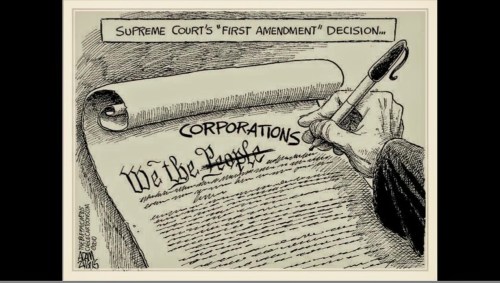
Now, take that image and move it down to the state level and you have a microcosm of Congress.

The numbers are smaller, of course, given the smaller House and Senate districts from which candidates run but the model is the same.

And that is precisely the reason nothing gets done in regard to resolving the financial plight of the state.

Corporate tax breaks, tax exemptions, and tax credits have eroded the state budget until the onus now falls on the individual taxpayers while companies like Walmart enjoy Enterprise Zone tax credits for locating stores in upscale communities across the state.

Petro-chemical plans along the Mississippi River and in the southwestern part of the state enjoy millions of dollars in tax breaks for construction projects that produce few, if any, new permanent jobs.

And who is front and center in protecting the interests of these corporations?

That would be the Louisiana Association of Business and Industry (LABI), first created with the intent of breaking the stranglehold of organized labor back in the 1970s and now focused on maintaining lucrative tax incentives for its membership.

LABI has four primary political action committees: East PAC, West PAC, North PAC, and South PAC.

LouisianaVoice has pulled the contributions of LABI, its four PACs.

For lagniappe, we’ve also thrown in contributions from pharmaceutical and oil and gas interests. The latter list offers a clear-cut explanation of why efforts to hold oil and gas companies accountable for damage to Louisiana’s coastal marshland have died early deaths.

You will notice in reviewing the reports that LABI, while making individual contributions, pours most of its money into its four PACs, which then make the direct contributions to the candidates.

Enjoy.

LABI CONTRIBUTIONS

EAST PAC CONTRIBUTIONS

WEST PAC CONTRIBUTIONS

NORTH PAC CONTRIBUTIONS

SOUTH PAC CONTRIBUTIONS

PHARMA CONTRIBUTIONS

OIL AND GAS CONTRIBUTIONS


Read Full Post »

It was Abraham Lincoln’s Secretary of War SIMON CAMERON who is credited with having defined an honest politician as one “who, when bought, stays bought.”

And it was Louisiana’s own Sen. JOHN BREAUX who told a reporter in 1981, “My vote can’t be bought, but it can be rented.”

Whether bought or rented, contributions to legislators by nursing home interests appear to have been sound investments when it shelled out a total of $27,250 to six state senators, members all of the Health and Welfare Committee, who obligingly voted down a BILL by fellow Sen. Conrad Appel of Metairie that would have given more home health services to the elderly as an alternative to nursing homes. Make that $35,250 if you count contributions to committee chairman Fred Mills who did not vote on the bill because of a conflict. He owns an interest in a Breaux Bridge nursing home and received $8,000 in contributions from the Louisiana Nursing Home PAC.

But the two members who voted in favor of Appel’s Senate Bill 357, Sens. Dan Claitor (R-Baton Rouge) and Ed Price (D-Gonzales) apparently didn’t stay bought—or rented—despite their having received $5,500 between them from the Louisiana Nursing Home PAC. They probably won’t be receiving any further contributions from the nursing home interests.

Appel may also be crossed off their list since he sponsored the bill despite having received $3,500 from the same PAC.

Mind you, the contributions looked up hurriedly by LouisianaVoice by no means constitute the total dished out by nursing home interests, particularly individual nursing homes and their operators. The only contributions searched were from the Louisiana Nursing Home PAC and Elton Beebe of Ridgeland, Mississippi, who operates a string of nursing homes in Louisiana.

The committee voted 6-2 to kill the bill despite the support of AARP lobbyist Andrew Muhl who apparently was no match for the Louisiana Nursing Home Association, which represents about 250 nursing homes in Louisiana—or its money.

Mills, while not voting, did not let his nursing home ownership deter him from speaking against Appel’s bill, calling managed care “too risky.”

Senators voting against the bill and their contributions from nursing home interests included:

  • Yvonne Dorsey Colomb (D-Baton Rouge): $6,000;
  • Norbert “Norby” Chabert (R-Houma): $6,250;
  • Regina Barrow (D-Baton Rouge): $5,000;
  • Gerald Boudreaux (D-Lafayette): $5,000;
  • Dale Erdy (R-Livingston): $4,000;
  • Jay Luneau (D-Alexandria): $1,000.

Voting no and their contributions:

  • Dan Claitor (R-Baton Rouge): $4,000;
  • Ed Price (D-Gonzales): $1,500.

Perhaps we misunderstood John Kennedy’s intent when he said, “Louisiana doesn’t have a revenue problem, it has a spending problem.”

Click on the link to see a partial list of NURSING HOME CONTRIBUTIONS to Louisiana’s elected officials since Jan. 1, 2011. Remember, this is just a partial list.


Read Full Post »

That’s right folks.

Almost two years after being asked to investigate the rape of a 17-year-old girl in the Union Parish jail by a man already convicted of aggravated rape and awaiting sentencing, Attorney General Jeff Landry’s office finally took its case before a Union Parish grand jury.

And guess what?

The grand jury, after reviewing all the evidence provided by Landry’s office, declined to indict Demarcus Shavez Peyton of Homer.

Te refresh you memory, Peyton was awaiting sentencing after being convicted of aggravated rape in a separate case in nearby Claiborne Parish. He was allowed to leave his jail cell and to enter the cell of the 17-year-old, who was being detained after being picked up on meth charges. Peyton was said to have raped the girl not once, but twice

Because the Union Parish Detention Center is run by a commission comprised of the sheriff, the district attorney and several area mayors, the district attorney, rightly claiming a conflict of interest, asked Landry to investigate the matter.

So Landry’s office was handed an investigation of:

  • A rape that occurred at a time, date and location known to investigators;
  • Allegedly committed by a person known to investigators;
  • Committed against a victim also known to investigators.

Yet, the attorney general somehow was unable to build a case against Peyton despite the presence of a witness who said he also was allowed into the victim’s cell with the intent of sexually assaulting her but departed without doing so.

I guess we’ll have to wait and see how the civil suit filed by the victim plays out. While criminal convictions call for proof of guilt beyond reasonable doubt, a civil suit need only show a preponderance of the evidence. An illustration of that is the exoneration of O.J. Simpson on the criminal charges of murdering his wife and Ron Goldman but Goldman’s parents then sued Simpson in civil court and won.

Meanwhile, several questions immediately come to mind regarding the AG’s investigation and the presentation of evidence to the grand jury:

  • Was a rape kit was used by investigators?
  • Was the rape victim interviewed?
  • Was the witness interviewed? Apparently he was, since he admitted that he initially intended to participate.
  • Were DNA samples collected?

We probably will never know the answers to these questions because contrary to Landry’s penchant for issuing glowing press releases to trumpet his wonderful work on behalf of law and order and the American way, his press office was strangely mute on this matter. No press releases this time, thank you very much.

Oh, there was one email response to the Farmerville newspaper editor’s inquiry from Landry’s press secretary that said, “…at a hearing on March 15, members of a grand jury in the 3rd Judicial District were given an opportunity to review all the evidence we had in this matter. After our presentation, the grand jury determined that no formal charges should be filed. While we must respect the grand jury’s decision, it is important to note that our office stands ready to act should new credible evidence arise.”

Well, that’s certainly reassuring.

No effort was made to so inform LouisianaVoice  which, for 18 months, has dogged Landry’s office for updates on the investigation. We were always told that the investigation was ongoing and that no details could be released.

Of course, when details could be released, the attorney general’s office was strangely quiet. But then, we never really expected Landry to go out of his way to keep us in the loop.

But now that the investigation is over and the matter is closed, there’s no reason for Landry’s office to continue to withhold details of his office’s investigation. Accordingly, LouisianaVoice will be making an official public records request for the AG’s file on the investigation.

And now we can turn our attention to another “ongoing investigation” by Landry’s office—one that a lot of people in Baton Rouge will be watching and one which has a much higher profile.

More than 10 months ago Landry’s office was asked to investigate the shooting of a Baton Rouge black man, Alton Sterling, by Baton Rouge police. Landry appears to be dragging his heels on that probe as well and there is growing pressure from the black community to announce his findings. Their voices are considerably louder than that of a young girl raped in a lonely north Louisiana jail cell.

If that Union Parish “investigation” is any indication….


Read Full Post »

Why would DeSoto Parish Sheriff Rodney Arbuckle abruptly resign less than midway through his fifth consecutive term in office?

Arbuckle, who stepped down, effective today (Friday, March 16), attributed his decision, which he said has been a year in the making, to HEALTH PROBLEMS being encountered by one of his grandchildren.

But could there have other overriding factors that prompted his decision? Possibly. There are several prior and ongoing questions involving the DeSoto Parish Sheriff’s Office which, taken together or separately, could have nudged him out the door prematurely.

The first, going back about four years to an investigative audit REPORT by the Legislative Auditor’s Office in Baton Rouge revealed a major issue involving a former deputy sheriff whose private company ran half-a-million dollars’ worth of private background checks through Arbuckle’s office.

The company, Lagniappe and Castillo Research and Investigations, ran 41,574 background checks through the sheriff’s office during the 11-month period between April 1, 2012, and February 28, 2013, the audit report said. That’s 41,574 background checks in a parish that has a population of only 27,000.

Lagniappe and Castillo charged its customers $12 for each background report but paid the sheriff’s office only $3 per report. That represents a profit of more than $372,000 on income of more than $498,000—and sheriff’s office employees actually ran the checks. Robert Jackson Davidson, who retired as chief investigator for the sheriff’s office in May 2013, is listed as 50 percent owner of the company by the Louisiana Secretary of State’s corporate filings.

And then there is the more recent problem of LACE. That’s an anacronym for Local Agency Compensation Enforcement whereby the district attorney’s office pays the salaries of law enforcement officers to beef up traffic patrol for the parish. LACE has been hit with similar problems in State Police Troops B and D when it was learned that troopers were reporting hours worked on LACE detail that were not actually worked.

In the case for DeSoto Parish, it was sheriff’s deputies who fudged the numbers on their timesheets and three of Arbuckle’s deputies have already left under a cloud.

A new investigative audit by the Legislative Auditor’s Office has been ongoing for some time now and that report is also expected to be highly critical of the LACE program and possibly other areas of operation.

Legislative Auditor Daryl Purpera told LouisianaVoice on Thursday that he did not know just when that report would be released. The auditor’s office traditionally sends the head of the agency being audited a management letter in advance of the public release of the report in order to give management a chance to respond in writing. That response is usually included in the release of the audit report. There was no word from Purpera’s office as to whether or not that management letter had been sent to Arbuckle.

A check by LouisianaVoice of about 600 LACE tickets handed out by sheriff’s deputies revealed that not a single LACE ticket was issued to a resident of DeSoto Parish. Every single recipient checked was from other parishes or even from out of state.

Of course, I-49 cuts through DeSoto Parish which would explain at least a high number of out-of-parish motorists’ receiving tickets—but 100 percent would seem somewhat improbable.

Reports by local critics of Arbuckle cite him for purchasing vehicles for the sheriff’s office without going through the public bid process. But sheriffs offices are on a state vendor list that exempts many such purchases from public bid. But on those not exempt, critics claim there is mischief afoot in the way Arbuckle goes about his purchases.

Then there is Arbuckle’s annual budget which reflects revenues of $12.3 million, which is nearly double the $4.9 million of next-door neighbor Sabine Parish, which has a population of 24,200—only a little fewer than DeSoto.

But it’s the office expenditures that are the real eye-openers. Arbuckle’s office had expenditures of nearly $14.1 million for the fiscal year ending June 30, 2017. That is $3.3 million more than the $10.8 million spent by the sheriff’s office in Natchitoches Parish, which has a population of 40,000—and a university. It also is more near three times the $5 million spent by the Sabine Parish Sheriff for the same year.

So, just what did Arbuckle spend all that money on? For starters, the bulk of that $15.2 million, $11.2 million to be exact, went for salaries. It would appear that Arbuckle hired deputies almost indiscriminately. Arbuckle himself was the second-highest-paid sheriff in the state (only the Beauregard Parish sheriff made more).

His department’s salary figures compare with salary expenditures of $3.7 million for Sabine and $7.9 million for Natchitoches.

Even more telling is a comparison of the year-end fund balances for the three sheriffs’ offices. Sabine Parish ended the fiscal year with a fund balance of $7.5 million and Natchitoches Parish had a fund balance of $8.2 million. Arbuckle’s DeSoto Parish Sheriff’s Office, however, finished the fiscal year with a whopping fund balance of $52.2 million.

Arbuckle apparently need not concern himself with the state law that a sheriff is responsible for any operating deficit at the end of his term of office.

DeSoto’s embarrassment of riches was due in large part to the Haynesville Shale and a couple of major facilities—eight energy companies, International Paper, and SWEPCO—in the parish which accounted for $256.5 in assessments and $3.5 million in property taxes (4.73 percent of total assessed valuation). Both figures would appear to be extremely low.

Arbuckle also is a principal in no fewer than six corporate entities, three of which are for-profit companies. One is a fence construction company and a second is a real estate development firm. The third, and possibly the most significant, is an outfit called Dirt Road Rentals, which rents or leases equipment to oil and gas field companies.

The company was chartered in July 2013, just about the time the Haynesville Shale boom kicked off. With so much activity taking place with the Haynesville Shale, it would seem to be a golden opportunity for a sheriff who, if he chose to do so, could lean on the oil and gas field companies to lease equipment from him lest their trucks get pulled over for traffic offenses.

Which could explain the need for all those extra deputies.

But a sheriff would never stoop to such tactics.

Would he?

Read Full Post »


Read Full Post »

« Newer Posts - Older Posts »


