Feeds:
Posts
Comments

Archive for December, 2013

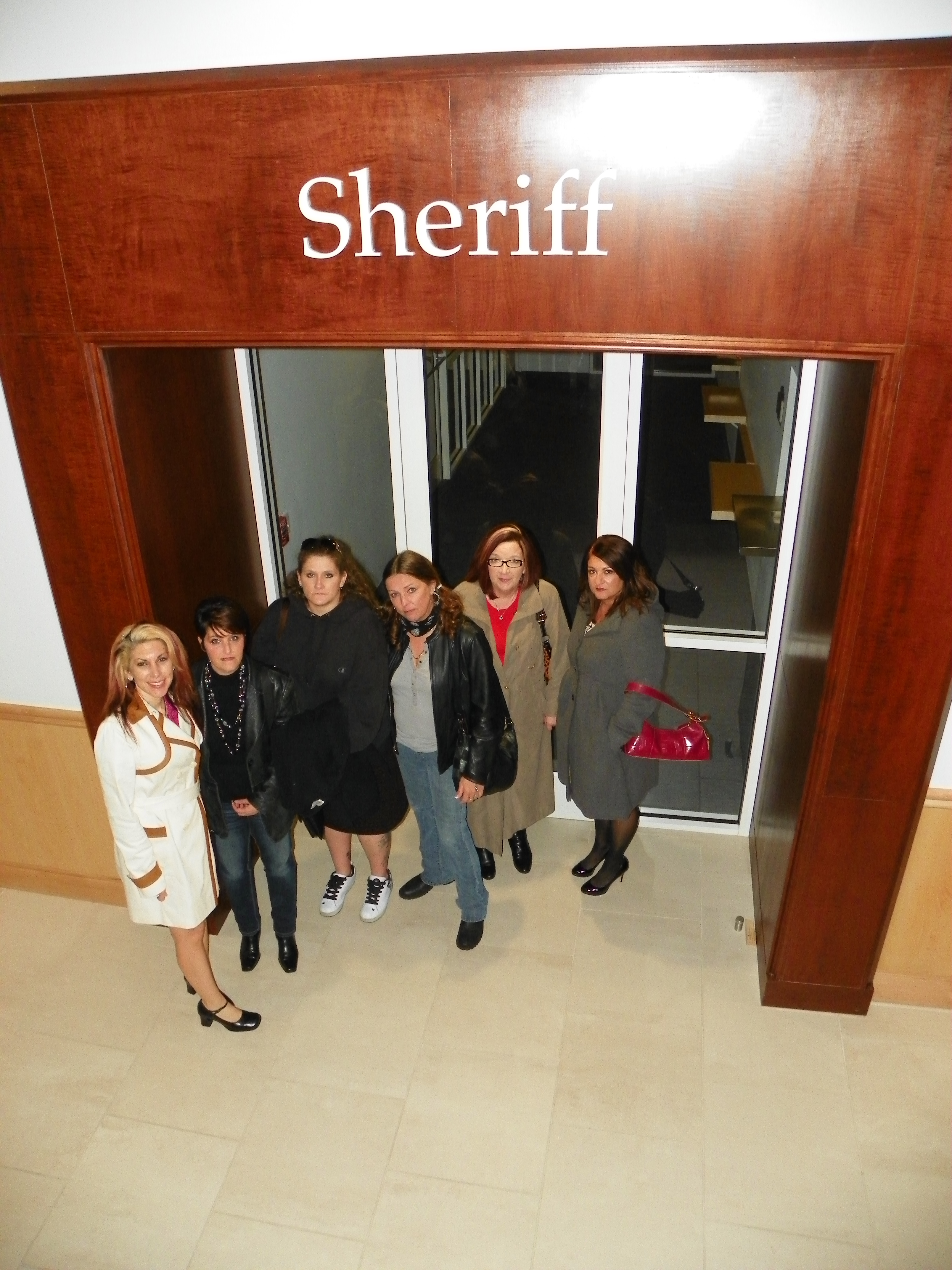
The decades-long controversy surrounding New Bethany Home for Girls in Bienville Parish was renewed last Friday, Dec. 6 when seven former residents of the home returned to Arcadia so that two of the women could file formal charges of sexual assault against the now-defunct home’s owner, Rev. Mack Ford.

(CLICK ON PHOTOS TO ENLARGE):
100_0824

A seventh arrived on Saturday to file her complaint.

Although only two of the six who flew in from North Carolina, Nevada, Florida and Texas, claimed to been sexually abused while living at the home, the others said they were there to lend moral support to the two, one of whom is said to be terminally ill with an inoperable brain tumor.

Sheriff John Ballance, who had his own experience with the home during his career as a state trooper some 30 years ago, met with the women, took the statements of the two claiming sexual abuse, and promised to do everything possible to resolve the matter.

An earlier statement of one of the alleged victims was turned over to state police in Bossier City in October, Ballance said.

In September, Ballance told LouisianaVoice he had picked up a runaway from the home decades ago when he was a state trooper. Instructed by the sheriff’s department to return her to the facility, he said he refused to force her to go back because of her claims of abuse.

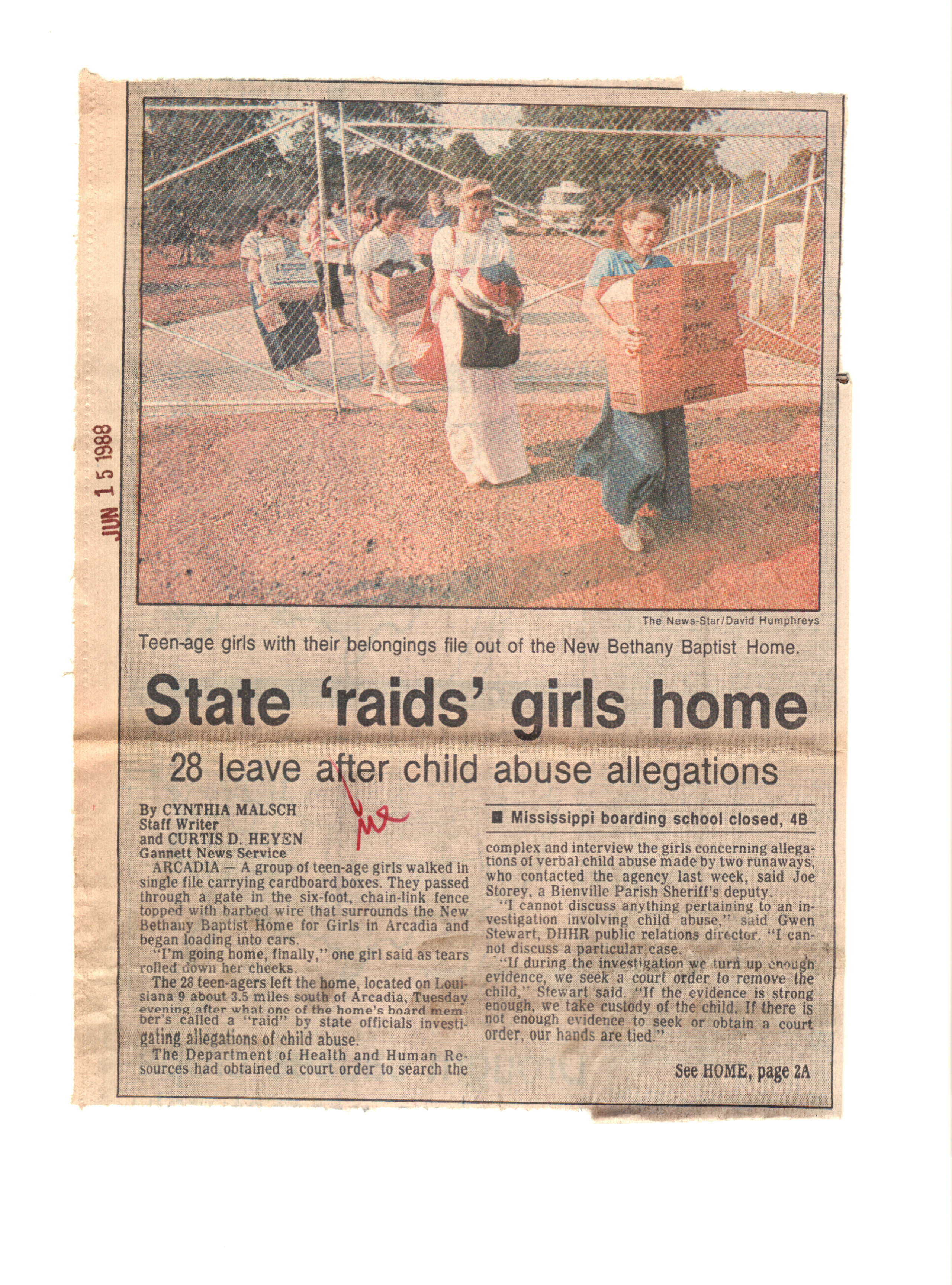
Allegations about beatings, handcuffing and other forms of punishment of girls at the home first came to light when the Baton Rouge Advocate began an investigation of the home in 1974. Editors, however, quickly killed the investigation before any stories could be written and the issue lay dormant until the late 1980s when the Louisiana Department of Health and Human Resources began looking into abuse allegations. In 1988, the state raided the unlicensed home located south of Arcadia on LA. 9 and removed 29 girls from the facility.
PTDC0139

Simultaneous to that raid, the Bethel Home for Wayward Children in Lucedale, Mississippi, was closed down by officials in that state. Six months after the New Bethany raid, however, it remained open and was not closed down until 1992.

There were claims of girls at New Bethany having to clean toilets with their bare hands, being locked in isolation with only a bucket for a toilet, girls being handcuffed to their beds and being made to stand all day with no restroom breaks, beatings with wooden dowels, PVC pipe, paddles, belts and limbs.

A state game warden, interviewed by the Advocate in 1974, said he would take confiscated deer that had been killed illegally by hunters to the home. “On one occasion,” he said, “Ford asked if he could have my handcuffs.”

100_0784

New Bethany Baptist Church (foreground); girls’ windowless dormitory (background).

The public face of New Bethany, however, was quite different. Girls’ quartets would be clad in long dresses and paraded before church congregations to sing, figuratively and literally, the praises of New Bethany in efforts to generate “love offerings” from church members.

A father who pulled his daughter out of the home said, “He (Ford) would have those little girls sing hymns and give testimony to churches and the church members would hit the floor with their knees while reaching for their wallets” to give Ford money for his home.

The claims of physical abuse and rape are not new to the Independent Fundamentalist Baptist (IFB) Church with which New Bethany and Ford are affiliated.

The First Baptist Church of Hammond, Indiana, received a great deal of notoriety over the sexual trysts two of its ministers had with female church members over a period of several years. Their misconduct was subsequently repeated at other churches where they ministered.

And when their behavior was revealed, it was the women victims who were required to stand before the congregation and apologize and ask forgiveness for tempting the men, who invariably went unpunished and indeed, continued to receive near idol status from the congregation.

Likewise, group homes where abuse has been documented tend to receive devout support from area churches. Instead of asking those who run the homes to explain their behavior, their accusers are routinely treated as pariahs while the accused are welcomed as heroes at church rallies on their behalf.

Adherents to IFB dogma, for example, discourage intermarriage or even any contact with those of other religious beliefs, distrust government, favor home schooling, and believe that spankings should commence as early as 15 months of age.

Tampa Bay Times reporter Alexandra Zayas last year was allowed to do what the Advocate refused to do. She wrote a lengthy investigative series on claims of physical abuse at several group homes in Florida. http://www.tampabay.com/faccca/

Just as she found in Florida and as had been found earlier in Texas, Louisiana homes are unlicensed and unregulated by the state, thus allowing the operators free rein in the areas of discipline and education—so long as it is done in the name of religion.

The group homes employ the same textbooks that rely heavily on the Accelerated Christian Education (ACE) and BJU (Bob Jones University) Press curricula—the same resources used by many of Louisiana’s voucher and charter schools being approved by the Louisiana Department of Education. The textbooks eschew traditional science and history courses, choosing instead to apply Old Testament interpretations in their teachings.
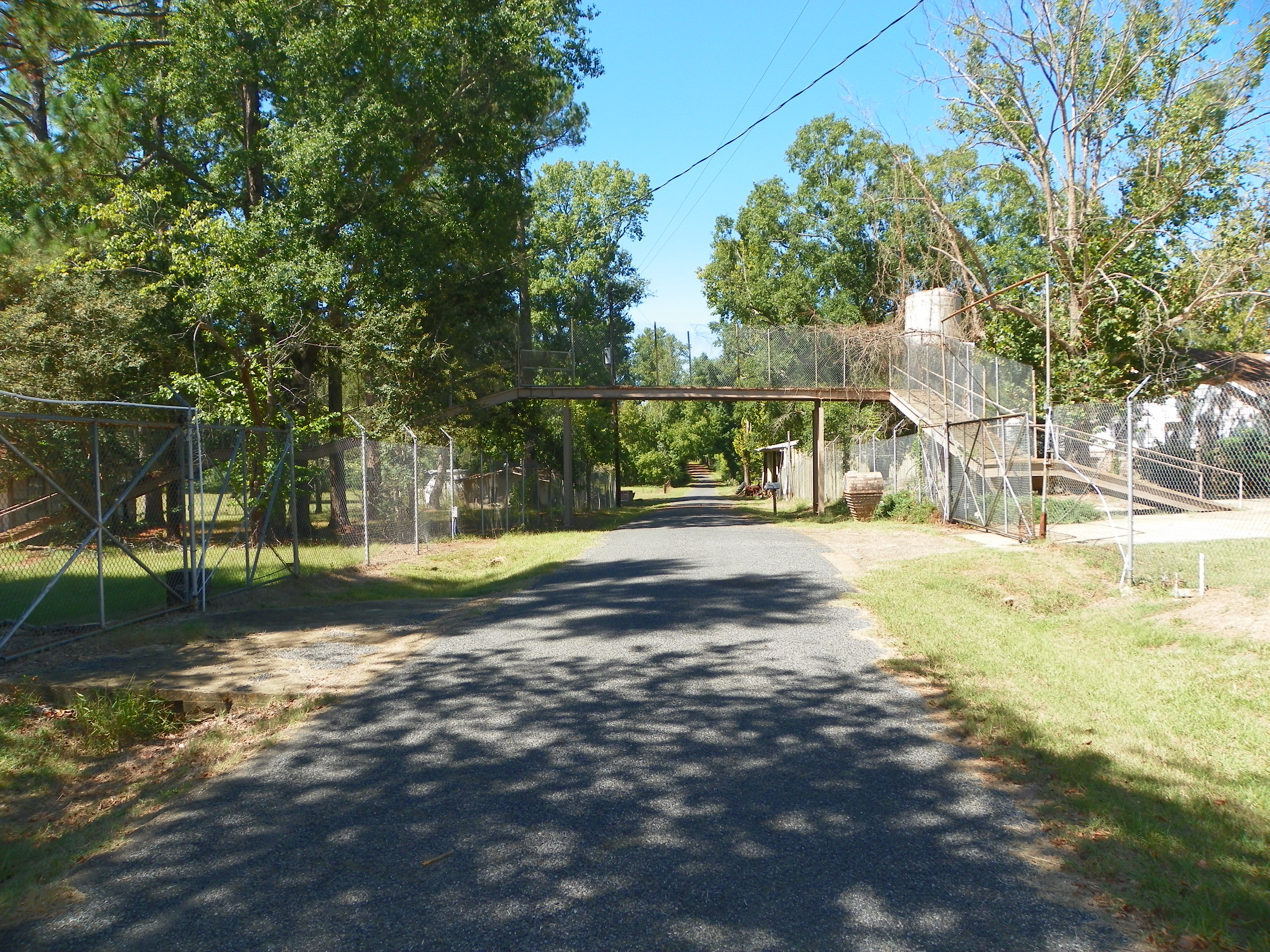
100_0770

Encaged walkway over public road discourages thoughts of escape while walking from one area of New Bethany to another.

Following their meeting with Sheriff Ballance, the women drove to New Bethany and attempted to confront Ford, who instead, refused to talk to them and walked away.
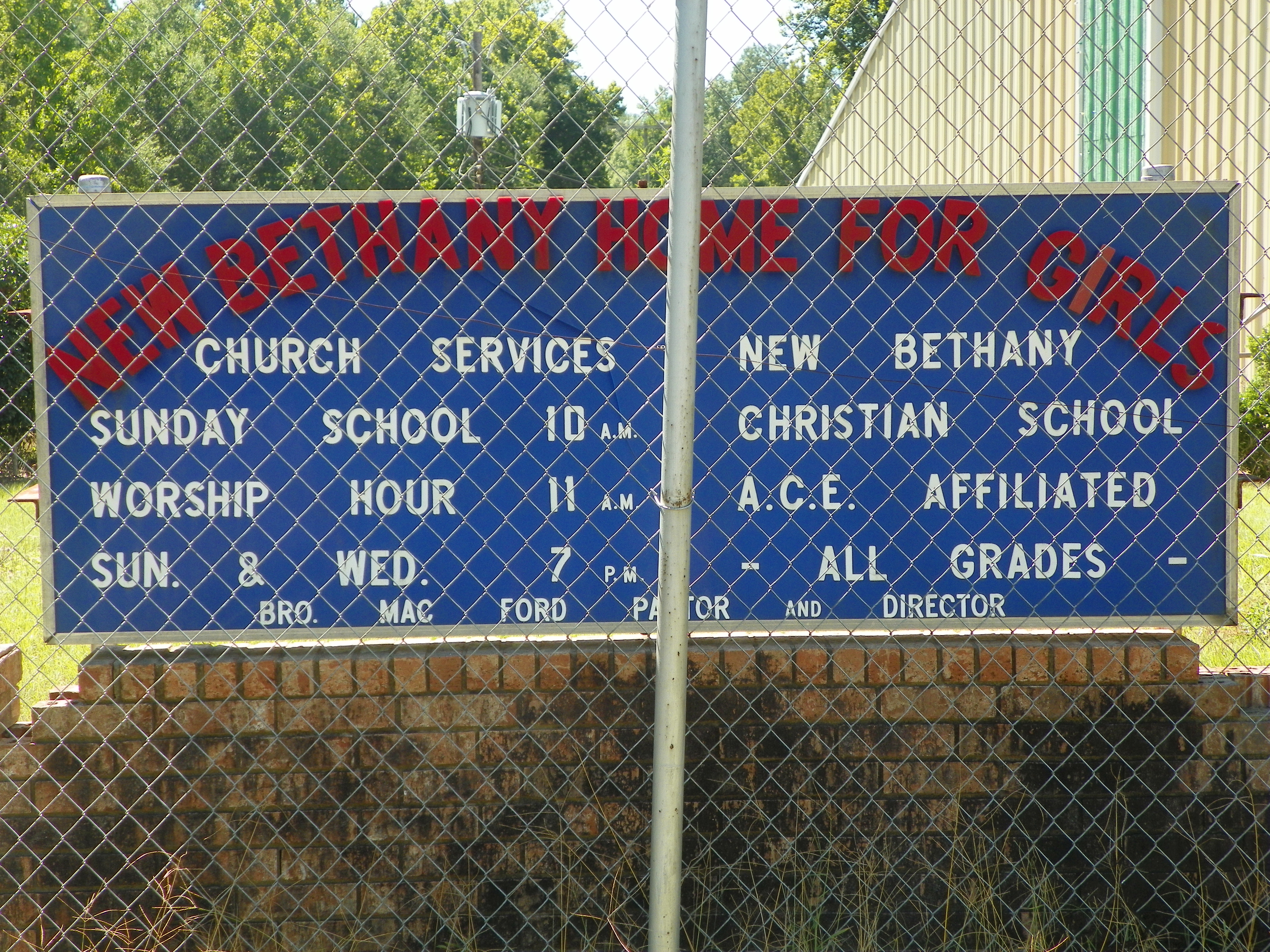
100_0779

Sign displaying times of services remains outside church 21 years after New Bethany’s closure.
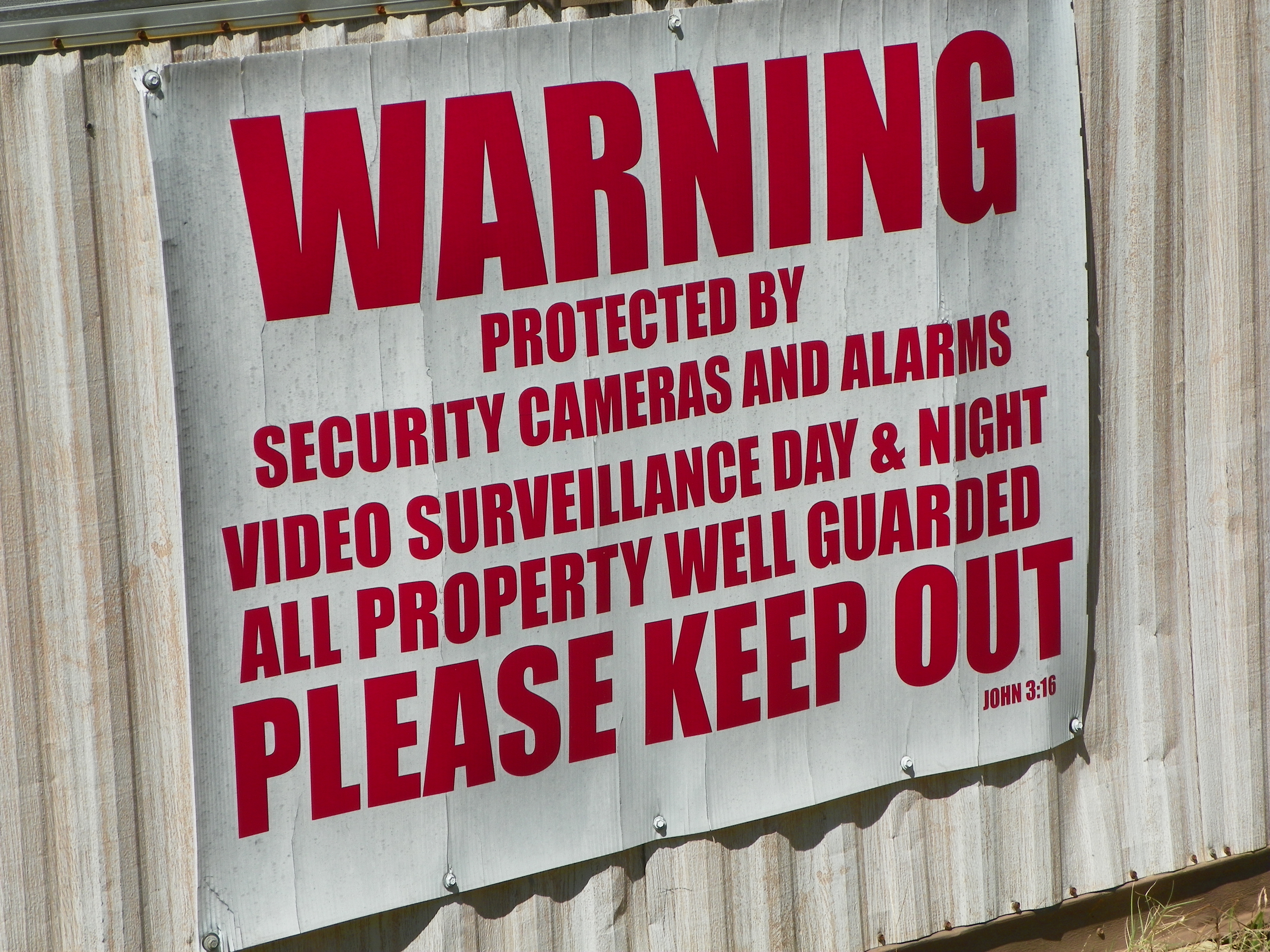
100_0778

Clear message that visitors are no longer welcome at New Bethany Home for Girls or at New Bethany Baptist Church.
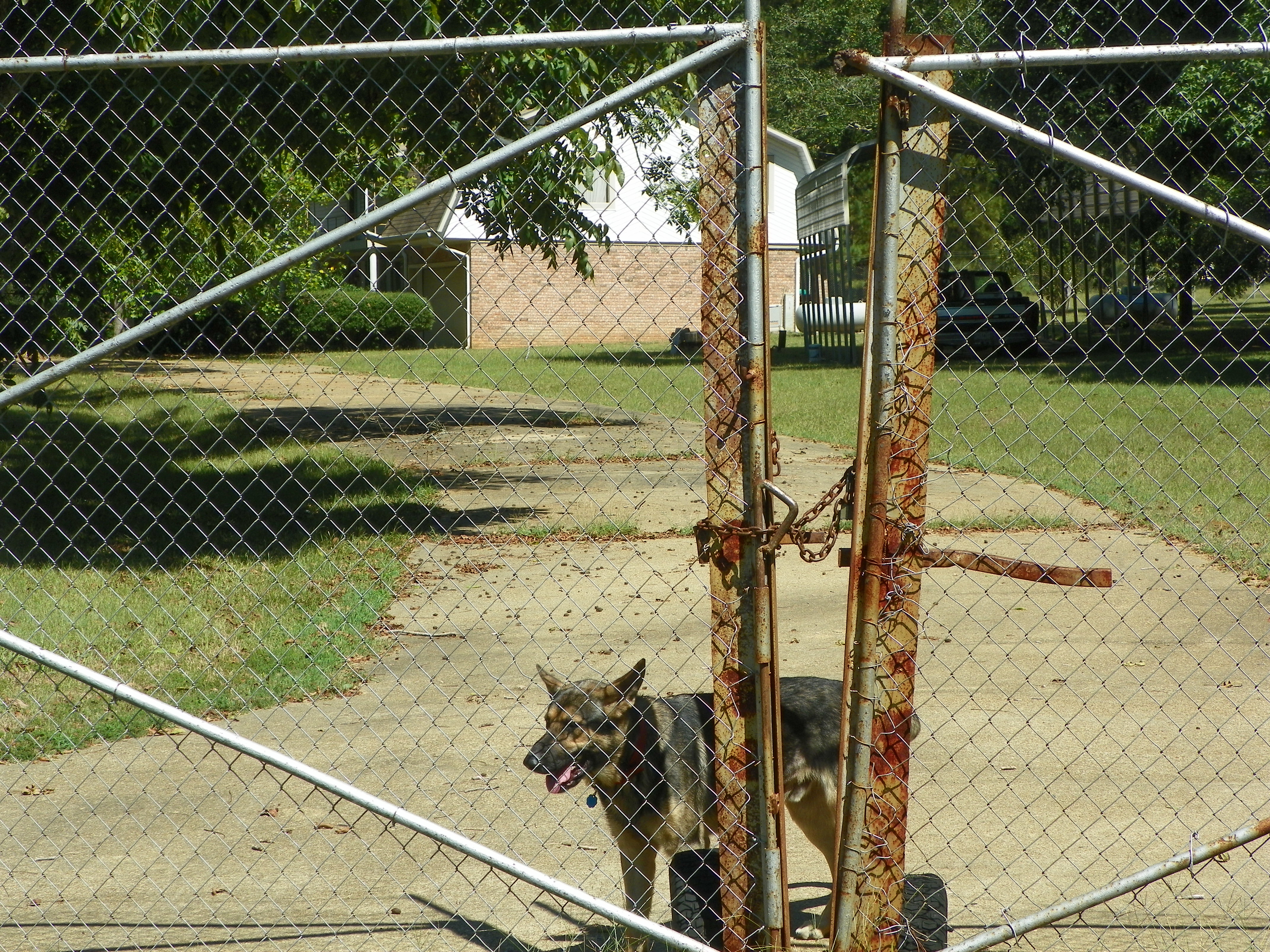
100_0775

And just in case one misses the sign…

Read Full Post »

Something’s not quite right over at the Louisiana Workforce Commission (LWC).

Conflicting dates of employment of an unclassified employee, the awarding of a contract to a vendor whose bid was nearly twice that of two competitors, and appearances on behalf of a state contractor at a Florida convention by a state legislator have flown under the radar until now.

Wes Hataway is Director of the Office of Workers Compensation Administration but the question is just when did he join LWC?

Department of Civil Service records and minutes of the Worker’s Compensation Advisory Council simply do not match up.

Civil Service records indicate that Hataway was hired as an unclassified Assistant Attorney General on Jan. 25, 2010 at $93,600 per year and 13 months later, on Feb. 21, 2011, moved over to LWC as an unclassified Assistant Secretary to then advisory council Chairman Chris Broadwater at an annual salary of $105,000.

Here is what we received from the Department of Civil Service:

“See information below on Wes Hataway. Let me know if you have any questions or need more information.”

Begin Date End Date Agency Job Title Annual Pay Rate
1/25/2010 2/20/2011 Office of the Attorney   General Unclassified Asst Attorney   General 90,000.04 (begin)93,600.26 (end)
2/21/2011 Present LWC-Workforce Support &   Training Unclassified Assistant   Secretary 104,998.40

And indeed, there is a paper trail that appears to support that time frame. A two-page score sheet that evaluated proposals for a fraud detection contract with LWC dated June 22, 2010, includes the signature of Hataway and identifies him as one of the four-member team that evaluated and made recommendations for the contract. It also identifies him as representing the Attorney General’s Office—six months after he was ostensibly named as legal council for the Office of Workers’ Compensation (OWC).

(To enlarge, left click on image):

PTDC0124

PTDC0125

But another document dated Jan. 28, 2010, casts doubts as to Hataway’s status at LWC.

Minutes of the Jan. 28, 2010, meeting of the Workers’ Compensation Advisory Council contain an entry on the fourth and final page which says, “Director Broadwater introduces newly hired AG attorney, Wes Hataway. Wes will serve as General Counsel, and also work on the prosecution of fraud cases.”

MinutesAdvisoryCouncilJan2810

Hataway has since replaced Broadwater as Director of OWC but he regularly consults with Broadwater on pending matters coming before him, according to court documents, according to legal documents.

Broadwater, a Republican from Hammond, was elected to the Louisiana House of Representatives in 2011 but continues to represent workers’ comp insurance companies before the Office of Workers’ Compensation, the agency he once ran.

Broadwater also appeared in a four-minute video at an SAS Institute conference in Orlando, Florida. In that video, he praised the work of the company, which won that 2010 contract with a high bid of nearly $4.3 million.  http://www.allanalytics.com/video.asp?section_id=3427&doc_id=269491#msgs

The three-year contract, which was officially approved on Oct. 7, 2010 retroactive to Aug. 31, 2010, ended last Aug. 30.

The SAS bid was nearly double the bids of IBM and Ultix, each of whom had bids of $2.2 million.

Broadwater, Vice Chairman of the House Labor and Industrial Relations Committee, said in a letter to LouisianaVoice, “My service as vice chair of the Labor & Industrial Relations Committee in no manner alters my duties or the constraints placed upon me under the Code of Governmental Ethics.”

And while claiming that he is prohibited from receiving compensation “from a source other than the legislature for performing my public duties,” he admitted in a legal deposition that he represented insurance clients before OWC and he even admitted that he discussed with Hataway the pending appointment of his former law partner and that he has discussed with Hataway on several occasions matters pending before OWC.

Broadwater also related that Hataway had sought his advice on whether or not he (Hataway) had the authority as director to issue a stay of pending cases without involving the judges to whom the cases were assigned. Broad said in his deposition that he was of the opinion that Hataway did have such power.

Broadwater and Hataway are friends of long standing but that does little to explain why Broadwater would introduce him to council members as a new hire a full year before Civil Service Records and the RFP evaluation and recommendation form reflect any change from his employment status at the Attorney General’s office.

Calling the conflicting dates a clerical error doesn’t fly but then again, it could be just another aspect of the current administration that defies explanation.

Read Full Post »

We came across a series of political cartoons (actually, the link was provided us by our friend John Hays in Ruston) that feature incredibly accurate caricatures (not necessarily complimentary) of Gov. Bobby Jindal.

And even though the artwork is, in all probability, computer-generated, the dialog the author has inserted with the art is spot on and certainly worth sharing.

We attempted to determine the creator, but were unsuccessful. It is our hope he/she will see this and contact us.

That said, we are including one here and unless the creator of these very clever cartoons objects, we will periodically include others.

Here is the first and hopefully, not the last (click on the image to enlarge it):

ddceba3cf054680ec380608fe6e2bd81_09gr[1]

Read Full Post »

“(Redacted) then told Hoffman in front of the other three owners that if he ever disclosed the misconduct at the company, they would have him killed.”

—FBI interview notes from interview with former CNSI Vice President and Corporate Counsel Matthew Hoffman. Hoffman said the threat by CNSI owners occurred in early March of 2009.

Read Full Post »

One probably can understand former Commissioner of Administration Paul Rainwater for not putting the kibosh on that ill-fated $194 million contract with CNSI in mid-2011. Rainwater was, after all, preoccupied at the time with Gov. Bobby Jindal’s priority project, that of privatizing the Office of Group Benefits (OGB).

You may remember the controversy surrounding the OGB privatization push. First, the state brought in Goldman Sachs to help write the specifications of the request for proposals (RFP) for the privatization scheme and then (drum roll please) Goldman Sachs was the only bidder at $6 million.

After Goldman Sachs subsequently withdrew in a dispute over the issue of indemnification, Blue Cross Blue Shield of Louisiana finally got the bid but in between all that, there was that $49,999.99 contract to Chaffe and Associates for a study that failed to produce the results sought by the administration—not to mention questions about the possibility of the existence of two Chaffe reports. https://louisianavoice.com/2011/06/20/was-leaked-chaffe-report-real-or-a-doa-misdirecton-ploy/

Then there was the little matter of Rainwater’s own confirmation hearings and that of a new OGB director before the Senate and Governmental Affairs Committee that almost certainly demanded much of Rainwater’s attention.

But the confirmation hearing for Bruce Greenstein as Secretary of Health and Hospitals by the same committee a week later should have served as a red flag and should have set off all sorts of alarms within the Jindal administration—beginning with Rainwater.

https://louisianavoice.com/2011/06/09/jindals-appointees-arrogant-bureaucrats-or-simply-a-multitude-of-misunderstood-misbehavin-miscreants/

The warnings were clear and the track record of CNSI was readily available. Apparently no one in this administration ever heard of vetting a company before awarding it the largest single contract in the state’s history.

That, it turned out, was a mistake of monumental proportions.

The details of the awarding of the contract to Greenstein’s former employer now reads like some kind of Tom Clancy espionage novel—complete with secret communications, bid-rigging, lavish entertainment of state officials, death threats, creative accounting principles, money laundering, ghost employees, payments of non-existent loans, posh homes of questionable ownership, possible tax evasion, and claims of an ancestral link between Gov. Jindal’s Indian heritage and CNSI’s Indian ownership. dt.common.streams.StreamServer

Throw in the fact that CNSI is one of the subcontractors working on the Obamacare website, and you’ve got all the makings of a real suspense story.

To say the CNSI story is complex would be to belabor the obvious which is all the more reason that Jindal and Rainwater should have taken a closer look at the qualifications of CNSI before committing to such a contract.

It turns out that every state might want to take a long, hard look at CNSI’s credentials now that the company is in position to bid on billions in new contracts with individual states that, in order to receive new grants for expanded Medicaid rolls, will be required to update outdated IT systems in order to more readily share data. Michael Volpe recently had a story that dealt with that very issue in Frontpage Mag. http://www.frontpagemag.com/2013/volpe/billionaire-swindlers-line-up-for-obamacare/

In examining CNSI, these states might wish to begin with Maryland where CNSI’s problems began as far back as 2001. In was that year that Maryland hired CNSI to develop its new web-based Main Medicaid Claims System for the processing of $1.5 billion per year in Medicaid Claims. CNSI has submitted the lower of two bids for the project. The company’s $15 million bid was exactly half the $30 million bid by the other company. Experts say the state should have known right then that the low number of bidders and the disparity between bids were red flags.

CNSI, it turned out, had zero experience in developing Medicaid claims systems. It was given 12 months to develop the system, which was finally put online in January of 2005, three years late.

Problems occurred almost immediately. The company’s costs quickly grew to $25 million but even worse for the state, there were an unusually high number of rejected claims from the outset and the number of suspended claims quickly reached 300,000—a rejection rate of about 50 percent—and by June the number had grown to 647,000, representing about $310 million in back payments to medical providers. Some facilities had to close their doors because of non-payments while others had to take out loans to keep their doors open and others simply stopped seeing Medicaid patients altogether.

In 2008, South Dakota awarded CNSI a $62.7 million contract for a new Medicaid processing system. By 2010—nearly a year before Louisiana hired CNSI—work was halted on the project after costs had grown to $80 million and the system was still two to three years from completion.

A year ago, the Southeast Michigan Health Information Exchange (SEMHIE) filed suit against CNSI over a $1.8 million contract to develop a Social Security e-Disability project for SEMHIE. One of the stipulations of that contract was that any software developed for the project would become the property of SEMHIE. The lawsuit says that SEMHIE “repeatedly, both orally and in writing,” demanded delivery of the software but that CNSI has refused to turn over the software or even to communicate with SEMHIE.

SEMHIE says it had been negotiating to provide the Michigan Health Information Network (MHIN) with the software but that CNSI’s refusal to turn it over resulted in MHIN’s termination of the agreement, thereby costing SEMHIE “substantial” revenue.

The latest twist in the CNSI saga is that the State of Arkansas has, on the basis of the FBI investigation of CNSI’s contract with Louisiana, disqualified CNSI from doing business with that state.

But the really interesting details of the CNSI contract and the company’s links to former employee Greenstein, who was DHH Secretary at the time the contract was awarded, can be found in a series of interviews conducted by the FBI in Maryland FBIReportsCNSI in which two former employees, Vice President and Corporate Counsel Matthew Hoffman and Vice President of Accounting and Finance Jeffrey Weisenborne, reported bookkeeping irregularities, falsification of asset statements to bankers, the purchase of secret homes in Maine, Michigan and Washington State which were not carried on the CNSI books, non-existent loans for which the four CNSI partners received monthly payments, the hiring of CNSI partners’ family members who did no work, bid-rigging, and threats to Hoffman that he would be killed if he disclosed company misconduct. dt.common.streams.StreamServer

The Louisiana Attorney General’s office also conducted an interview with a CNSI employ who originally was a contract employee but who was subsequently hired full time by the company. The employee, identified only as Kunego, which was said to be a pseudonym, was conducted on May 10—11, 2012.

He testified that CNSI’s bid was structured so that it could “shave off” about $40 million from its bid, thus allowing the company to win the contract after which it could get the terms of the contract changed. “In many states this alone would lead to disqualification of the CNSI proposal,” he said. Additionally, he said DHH “front-loaded” the contract, meaning CNSI got money up front because “CNSI was close to being insolvent and needed this change to keep them afloat.”

Kunego said in January of 2011 he and CNSI officials were in North Dakota to prepare their pricing for the Louisiana proposal when they were told by CNSI cofounder and CEO Bishwajeet Chatterjee that the number they had to beat was under $199 million. “This indicated that CNSI officers knew ahead of time the dollar amount that they had to propose to win the contract,” he said.

“After the contract was awarded and during the protest period, Greenstein went to DC (Washington) and was picked up by CNSI officers and entertained to dinner,” the witness said.

He said that during the Greenstein confirmation hearings, CNSI Vice President of Government Affairs Creighton Carroll “was very concerned that the Senate committee would subpoena their phone records.” Carroll told Kunego that they deleted many text messages between CNSI officers and Greenstein “to avoid them being subpoenaed.” Moreover, he said Carroll used his wife’s cell phone for most of the “off channel communications” with Greenstein.

Also during the Greenstein confirmation hearings, CNSI’s lobbyist Alton Ashy was texting Greenstein in an effort to help him with his answers to questions being asked by committee members.

Kunego said that when Greenstein worked for CNSI he lived in a CNSI-owned townhome and that he “got the impression from Chatterjee that Greenstein had ownership in CNSI.” He said 80 percent of CNSI is owned by the four founders—Chatterjee, Chief Strategic Officer Adnan Ahmed, Chief Financial Officer Jaytee Kanwal, and Chief Administrative Officer Reet Singh—while the remaining 20 percent is owned by 23 different people.

The Attorney General report quoted Kunego as saying Jindal has “an India to India ancestor-driven background and network of connectors that brought CNSI and Jindal together” (a characterization the governor’s office labeled as “insulting”) and that “Jindal’s public persona does not jive (sic) with what is going on at DHH.” LDOJ Interview Report on CNSI from 051412

Finally, we have to raise a couple of other questions here about the sequence of events that don’t exactly shine the best light on the Jindal administration.

Was the timing of the personnel change in the Division of Administration (DOA) coincidental or was it somehow tied to the pending investigation?

Rainwater was brought over to the governor’s office on Oct. 15, 2012, to serve as Jindal’s Chief of Staff and has not been heard from since while Deputy Chief of Staff Kristy Nichols left the governor’s office to move across the street to the Claiborne Building to take over Rainwater’s former duties.

In January, the FBI served a subpoena on DOA for all records pertaining to the CNSI bid and contract, including the RFP. And while Jindal certainly knew of the subpoena (and if he did not know, Nichols should be run off by a mean, biting dog for not informing her boss), the subpoena did not become public knowledge until early March. Once the news broke, Jindal acted with all deliberate speed (and yes, that’s sarcasm) to announce the termination of the contract, saying his administration would “not tolerate corruption.”

A week after that, Greenstein announced his resignation, but incredibly, was allowed to remain on the job for another month.

So, did the administration initiate the personnel change at DOA in October in anticipation of the FBI and Attorney General investigations and the subpoena that would come down in three months?

Why did the administration try to keep a lid on the news of the subpoena for some two months and cancel the CNSI contract only when the subpoena’s existence became public knowledge?

And most important: why was Greenstein allowed to remain on the job for a full month after news of the subpoena and the cancellation of the CNSI contract?

Something here just doesn’t pass the smell test.

Read Full Post »

« Newer Posts

