…the Dow’s below 50,000; can we talk about the Epstein files now?
Four years after the fact, the Louisiana State Police (LSP) Department has been ordered to surrender a video of LSP Trooper Matthew “No Neck” Clair as he laid one across the face of a handcuffed prisoner at the Avoyelles Parish Detention Center in Marksville.
For four long years, LSP DENIED Baton Rouge TV station WAFB access to the tape of Clair popping the prisoner, who had been booked into jail on a DUI charge. So, the TV station SUED for access to the video.
You’d think LSP would finally learn after losing so many public records requests from members of the media. But noooo, they have to keep going to the well and coming up empty.
Remember how it took three years for video of the Ronald Greene beating at the hands of half-a-dozen state troopers and a Union Parish sheriff’s deputy? Three years of lying about the existence of body cam video that existed all along and now LSP is apparently stupid enough to think it can pull the same coverup again. WAFB’s early requests were met with denials of the existence of video, a denial that sounds eerily familiar to the initial Ronald Greene denials.
This time, though 19th Judicial District Court Judge William Jorden would have none of it. Today, he ordered LSP to surrender the video depicting what has been alleged as excessive force.
First to break the news of the judge’s order was Robert Burns, owner of the Sound Off Louisiana web blog. He has been following the incident since at least March 1.
Quick to follow with its own story was WAFB, which not only posted the story but also posted the video in question. It’s the third video down in the WAFB story. To watch it and to judge for yourself whether or not excessive force was used, go HERE.
The video was from the Avoyelles Sheriff’s Office because Clair did not have his body cam on (that seems to happen a lot with state police). Clair was initially suspended without pay for 40 hours in 2022 but that discipline was later overturned on appeal when State Police Commander Col. Robert Hodges assumed command. Instead, Clair received only a non-disciplinary letter of counseling—sort of an LSP participation trophy.
State police explained that Clair, who had been a state trooper since 2006, had not received updated training on current techniques prior to the slapping incident—16 years after joining LSP. Well, hell, these things take time.
Burns quoted an unnamed state trooper who called the LSP explanation “B.S.” He told Burns, “They (LSP) train on defensive tactics every year, without fail.”
Posted in Uncategorized | 1 Comment »
People these days are gnashing hands and wringing teeth over the threat of AI because we can no longer believe what we see is real.
But wait.
Have you seen the latest TV ad campaign of Sen. Bill Cassidy?
If not, you’re missing out on some low-brow comedy. AI has nothing on him. The ad’s MESSAGE comes down hard on his efforts to work with Donald Trump in passing tax cuts that “put more money in our pocket” by working to “change” the high costs of goods and services.
It’s truly laughable if you like dark humor. Under Trump, prices have gone but one way: up. And Cassidy has been shunned by Trump like he was the Epstein files personified. In fact, he even endorsed one of his opponents in the upcoming GOP primary, Rep. Julia Letlow.
But the funniest part of the ad is at the end when four supposed voters take turns “thanking” Cassidy for his fine work on their behalf.
Except for one important little snag. They’re not actually voters and they’re most probably not even from Louisiana.
Like the so-called clients portrayed in so many of those personal injury attorney ads, they are actors, paid by some ad agency to stand or sit in front of a camera and try to convince your life will be somehow made better by voting for him.
The only thing missing is the candidate, in shirtsleeves, coat slung over his shoulder, as he greets hardworking plant workers emerging from a long day at work.
Just a gentle reminder that what you see ain’t necessarily what you are really seeing.
Posted in Uncategorized | 1 Comment »
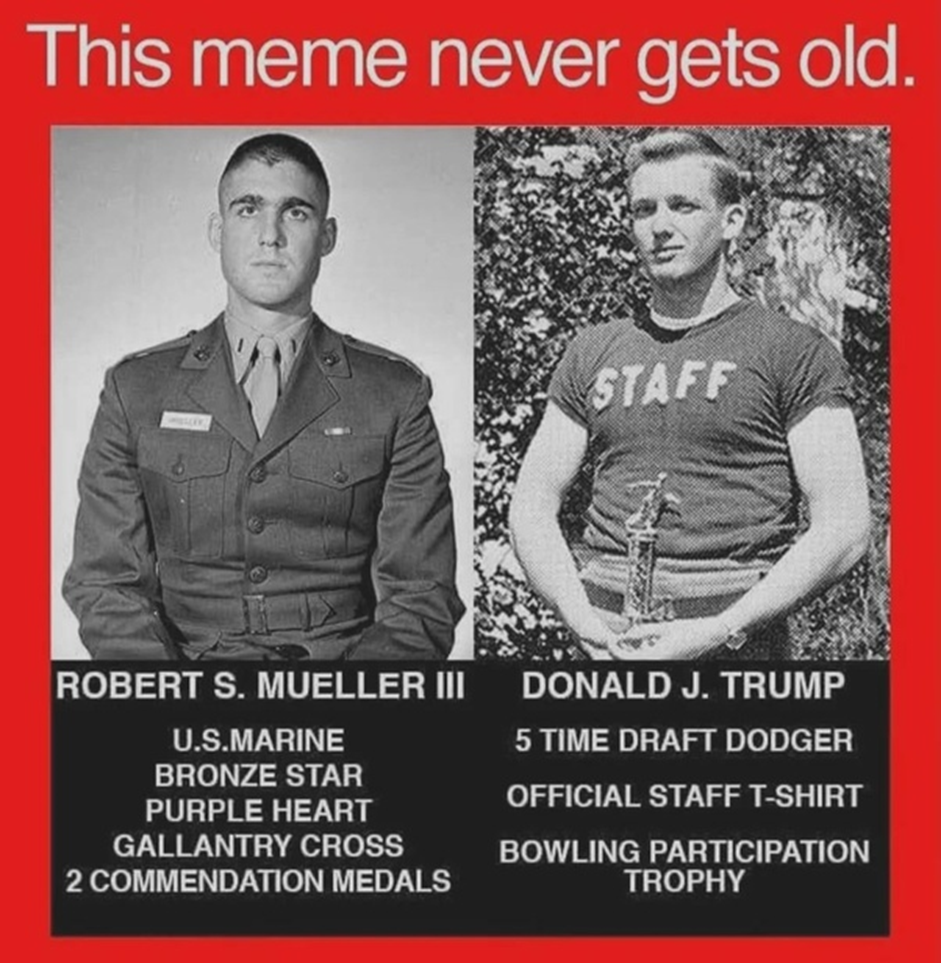
In my resolve not to appear hypocritical, I will refrain from criticizing Donald Trump’s comments on the death of Robert Mueller III.
That’s because if am still alive and in control of my faculties, I’m pretty sure what my own reaction will be when and if Cankle Ankles should assume room temperature.
Posted in Uncategorized | 5 Comments »
First, he announced he would run against Bill Cassidy for Cassidy’s U.S. Senate seat. But then, State Sen. Blake Miguez (R-New Iberia) lowered his sights (a pun in reference to his proficiency as a marksman) and entered the crowded race to succeed 5th District Rep. Julia Letlow who is running against Cassidy.
That’s his derogatory, as a former mayor of an area city once said to a critic at a city council meeting I was covering, even though he has been accurately described as a “carpetbagger” by an opponent in that House race because he lives far outside the 5th District.
But his latest TV campaign ad almost made me hurl, toss my cookies, drive the porcelain bus, yawn the technicolor yawn. Puke, in other words.
Let it be made clear that I don’t have a dog in this hunt. He’s running in a Repugnantcan primary and not being Repugnantcan, I cannot vote for any of the candidates anyway. Still, there’s this TV ad…
A solemn Miguez turns to an American flag and recites the Pledge of Allegiance, proclaiming at the end that he is loyal both to the flag and is a patriotic American.
Well, who isn’t? I’m patriotic. His opponents, I’m certain, are patriotic. So what? That alone is no more a qualification to hold office than being an expert shot in a pistol competition.
But here’s the rub. He has the full endorsement of Donald Trump.
Now let’s connect the dots.
Gregory Crittendon Jr. was an officer with the D.C. police department when he arrived at the U.S. Capitol on Jan. 6, 2021 to help quell a riot, an insurrection, that occurred at the urging of one Donald Trump.
When he got to the Capitol, he was assaulted by rioters, thugs, who were there to prevent the peaceful transfer of power. They battered Crittendon with…the American flag. “I’m a police officer, I support the American flag and yet, there I was getting stuck with it,” he told The Washington Post.
And here’s the biggest insult: A bronze plaque honoring law enforcement officers who defended the seat of American democracy that day, intended to commemorate the service of Crittendon and other police officers who were beaten with flagpoles (like Samuel Mott), drenched in pepper spray (like Jesse Leasure) and beaten, yanked and bruised (like Carlton Wilhoit III), somehow managed to leave their names off. Nor was the name of Jeffrey Smith, who was beaten so badly with his own baton that he took his own life nine days after the riot, to be found on the plaque–which, by the way Repugnantcans fought successfully for years to keep if from being displayed for public viewing. Even now, it’s mounted on a basement wall, where the public is not allowed access. How’s that for honor?
And yet, Blake Miguez has the cajones to stand there all serious and full of good ol’ American pride as he recites the Pledge while accepting the endorsement of the very man who instigated the assault on the American seat of democracy, the man who told the mob to “march down to the Capitol,” the may who had the authority to call off the dogs but refused to do so for 187 minutes, choosing instead to watch the mob chant “Hang Mike Pence,” smear the Capitol walls with excrement and use the American flag as a weapon against peace officers, a man directly responsible for the six deaths that occurred during the riot or in its aftermath.
Sorry, Blake Miguez. You can’t have it both ways. You loyalty is to the flag or to Trump.
Not both.
Posted in Uncategorized | 2 Comments »
-
Join 3,078 other subscribers
Donate!
LouisianaVoice does not accept advertising because we insist on an independent voice. Likewise, we do not charge a subscription fee for our blog. That is not to say we do not have expenses—lots of them. Moreover, we would love to add a reporter to provide even better coverage of the underbelly of Louisiana politics. Your contribution would help us immensely in meeting our growing expenses. Simply click on the “Donate” button here and contribute whatever you feel appropriate. Thank you. Tom Aswell, Publisher
Got a tip?
Read my books!



Read more Books!


Order your Piyush Bumper Sticker Now!
Click image to order $2.50 each or three for $6.00
LouisianaVoice on Facebook
Categories
- ALEC
- ALEC, American Legislative Exchange Council
- American Legislative Exchange Council
- ATC
- Attorney General
- Audit Reports
- Auditor
- BESE
- Boards
- Book Review
- Broadband, Internet
- Budget
- Bundling
- Business
- Campaign Contributions
- Cartoon
- Cartoons
- Charters
- Civil Service
- Coastal Erosion
- Commissions
- Computers
- Congress
- Contract
- Contract, Contracts
- Contracts
- Corruption
- Courts
- Crime
- DEQ
- DHH
- DOA
- Earl Long
- Earl Long, Huey Long
- Economy
- Education
- Elections
- Ethics
- Exemptions
- Exemptions, Incentives
- Finances
- Fraud
- Geography
- GOHSEP
- Golf Courses
- Governor's Office
- Grant
- Grant, Grants
- Grants
- Guest Columnist
- Health Care
- Higher Education
- House
- House, Senate
- Huey Long
- Incentives
- IT
- Jobs
- Judges
- Lawsuits
- Layoffs
- Legislators
- Legislature
- Legislature, Legislators
- Lobbyist
- Louisiana Purchase
- LSED
- LSU
- Media
- NGOs
- Notable Quotables
- Office of Group Benefits
- Office of Risk Management
- Office of Workers' Comp
- OGB
- OGB, Office of Group Benefits
- ORM
- ORM, Office of Risk Management
- PACs
- Politicians
- Prison
- Privatization
- Public Records
- Recovery School District
- Regents
- Retirement
- Revenue
- RFP, Request for Proposals
- RSD
- Senate
- State Agencies
- State Fire Marshal
- State Police
- Supriya Jinda Foundation
- Taxes
- Teague
- Toledo Bend, Water Sale
- Transparency
- TV News
- Uncategorized
- Veto
- Vitter
- Vouchers
- Waste
- Water Reservoirs
- Water Sales
Tag Cloud
AFSCME Alliance for School Choice American Federation of State Anarchy Ann Williamson Attorney General Bechtol Russell Black Bear Bob Levy Bonding Assistance Program Business Report Chafee Educational Training Voucher Charters Charter Schools College Students Commandeer County and Municipal Employees Digital Medial Incentive Early Start Program Enterprise Zone FastStart Financial Literacy for You Francis Thompson Frank Simoneaux Go Grant Governor Hebert Heresy Huey Long Industrial Tax Exemption Jim Champagne Jindal John Schroder John White Kyle Plotkin Live Performance Tax Credit Louisiana FastStart Louisiana Guaranteed Student Loans Louisiana State Troopers Association Michael Walker-Jones Micro Loan Program Mike Thompson Modernization Tax Credit Morgan-Keegan Motion Picture Investor Tax Credit Office of Group Benefits Per Capita Income Poverty Professional Fire Fighters Association Quality Jobs Rainy Day Fund Rene Greer Rep. Alan Seabaugh Rep. Bob Hensgens Research and Development Restoration Tax Abatement Rockefeller State Wildlife Scholarship Sibille Small Business Loan Program Sound Recording Investor Tax Credit Spending Freeze START State Matching Funds Grant State Revenue Steve Monaghan Tax Credit Tax Cuts Technology Commercialization Credit and Jobs Program Teepell TOPS Veteran Initiative and Mentor-Protege Tax Credit Veto Violent Crime Vouchers Weitz Golf InternationalMeta
 Louisiana Voice