Feeds:
Posts
Comments

The ghost of Bobby Jindal, thought to have faded into history, has reared its ugly head a decade after his leaving office.

The First Circuit Court of Appeal has reversed a lower court ruling that had said the state was immune from a lawsuit by state employees and state retirees over changes to the Office of Group Benefits (OGB) that were implemented without proper input way back in 2014.

On June3 of that year, the Jindal administration announced sweeping changes to its health-car and pharmacy plans, to go into effect August 1. Among those changes were increased out-of-pocket maximums, increased deductibles, increased co-pays, increased out-of-pocket maximums for prescription drugs and the removal of all vision coverage from the health plan options.

On Sept. 23, then-Attorney General Buddy Caldwell’s office issued an opinion that any modifications to existing plans “must be accomplished in accordance with the procedures set forth in the Louisiana Administrative Procedure Act (APA) for rulemaking” and that OGB was required to promulgate rules and regulations “for the implementation, administration,

and management of the new plans proposed by the OGB.”

The opinion concluded by saying, ” If the OGB did not follow the procedures set forth in the APA when it created new health care plans and/or modified the existing health care plans … then the validity of the plans becomes questionable.”

The Jindal administration’s response was to publish a “declaration of emergency” in the Louisiana Register with an effective start of Sept. 30 that it would be adopting emergency rules to codify the proposed changes that took effect in August.

OGB held a public hearing on the proposed plan changes on December 29, 2014, after the enrollment period closed and after the proposed plan changes were implemented and after the enrollment period had ended (emphasis ours).

OGB published a second “Declaration of Emergency” on Feb. 20, 2015, that extended the first declaration and adopted the changes that were the subject of the emergency rules, and OGB re -opened enrollment for its members on or about April 3, 2015.

The plaintiffs, Marilee Cash, Nancy Dickie, Aileen Hendricks, Rebecca McCarter, Dayne Sherman and Debra Thornton, each of whom was either an active state employee or state retiree, filed a Petition for Declaratory and Injunctive Relief on April 21, 2015, naming OGB, the Division of Administration and the State of Louisiana as defendants. The plaintiffs are represented by Baton Rouge attorney J. Arthur Smith, Jr.

In claiming that OGB had violated rulemaking procedures, that the December public hearing was a “sham” and that there had been no legitimate basis for the September 2014 emergency rule. They also asserted that the state violated their fiduciary duties by depleting the OGB fund balance and attempting to saddle state employees and retirees with the costs and burdens

resulting from their own imprudence” during the fiscal crisis that plagued the State at that time.

The plaintiffs filed several amended petitions and a motion for class certification along the way, including a Third Amended Petition to which the state filed a peremptory exception claiming plaintiffs had no cause of action because plaintiffs failed to state a cause of action upon which relief could be granted because they failed to prove damages existed. The state also claimed that OGB’s promulgation and adoption authority was protected under a statute that provided immunity from tort liability.

On Jan. 10, 2025, a full decade after the issue first arose, the 19th Judicial District Court upheld the state’s objection and dismissed plaintiffs’ claims.

But the First Circuit on Dec. 19 revered the lower court, ruling that the state was not immune from tort liability. The ruling said, “A court

must first determine whether a statute, regulation, or policy requires the government employee to follow a particular course of action. If there is such a requirement, then there is no choice or discretion involved, and the immunity does not apply.”

The appeal court also noted that there indeed were claims of damages by the plaintiffs in the form of financial losses and that the state had failed to follow established procedure in carrying out the changes.

“The matter is remanded for further proceedings,” the three-judge panel of the First Circuit ruled, clearing the way for a lawsuit against the state to proceed.

Costs of the appeal in the amount of $3,330 were assessed equally among OGB, the Division of Administration and the State of Louisiana—another example of the state’s willingness to pay attorneys rather than do the right thing at the beginning.

The wheels of justice turn slowly—far too slowly it seems at times and all because of the stubbornness of bureaucrats.

LouisianaVoice is proud to announced that we have been chosen to reveal early entries for possible designs for the proposed “Trump Class” battleships being proposed by the administration. To date, four basic designs have been approved for consideration.

The Crown Jewel Gold Standard, with precious jewels inlaid on a basic golden deck and hull:

The classic Golden Imperial Eagle, set off by the unmistakable Red Square oniontop cabin:

The understated Milania Rules beauty of white pearls and gold trim:

And the early favorite:

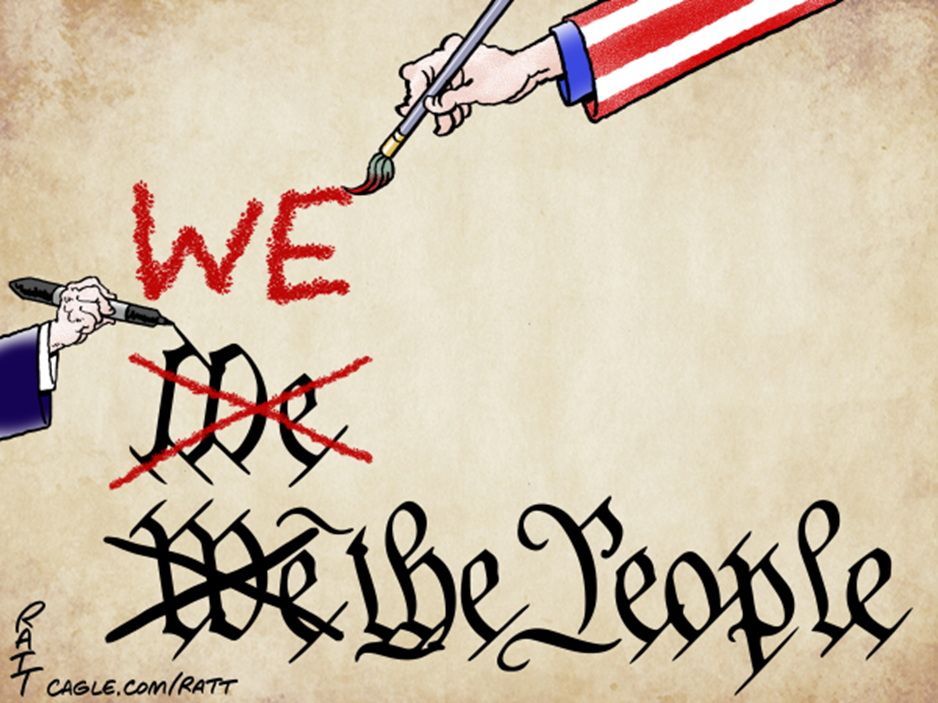
What’s with these Buford T. Justice-wannabe redneck sheriffs and their ignorance/disregard of the First Amendment of the U.S. Constitution?

What do they think gives them the authority to arbitrarily decide—and enforce—some obscure (actually, non-existent) law that makes it a criminal offense to exercise our freedom of speech laid out in the Bill of Rights very First Amendment?

Way back in August 2016, before the election of Ass-clown Trump, Terrebonne Parish Sheriff Jerry Larpenter had a local man arrested for daring criticize the sheriff on the man’s web blog.

Not only was he arrested, but the sheriff’s department, armed with a warrant, DISPATCHED SIX ARMED DEPUTIES TO THE BLOGGER’S HOME where he was arrested on the basis of Louisiana’s criminal defamation statute. Deputies seized two of his laptops in the process.

(The full story of this episode is covered in my book, Louisiana’s Rogue Sheriffs: A Culture of Corruption, available for $30 by contacting me at louisianavoice@outlook.com)

Four years later, St. Tammany Parish Sheriff Randy Smith did the same thing when another local man was critical of the lack of progress in the investigation of the murder of a St. Tammany Parish woman, Nanette Krentel, a murder, by the way, that still has not been solved.

The problem in both the Larpenter and Smith actions was the law on which they based their arrests had been declared unconstitutional in 1981, nearly four decades earlier. In Larpenter’s case, it cost the sheriff’s office about $250,000 in a court judgment and should have caused embarrassment to Judge Randal Bethancourt who had issued the warrant.

In Smith’s case, Assistant District Attorney Collin Sims ADVISED THE SHERIFF that the arrest of Jerry Rogers was unconstitutional. Smith, though, ignored the advice and had Rogers arrested, handcuffed and booked into parish prison where he was strip-searched, calling to mind Forrest Gump’s proclamation “Stupid is as stupid does” and handing Rogers a slam-dunk lawsuit in the process.

Fast forward to today and head up to Perry County, Tennessee, where Sheriff Nick Weems apparently thinks he is heir-apparent to another Buford (Pusser, in this case). His problem is, however, he picked on the wrong guy: a retired cop.

Larry Bushart, who spent more than three decades in law enforcement, was arrested in September on a charge of threatening mass violence at a school and was held for 37 days because he was unable to post $2 million bond. Only widespread media attention and public backlash got the charges dropped.

His specific offense? He re-posted a meme that featured a photo of Yam Tits Trump reacting to a school shooting at Perry High School in Iowa and Trump’s quote “We have to get over it.” Alongside that comment, Bushart posted, “This seems relevant today.”

NOT SO, SAID HIGH SHERIFF WEEMS who, confusing his geography, somehow managed to take the reference to the Perry, Iowa, shooting as a threat to Perry County, Tennessee High School and claiming that Bushart had thrown the Perry County residents into a panic.

Local police paid Bushart a visit at his home around 8 p.m. on September 21 to warn him about the post “insinuating violence.”

Bushart told sympathetic officers that he was not going to take his post down and officers left.

About three hours later, they returned, this time with an arrest warrant even as an officer acknowledged he’d done nothing illegal.

Weems said the arrest was justified because Bushart’s post caused “mass hysteria” in the community, though his office still has not responded to public records requests for evidence of such hysteria.

As a result of the sheriff’s b.s., Bushart says he lost his job, missed his wedding anniversary and the birth of a grandchild during the 37 days he spent behind bars.

Times like this I’d love to be a lawyer—specifically Bushart’s lawyer.

Folks, this is what we are beginning to encounter more and more frequently. From capitulation to Trump by major news networks, control of licensing, to approval of mergers and acquisitions, this administration is already flexing its muscle to get its way. There is no better illustration of this than Sunday’s spiking of a 60 MINUTES SEGMENT by Bari Weiss, the head of CBS News.

I mean, who needs Faux News now that Trump has The Washington Post, CBS and ABC eating out of his hand?

Now, if we wish to play by the rules of Sheriff Weems, then we are forbidden from saying anything negative about the dead lest we set off a public panic. Accordingly, Trump now must have his fat ass thrown into jail under a multi-billion-dollar bail (mere millions would hardly be a deterrent for him, given how much money he’s grifted in his one year back in the Oval Office) for disparaging the name of Rob Reiner.

Let’s keep the playing field level.