Democracy dies in darkness. Sunshine is the best disinfectant. The public’s right to know.
You’ve heard them all. They’re calls for transparency on the part of government—federal, state, right down to your local city council. This blog even has its own slogan plastered across its masthead, albeit paraphrased from a quote by Plato:
“It is understandable when a child is afraid of the dark but unforgivable when a man fears the light.”
And be assured, there are precious few in state government who want you to know what they’re doing. They thrive in the shadows.
A couple if years ago, it was SENATE BILL 482, introduced by State Sen. Heather Cloud (R-Turkey Creek) that would have absolutely gutted Louisiana’s public records act. Cloud was one of the senators who filed SB 46 last year to outlaw chemtrails emitted by jet airplanes over Louisiana (apparently all bought into the conspiracy that the actual contrails are chemical poisons being spread all over the world).
Her bill passed the SENATE AND GOVERNMENTAL AFFAIRS COMMITTEE by a 6-2 vote but never made it to the floor for a full vote.
Would you like to know who voted for more restrictive access to public records? Good. Here they are:
One is Blake Miguez (R-New Iberia). Yes, that Blake Miguez, the one running for the U.S. House District 5 to replace Julia Letlow, who’s running for senate against Bill Cassidy. Miguez wants to move up the political ladder but he doesn’t want you knowing what government is doing that directly affects you.
The others senators who voted to keep you in the dark:
- Mike Fesi (R-Houma)—he also of the chemtrail conspiracy;
- Gregory Miller (R-Norco);
- Mike Reese (R-Leesville);
- Caleb Kleinpeter (R-Port Allen)—remember that name, it’ll come up later;
- Glen Womack (R-Harrisonburg)
You’ll notice, of course, the common thread that they’re all—each and every one—Repugnantcans. Voting against the bill in committee were Democrats Sam Jenkins and Gary Carter. Democrat Cleo Fields did not vote.
Of course, Gov. Landry would have you believe he eats, sleeps and breathes transparency. But the facts say otherwise. Why else would he, when he was attorney general, file suit against a Baton Rouge Advocate reporter because that reporter made a public records request? Why else would Landry, also while attorney general, attempt to make it illegal for a non-resident of Louisiana to even make a public records request of his office?
“We have always appreciated transparency when it comes to fiscal manners,” Landry said almost two years ago to the day, on April 16, 2024. I call B.S.
Why would I do that? Because of THIS STORY .
Talk about a story gaining traction: Every. Single. Parish. Has at least one non-disclosure agreement (NDA) that local and state officials were required to sign that shields (well, we don’t know what they shield) information from public view.
First to break the story was the GULF STATES NEWSROOM and TYPE INVESTIGATIONS but the story was picked up by LOUISIANA ILLUMINATOR, (quickly becoming the go-to source for hard-hitting breaking state news) but interestingly, none of the so-called mainstream media.
The Illuminator posted alongside its article, two graphic illustrations. One lists each legislator and parish in which officials were required to sign NDAs. The other illustration is a map on which one may click to see precisely how many NDAs a particular parish is committed to.
Leading the pack, to no one’s surprise who is familiar with all the petrochemical plants along the Mississippi River between Baton Rouge and New Orleans is Ascension Parish with 11 NDAs, followed closely by Caddo with nine. Others include:
Lafourche: 6; Jefferson, Livingston, Rapides and St. Landry, 5 each; Bossier, Ouachita, Avoyelles, East Baton Rouge and St. John the Baptist, four each. Ten parishes have three each, ten parishes have two NDAs and every other parish has one.
Signees include Lt. Gov. Billy Nungesser, legislators, and local officials such as mayors, city council members, a sheriff and even a school board superintendent.
Abigail Whittington of Shreveport is one of those who believes public officials conducting backroom business deals with entities like data centers is “bullshit. I think all of our elected officials need to remember they work for us and we voted them in,” she added.
But the NDAs represent the future—at least insofar as long as Jeff Landry is governor. At least 50 public officials have signed NDAs during Landry’s two years in office. During Gov. John Bel Edwards’s entire last four years in office, not a single elected official signed an NDA.
Economic development officials say the NDAs are necessary in order to attract businesses to Louisiana. But others assert that only benefit corporate interests at the expense of the local communities where developments involving public money are planned without public knowledge.
Remember when I said remember the name Caleb Kleinpeter, the Repugnantcan state senator from Port Allen? Well, what Heather Cloud was unable to do, he’s attempting in another broadside against public access to records.
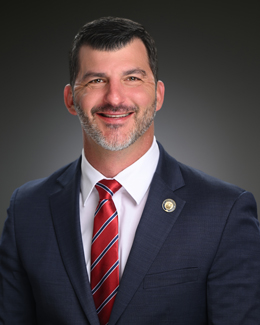
Sen. Caleb Kleinpeter (R-Port Allen)
Kleinpeter has introduced SB 482 which “provides that certain photographs, audio or video recordings, digital images regarding a crime scene or used in a criminal prosecution are not public records available for release or to be copied except by court order.”
Now, that piece of garbage is worded to be so open-ended that conceivably a record may never become public. Louisiana State Police, for example, could say video and reports of the beating death of a black motorist in Union Parish are “under investigation” in perpetuity and accordingly, never available for release—and we might never have seen the video of the beating death of. Ronald Greene in 2019. Likewise, the local district attorney would, under this bill, have license to deny access to records as long as the matter is “under investigation,” and case in point, in the Ronald Greene matter, the local DA sat on that case until the heat cooled down and then decided not to pursue charges against any of the troopers who beat, kicked, tased and then lied about the whole damned matter.
SB 482 is a terrible, a horrible bill that will slam the door on the public’s access to virtually any record sought—so long as it remains “under investigation.”
And if you don’t think Louisiana State Police, sheriffs’ offices, district attorneys and other elected and appointed officials will abuse the hell out of that protective clause, I have some tickets to the 2026 NCAA Women’s Final Four basketball tournament to sell—right behind the LSU bench.






 Louisiana Voice