Feeds:
Posts
Comments

Archive for the ‘Transparency’ Category

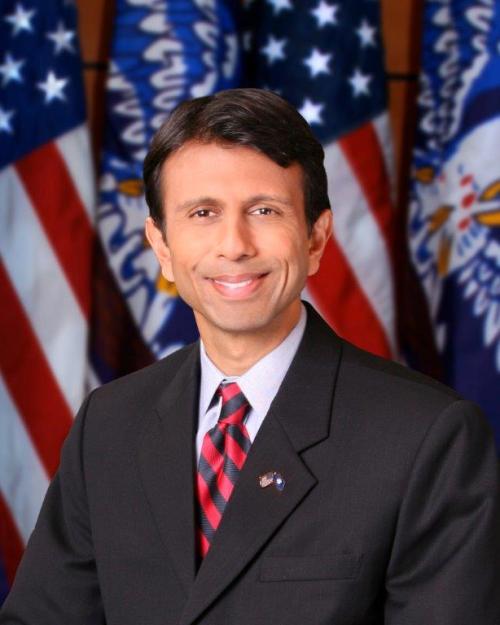
Louisiana Secretary of State Tom Schedler and former Secretary of the Department of Health and Hospitals (DHH) David Hood recently expressed their surprise that the Medicaid Trust Fund for the Elderly has shrunk from $830 million to $410 million under the administration of Gov. Bobby Jindal.

The fund balance is expected to drop to $250 million or less by the end of the current fiscal year (June 30, 2014) and at the present rate of depletion, could be gone in its entirety by the end of Jindal’s term of office, leaving the next governor with having to close a huge health care financing gap.

Schedler and Hood shouldn’t be surprised. In fact, by now they should expect no less from Jindal who, despite his 2003 campaign promises to the contrary, has consistently dipped into one-time money to pay recurring expenses in an effort to plug gaping deficit holes in the state budget.
null
null

The original intent of the fund was to use only the interest and investment earnings to provide a stream of funding to pay for nursing home care and other health care services.

Revenue in the fund was to be used as a source of state matching funds for Medicaid funds to make enhanced payments to local government-owned health care facilities.

In fact, a 2012 constitutional amendment to “prohibit monies in the Medicaid Trust Fund for the Elderly from being used or appropriated for other purposes when adjustments are made to eliminate a state deficit” was approved by voters by a 71 percent to 29 percent margin (1.3 million to 527,000).

The amendment specifically prohibits dollars in the trust fund from being used for anything other than the intended purposes and “not (for) helping to balance the state budget” and “to constitutionally protect a specific fund from being raided to help make up for shortfalls in state revenue,” according to the Council for a Better Louisiana (CABL).

Ironically, CABL took no position on the constitutional amendment prior to the election, calling it “unnecessary.”

But Jindal has consistently worked to cut mental health benefits through closure of Southeast Louisiana Hospital (SELH) in Mandeville, elimination of Early Childhood Supports and Services, vetoing funds for the developmentally disabled and even resorting to using personal email accounts to plot strategy on Medicaid cuts.

About $300 million of the money has been spent to stop cuts to the rates paid to private nursing homes for the care of Medicaid patients, according to DHH Undersecretary Jerry Phillips.

In the current budget year that began July 1, Louisiana nursing homes, which have some 29,000 residents, are slated to receive $893 million in state and federal Medicaid payments with $184 million to come from the elderly trust fund used to attract about $500 million in federal matching funds.

It should come as no surprise that with all the cuts to Medicaid, mental health treatment, early childhood support and funds for the developmentally disabled, Jindal would ensure uninterrupted funding for private nursing homes.

Jindal, after all, has received more than $380,000 in campaign contributions from nursing homes and nursing home owners.

Of that amount, $228,500 came from a single source—Elton Beebe of Ridgeland, Mississippi. Beebe, who owns several Louisiana nursing homes, funneled campaign contributions to Jindal through himself, family members, business associates and 21 nursing homes and corporations controlled by him.

The corporations list P.O. Box 6015 and 6016 or 763 Avery Blvd. North as their address. Beebe himself gave P.O. Box 6015 as the address on two of his contributions of $5,000 each and 763 Avery Blvd. North on another $5,000 contribution.

null
Elton Beebe’s Ridgeland, MS Headquarters

One company, Magnolia Management, gave the Avery Boulevard address on three contributions totaling $10,000 and 3900 Lakeland Drive, Ste. 400 in Jackson, Mississippi, on two others totaling another $10,000.

The contributions date back to Jindal’s first unsuccessful gubernatorial campaign in 2003.

Each of the corporations shares either a physical address or a post office box in Ridgeland.

The remaining $155,000 in nursing home contributions were made by some three dozen Louisiana facilities besides those owned by Beebe. They were scattered throughout Louisiana.

Following are contributions by Beebe, his wife, a business associate and corporations which gave the same Ridgeland address, with the number of contributions and the years the money was given in parenthesis followed by the aggregate amount:

• E.G. (Elton) Beebe: (3 from 2007 to 2011) $15,000;

• Carol Beebe: (2 in 2010 and 2011);

• Lansing Kolb (1 in 2008) $1,000);

• Louisiana Extended Care Centers: (4 from 2003 to 2009) $17,000;

• Magnolia Properties, Inc.: (4 from 2003 to 2011) $14,500;

• Magnolia Manor Properties: (3 from 2009 to 2012) $7,500;

• Magnolia Management Services of Louisiana: (3 from 2003 to 2010) $12,500;

• Magnolia Management of Louisiana: (2 in 2008 and 2009) $5,000;

• Magnolia Management Corp.: (5 from 2003 to 2011) $20,000;

• Magnolia Health Service of Louisiana: (2 in 2007 and 2008) $7,000;

• Medico, Inc.: (4 from 2003 to 2009) $15,000;

• Administrative Systems, Inc.: (3 from 2007 to 2010) $10,000;

• Provider Professional Services: (3 from 2007 to 2010) $10,000;

• HR Property Investments, LLC: (3 from 2010 to 2012) $10,000;

• Southern Magnolia, LLC: (3 from 2010 to 2012) $10,000;

• Transmed, LLC: (2 in 2011 and 1012) $7,500;

• Lena Heritage, LLC: (3 from 2010 to 2012) $10,000;

• Lake Charles Properties: (1 in 2012) $5,000;

• Extended Care Associates: (4 from 2003 to 2009) $15,000;

• EGB, LLC: (3 in 2010 and 2011) $5,000;

• Account Management Services, Inc.: (1 in 2010) $2,500;

• AGF, LLC: (2 in 2010 and 2011) $5,000;

• Caddo Property, LLC: )2 in 2010 and 2011): $5,000;

• Alexandria Investments, LLC: (3 in 2008 and 2011).

Contributions of $2,500 each were all made by 10 of the corporations and another contributed $3,000, all on the same day: Oct. 4, 2010.

Five corporations also made contributions of $5,000 each and another gave $2,500, all on Oct. 24, 2012, a year after Jindal won re-election to his second term. That $27,500 in contributions feeds speculation that Jindal is building up a campaign war chest for a run at a national office.

Here are the other nursing homes and the amounts contributed to Jindal campaigns:

• Alpine Guest Care of Ruston: $8,000;

• Courtyard Manor Nursing Care of Lafayette: $6,000;

• Golden Age of Welsh; $9,000;

• Golden Age Nursing Center of Jena: $2,000;

• St. Agnes Healthcare of Breaux Bridge: $5,000;

• Booker T. Washington Guest Care of Shreveport: $8,000;

• Ringgold Care Center: $2,000;

• Colonial Oaks Guest Care Center of Bossier City: $8,000;

• The Guest Care Center at Spring Lake, Shreveport: $7,000;

• Pilgrim Manor Guest Care of Bossier City: $8,000;

• St. Martin De Porres Multi-Care Center of Lake Charles: $3,000;

• Norhridge Care Center of Pineville: $2,850;

• Savoy Care Center of Mamou: $5,500;

• Morgan City Health Care Center: $2,500;

• The Woodlands Healthcare Center, Leesville: $3,000;

• Franklin Health Care Center: $2,500;

• Matthews Memorial Health Care Center, Alexandria: $1,000;

• Crescent City Health Care Center, Mandeville: $1,000;

• West Carroll Care Center, Oak Grove: $1,000;

• Pinecrest Healthcare Center, Bernice: $1,000;

• Riverview Care Center, Bossier City: $2,000;

• Basile Care Center: $700;

• Guest House Properties, Winnfield: $7,500;

• The Guest House, Shreveport: $8,000;

• Louisiana Guest House, Alexandria: $1,425;

• West Monroe Guest House: $6,800;

• Rayville Guest House: $500;

• Rosepine Retirement & Rehabilitation Center: $6,450;

• River Oaks Retirement Manor, Lafayette: $6,000;

• De Soto Retirement & Rehabilitation, Mansfield: $4,350;

• Kinder Retirement & Rehabilitation: $4,950;

• Sabine Retirement & Rehabilitation Center, Many: $4,700;

• DeRidder Retirement & Rehabilitation Center; $4,450;

• River Oaks Retirement Manor, Lafayette: $6,000;

• The Retirement Center, White Plains, N.Y.: $3,000;

• The Retirement Center, Baton Rouge: $1,000.

These contributions did not include and separate contributions that may have been made by owners of these nursing homes.

Let’s review:

The Medicaid Trust Fund for the Elderly has been reduced by half since Jindal took office.

Only interest and investment revenue from the Medicaid Trust Fund for the Elderly is supposed to be used to pay for nursing home care and other Medicaid expenses.

More than $300 million of the fund’s principal has been used to keep nursing home Medicaid rates afloat.

Nursing homes and their owners have contributed more than $380,000 to Jindal’s three gubernatorial campaigns.

With Jindal, it always seems to come down to a single precept: follow the money.

Read Full Post »

It’s been all of nine months since Meridian Behavioral Health Systems took over operation of Southeast Louisiana Hospital (SELH) in Mandeville in what we like to call the Jindal Swindle and already the facility has been notified that it has been found to have deficiencies serious enough to threaten its eligibility to continue participation in Medicare.

Meridian, a Florida-based company chosen to run SELH after Gov. Bobby Jindal chose to close the hospital, has been running the 58-bed facility under the name of Northlake Behavioral Health System.

Jindal announced last year that he was closing the hospital, effective Oct. 1, a move that left mental patients in all of southeast Louisiana, including the New Orleans, Houma and Thibodaux metropolitan areas, with no access to any state mental treatment facility. The move threw more than 300 SELH employees out of work.

Formed as a company less than a year before taking over the Mandeville hospital, Meridian had never handled a facility the size of SELH and in fact, listed no facilities it had ever run on its application.

And it didn’t take long for that inexperience to surface.

Northlake Behavioral Health System CEO Richard Kramer was notified by the Center for Medicare & Medicaid Services (CMS) on June 3 that Northlake no longer qualified for participation in Medicare.

“After a careful review of the May 23, 2013, survey report, we have determined that Northlake Behavioral Health System no longer meets the requirements for participation in the Medicare program,” wrote Greg Soccio, manager of the CMS Non-Long Term Care Certification and Enforcement Branch.

“Although the deficiencies do not constitute an immediate threat to the health and safety of patients, the deficiencies have been determined to be of such a serious nature as to substantially limit your hospital’s capacity to render adequate care and prevent it from being in compliance with all the conditions of participation for hospitals,” Soccio’s letter said. “Consequently, we plan to terminate participation in the Medicare program if compliance is not achieved within the given timeframes specified.”

Soccio, in his letter, gave Sept. 1, exactly 11 months after Meridian took over the facility, as the date of its termination in Medicare. “CMS will monitor your progress in correcting the deficiencies cited,” he said. “You must submit by June 14 a plan of correction with acceptable time schedule.” His letter, while imposing a July 3 deadline for completion of corrective action, listed criteria Northlake must meet for recertification:

• The plan must address correcting the specific deficiency cited;

• The plan must address improving the processes that led to the deficiency cited;

• The plan must include procedures for implementing the acceptable plans of correction for each deficiency cited;

• A completion date for the implementation of the plans of correction for each deficiency cited;

• All plans of correction must take a QAPI (Quality Assurance/Performance Improvement) approach and address improvements in its systems in order to prevent the likelihood of the deficient practice reoccurring;

• The plan must include the monitoring and tracking procedures to ensure that the plan of correction is effective and that specific deficiency cited remains corrected and/or in compliance with the regulatory requirements;

• The plan must include the title of the person responsible for implementing the acceptable plan for correction.

Subsequent to Soccio’s letter, Kramer submitted a 43-page plan of correction to CMS on June 14, the deadline given by CMS.

As serious as the letter may have been to Northlake and as welcome as it may have been to those opposed to the privatization, it did leave one gigantic loophole for Jindal:

“The Louisiana Department of Health and Hospitals (DHH) will conduct a focus Medicare survey of your facility to assess your hospital’s compliance with the conditions of participation that were found out of compliance and assess your corrective actions,” Soccio’s letter said.

“Compliance must be achieved at the time of this revisit if further action is to be avoided. If you remain out of compliance at the time of your revisit, you can expect to receive another letter advising you of the continuation of the termination process and your appeal rights.

“You will again be asked to submit an acceptable plan of correction to our office and we may conduct one final revisit before the termination date,” it said.

That July 3 deadline was more than a week ago and a CMS spokesperson in Dallas said on Wednesday that no new paperwork had been received on Northlake by his office.

But allowing DHH to make the determination of compliance? This is the same agency that, under former Secretary Bruce Greenstein, was allowed to manipulate specifications to allow Greenstein’s former employer, CNSI, to bid on and win a $280 million contract that is now the subject of a federal investigation.

Greenstein may be gone but his successor, like Greenstein, was appointed by Jindal and does anyone really doubt that the governor maintains an iron grip over DHH? And Jindal doesn’t like to admit he ever made a mistake.

Anyone care to take any bets on the outcome of that DHH focus Medicare survey of Northlake?

Read Full Post »

“I believe that all elected officials should—as I have always endeavored to do—act with the interests of our citizens in mind.”

—State Rep. Chris Broadwater (R-Hammond), vice chairman of the House Labor and Industrial Relations Committee and former director of the Office of Workers’ Compensation, defending his work as attorney for insurance companies seeking to deny or reduce workers’ compensation claims and his admitted practice of routinely consulting with his successor OWC Director Wes Hataway on pending matters before OWC that directly affect his clients.

Read Full Post »

When Chris Broadwater the state legislator says he has never received compensation from a private source for the performance of his legislative duties, he is technically correct.

Broadwater the attorney, however, does represent insurance companies before a state agency he once ran and over which he still exercises control as Vice Chairman of the House Labor and Industrial Relations Committee.

Taking that gray area of state ethics and moving into even murkier waters is the fact that Broadwater regularly consults with Wes Hataway, the current director of the Louisiana Office of Worker’s Compensation, the appointive position he himself once held before his election to the House of Representatives in 2011, on matters pending before the current director, Wes Hataway.

Broadwater (R-Hammond) resigned as Director of the Office of Workers’ Comp (OWC) in February 2011 to join a private law firm preparatory to running for state representative that same year and was succeeded by Hataway.

An ally of Gov. Bobby Jindal, Broadwater was immediately assigned to the House Labor and Industrial Relations Committee where he was promptly named vice chairman.

Documents filed with the State Board of Ethics in December 2012 and April of this year indicate that Broadwater represents three companies, Qmedtrix at $275 an hour, the Louisiana Home Builders Association, and LUBA Worker’s Comp, both at $135 an hour, in defending worker’s compensation claims before the OWC.

Moreover, an application for supervisory writs filed with the Third Circuit Court of Appeal in Lake Charles in March of this year in the case of Christus Health Southwest Louisiana, dba Christus St. Patrick Hospital, v. Great American Insurance Co. of New York, revealed meetings between Broadwater, Qmedtrix and Hataway to discuss the disposition of numerous cases involving Qmedtrix, namely efforts to get the cases stayed and transferred to another judge.

That writ application concerns procedures and conversations that took place involving numerous pending workers’ compensation cases about which we will be writing in subsequent postings.

For the purposes of this post, however, we will be limiting the discussion to the activities of Broadwater as they pertain to his relationship with the current Director of OWC (the position he once held) and his serving as vice chairman of the legislative committee that oversees the functions of OWC.

Broadwater, when confronted with the reports of the meetings, admitted to meeting with Hataway in late November 2012 at which time the transfers were discussed, the court filing says.

“In what may be the pinnacle of irony, Mr. Broadwater actually disclosed this ex parte meeting on his state ethics disclosure form,” the writ application says.

It (the writ application) quoted Broadwater’s own comment from that disclosure form: “Met with Director of OWC discussing process of resolving disputes over medical billing.”

The document said Broadwater admitted to meeting with Hataway “three or four times in person” (always with a Qmedtrix attorney present) and speaking with him 10 or 15 times on the phone. “This ex parte contact (Latin legal term meaning for the benefit of one party) with the OWC director at the request of Qmedtrix” cost Qmedtrix $275 per hour for Mr. Broadwater’s services, it said. “This rate must have seemed reasonable to Qmedtrix especially once they learned Chris Broadwater was not only a longtime friend (20 years) of Director Hataway, but was actually Director Hataway’s boss when Chris Broadwater was OWC Director,” the writ application added.

Not only did Broadwater admit discussing with Hataway the pending appointment of his former law partner to succeed Judge Shelly Dick once Judge Dick was confirmed as U.S. District Court Judge, but he related in detail how Hataway sought his advice on whether or not Hataway had the power as director to issue a stay of pending cases without involving the judges to whom the cases were assigned. Broadwater was of the opinion that Hataway did have such authority.

At the time Broadwater was hired by Qmedtrix, he “was well aware that Qmedtrix was involved in numerous workers’ compensation claims pending in the various OWC districts challenging its payment recommendations to the hospitals and ambulatory surgery center,” the writ application says.

“There is absolutely no question that Chris Broadwater was well aware that his client Qmedtrix was heavily involved in the ‘usual and customary’ litigation in front of the OWC at the time these ex parte discussions took place,” the court document said.

Broadwater even admitted as much when he was asked in deposition if he understood when he spoke with Hataway that Qmedtrix “was heavily involved in litigation in Louisiana workers’ compensation courts at the time.”

“Sure,” responded Broadwater to that question.

In addition to Qmedtrix, Broadwater also represented LUBA, the writ application says, “and, in fact, helped (former law partner) Amanda Clark secure LUBA as her client as well.

Broadwater, in a two-page letter to LouisianaVoice, said he approaches his duties as an attorney and as a legislator “with humbleness and with the highest sense of honor and ethical behavior. I believe that all elected officials should…act with the interests of our citizens in mind,” he said.

He said his representation of clients is governed by state statute which “prohibits me from receiving compensation from a source other than the legislature for performing my public duties, from receiving finder’s fees, from being paid by a private source for services related to the legislature or which draws substantially upon official data not a part of the public domain.”

He said he has provided legal counsel to clients before agencies, other than the legislature “and have disclosed such representation as required by law. At no time have I been offered, nor have I ever accepted payment from a private source for the performance of my legislative duties,” he said.

“My service as vice chair of the Labor & Industrial Relations Committee in no manner alters my duties or the constraints placed upon me under the Code of Governmental Ethics.

“If one assumed your interpretation to be correct—that service on a committee to which matters of the law related to one’s private employment are considered—it would likewise be improper for attorneys to serve on the Civil Law Committee, attorneys to serve on the Judiciary Committee, attorneys to serve on the Criminal Justice Committee, pharmacists to serve on the Health and Welfare Committee, business owners to serve on the Commerce Committee, farmers to serve on the Agriculture Committee, insurance agents to serve on the Insurance Committee, accountants to serve on the Ways and Means Committee, or attorneys to serve in the legislature in general as the legislature passes laws that inevitably will be later interpreted and applied in our private legal practice. I do not believe that such an outcome is required by the law, nor do I believe it would be wise policy to prohibit individuals to participate in government and share their area of expertise as policy is developed.

“I believe that my colleagues and I take our oath seriously and, should an issue arise that directly relates to an issue with which we are personally involved, we appropriately recuse ourselves from any such vote.”

While that was certainly better than a “no comment,” it still does not address the issue of his meeting with the OWC director to discuss pending cases that might affect his clients or to give advice to his successor on these cases.

Nor does it explain the likelihood that he would be hired to represent the three companies to fight for denials or reductions in workers’ comp medical payments were it not for his connections as both a legislator and as a former director of the Louisiana Office of Workers’ Compensation.

Just another sad example of how things are done in the administration that gave us the “gold standard” of governmental ethics.

Read Full Post »

For eight months, from Oct. 16, 2012, until June 28, Gov. Bobby Jindal had a director of his re-election committee on the state payroll overseeing state boards and commissions, according to state records.

The duties of Kendal Melvin, director of the Department of Boards and Commissions, was reassigned to Kyle Plotkin, communications director for the governor’s office, according to an announcement by Jindal on Friday, June 28. Plotkin was promoted by Jindal to Assistant Chief of Staff at that time and was given the supervision of state boards and commissions.

Plotkin was given a pay increase, from $90,000 to $110,000 to assume the additional duties, according to Jindal press secretary Sean Lansing.

Melvin, a Vermont native, was initially hired as Director of the Department of Boards and Commissions on Oct. 16, 2012, at a salary of $70,000 per year.

But records provided by the Secretary of State show that she was simultaneously serving as a director of the Committee to Re-elect Bobby Jindal.

Before becoming a state employee, she was on Jindal’s campaign payroll at annual salary of $44,578, according to Jindal’s campaign expenditure report. Her last paycheck from the campaign was for $1,711.86 on Oct. 15, 2012, the day before she went onto the state payroll, records show.

Each of her 46 checks from Jindal’s campaign between Jan. 14, 2011 and Oct. 15, 2012 was issued to her home address in Barre, Vermont, records show, a possible indication that she never moved her legal address to Louisiana even though she was working here.

Her hiring would again raise the question of why, if Jindal really wants to keep Louisiana’s best and brightest in the state as he says, does he continue to go out of state to hire many of his top appointees? Plotkin, for example, is from New Jersey and Jindal policy director Stafford Palmieri is from New York.

Jindal was re-elected in October of 2011 but his committee has continued to function, even filing an annual report on Jan. 10 of this year that showed Melvin was still a committee director.

All campaign expenditures however, are listed in the State Ethics Commission’s campaign finance records in Jindal’s name but no expenditures are listed for either the Committee to Re-elect Bobby Jindal or Friends of Bobby Jindal, the committee’s original name when it was first incorporated in January of 2004.

Jindal entered the 2011 election with nearly $9 million in his campaign treasury and facing only token opposition, so it naturally generates questions as to why his campaign committee remains active, even to the point of filing an annual report in January, instead of disbanding.

Since his re-election, Jindal has continued to collect more than $1.6 million in campaign contributions, leading to renewed speculation about his intentions to seek national office. He is presently 18 months into his second term and is constitutionally prohibited from seeking re-election.

What other reason could explain the need to continue fund raising, especially the $35,000 he raised in New York on a single day—Oct. 25, 2012? His 2012 inauguration, for example, only cost his campaign $156,000.

But an even bigger question is why an active director of Jindal’s campaign committee would be allowed to simultaneously draw a state paycheck for eight months.

State Civil Service rules generally prohibit state classified employees from engaging in political activity. Unclassified employees, however, may participate in political activities so long as such activity is carried out on the employee’s own time. (emphasis ours.)

Melvin was an unclassified, or appointed, employee.

A second question would be how Plotkin could assume assistant chief of staff duties and the directorship of Melvin’s department at an additional salary of only $20,000 compared to the $70,000 paid Melvin for a single function.

Put another way, how is it that Melvin required $70,000 to perform her job and Plotkin was able to absorb that and the assistant chief of staff’s duties for $50,000 less than her former salary for her one job?

Those questions were submitted via email to Plotkin but an automated response said he was out of the office until Monday, July 8. The automated response directed all questions to Sean Lansing of the governor’s office.

Accordingly, the questions were then directed to Lansing, who never responded.

What exactly is the Department of Boards and Commissions anyway, other than an obscure agency tucked away within the Executive Branch?

Basically, it is charged with the responsibility of processing and retaining records of all appointments made by the governor. The St. Peter of Louisiana boards and commissions, if you will.

So the department director is essentially the gatekeeper for all the boards and commissions (and there are many of them) to which the governor may appoint favored campaign contributors—which may go a long way in answering the second question because the job’s duties otherwise appear to be quite mundane.

Who better then to head up the department than a director of his re-election campaign? Such an individual theoretically would know who to reach out and touch for contributions and to not-so-subtly remind them to whom they owe their appointments to prestigious state boards and commissions.

During her tenure at the department, which began a full year after Jindal’s re-election, Jindal received more than $585,000 in campaign contributions, at least $42,000 of that from nine of his appointees to state boards and commissions. Those include:

• Tony Clayton, Southern University Board of Supervisors: $5,000;

• Charlotte Bollinger, State Board of Regents: $5,000;

• Carl Shetler, University of Louisiana Board of Supervisors: $5,000;

• William J. Dore, Sr., Southern States Energy Board: $5,000;

• Dave Roberts, Louisiana Stadium and Exposition District (Super Dome) Board: $5,000;

• Hank Danos, LSU Board of Supervisors: $5,000;

• Lee Mallett, LSU Board of Supervisors: $5,000;

• Blake Chatelain, LSU Board of Supervisors: two contributions totaling $2,000;

• Moore Investments (James Moore), LSU Board of Supervisors: $5,000.

Between Jindal’s re-election in October of 2011 and Melvin’s appointment to her state position in October of 2012, Jindal raked in a little more than $1 million, including $76,500 from eight appointees to boards and commissions. The bulk of that $76,500 came from $50,000 in 10 separate contributions from Board of Commerce and Industry member Bryan Bossier of Alexandria, family members and assorted businesses run by him.

The web page for the department features a question and answer section about the procedure for applying for appointment to a board or commission. Call us cynical, but we have taken the liberty of adding our own tongue-in-cheek answers (in parentheses and italics) to those provided by the department:

• (Q): How do I apply for a position on a board of commission?

• (A): Submit an official application, along with a letter stating why you are qualified or experienced in the area of the board’s activity. (read: Submit an official application, along with a letter stating your net worth and how much, in terms of contributions, you are willing to give);

• (Q): What happens after I submit an application to the Governor’s office?

• (A): When it is time for the Governor to make an appointment, an analysis is presented that includes the statutory restrictions and information on professional or personal experience either necessary or preferable to the board’s function. The analysis is reviewed and applicants screened. The Governor then makes his selections. (read: When it is time for the Governor to make an appointment, all political contributions are taken into consideration along with those of other applicants. The comparisons are reviewed and the Governor makes his selection based on the amount contributed by each applicant);

• (Q): How do I know if I am eligible to be appointed?

• (A): Most of the seats on the boards and commissions are restricted by statutes. You can research boards and commissions and the laws that govern them on the Internet. You may apply for any boards or commissions that interest you. Please specify your first and second choices. (read: Most of the seats on the boards and commissions are doled out on the basis of the applicant’s financial stability and willingness to contribute to the Governor’s campaign and on the applicant’s willingness to vote in the manner dictated by the Governor, with no questions asked or by asking only those questions approved in advanced and passed on to the member by the Governor’s staff).

Read Full Post »

« Newer Posts - Older Posts »