Feeds:
Posts
Comments

Archive for the ‘State Police’ Category

In an effort to determine the consistency of enforcement of traffic laws, here are just a few stories LouisianaVoice pulled off the internet at random:

SYNOPSIS: Ponchatoula police arrested David Brunet, 33, of Folsom, on charges of negligent homicide after he struck and killed 29-year-old Justin Settoon of Ponchatoula on Aug. 29.

Police said Settoon had a green light and attempted to cross an intersection when he was struck by Brunet who they said ran a red light.

SYNOPSIS: State Police booked Denis Yasmir Amaya Rodriguez, 37, a Honduran immigrant, on three counts of negligent homicide and 41 counts of negligent injuring, reckless driving and driving without a license when a bus he was driving struck a parked fire truck in St. John the Baptist Parish.

He was transporting 31 passengers looking for work on flood recovery following the August 2016 floods that struck South Louisiana. State Police said he was in the country illegally.

SYNOPSIS: State Police booked Joshua Cole Stinson, 35, on charges of negligent homicide on July 12 after police said he ran a stop sign, striking and killing 81-year-old Curtis Simmons of Tylertown, Mississippi. Stinson was also booked for failure to stop at a stop sign and driving with an expired driver’s license.

SYNOPSIS: State Police booked Elmer Menendez, 32, of Utah on one count of negligent homicide, for not having a child restrained properly and for not wearing a seat belt after his 9-year-old son was killed in a collision with a second vehicle. Police said when Menendez lost control of his pickup truck, it spun along the road and crossed into oncoming traffic where it was struck by an SUV driven by Ron Adams, 46, of Baton Rouge.

SYNOPSIS: Ascension Parish authorities booked John D. Sanchez, 27, of St. Amant, for negligent homicide after his vehicle drifted into an adjacent lane on Interstate 10, striking a vehicle driven by Floyd Cox of Baton Rouge, killing him.

SYNOPSIS: Louisiana State Police arrested 19-year-old Christopher M. Lymous of St. Rose for negligent homicide in connection with a single car accident in which his 20-year-old passenger, Charles Green, Jr., also of St. Rose, was killed when he was ejected from the vehicle. State Police said Lymous was traveling 90 mph in a 55 mph speed zone prior to the January 2015 accident.

Police said Lymous swerved into the northbound lane of LA. 626 and lost control of his vehicle when he attempted to re-enter the southbound lane. The vehicle veered from the road, dropped into a ditch, hit multiple trees and flipped several times. Lymous voluntarily submitted to blood and breath tests for the purposes of determining impairment, both of which tested negative.

SYNOPSIS: Caddo Parish sheriff’s deputies arrested Carbin Logan, 42, of Deberry, Texas, when his SUV struck a horse and was in turn hit by an oncoming motorcycle, killing the cyclist, Vera Martin, 51, of Bethany, and critically injuring her husband, Gene Martin, 52.

Though authorities said Logan was driving drunk, he was not arrested for DUI but for vehicular negligent homicide and vehicular negligent injury.

SYNOPSIS: State Police in July of this year arrested both drivers involved in a fatal accident in St. John the Baptist Parish in December 2016 following a seven-month investigation. Arrested were Christian Moses, 18, of Gonzales, negligent homicide, and Tylas Bailey, 24, of Vacherie, vehicular homicide and driving under the influence.

The difference in negligent homicide and negligent vehicular homicide is negligent homicide means impairment was not a factor, police said.

Police said Moses made a left turn while traveling north on Airline Highway in Reserve into the path of Baily who was traveling south. Bailey’s vehicle struck Moses, killing Bailey’s passenger, Danielle Georgel of LaPlace.

SYNOPSIS: On orders of then-Louisiana Attorney General Charles Foti, head and neck surgeon Dr. Anna Pou, 50, and three of her nurses were arrested on four counts of second-degree murder after patients under Dr. Pou’s care died during Hurricane Katrina in 2005. Sanity prevailed, however, and Foti’s hysterical overreach was discounted as a grand jury refused to indict Dr. Pou and her nurses.

SYNOPSIS: St. Charles Parish sheriff’s deputies arrested Dallas Veillon, 57, of Luling, was convicted of negligent homicide when a St. Charles deputy sheriff was killed after the deputy struck Veillon’s vehicle in August 2013.

The deputy, Jeff Watson, was killed when Veillon pulled into Watson’s path. State Police, studying surveillance camera footage from a nearby store, determined that Watson, who was traveling an estimated 90 mph in a 35 mph zone, did not activate his lights and siren until .88 seconds prior to the crash.

Typically, Louisiana Attorney General Jeff Landry was quick to offer an opinion, albeit it inaccurate and uninformed, on the conviction of Veillon. “According to expert witnesses, Dallas Veillon had a blood alcohol level nearly twice the legal limit at the time of the crash…”

Veillon’s BAC was .10 percent, which is in excess of the .08 percent legal limit, but hardly twice the legal limit.

All of which brings us to our main point:

SYNOPSIS: Louisiana State Trooper Christopher Kelley of Troop E in Alexandria, driving to New Orleans Mardi Gras detail, was not on duty nor was he in an emergency situation. Accordingly, he did not have his lights or siren engaged.

Yet he was traveling on U.S. 190 in Pointe Coupee Parish at 111 mph—more than twice the posted speed limit—only seconds before striking Henry Baise, 64, killing him. Police said Baise pulled into Kelley’s path and that Kelley attempted to avoid the crash, slamming on his brakes which slowed his vehicle down to 79 mph at the point of impact—still 24 mph over the speed limit—speeds for which John Q. Public gets a speeding ticket, collision or no.

Prosecutor Tony Clayton said a grand jury reviewed a “brutally honest” State Police investigation before refusing to indict Kelley.

Anyone who knows anything about our system of justice knows that a prosecutor can manipulate and steer a grand jury in any direction he please. A skilled prosecutor can get a grand jury to indict a ham sandwich or to, say, just as an example, not indict a law enforcement officer for driving 111 mph and striking and killing an innocent driver who, unable to judge such high speed, pulls into his path—precisely the scenario that occurred in Kelley’s case.

All of which raises the obvious question is what did that “brutally honest” State Police investigation produce in the way of  disciplinary action against Kelley for driving at such an excessive speed?

The answer is a whopping suspension without pay for 14 weeks.

Fourteen weeks without pay for killing a man while driving like a maniac.

Nice.

It seems to us that Trooper Kelley would have a helluva lot of nerve to ever write another speeding citation the rest of his career in law enforcement.

It’s little wonder that there is growing disrespect for and suspicion of law enforcement in this country.
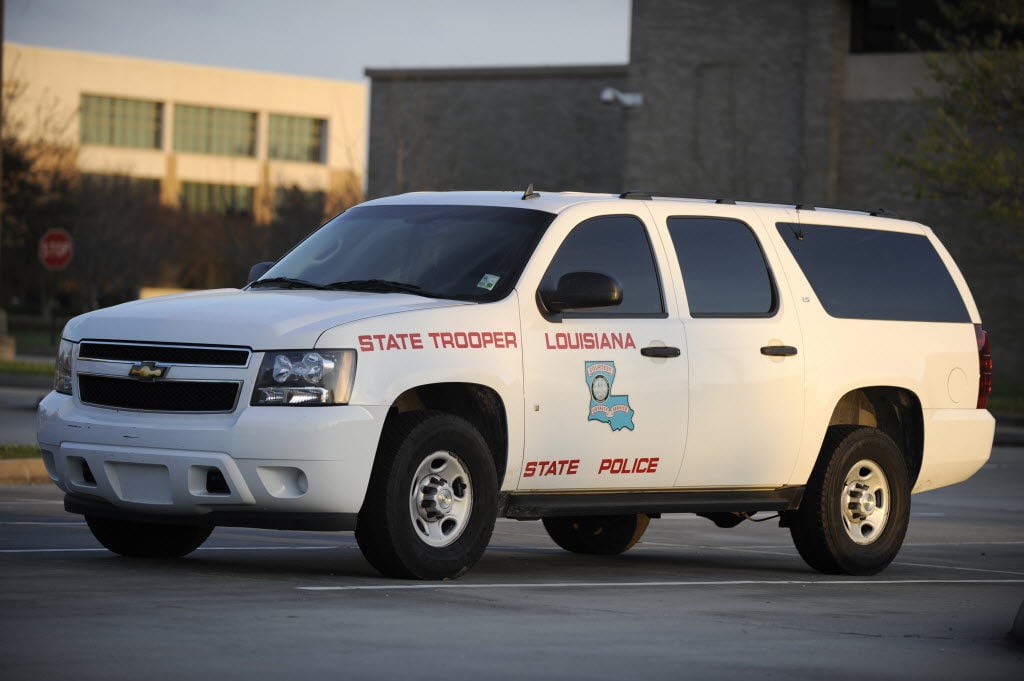
State Police stock

Read Full Post »

Normally, I discount any and all get-rich-quick schemes on the premise if it were that easy, everyone would be doing it.

But now I have to admit I’ve inadvertently stumbled across the perfect path to prosperity that is fraught with few pitfalls other than a harmless disciplinary letter (which can be appealed anyway) and perhaps the scorn of more ethical co-workers. But who cares about that anyway?

And it’s not a pyramid scheme, so go on and put that thought aside.

In fact, in addition to potentially untold riches, there are other benefits—like cross-country vacations, trips to beautiful, historic places, and parties in balmy climates for an entire weekend.

So, here’s my plan and the more readers who participate, the better for all of us:

Find a convention, a seminar or any other such event that can be chalked up to business, preferably halfway across the country, say San Diego, for example. Check out a company vehicle, load up a few co-workers and maybe even a wife if you’re so inclined, and strike out. (Note: it has to be a company vehicle; a personal car would defeat the whole purpose. It would be even better if it is a car normally assigned to a company supervisor.)

As you travel, make it a leisurely drive, complete with side trips to places like Las Vegas, Hoover Dam and the Grand Canyon. It’s okay if you send texts to your bosses along the way but be sure to save them and for goodness sake, put all photos on Facebook. I’ll explain why this is important momentarily.

And here’s where the big money comes in. As you travel, remember: You’re on the clock, even when you sleep. This is crucial! You are never off the clock the entire trip, even when you’re posing for those photos at those lovely landmarks to text to your supervisors (who, by the way, are going to delete their text messages so as not to leave a digital trail). If you work it right, each of you can claim 88 or so straight hours—at the overtime rate of about $53 an hour.

Yes, it’s payroll fraud, but who cares? You company isn’t going to prosecute you for this because you did what you did with the full knowledge and approval of your supervisors—and they’re certainly not talking. It doesn’t matter whether or not you personally knew it was wrong; you’re just following orders.

If you’ve already done the math, you know by now that you’ve pocketed about $4,600 in pay you did not earn but again, you did it with the knowledge and blessings of those up the chain of command. As you make this assertion, you now are thankful you followed my advice and kept those those text messages to prove that you were keeping the brass informed of your every move along the way. That could come in handy later.

When the fecal matter hits the Westinghouse oscillating air manipulation device, everyone of course runs for cover. Your bosses, in a united show of righteous indignation, say you were never authorized to take the scenic route to San Diego and of course their text messages are mysteriously empty.

Wait. What? You didn’t save your text messages? You bonehead! That was your insurance policy, your ace in the hole! Oh, well, if all of you stick together, you can still make this work.

In a classic CYA move, the company honchos conduct an in-house “investigation,” issue a letter of reprimand and make you pay back $1,000 of your ill-gotten gains. And as you file the obligatory appeal, you break out in that Cheshire cat grin in the knowledge that you’re $3,500 to the good with no suspension.

And this is where I come into the picture.

In exchange for my giving you this blueprint to riches, you pay me a finder’s fee of $1,000 and you’re still $2,500 and a nice vacation ahead.

LouisianaVoice has something north of 3,000 subscribers so if I can get just a third of that number to pull off this scam, I’m a millionaire and there are a lot of happy, tanned vacationers out there who are eternally grateful to me for this brilliant plan.

http://www.theadvocate.com/baton_rouge/news/crime_police/article_da072764-8f47-11e7-a6e8-775b365af741.html

State Police stock

Read Full Post »

A familiar name has surfaced as one of a dozen applicants to be the next Baton Rouge Chief of Police, according to a story in today’s (Friday, Sept. 1) Baton Rouge Advocate (Click HERE for story).

Lt. Col. Murphy J. Paul Jr., who holds a bachelor’s degree in criminal justice from Loyola University, currently serves as deputy superintendent of the Bureau of Investigations for Louisiana State Police (LSP). His current salary at LSP is $150,750 per year.

Besides being the recipient of several commendations and awards during LSP, he also came under scrutiny last February when it was revealed that he was among 15 or so guests who traveled to San Diego to witness then State Police Superintendent Mike Edmonson receive a national award.

HERE is the link to LouisianaVoice’s story about that trip, which ultimately led to the resignation of Edmonson after nine years as Louisiana’s top cop.

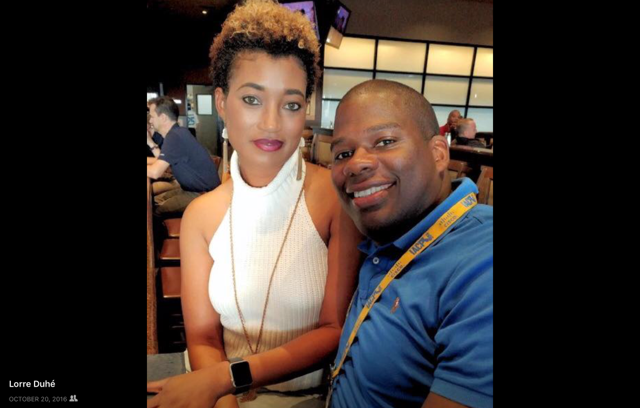
Paul was photographed with his girlfriend, Lorre Claiborne, at a party during that San Diego trip. Claiborne is employed as a State Fire Marshal captain at a salary of $52,500.

LSP Lt. Col. Murphy Paul and girlfriend State Fire Marshal Captain

Lorre Claiborne at party in San Diego last October.

Read Full Post »

When Monica Manzella showed up for her first meeting of the Louisiana State Police Commission (LSPC) last November, she received a warm greeting and a hug from State Police Lieutenant Rodney Hyatt.

We were curious how they knew each other so well. It was, after all, her first meeting.

Hyatt, other than his state trooper duties, also was—and still is—President of the Headquarters Chapter of the Louisiana State Police Association (LSTA). Click HERE. He is also one of the four troopers who drove a state vehicle to San Diego via the Grand Canyon and Las Vegas last October to cheer on and party with their boss, then-State Police Superintendent Mike Edmonson as he received a national award.

Manzella, appointed to the LSPC last October, was an assistant city attorney for the City of New Orleans and had, as part of her duties, signed off on Local Agency Compensated Enforcement (LACE) contracts between the City of New Orleans and Louisiana State Police (LSP). Under LACE, state police are paid by the local district attorney to help beef up traffic enforcement. Some characterized her work on the contracts and her appointment to the commission as a possible conflict of interest but she dismissed that concern out of hand.

Other than his position as headquarters chapter president of LSTA and her signing off on LACE contracts, there was no apparent connection or any obvious reason why the two would be on such friendly terms at her very first meeting.

But thanks to the wife of retired state trooper Leon “Bucky” Millet of Lake Arthur, a connection that appears a little more than casual has been discovered.

Bucky Millet first set the stage a year ago at the LSPC meeting of August 11, 2016, when he filed a formal complaint about the manner in which LSPC members were supposed to be appointed and the manner in which those requirements were being ignored.

[Please keep in mind that LSPC is the Louisiana State Police Commission, which rules on appeals of troopers subjected to discipline and LSTA is the private, non-profit association comprised of active and (some) retired state troopers as members. Some retirees have been expelled from the LSTA for questioning certain activities. The two, LSPC and LSTA, are completely separate entities.]

In his complaint, Millet referenced Article X, Part IV, Section 43(C) of the Louisiana Constitution of 1974 which stipulates the following:

  • The presidents of Centenary College at Shreveport, Dillard University at New Orleans, Louisiana College at Pineville, Loyola University at New Orleans, Tulane University of Louisiana at New Orleans, and Xavier University at New Orleans, after giving consideration to representation of all groups, each shall nominate three persons. The governor shall appoint one member of the commission from the three persons nominated by each president. One member of the commission shall be elected by the classified state police officers of the state from their number as provided by law. A vacancy for any cause shall be filled by appointment or election in accordance with the procedure or law governing the original appointment or election, and from the same source. Within thirty days after a vacancy occurs, the president concerned shall submit the required nominations. Within thirty days thereafter, the governor shall make his appointment. If the governor fails to appoint within thirty days, the nominee whose name is first on the list of nominees automatically shall become a member of the commission. If any nominating authority fails to submit nominees in the time required, or if one of the named institutions ceases to exist, the governor shall make the appointment to the commission.

LouisianaVoice had earlier made a public records requests for any such letters of nominations from the university presidents. Only a single letter from Centenary College President Kenneth Schwab to then-Gov. Mike Foster dated Jan. 15, 2003, was provided.

For the full story of just how dysfunctional the LSPC was at that meeting, click HERE.

So, when Manzella was appointed by Gov. John Bel Edwards two months later, was that procedure finally followed? Well, yes and most probably not so much.

Thanks to Vivian Millet’s extensive Internet search, we now know that Lt. Hyatt and Manzella had their own history, dating back to March of 2016.

It seems that both Hyatt and Manzella were among 28 attendees from across the U.S. who earned their security Master of Arts degrees in Security Studies at the Naval Postgraduate School Center for Homeland Defense and Security (CHDS) in Monterey, California, on March 25.

The CHDS curriculum is an 18-month master’s degree program in homeland security.

Click HERE to see the press release and to see a class photo of the proud graduates. It’s a rather small photo, so here’s a little help with the identities: Hyatt is on the far right in the front row in complete Louisiana State Police uniform and Manzella is behind him and to his right, in the red top.

Which brings us to the question of how she got her appointment to LSPC.

She obtained her J.D. in Law from Loyola University of New Orleans in 2005 (click HERE). Loyola could have been expected to nominate one of its alumni—if it had been asked to do so.

That certainly makes sense. But it didn’t go down that way and with Hyatt in a key position with the LSTA and with LSTA the subject of what the LSPC attempted to pass off as an ongoing “investigation” of its illegal campaign contributions funneled through the personal bank account of the LSTA executive director, the stage was certainly set for a little politicking on her behalf. LSTA needed desperately to stack the commission with members friendly to the LSTA who would lend comfort and support to LSPC Chairman, State Trooper T.J. Doss and other like-minded members.

So, did Hyatt and the LSTA exert a little friendly persuasion to secure a seat on the commission for Manzella? Did they engage in a little back channel diplomacy in order to wrangle the appointment of a member guaranteed to be friendly to the LSTA?

Given the outcome of that investigation by Natchitoches attorney Taylor Townsend, who still has yet to provide a written report of his findings as required by his $75,000 contract and despite repeated demands that he do so, it would seem the Manzella—and subsequent—appointments have paid off handsomely for the LSTA. She has been everything LSTA could want—and more, as she moved from new member to vice chairman of the commission in a matter of just a few months while voting the LSTA line.

Which only underscores the necessity of at most, abolishing the LSPC and to put a constitutional amendment before voters to bring LSP under State Civil Service as it once was or at least, wiping the slate clean and beginning anew with all new members, unaffiliated with any political faction or with any organization and with the common goal of cleaning up the image of State Police and the troubled LSPC.

Failing either of those options, the term “Tarnished Badge” will soon refer to something other than just the nom de plume of a frequent commenter to LouisianaVoice posts.

Read Full Post »

After viewing WVUE-TV Lee Zurik’s report on the Louisiana State Police Commission (LSPC), several things are abundantly clear:

  • If a State Police report is accurate, commission member Calvin Braxton must go but it has to be a package deal with fellow member Jared Caruso-Riecke also being shown the door.
  • The commission, embroiled in tawdry political theatrics, is no longer functional if, indeed, it really ever was. It is incapable of autonomy and must be abandoned and Louisiana State Police (LSP) brought back under the management of the Louisiana Civil Service Commission.
  • In the alternative, if it is to remain intact, there must be put in place a prohibition against a state trooper’s serving as chairman.

LouisianaVoice has been upfront in its past support of Braxton, primarily because he is something of a maverick who refused to take his marching orders from former State Police Superintendent Mike Edmonson. He often bucked the rest of the board and he asked probing questions that made some other members more than a little uncomfortable. The commission needed such a member.

Our 180-flip, based in large part on Zurik’s excellent REPORT Monday night, isn’t because Braxton had a couple of tickets fixed—or that he apparently imposed on then-LSPC Executive Director Cathy Derbonne to write letters on his behalf in efforts to put the fix in.

Who among us has never had a ticket taken care of by friends in the right places? In the spirit of full disclosure, I have on a couple of occasions. My first was as a 21-year-old and was issued as the result of an accident that I still maintain, after 52 years, was not my fault. Not knowing any better, I showed up in court in Farmerville in Union Parish only to have District Attorney Ragan Madden (he represented the 3rd Judicial District, which includes Union and Lincoln, my home parish) meet me at the back of the courtroom. “What’re you doing here? I dismissed your ticket. Go home.”

Wow. And I didn’t even ask. Guess he felt the accident wasn’t my fault either.

In the interest of full disclosure, it should be noted that I also paid a few tickets along the way, even though in two cases, I was offered the fix, but politely declined. Also in the interest of full disclosure, none of the tickets were for anything major (other than the accident)—a rolling stop and a couple of speeding offenses but only about 15 mph over the limit.

When fellow blogger and occasional LouisianaVoice contributor Robert Burns suggested the ticket-fixing would force Gov. John Bel Edwards to remove Braxton from the commission, my first rhetorical question was: How many tickets do you suppose the governor’s brother, Tangipahoa Parish Sheriff Daniel Edwards, may have fixed over the years?

No, it wasn’t the attempt to get tickets fixed that concerned me. It was Zurik’s revelation that Braxton had apparently attempted to have the state trooper who arrested his daughter for DUI transferred and that he implied that as a member of LSPC, he might be disinclined to help the trooper should he ever find himself before the commission for disciplinary action.

Those allegations were contained in a lengthy report by Troop E Commander Captain J.D. Oliphant to the Region 3 Command Inspector that was brandished by Zurik.

Such behavior on the part of a member of the commission that oversees the actions of Louisiana State Troopers in unacceptable. Period.

Granted, Zurik blindsided Braxton at the LSPC meeting last Thursday. Some call it “ambush journalism,” but Braxton has exhibited a reluctance to talk to anyone in the media, LouisianaVoice included, and the direct approach was apparently the only one available to Zurik.

And Braxton’s sudden memory loss concerning his communications with Derbonne was clumsy and was certainly less than convincing.

So why would I insist that Caruso-Riecke be removed from the commission along with Braxton?

Not because he has been a divisive force since his appointment by Gov. Edwards, though he has certainly been that.

My contention is that while Braxton has been issued tickets and then tried to get them fixed, Caruso-Riecke has made it a point of considerable pride that he avoids tickets because…

He cheats. He openly violates the law and even boasts about it on his internet Web page.

You can hear it in his own words HERE and about his wager with Team Texas HERE.

You see, Riecke, who is worth an estimated $70 million, has a lot of time on his hands to pursue his hobby as a star in a TV reality show in which he uses his modified Mercedes in cross-country rally competition, tearing down the nation’s highways at speeds of up to 140 mph.

His vehicle is equipped with two in-dash police scanners with more than 1,000 channels—concealed by a fake dashboard, a handheld scanner and several cellphones, all used to evade law enforcement on public highways.

But here’s the real clincher: his car has 10 separate license plates to help evade law enforcement.

That raises the obvious question of how one gets 10 separate license plates issued to the same vehicle. Or does he pull plates from other cars to use to escape police?

Well, he is a licensed auto dealer, so perhaps he has access to plates from other vehicles. Or maybe he registered the vehicle in multiple states—sort of like Donald Trump’s claim of multiple-state voter registration fraud.

But no one appears to be concerned about that. When Floyd Falcon, attorney for the Louisiana State Troopers Association (LSTA), fired off a LETTER to Gov. Edwards on July 11, 2016, asking that Braxton be removed from the commission, he included a laundry list of 20 specific complaints and also included a four-page State Police Incident Report by Oliphant and submitted to Region 3 Command Inspector Kevin Reeves (since named as Edmonson’s successor as Superintendent of State Police with Oliphant promoted to Major and moved to Reeves’ former post as Region 3 Command Inspector) which detailed Braxton’s alleged threats against the State Trooper who arrested his daughter.

Falcon has been strangely quiet about Caruso-Riecke’s somewhat cavalier attitude about speeding, eluding law enforcement by illegally switching license plates (and yes, it is definitely illegal). But there seems to be no indignation over his thumbing his nose at the law.

But Riecke won’t be removed by Edwards.

Why? A little thing called campaign contributions. Riecke is a close friend of Sheriff Daniel Edwards and between the sheriff and his brother, Riecke has contributed $10,000 in campaign cash. He ain’t going anywhere.

Which brings me to my final point. T.J. Doss is a state trooper. He is a mostly ineffective chairman of the LSPC but as such, is in position to control investigations (or non-investigations in the case of those illegal campaign contributions by the LSTA) of trooper misconduct.

But not once did he attempt to investigate the actions of his former boss, Mike Edmonson. Not once was that infamous San Diego trip raised before the commission. But who in his right mind would want the dubious task of investigating one’s boss?

Which is precisely why there should be a prohibition against a State Trooper serving as chairman of the LSPC. It’s too much of a hot seat—or should be—for a State Trooper. Yes, the LSTA should be represented on the commission, which hears appeals of disciplinary action by troopers. But chairman? No indeed.


Read Full Post »

« Newer Posts - Older Posts »


