Feeds:
Posts
Comments

Archive for the ‘Legislature, Legislators’ Category

Physicians Health Foundation (PHF), which for years has abetted the Louisiana Board of Medical Examiners in targeting vulnerable medical practitioners in a manner reminiscent of the tactics employed by the Louisiana State Board of Dentistry, now finds itself in the crosshairs of State Sen. John Milkovich (D-Shreveport).

Both boards have for years flown under the radar of governors, legislators and the media but more and more, attention is being given to their near-autonomous rule by intimidation and extortion.

PHF, also known as the Healthcare Professionals’ Foundation of Louisiana (HPFL), is located on Bluebonnet Boulevard in Baton Rouge and it currently is about halfway through a three-year, $1.35 million contract with the Board of Medical Examiners to run a “Statewide Operations of Physicians Health Program.”

And, since the Board of Dentistry has been mentioned, it might be worth noting that PHF also is just over a year into a three-year, $287,000 contract with that board to “develop, create and administer the Dental Health Professional Monitoring Program.”

By its own admission in a lawsuit to be discussed later in this post, it is not a treatment facility. So, just what does PHF (or HPFL) do to earn its money?

Well, for the Board of Medical Examiners, it appears to extract huge fees from medical professionals (which includes doctors, physician assistants, podiatrists, medical psychologists, dentists and dental hygienists) who are found to have addiction problems or who the board deems to have committed other transgressions.

And since its contract with the Board of Medical Examiners includes dentists, it is unclear why there is a need for a separate $287,000 contract with the Dentistry Board.

But like the Dental Board, the Board of Medical Examiners has set itself up as accuser, prosecutor, judge and jury in investigating complaints and handing down its decisions. Again, like the Dental Board, the Board of Medical Examiners even conducts its own hearings whenever a doctor appeals one of its decisions.

And the board remains a stellar undefeated record in 20 years of reviews of its decisions that are appealed.

Which probably is the reason Sen. Milkovich feels the need for his SB 286, which would establish a Physicians’ Bill of Rights designed to protect their rights whenever they are brought under the scrutiny of the board. More about that shortly.

In addition to its ability to suspend licenses of medical professionals, the board wields a big stick in its ability to coerce licensees into signing consent agreements to enter into rehab.

And those consent agreements often come with large price tags in the form of fees and penalties. Many state regulatory boards, the Board of Medical Examiners and the Dentistry Board included, receive their budgets not from legislative appropriations but from membership fees and financial penalties assessed against members accused and convicted of violations, some of which, though minor, still carry large fines.

Doctors and other medical practitioners apparently are referred to the rehab centers by PHF (or HPFL) whose spokesperson indicated to LouisianaVoice that it has a list of approved facilities in Louisiana, Mississippi and Alabama, among others.

PHF’s $1.35 million contract with the Medical Board runs from Aug. 1, 2016 through July 31, 2019.

One of those rehab centers is PALMETTO Addiction Recovery Center in Rayville.

That facility became involved in a lawsuit in 2009 after one of its staff members. Dr. Douglas Wayne Cook became sexually involved with one of the center’s patients. The husband of the victim sued Cook, who is no longer with Palmetto but who does continue to have a private practice in Richland Parish.


Milkovich’s bill, already reported out of committee favorably, is scheduled to be brought before the entire Senate on Monday.

“Under Louisiana’s current board system, physicians often face an uneven playing field, rigged proceedings, and a stacked deck,” Milkovich said. “Licensed, dedicated and highly qualified professionals may have their licenses threatened, suspended, or revoked, based on false accusations, anonymous complaints, and spurious charges. Doctors are often administratively charged by the board without even being informed of the identity of their accusers, the evidence against them, or even the substance of the accusations brought against them. This injustice is compounded by the heavy-handed and inequitable tactics employed by some Board staff.

“We understand that there must be a fair and sound disciplinary process for physicians, to protect the public. However, the goal of board proceedings for physicians should be impartiality, fairness, and integrity—not intimidation, falsification, and inequity.

“The aim of SB 286 is to level the playing field, un-stack the deck and render the Board’s adjudication of doctors more transparent. Everyone deserves Due Process. And that includes doctors.”

The bill, according to the BATON ROUGE ADVOCATE, would require stricter communication requirements during board investigations and would require that the board provide physicians under investigation written notice of complaints within 10 days or receipt. Moreover, the bill would require that the board reveal the identity of the complainant and would prohibit ex parte communications by board members prior to a hearing on the pending investigation.

One critic of the board, Dr. Greg Stephens said criminals and terrorists receive “more due process than we give doctors.” He and his former boss, Dr. John Gianforte, said they were coerced into consenting to voluntary license suspensions and mandated substance abuse treatment without either being allowed to give their side of the story.

They were suspended following claims that Stephens allowed unqualified staff members to write and sign prescriptions in his name while serving as medical director at a clinic in Shreveport when in fact, the prescription pad was stolen by two employees and Stephens’ name forged. Gianforte said the two employees were fired and one was later charged by law enforcement authorities.

Milkovich even cited a case where a New Orleans physician practicing at Tulane Medical Center committed suicide last November. His license was summarily suspended in June following an investigation but was reinstated in October. By then, however, the doctor had lost privileges, positions and future opportunities as a result of the investigation, the senator said.

In another case, the family of another doctor filed suit against PFL when the doctor, informed that he had had tested positive for drug use, committed suicide a few hours later. The doctor’s family was told by PFL that its programs and personnel had statutorily qualified immunity from legal liability regarding their activities and that they were further protected by a release and a hold-harmless agreement with the Physicians Health Program.

RAMEY V. DECAIRE

PHF was successful in getting the Louisiana Supreme Court to rule that it was exempt under the peremptory exception of no cause of action and the family’s lawsuit was dismissed. PHF, apparently not satisfied with merely winning, then went after the family for legal sanctions, claiming their suit was frivolous and without reasonable good faith. The trial court denied PHF’s motion and PHF appealed. The First Circuit Court of Appeal upheld the trial court and assessed costs against PHF.

Read Full Post »

Taking their cue from Alabama Sheriff TODD ENTREKIN, several members of Louisiana’s House of Representatives have co-sponsored a bill that would cut food expenditures for prisoners and college and university students while increasing the percentage of prisoner work-release pay that the state receives in an effort to boost revenue as the state rushes headlong toward the June 30 fiscal cliff.

HB-4118, co-authored by a dozen Republican legislators who received the highest ratings from the conservative Americans for Prosperity (AFP), would slash funding for inmate meals three days per week in an effort to help make up budgetary shortfalls.

The bill has been endorsed by AFP, the Louisiana Association of Business and Industry (LABI), the American Legislative Exchange Council (ALEC), U.S. Sen. John Kennedy, and Attorney General Jeff Landry as an effective cost-saving measure that would, at the same time, continue to allow generous tax breaks for business and industry to remain untouched. Also remaining intact would be tax incentives for movie and television production in the state.

In Alabama, existing legislation allows sheriffs to collect a salary supplement as a percentage of savings achieved.

Entrekin, Sheriff of Etowah County in Alabama, recently came under heavy criticism when it was learned that he cut back on his jail’s food budget by eliminating meat for prisoners for all but a couple of days per month but then used the money saved to purchase a beach house for $740,000. HB 4118, while similar to the Alabama law, would have built-in safeguards against any surplus being diverted for personal use.

“Sheriff Entrekin, who runs only a single county jail in Alabama, was able to save approximately $250,000 per year for three years. Granted, he abused the intent of the law by using his surplus funds for personal gain,” said State Reps. Cameron Henry (R-Metairie) and Lance Harris (R-Alexandria) in a joint statement announcing their introduction of the bill. “If surplus funds are properly allocated back to the state instead of to individuals as was the case in Alabama, that misuse of funds can be avoided. With 50,000 prison inmates and more than 200,000 college students in Louisiana, imagine how much we would be able to save by employing the same paradigm.”

HB 4118 would cut servings of meat, milk and juice by three days a week for 50 weeks per year—Mondays, Wednesdays and Thursdays for state-run prisons and all colleges and universities and Tuesdays, Thursdays, and Saturdays for parish jails and privately-run prisons. State appropriations for those institutions would be cut accordingly.

“We wouldn’t want to make such cuts for prisons on Sundays or during the weeks of Thanksgiving or Christmas because that would just not be the Christian thing to do,” the statement by Henry and Harris said. “Colleges and universities are out during those weeks anyway, so they would not be affected during those times.”

They said the potential savings to the state, calculated at a minimum of $3 per meal at which meat, milk and juice are eliminated, would be an estimated $22.5 million per year at prisons and $75 million at institutions of higher learning, or a total of $97.5 million per year.

Public schools would be exempted from the more restrictive diets for now, they said.

Operators of prisons and jails typically receive about 60 percent of the earnings of each prisoner who participates in a work-release program. That amount would be increased to 75 percent if HB 4118 becomes law. Additionally, a processing fee of one dollar would be added to the sale of each soft drink and snack to the prices presently charged by prison commissaries, according to provisions of the bill. Currently, prisoners are charged $3 for soft drinks and $5 for snacks.

“These people are in jail for committing crimes,” the two lawmakers’ joint statement said. “They get free housing, food, clothing and they’re learning a trade. There really isn’t any need for them to earn money on top of those benefits.

“This bill will allow the state to protect the valuable incentives for businesses and industry which provide jobs for Louisiana’s honest, hard-working citizens,” they said. “The bill protects the same jobs that will be available to the college students when they graduate. We’re asking students to sacrifice a little now for greater rewards in the future.”

Though the bill’s language doesn’t specifically say so, the same cuts could also be applied at hospitals now operated as part of the public-private partnerships implemented by the Jindal administration, which would produce additional savings although no estimates were provided for the medical facilities.

If approved, the new law would go into effect one year from today.

Read Full Post »

In case you’ve ever taken the time to wonder why our legislature has been unable—or unwilling—to effective address the looming fiscal crisis for the state, here’s a quick lesson in civics that may help you understand the real priorities of our elected officials and the forces that motivate them.

Members of Congress are advised to spend four hours per day FUNDRAISING, or on “call time.” That’s time to be spent on the telephone raising campaign contributions—if they want to be re-elected.

They are also told they should spend one to two hours on “constituent visits,” which often translates to meeting with lobbyists and campaign contributors. That leaves two hours for committee meetings and floor attendance, one hour for something called “strategic outreach,” or breakfasts, meet and greets, press interviews (read: Sen. John Kennedy), and one hour “recharge time.”

It doesn’t take a mathematician to see that we’re paying big salaries for these guys to actually work only about two hours per day for only part of the year.

Another way of putting it is we’re paying big bucks for them to spend twice as much time raising campaign contributions as actually doing the work of the people who, in theory at least, elected them.

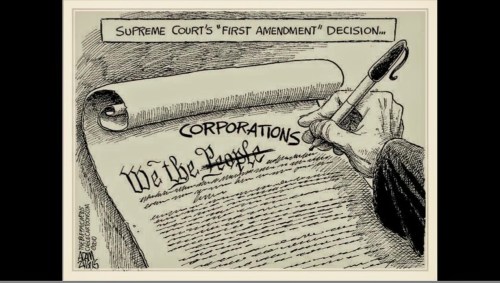
That’s in theory only, of course. The truth is special interests such as banks, hedge funds, big oil, big pharma, the military-industrial complex, the NRA, and other major corporate interests—especially since the Supreme Court’s Citizens United decision—turn the gears of democracy while letting the American middle class delude itself into thinking we actually affect the outcome of elections.

Now, take that image and move it down to the state level and you have a microcosm of Congress.

The numbers are smaller, of course, given the smaller House and Senate districts from which candidates run but the model is the same.

And that is precisely the reason nothing gets done in regard to resolving the financial plight of the state.

Corporate tax breaks, tax exemptions, and tax credits have eroded the state budget until the onus now falls on the individual taxpayers while companies like Walmart enjoy Enterprise Zone tax credits for locating stores in upscale communities across the state.

Petro-chemical plans along the Mississippi River and in the southwestern part of the state enjoy millions of dollars in tax breaks for construction projects that produce few, if any, new permanent jobs.

And who is front and center in protecting the interests of these corporations?

That would be the Louisiana Association of Business and Industry (LABI), first created with the intent of breaking the stranglehold of organized labor back in the 1970s and now focused on maintaining lucrative tax incentives for its membership.

LABI has four primary political action committees: East PAC, West PAC, North PAC, and South PAC.

LouisianaVoice has pulled the contributions of LABI, its four PACs.

For lagniappe, we’ve also thrown in contributions from pharmaceutical and oil and gas interests. The latter list offers a clear-cut explanation of why efforts to hold oil and gas companies accountable for damage to Louisiana’s coastal marshland have died early deaths.

You will notice in reviewing the reports that LABI, while making individual contributions, pours most of its money into its four PACs, which then make the direct contributions to the candidates.

Enjoy.

LABI CONTRIBUTIONS

EAST PAC CONTRIBUTIONS

WEST PAC CONTRIBUTIONS

NORTH PAC CONTRIBUTIONS

SOUTH PAC CONTRIBUTIONS

PHARMA CONTRIBUTIONS

OIL AND GAS CONTRIBUTIONS


Read Full Post »

It was Abraham Lincoln’s Secretary of War SIMON CAMERON who is credited with having defined an honest politician as one “who, when bought, stays bought.”

And it was Louisiana’s own Sen. JOHN BREAUX who told a reporter in 1981, “My vote can’t be bought, but it can be rented.”

Whether bought or rented, contributions to legislators by nursing home interests appear to have been sound investments when it shelled out a total of $27,250 to six state senators, members all of the Health and Welfare Committee, who obligingly voted down a BILL by fellow Sen. Conrad Appel of Metairie that would have given more home health services to the elderly as an alternative to nursing homes. Make that $35,250 if you count contributions to committee chairman Fred Mills who did not vote on the bill because of a conflict. He owns an interest in a Breaux Bridge nursing home and received $8,000 in contributions from the Louisiana Nursing Home PAC.

But the two members who voted in favor of Appel’s Senate Bill 357, Sens. Dan Claitor (R-Baton Rouge) and Ed Price (D-Gonzales) apparently didn’t stay bought—or rented—despite their having received $5,500 between them from the Louisiana Nursing Home PAC. They probably won’t be receiving any further contributions from the nursing home interests.

Appel may also be crossed off their list since he sponsored the bill despite having received $3,500 from the same PAC.

Mind you, the contributions looked up hurriedly by LouisianaVoice by no means constitute the total dished out by nursing home interests, particularly individual nursing homes and their operators. The only contributions searched were from the Louisiana Nursing Home PAC and Elton Beebe of Ridgeland, Mississippi, who operates a string of nursing homes in Louisiana.

The committee voted 6-2 to kill the bill despite the support of AARP lobbyist Andrew Muhl who apparently was no match for the Louisiana Nursing Home Association, which represents about 250 nursing homes in Louisiana—or its money.

Mills, while not voting, did not let his nursing home ownership deter him from speaking against Appel’s bill, calling managed care “too risky.”

Senators voting against the bill and their contributions from nursing home interests included:

  • Yvonne Dorsey Colomb (D-Baton Rouge): $6,000;
  • Norbert “Norby” Chabert (R-Houma): $6,250;
  • Regina Barrow (D-Baton Rouge): $5,000;
  • Gerald Boudreaux (D-Lafayette): $5,000;
  • Dale Erdy (R-Livingston): $4,000;
  • Jay Luneau (D-Alexandria): $1,000.

Voting no and their contributions:

  • Dan Claitor (R-Baton Rouge): $4,000;
  • Ed Price (D-Gonzales): $1,500.

Perhaps we misunderstood John Kennedy’s intent when he said, “Louisiana doesn’t have a revenue problem, it has a spending problem.”

Click on the link to see a partial list of NURSING HOME CONTRIBUTIONS to Louisiana’s elected officials since Jan. 1, 2011. Remember, this is just a partial list.


Read Full Post »

If there was any lingering doubt as to the political stroke of the Louisiana Sheriffs’ Association, one need only watch House Bill 218 do its imitation of Sherman’s March to the Sea.

The bill, authored by State. Rep. Katrina Jackson (D-Monroe) and which gives Louisiana’s sheriffs a 7 percent pay raise, has already sailed through the House with a convincing VOTE of 79-9 with the remaining 16 managing to skip out on the vote.

It now moves on to the Senate Judiciary B Committee where it will be rubber stamped before going to the Senate floor where it is virtually assured of a similarly overwhelming majority approval as it enjoyed in the House.

In the interest of full disclosure, it should be pointed out that neither the sheriffs’ current salaries nor the proposed increase will come from state funds. All sheriffs’ salaries come from their individual budgets but any raises must be approved by the legislature.

But that doesn’t change the fact that sheriffs are among the highest paid public officials in the state. There is not a single sheriff among the 64 parishes who does not make significantly more than the governor of the gret stet of Looziana.

LouisianaVoice painstakingly perused the latest audit reports for every sheriff in the state and found some interesting numbers that might make even the most ardent law and order advocate blanch a little.

Base salaries for sheriffs range from $105,279 for Assumption Parish Sheriff Leland Falcon to $179,227 for East Baton Rouge Parish Sheriff Sid Gautreaux but benefits can—and do—kick the bottom line up significantly.

Several small rural parishes are especially generous to their sheriffs when it comes to chipping in extras.

Take John Ballance of Bienville Parish, for example. Ballance, by the way, is a retired State Trooper drawing a pretty hefty pension from the state. His base salary is $144,904 but he gets an additional $82,607 in benefits that bump his overall pay to $227,511. Among his perks are a $14,504 expense allowance, $10,957 in insurance premiums, $41,207 in retirement contributions and—get this: $13,295 in membership dues for the sheriffs’ association. He has the third highest total in benefits in the state. Bonnie and Clyde, who met their demise in Bienville Parish back in 1934, should have made out so well.

Dusty Gates, the sheriff of Union Parish, pulls down $144,938 in base pay but gets an additional $83,652 in benefits (highest in the state), including $13,766 in sheriffs’ association membership dues (it ain’t cheap being a member of the most powerful lobbyist organization in the state).

Gerald Turlich of Plaquemines Parish comes in second in benefits with $83,530 tacked onto his $159,540 base pay—and he doesn’t even get any membership dues. His perks include $36,825 in insurance and $41,038 in retirement.

Nineteen individual sheriffs currently make $225,000 per year or more after benefits are included—and that’s before the proposed increase.

The top ten overall compensation packages, in order, are:

  • Turlich (Plaquemines): $243,070;
  • Tony Mancuso (Calcasieu): $237,080;
  • Ron Johnson (Cameron): $233,556;
  • Mike Stone (Lincoln); $232,785;
  • Craig Webre (Lafourche): $231,413;
  • Julian Whittington (Bossier): $231,100;
  • Andrew Brown (Jackson): $230,739;
  • Rodney Arbuckle (DeSoto): $230,566 (Arbuckle resigned on March 16);
  • Willy Martin (St. James): $229,951;
  • Ricky Moses (Beauregard): $229,098.

Conversely, only seven sheriffs earned less than $190,000 per year after benefits were included. They included:

  • Falcon (Assumption): $153,637;
  • Sam Craft (Vernon): $171,615;
  • Randy Smith (St. Tammany): $177,367;
  • Eddie Soileau (Evangeline): $180,766;
  • James Pohlmann (St. Bernard): $184,057;
  • Ronald Theriot (St. Martin): $188,003;
  • Toney Edwards (Catahoula): $188,751.

Base salaries are determined by the legislature, according to St. Landry Parish Sheriff Bobby Guidroz.

Twenty-four sheriffs have base salaries of $159,540. A 7 percent increase will add $11,167, boosting their base pay to $170,707 before the addition of benefits

Gautreaux’s East Baton Rouge Parish base pay of $179,277 will jump by $12,549, giving him a new base pay of $191826.

Here is a list of all the SHERIFFS’ SALARIES, including base pay and total compensation.

Read Full Post »

« Newer Posts - Older Posts »

