Feeds:
Posts
Comments

Archive for the ‘House, Senate’ Category

In case you’ve ever taken the time to wonder why our legislature has been unable—or unwilling—to effective address the looming fiscal crisis for the state, here’s a quick lesson in civics that may help you understand the real priorities of our elected officials and the forces that motivate them.

Members of Congress are advised to spend four hours per day FUNDRAISING, or on “call time.” That’s time to be spent on the telephone raising campaign contributions—if they want to be re-elected.

They are also told they should spend one to two hours on “constituent visits,” which often translates to meeting with lobbyists and campaign contributors. That leaves two hours for committee meetings and floor attendance, one hour for something called “strategic outreach,” or breakfasts, meet and greets, press interviews (read: Sen. John Kennedy), and one hour “recharge time.”

It doesn’t take a mathematician to see that we’re paying big salaries for these guys to actually work only about two hours per day for only part of the year.

Another way of putting it is we’re paying big bucks for them to spend twice as much time raising campaign contributions as actually doing the work of the people who, in theory at least, elected them.

That’s in theory only, of course. The truth is special interests such as banks, hedge funds, big oil, big pharma, the military-industrial complex, the NRA, and other major corporate interests—especially since the Supreme Court’s Citizens United decision—turn the gears of democracy while letting the American middle class delude itself into thinking we actually affect the outcome of elections.
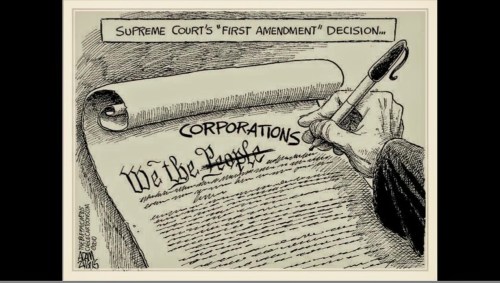
Now, take that image and move it down to the state level and you have a microcosm of Congress.

The numbers are smaller, of course, given the smaller House and Senate districts from which candidates run but the model is the same.

And that is precisely the reason nothing gets done in regard to resolving the financial plight of the state.

Corporate tax breaks, tax exemptions, and tax credits have eroded the state budget until the onus now falls on the individual taxpayers while companies like Walmart enjoy Enterprise Zone tax credits for locating stores in upscale communities across the state.

Petro-chemical plans along the Mississippi River and in the southwestern part of the state enjoy millions of dollars in tax breaks for construction projects that produce few, if any, new permanent jobs.

And who is front and center in protecting the interests of these corporations?

That would be the Louisiana Association of Business and Industry (LABI), first created with the intent of breaking the stranglehold of organized labor back in the 1970s and now focused on maintaining lucrative tax incentives for its membership.

LABI has four primary political action committees: East PAC, West PAC, North PAC, and South PAC.

LouisianaVoice has pulled the contributions of LABI, its four PACs.

For lagniappe, we’ve also thrown in contributions from pharmaceutical and oil and gas interests. The latter list offers a clear-cut explanation of why efforts to hold oil and gas companies accountable for damage to Louisiana’s coastal marshland have died early deaths.

You will notice in reviewing the reports that LABI, while making individual contributions, pours most of its money into its four PACs, which then make the direct contributions to the candidates.

Enjoy.

LABI CONTRIBUTIONS

EAST PAC CONTRIBUTIONS

WEST PAC CONTRIBUTIONS

NORTH PAC CONTRIBUTIONS

SOUTH PAC CONTRIBUTIONS

PHARMA CONTRIBUTIONS

OIL AND GAS CONTRIBUTIONS


Read Full Post »

If there was any lingering doubt as to the political stroke of the Louisiana Sheriffs’ Association, one need only watch House Bill 218 do its imitation of Sherman’s March to the Sea.

The bill, authored by State. Rep. Katrina Jackson (D-Monroe) and which gives Louisiana’s sheriffs a 7 percent pay raise, has already sailed through the House with a convincing VOTE of 79-9 with the remaining 16 managing to skip out on the vote.

It now moves on to the Senate Judiciary B Committee where it will be rubber stamped before going to the Senate floor where it is virtually assured of a similarly overwhelming majority approval as it enjoyed in the House.

In the interest of full disclosure, it should be pointed out that neither the sheriffs’ current salaries nor the proposed increase will come from state funds. All sheriffs’ salaries come from their individual budgets but any raises must be approved by the legislature.

But that doesn’t change the fact that sheriffs are among the highest paid public officials in the state. There is not a single sheriff among the 64 parishes who does not make significantly more than the governor of the gret stet of Looziana.

LouisianaVoice painstakingly perused the latest audit reports for every sheriff in the state and found some interesting numbers that might make even the most ardent law and order advocate blanch a little.

Base salaries for sheriffs range from $105,279 for Assumption Parish Sheriff Leland Falcon to $179,227 for East Baton Rouge Parish Sheriff Sid Gautreaux but benefits can—and do—kick the bottom line up significantly.

Several small rural parishes are especially generous to their sheriffs when it comes to chipping in extras.

Take John Ballance of Bienville Parish, for example. Ballance, by the way, is a retired State Trooper drawing a pretty hefty pension from the state. His base salary is $144,904 but he gets an additional $82,607 in benefits that bump his overall pay to $227,511. Among his perks are a $14,504 expense allowance, $10,957 in insurance premiums, $41,207 in retirement contributions and—get this: $13,295 in membership dues for the sheriffs’ association. He has the third highest total in benefits in the state. Bonnie and Clyde, who met their demise in Bienville Parish back in 1934, should have made out so well.

Dusty Gates, the sheriff of Union Parish, pulls down $144,938 in base pay but gets an additional $83,652 in benefits (highest in the state), including $13,766 in sheriffs’ association membership dues (it ain’t cheap being a member of the most powerful lobbyist organization in the state).

Gerald Turlich of Plaquemines Parish comes in second in benefits with $83,530 tacked onto his $159,540 base pay—and he doesn’t even get any membership dues. His perks include $36,825 in insurance and $41,038 in retirement.

Nineteen individual sheriffs currently make $225,000 per year or more after benefits are included—and that’s before the proposed increase.

The top ten overall compensation packages, in order, are:

  • Turlich (Plaquemines): $243,070;
  • Tony Mancuso (Calcasieu): $237,080;
  • Ron Johnson (Cameron): $233,556;
  • Mike Stone (Lincoln); $232,785;
  • Craig Webre (Lafourche): $231,413;
  • Julian Whittington (Bossier): $231,100;
  • Andrew Brown (Jackson): $230,739;
  • Rodney Arbuckle (DeSoto): $230,566 (Arbuckle resigned on March 16);
  • Willy Martin (St. James): $229,951;
  • Ricky Moses (Beauregard): $229,098.

Conversely, only seven sheriffs earned less than $190,000 per year after benefits were included. They included:

  • Falcon (Assumption): $153,637;
  • Sam Craft (Vernon): $171,615;
  • Randy Smith (St. Tammany): $177,367;
  • Eddie Soileau (Evangeline): $180,766;
  • James Pohlmann (St. Bernard): $184,057;
  • Ronald Theriot (St. Martin): $188,003;
  • Toney Edwards (Catahoula): $188,751.

Base salaries are determined by the legislature, according to St. Landry Parish Sheriff Bobby Guidroz.

Twenty-four sheriffs have base salaries of $159,540. A 7 percent increase will add $11,167, boosting their base pay to $170,707 before the addition of benefits

Gautreaux’s East Baton Rouge Parish base pay of $179,277 will jump by $12,549, giving him a new base pay of $191826.

Here is a list of all the SHERIFFS’ SALARIES, including base pay and total compensation.

Read Full Post »

A handful of distinguished retired journalists (and me) meets once a month at a Baton Rouge Piccadilly Cafeteria (I told you we were retired) to solve the ills of the state, nation, and the world. Occasionally, we even delve into local Baton Rouge politics.

One of those, Ed Pratt, with whom I had the pleasure of working at the old Baton Rouge State-Times back in the ‘70s, is an occasional attendant but because he is still gainfully employed (unlike the rest of the over-the-hill-gang), he doesn’t join us each month.

But several months ago, at a lunch he did show up. The subject that day was the future of the Taylor Opportunity Program for Students (TOPS) and the legislature’s failure to adequately address the looming fiscal cliff that will see about a billion dollars fall off the books with the expiration of a temporary sales tax.

On March 9, Pratt, who still does a regular op-ed column for the Baton Rouge Advocate, WROTE a piece that accurately illustrated the direct connection between the continued funding of TOPS and the return on investment of apartment developers and restaurant owners, investments that exist in the immediate orbit of the state’s institutions of higher learning.

And while Pratt’s analysis singled out the spurt in apartment, condo, and restaurant development, primarily in the immediate proximity of LSU, other colleges and universities have also witnessed similar private investment, particularly in student housing.

Those investments could be in peril if the legislature continues to shirk its responsibility in setting the state on firm fiscal footing.

Take my alma mater, Louisiana Tech, for example, and Grambling State University, just five miles from Tech. There has been an explosion of housing construction around those two campuses. And because Tech has embarked on an ambitious program of student recruitment to bump its enrollment to something like 20,000 or so over the next few years, construction workers have been particularly busy in Ruston. (The enrollment at Tech when I was there was something like 4,000. But they had rotary dial pay phones, Cokes in 61/2-ounce glass bottles, manual typewriters, carbon paper, and 8 p.m. weeknight curfews for female students back then, too.)

But the way they’ve gone about with their student housing construction at Tech is quite creative and is being emulated by every other campus in the state, according to Ruston political consultant Dr. Gary Stokley, a retired Tech professor.

The Tech Alumni Foundation approaches alumni and other supporters with an “investment opportunity” that, as long as TOPS is maintained, is virtually risk-free. (And no, it’s not a Ponzi or pyramid scheme.)

Tech, despite having torn down some of its dormitories, is growing and with an increase in enrollment, students need housing. And, of course, students would prefer a home environment with private baths and kitchens as opposed to dormitories with a community bath and no kitchen.

By working with the school’s foundation, which actually negotiates the construction contracts, investors enjoy a generous tax write-off, plus they will own a percentage of the apartments or condos. The school takes care of filling the housing units and collecting the rent and is also responsible for the maintenance of the buildings. The dollars generated by student rent pays off the debt. The advantage to the school is that it is relieved of the burden of having to go through the State Bond Commission to obtain funding for the construction. The alumnus or supporter who ponies up the money does nothing but sit back and reap the rewards of his investment.

If you have the funds to sink into the project, it’s a win-win proposition.

“Tech is one of the first schools to come up with this method of financing construction of student housing,” said Stokley. “Other schools have since replicated that method.

“Tech and Grambling have a tremendous impact on the economy of Ruston and Lincoln Parish as do others schools on their communities,” he said.

“A four-year student at Tech has an economic value of a million dollars on Ruston,” he said, “so the retention of students is critical. If TOPS craters, enrollment will drop and these apartments will sit empty.

“It’s a domino effect. If TOPS is cut or eliminated, it affects not only students’ families, but the ripple effect impacts colleges and the community as well.” Stokley said it was not unrealistic to envision some universities actually shutting down or converting from public to private schools with even higher tuitions—which could further reduce enrollment.

There are already all those extra fees that students voted to impose on themselves—before tuition began rising so sharply seven or eight years ago. “At Tech, we have the $62 million Davison Center that students voted to pay a portion of by assessing themselves fees totaling $8 million,” Stokley said. “That’s an added fee tacked onto already rising tuition. If TOPS is cut, that’s money that will have to be made up by students’ parents or by students taking out student loans. If that happens, the money for private apartments and condos just won’t be in the budget.”

Combined with the threat to TOPS, banks are lobbying Congress to cap the amounts of government student loans which could place additional financial hardships on students.

With federal student loans, the interest rate is fixed and often lower than private loans which can have variable interest rates of more than 18 percent. Plus, with federal loans, students are not required to begin repayment until they graduate, leave school or change their enrollment status to less than half time. Private loans require payments while still enrolled.

For other advantages of federal over private loans, click HERE.

If you are a parent with a kid enrolled in a Louisiana public university who is on TOPS, you may wish to turn your attention from March Madness long enough to give your House and Senate members a call to suggest that they take time away from campaign fund raising long enough to do the job they were elected to do.

Better yet, here are the links to the HOUSE and SENATE. Scroll down and click on the name of your members to get their email addresses to contact them that way.

Read Full Post »

State Sen. Dan Claitor (R-Baton Rouge) sometimes seems to be Louisiana’s answer to California Gov. Jerry Brown, aka Moonbeam.

Claitor can sometimes be an example of what we should expect from our legislators but far more often than not, fail to get. He also can do a spot-on Jekyll-to-Hyde transformation.

For instance, it was Claitor who filed a lawsuit to stop fellow Sen. Neil Riser’s sneakier than sneaky attempt to (illegally) inflate then-State Police Superintendent Mike Edmonson’s retirement by, it eventually turned out, some $100,000 per year.

Points for Dan Claitor.

Claitor also filed a bill way back in 2012 that would have prevented legislators from leaving the House or Senate and taking six-figure political jobs in order to boost their retirement. That bill caused Sen. Daniel Martiny (R-Metairie) to practically go slightly ballistic—possibly because he could see an opportunity slipping away for himself.

The impetus behind Claitor’s doomed bill was Bobby Jindal, who was handing out those jobs like a lecherous old man giving candy to little kids

Claitor’s bill was defeated even as it became known that Jindal had appointed former legislators to lucrative jobs for which they possessed few, if any, qualifications.

Cases in point included:

  • Noble Ellingtonof Winnsboro, appointed to the second position in the Department of Insurance at $150,000 per year;
  • Jane Smithof Bossier City, appointed to position of Deputy Secretary in the Department of Revenue at $107,500 per year;
  • Troy Hebertof Jeanerette, appointed Commissioner of the Louisiana Alcohol and Tobacco Control Board at $107,500per year;
  • Kay Katzof Monroe, named member of the Louisiana Tax Commission at $56,000 per year;
  • Nick Gautreauxof Meaux, named Commissioner of the Office of Motor Vehicles at $107,000;
  • Tank Powelland  J. “Mert” Smiley, both named to the pardon board at $36,000 per year—Smiley to serve only until he took office as Ascension Parish tax assessor;
  • Former St. Tammany Parish President Kevin Davis, named Director of the Governor’s Office of Homeland Security and Emergency Preparedness at $165,000, and
  • Former St. Bernard Parish President Craig Taffaro, new Director of Hazard Mitigation and Recovery at $150,000per year.

Points for Claitor for his quixotic tilting at windmills.

So, what’s with his SENATE BILL 276 in the current legislative session? Is he now acting out his Mr. Hyde role?

Claitor, who will be 57 later this year, is trying to push through a constitutional amendment that, if passed by voters, would bar anyone who is 70 or older from serving in the legislature or from holding statewide elective office.

In a magnanimous gesture of goodwill, however, his bill does stipulate that any officeholder who reaches age 70 while in office would be able to complete his term.

Wow. Thanks, I guess, from the Old Geezer Gallery. Claitor can certainly expect a Christmas card from State Insurance Commissioner Jim Donelon this year (he’ll be 74 by that time).

It’s uncertain, without time-consuming research, just how many legislators would be disqualified to hold office under terms of Claitor’s benevolent bill, but my State Representative, J. Rogers Pope will be 77 later this year and I kinda like the job he’s done for the citizens of Livingston Parish. Senate President John Alario, considered the most able legislator whether or not you agree with him, is 74 (15 days older than yours truly but don’t worry: I’m not running for office).

And there is a gaggle of legislators well under Claitor’s self-imposed age of demarcation who, based on their collective performance in addressing the state’s fiscal problems, should already be out the door well before reaching their septuagenarian years. As a group, they’ve proven themselves to be inept, greedy, ambitious, petty, obstructionist, partisan hacks—and that’s sugar-coating it.

Apparently, Claitor, an attorney, has never heard of the AGE DISCRIMINATION IN EMPLOYMENT ACT. Which forbids age discrimination against people who are age 40 or older (did I mention that Claitor is 56?).

Initially, I thought Claitor, in a snit of self-righteousness, might be aiming his bill at Secretary of State Tom Schedler, who is embroiled in a dandy sexual harassment lawsuit by a former employee (Schedler admits having sex with the plaintiff, but says it was consensual, which she denies). The entire affair (poor choice of words) has more or less captured the interest of political junkies in Baton Rouge who thought Schedler ran one of the more upstanding, scandal-free agencies until this story broke.

But a quick check reveals that Schedler is 68. He will be 70 on Jan. 24, 2020, only days after the new terms of office for state officials and legislators begin which would mean that Schedler, if he remains in office and is re-elected, would be able to complete his next term under Claitor’s proposed guidelines.

Regardless, Claitor has royally ticked off a few senior citizens who are aware of his bill. Among them is former State Budget Director Stephen Winham of St. Francisville, who just happens to be 70. The bill wouldn’t affect Winham unless he plans to run for office, but he nevertheless was rankled by Claitor’s attempt at slamming the door on those who do aspire to office but have reached the magic age of 70.

“I do not live in your district,” Winham said in an email to Claitor. “I am 70.  I take offense at this bill and I am sure I am not alone. Is this one of those bills where you are trying to punish an individual elected official or do you really believe ALL of us who have reached age 70 are senile or otherwise incapable of serving in public office?”

Claitor was less than diplomatic in his response to Winham:

“I am glad you take offense to SB 276. I will assume that you also take offense to requiring judge’s (sic) to retire at age 70. Please stay tuned to the debate. Thank you.”

Besides his apparent inability to correctly spell the plural of judge despite holding a law degree (it doesn’t take an apostrophe, Dan), Claitor also appears to have a propensity to be a bit snotty with critics. Not a good trait for an elected official.

Stay tuned, folks. The “debate” should be interesting.

Read Full Post »

When Ronald Reagan wanted to push a bill through a recalcitrant House ruled by Democratic Speaker Tip O’Neill (as bad as he was, O’Neill was still head and shoulders above current Speaker Paul Ryan in terms of leadership and ability), he would go on national television and appeal directly to the American voters.

Gov. John Bel Edwards should have taken his cue from the Gipper. Instead of taking to the TV airwaves to make his case directly to Louisiana citizens, he has chosen to go it alone against an obstinate, arrogate, no-solutions-to-offer Republican legislature who, to quote my grandfather (and I’m cleaning it up a bit) wouldn’t urinate on him if he were on fire.

But while Edwards has not displayed the leadership one would expect of a West Point graduate, neither has this Jell-O-backboned legislature done anything to warrant any bouquets. The word obstructionism comes to mind immediately as a one-word description of this bunch.

There is not a shred of doubt that Republican legislators are still taking their cue from the American Legislative Exchange Council (ALEC) and Grover Norquist. Remember in 2015, when 11 legislators WROTE to Norquist to obtain his permission to vote for Jindal’s tax swap?

Since when does Grover Norquist speak for the voters of Louisiana?

But, believe it or not, this rant isn’t about the legislator’s ability to waste some $900,000 on a special session that failed to produce a solution to the looming state financial disaster. Retired State Budget Director Stephen Winham covered that in yesterday’s post.

Instead, in a classic illustration of how to violate journalistic practices by burying the lede this deep in the story, this is about legislators’ real priorities while in Baton Rouge at the governor’s call to do something—anything—to avert the fiscal cliff that awaits next June.

Citizens routinely flock to Baton Rouge during legislative sessions to testify before committees on their positions on various issues. If you’ve ever sat in on any of these committee meetings, it’s apparent that legislators are just going through the motions of pretending to listen to the voice of the people. In reality, they converse among themselves during citizens’ testimonies, walk out of the committee room to take a phone call, or generally get that patently political glazed look as they wait for the testimony to end so that the committee can proceed with its predetermined vote.

The real reason many legislators were in Baton Rouge for this session was not to tend to the people’s business but to line their own pockets, or more precisely, their campaign treasuries.

Beginning on Jan. 31, and continuing through the special session which began on Feb. 19 and until March 12 (one week from today), 41 campaign fundraisers for 46 legislators were scheduled by lobbyists, including the Beer Industry League, the Louisiana Restaurant Association (LRA), the Louisiana Oil & Gas Association (LOGA), and Southern Strategy Group in such partying-hardy locations (where the real legislative work gets done) as:

  • The Longview House, the former home of Mrs. Earl K. Long, now housing the offices of Haynie & Associates;
  • The Jimmie Davis House, which houses the offices of CeCe Richter and the Louisiana Oil and Gas Association;
  • The Louisiana Restaurant Association House (LRA: recently purchased near the State Capitol);
  • Beer Industry League offices.

One of those, on March 8 (Thursday), for State Sen. Eric LaFleur, will feature an appearance by Gov. Edwards. Of course, the Beer Industry League keeps legislators plied with alcohol at each of these locations, thus insuring their undying loyalty when key votes come up.

It’s uncertain if the suggested contribution amounts reflect the legislator’s relative worth to the organization, but following is the schedule of fundraisers hosted by the various lobbyists:

  • 30: Longview (1465 Ted Dunham Ave.) Fundraiser for Senator John Milkovich ($500 suggested contribution);
  • 31: Beer Industry League Fundraiser for Rep. Robby Carter ($250 suggested contribution);
  • 31: Jimmie Davis House (1331 Lakeridge Dr.) Fundraiser for Rep. Clay Schexnayder ($500 Contribution);
  • 31: Longview Fundraiser for Rep. Joseph Stagni ($250 suggested contribution);
  • 31: Jimmie Davis House Fundraiser for Rep. Tanner Magee ($250 contribution);
  • 5: 18 Beer Industry League Fundraiser for Rep Frankie Howard ($250 suggested contribution);
  • 5: Jimmie Davis House Fundraiser for Senator Rick Ward ($500 contribution);
  • 6: Longview Fundraiser for Rep Scott Simon ($250 suggested contribution);
  • 7: Jimmie Davis House Fundraiser for Rep Blake Miguez ($250-500 contribution);
  • 7: LRA House (Louisiana Restaurant Association – which recently got a nice place right by the capitol at 1312 Ted Dunham Ave. to host fundraisers) Fundraiser for Rep Stephen Carter ($500 contribution);
  • 7: LRA House Fundraiser for Rep Thomas Carmody ($500 contribution);
  • 7: Jimmie Davis House Fundraiser for Senate President John Alario, Jr. and Speaker of the House Taylor Barras ($500 contribution—Can’t wait to see how much this one brought in);
  • 15: Longview Fundraiser for Senators Page Cortez & Jonathan Perry ($500 contribution);
  • 19 (Opening day of special session): Beer Industry League Fundraiser for Senator Greg Tarver (suggested contribution up to $2,500—nothing cheap about Tarver, including his price);
  • 19: Longview Fundraiser for Reps Patrick Connick, Kevin Pearson, & Polly Thomas ($250 suggested contribution)
  • 19: Longview Fundraiser for Rep Sam Jenkins ($250 suggested contribution);
  • 20: The Lobdell House (711 N. 6th St) Fundraiser for Rep Frank Hoffman ($500 suggested contribution);
  • 20: LRA House Fundraiser for Senators Ronnie Johns and Dan Morrish ($500 contribution);
  • 21: Beer Industry League Fundraiser for Rep Kenny Havard ($500 contribution);
  • 21: Longview Fundraiser for Rep John Stefanski ($250 suggested contribution);
  • 22: Beer Industry League Fundraiser for Senator Jay Luneau ($500 suggested contribution);
  • 22: LRA House Fundraiser for Rep Chris Leopold ($250 contribution);
  • 22: LRA House Fundraiser for Senator Sharon Hewitt ($500 contribution);
  • 22: Longview Fundraiser for Senator Karen Carter Peterson ($500 contribution—She’s the largely ineffective chairperson of the State Democratic Party);
  • 22: Jimmie Davis House Fundraiser for Rep Gary Carter ($250 suggested contribution);
  • 23: Longview Fundraiser for Rep Ryan Gatti ($500 suggested contribution);
  • 27: LRA House Fundraiser for Senator Dale Erdey ($500 contribution);
  • 28: Beer Industry League Fundraiser for Senator Dan Claitor and Rep Franklin Foil ($500 suggested contribution);
  • 28: LRA House Fundraiser for Rep Rick Edmonds ($500 contribution);
  • 28: Jimmie Davis House Fundraiser for Rep Nancy Landry ($500 contribution)
  • 28: Southern Strategy Group of LA Fundraiser for Senator Ed Price ($500 contribution);
  • 1: Beer Industry League Fundraiser for Rep Rodney Lyons ($250 to $2,500 suggested contribution);
  • 1: Jimmie Davis House Fundraiser for Rep Alan Seabaugh (attendee $250, Host Committee $1000, Supporter of Seabaugh $2500);
  • 6: Beer Industry League Fundraiser for Senator Troy Carter ($500 to $2,500 contribution—another big-ticket legislator);
  • 6: Southern Strategy Group Fundraiser for Rep Denise Marcell ($250 suggested contribution);
  • 7: Beer Industry League Fundraiser for Senator Troy Carter ($500 suggested contribution) (Two days in a row for this Senator! A double-dipper! His relationship with the ATC Commissioner must be very important to this group);
  • 8: Beer Industry League Fundraiser for Senator Eric LaFleur with Special Guest LA Governor John Bel Edwards ($500 contribution)
  • 8: Longview Fundraiser for Senator Regina Barrow ($500 suggested contribution)
  • 9: Beer Industry League Fundraiser for Senator Norby Chabert and Rep Stuart Bishop ($500 suggested contribution);
  • 9: Longview Fundraiser for Rep Ray Garofalo ($250 contribution);
  • 12: Jimmie Davis House Fundraiser for Rep Patrick Jefferson ($250 – 2,500 suggested contribution).

Twenty-eight state place RESTRICTIONS on campaign CONTRIBUTIONS and Louisiana is one of those—theoretically.

Louisiana Revised Statute 24:56 addresses PROHIBITED ACTIVITY.

Louisiana RS 18:1505.2 Q(b) also says: “No legislator or any principal or subsidiary committee of a legislator shall accept or deposit a contribution, loan, or transfer of funds or accept and use any in-kind contribution, as defined in this Chapter, for his own campaign during a regular legislative session.”

So, yes, there are restrictions against legislators soliciting or accepting campaign contributions during legislative sessions, but a close look at the wording gives lawmakers—the ones who write the laws—a loophole you could drive a truck through.

And that loophole is the words “regular legislative session.” The fiasco that ended on Monday was not a regular session but a special session. In fact, it was the fifth special session called to deal with the state’s fiscal condition, all of which failed to do so.

But campaign contributions are another matter. Where legislators are unable/unwilling to fix the state’s fiscal problems, they certainly see to their own financial well-being. And if they can do so while on the taxpayer clock for $156 per diem (Latin: per day) and mileage payments to and from Baton Rouge, so much the better. Church Lady from Saturday Night Live had a term for that: “Isn’t that special.” (Pun intended).

One observer said, “It’s almost insulting that they (legislators) even waste our time and money on these hours-long committee meetings where they are supposed to be considering the voice of the people who take time away from their jobs and families with the naïve perception that their voices actually matter when it is abundantly clear that decisions are controlled and bought by a small group of power associations. Just watch the process unfold. These groups will prevail I their positions no matter how many logical facts and explanations are presented by the other side (and often when the prevailing associations have absolutely no logical facts or explanations).”

I couldn’t have said it better myself.


Read Full Post »

« Newer Posts - Older Posts »

