Feeds:
Posts
Comments

Archive for the ‘Governor’s Office’ Category

The Faircloth Law Firm doesn’t even show as a blip on the Louisiana Office of Contractual Review’s (OCR) Top 50 list of legal contractors with the State of Louisiana for the Fiscal Year July 1, 2010 through June 30, 2011.

Altogether, the top 50 contracts represent a combined total of $81.4 million, according to OCR’s list.

The list ranks state contracts from the largest—the Department of Justice (Louisiana Attorney General) at $18 million to number 50—the $276,000 contract of the New Orleans law firm of Vezina & Gattuso, but does not include Faircloth.

That’s because the Faircloth Law Firm received its payments in fiscal years 2012 and 2013 and did not show up on the FY-2011 list.

Most attorney contracts, with the exception of the Attorney General and public defender contracts, are awarded over a three-year period.

It should be noted that simply because a firm is awarded a contract of, say, $1.5 million, it does not necessarily reflect the actual amount paid the firm. Often, cases conclude long before the contracts are exhausted and in other cases, they extend beyond the financial terms of the dates of the contracts and must be amended or renewed.

The Associated Press reported Wednesday that Faircloth has received more than $1.1 million in contract work from various state agencies, which would put the firm about midway on the list of top 50 firms. Records provided by the Office of Risk Management (ORM) through the Division of Administration (DOA) show that the Faircloth firm was actually paid $931,000 in 2012 and 2013.

Most contracts awarded through ORM are done so at set hourly rates which are generally uniform from firm to firm, though there are exceptions where a firm will receive a contract with a higher per hour representation fee. And while LouisianaVoice was not provided with Faircloth’s hourly fee, it is assumed that it is higher than customary simply because he represented the governor’s office in several court cases, many of which he lost in the lower courts and in the appeals process.

More recently, the attorney general’s office has contracted Faircloth’s firm to represent the state in litigation against BP for the 2010 Gulf of Mexico oil spill and is also represented the state in litigation by CNSI which was fired from its $200 million Medicaid contract with the Department of Health and Hospitals.

Those two cases alone are expected to reap an additional $675,000 in addition to the $1.1 million already paid but Faircloth downplays that amount as insignificant in the overall scheme of things.

“I know what we do is a pittance compared to how much gets contracted,” he said.

Oh, really?

Let’s compare.

With the $675,000 from CNSI and BP cases added to the $1.1 million already received, that’s almost $1.8 million total.

Of the 50 biggest legal contracts listed by OCR, only 10 were for more than $1.8 million and half of those were for either the attorney general’s office or four contracts of $5.1 million for the legal services for the defense of persons pursuing post-conviction relief of a capital conviction; $4 million for legal services for the Louisiana Public Defender Board and contracts for $2.1 million and $2 million for legal representation for capital cases where an ethical conflict in the representation of indigents is needed.

Faircloth denies that he is getting the lucrative contracts because of his ties to the governor as first his executive counsel and most recently as a member of the University of Louisiana Board of Supervisors.

Sean Lansing, a spokesman for Jindal first said the governor’s office doesn’t direct agencies to hire specific attorneys but later revised his statement when told that agency directors indicated that Jindal’s office had suggested hiring Faircloth in the past. “We have recommended Jimmy in certain circumstances because he is a great lawyer but at the end of the day, it is up to agency heads to decide on whom to hire.

“I don’t deny that I have the benefit of knowing all those folks,” Faircloth said of his connections to the governor’s office. “I would like to think that in my working with (state agencies), they would say, ‘Jimmy’s a very good lawyer. Let’s hire him.’

“I like to think I get the call because we give pretty good service,” he said.

Read Full Post »

BATON ROUGE (CNS)—It would seem that Jimmy Faircloth isn’t doing very well when representing the gret stet of Looziana in the various courtrooms around the state—either as an advocate of an unwinnable case on behalf of the state or as a candidate for the Louisiana Supreme Court.

Faircloth’s name has surfaced more often than bubbles in little Flatulent Filmore’s bath water, but always, it seems, on the losing end of the score.

The first time we heard the Louisiana Tech graduate’s name was when he was named in January of 2008 as Gov. Elect Bobby Jindal’s choice as his executive counsel.

Jindal’s pick was controversial from the get-go. Faircloth was still sticky from his three-year hitch as legal counsel for the Coushatta Indians, whom he advised to sink $30 million in a formerly bankrupt Israeli technology firm called MainNet for whom his brother Brandon was subsequently employed as vice president of sales.

It was not the first bad decision by the Coushatta Tribe. Three years earlier, they attracted undesired national attention when it was revealed that they had paid lobbyist Jack Abramoff $32 million to help promote and protect their gambling interests and got little in return.

Those same Coushattas also paid another $400,000 to Aubrey Temple of DeRidder, whom Jindal would later name to the Coastal Protection and Restoration Financing Corp. Temple was never able to account for the $400,000. Temple also was a key player in an attempt by another Jindal ally, Donald T. “Boysie” Bollinger of Lockport, to purchase Toledo Bend water from the Sabine River Authority for possible resale in Texas.

Okay, this is getting way too convoluted. Let’s get back to Alexandria attorney Faircloth.

Faircloth resigned as executive counsel in 2009 to run for the Louisiana Supreme Court. It was a race he lost by 53-47 percent.

Two years later he was fined $1,000 by the Louisiana Board of Ethics for violating state ethics laws when he entered into a contract to represent the Louisiana Tax Commission only six months after he resigned as Jindal’s executive counsel. State law required him to wait a full year before representing any state agency. He returned the $7,000 he had received in legal fees from the Tax Commission.

In December of 2010, Jindal appointed Faircloth to the University of Louisiana Board of Supervisors. In January of this year, Faircloth resigned and was replaced by his wife, Kelly.

The latest episode with Faircloth is yet another legal setback—this time at the hands of the First Circuit Court of Appeal which upheld a lower court decision that the LSU Board of Stupevisors must make public the names of the candidates for LSU president.

The Stupevisors withheld the names of all the candidates except the ultimate selection, F. King Alexander of California State University Long Beach and the Baton Rouge Advocate and the New Orleans Times-Picayune each filed suit to force the board to reveal the names of the three dozen candidates who were considered.

Faircloth, true to form and like his mentor Jindal, refused to admit defeat graciously. He described the matter before the appeals court as “not an appeal” but merely a question of what LSU owed in damages and legal fees. He added that LSU would “get its chance to appeal.”

Normally, only the losing party of a civil court matter would be required to pay damages and legal fees, so it’s somewhat confusing to understand where, exactly, Faircloth is drawing the line between winning and losing or what is and what is not an appeal.

No matter.

Faircloth, if nothing else is a trooper and the matter lives on in the courts—and Faircloth’s meter keeps running.

Other cases in which Faircloth has gone down in flames include a federal case in Tangipahoa in which a U.S. District Court Judge in November of 2012 ordered a halt to implementation of Jindal’s new voucher and teacher hiring laws in Tangipahoa because the state laws conflict with court orders in decades-old desegregation cases in Tangipahoa and at least 30 other parishes.

“They (the plaintiffs) can’t even describe the standard or what programs are affected” by the desegregation order, Faircloth sniffed.

In March of this year, a Baton Rouge district court judge negated the teacher tenure and evaluations section of Gov. Jindal’s education reform.

Faircloth had no comments about that ruling but Jindal had plenty to say. “We expect to prevail in the state Supreme Court,” he said.

Two months later, in May, the Louisiana Supreme Court shot down the Jindal administration’s method of funding the statewide school voucher program, ruling that it diverted money from each student’s per-pupil allocation to cover the cost of private or parochial school tuition.

The very next month, the Supremes struck down a change to the state retirement system that had been pushed through the legislature by Jindal—because the measure had not been approved by the constitutionally-required two-thirds vote.

Ironically, State Rep. Kevin Pearson (R-Slidell), who sponsored the retirement changes in the 2012 legislature, was the same legislator who pushed for the constitutional amendment the previous year that required that any retirement plan which results in an actuarial cost to the state to be passed by a two-thirds vote.

So Faircloth must really feel bad about all those losses, right? After all, those TV lawyer ads say you pay nothing unless you win, right?

Nope and nope. Taking the second question first, those lawyer ads are for plaintiff attorneys who work on contingency. Defense attorneys like Faircloth get paid, win or lose.

That should take care of the first question; Faircloth gets paid, win or lose. And he certainly gets paid well.

LouisianaVoice made our customary public records request. On July 9, we asked the governor’s office, the Office of Risk Management (ORM) and the Division of Administration (DOA) for an accounting. The answer finally came on July 19, eight days late under the state’s public records laws.

There was a caveat with which we take issue: The response from DOA attorney Joshua Melder said, “Some information has been redacted pursuant to the Office of Risk Management’s pending claims privilege.”

The public records law, as we understand it, does protect matters of attorney-client privilege or details of ongoing litigation such as settlement negotiations. Attorney fees would not, as we interpret the law, be protected but we let it pass for now. After all, we don’t possess the knowledge of the great legal minds who protect the state’s interests so proficiently.

The figures for fiscal years 2012 and 2013, exclusive of the figures redacted pursuant to ORM’s pending claim privilege, show that the Faircloth Law Firm pulled down an eye-popping $931,000 in those losing causes–$843,300 of that in FY-2013.

Not a bad return on Faircloth’s $23,000 in campaign contributions to Jindal campaigns in 2003, 2006 and 2010.

Now if he would just win an occasional case, Jindal might be a little happier with his favorite attorney.

Read Full Post »

John White just doesn’t get it. A few months ago he went ballistic over information leaked to LouisianaVoice and sources inside the Department of Education (DOE) told us he launched an in-house investigation, including employee emails, in an effort to learn the source of the leaks.

We responded to that report by sending an email to White informing him that none of his employees were as careless with emails as he (remember the “Dude, you are my recharge” email he sent to Pete Gorman, senior vice president of News Corporation’s education division Amplify when Gorman asked White to dinner?).

We informed White that the information we received had been downloaded on a flash drive and passed along to us. We even offered to supply White with a blank flash drive in case he had any information he would like to provide. He never responded to our offer.

Then there was that mysterious email accidentally copied to us from DOE legal counsel Joan Hunt to Troy Hebert, director of the Office of Alcohol and Tobacco Control (ATC) as a result of one of our many requests for public records that DOE loves to ignore until they’re hauled into court and hit with fines, court costs and attorney fees. The message to Hebert, who apparently has wormed his way into Gov. Jindal’s inner circle, said, “Troy, we need to reply and say that.”

That’s it. Nothing else. And when we tried to obtain a copy of that email, we were informed that it was subject to attorney-client privilege despite the fact that Hebert, as head of ATC, is not affiliated with DOE, is not an attorney, and certainly is not a client of Hunt.

But now, a new twist has surfaced that may be (or maybe not) related to that exchange between Hunt and Hebert.

Were they laying the groundwork to set up a couple of internet bloggers who have been an ongoing nuisance to White and DOE? If current reports are accurate, it could well be.

Word out of DOE is that administrative types (we have their names but we are not prepared to release them at this time) are leaning hard on DOE employees in the Information Technology (IT) section, even to reviewing all their emails and harassing them in attempts to learn who is leaking information to Jason France of the Crazy Crawfish blog and to Tom Aswell of LouisianaVoice.

Also part of the alleged game plan is to plant tantalizing—but bogus—stories in an effort to get our sources to leak the information to us and to get us to publish them so that we can be discredited publicly and revealed as hacks—and so the leakers can be nailed to the wall.

Silly rabbits, you can’t even devise a plan to plug leaks without the plan itself being leaked. You couldn’t plant petunias without growing a crop of ragweed. I’ve known mayonnaise farmers in Missoula, Montana, who were better at planting things.

As we said earlier, we know the identities of three of the administrative types at the center of this little high school stunt but we’ll keep them confidential for now with the option of releasing them down the road.

Finally, we would be remiss if we did not remind White that our sources are not stupid, nor are they careless. Anything they reveal to us will never be through a state computer—unlike the state employee (Department of Public Safety) who used his state email account to log a commit on our blog today (Tuesday)—at the bottom of our June 28 IT consolidation story—asking us if racism was at the root of our criticism of Jindal. (First of all, we’re anything but racist. Secondly, Lord knows we don’t need racism as grounds for offering legitimate criticism of this administration.)

Finally, Mr. White, we have already been investigated by the best (in Gov. Jindal’s eyes, apparently, and of course, in his own mind). Mr. Hebert ordered an investigation of us some months ago and that came up empty.

Seems we’re actually pretty boring but you’d never know it by the amateur sting operation being concocted by DFA (Detectives for America, the investigative arm of TFA— Teach for America).

Wonder if we should submit a public records request for interoffice emails dealing with planting fake news stories with a couple of pesky blogs?

ESSAGEMAY OTAY OURCESSAY: IXNAY NOAY HETAY TATESAY OMPUTERSCAY.

Read Full Post »

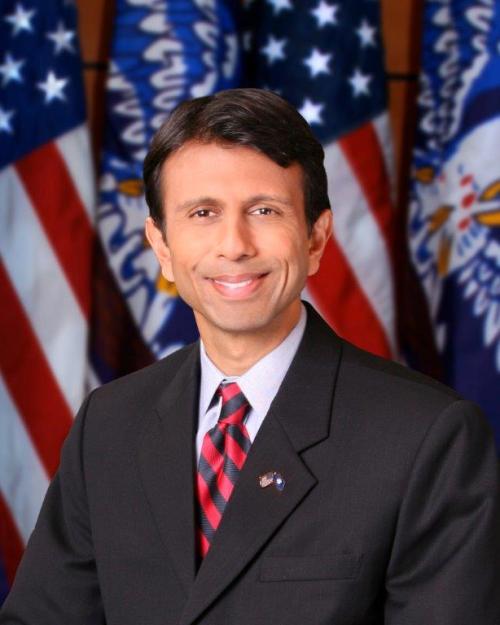
Louisiana Secretary of State Tom Schedler and former Secretary of the Department of Health and Hospitals (DHH) David Hood recently expressed their surprise that the Medicaid Trust Fund for the Elderly has shrunk from $830 million to $410 million under the administration of Gov. Bobby Jindal.

The fund balance is expected to drop to $250 million or less by the end of the current fiscal year (June 30, 2014) and at the present rate of depletion, could be gone in its entirety by the end of Jindal’s term of office, leaving the next governor with having to close a huge health care financing gap.

Schedler and Hood shouldn’t be surprised. In fact, by now they should expect no less from Jindal who, despite his 2003 campaign promises to the contrary, has consistently dipped into one-time money to pay recurring expenses in an effort to plug gaping deficit holes in the state budget.
null
null

The original intent of the fund was to use only the interest and investment earnings to provide a stream of funding to pay for nursing home care and other health care services.

Revenue in the fund was to be used as a source of state matching funds for Medicaid funds to make enhanced payments to local government-owned health care facilities.

In fact, a 2012 constitutional amendment to “prohibit monies in the Medicaid Trust Fund for the Elderly from being used or appropriated for other purposes when adjustments are made to eliminate a state deficit” was approved by voters by a 71 percent to 29 percent margin (1.3 million to 527,000).

The amendment specifically prohibits dollars in the trust fund from being used for anything other than the intended purposes and “not (for) helping to balance the state budget” and “to constitutionally protect a specific fund from being raided to help make up for shortfalls in state revenue,” according to the Council for a Better Louisiana (CABL).

Ironically, CABL took no position on the constitutional amendment prior to the election, calling it “unnecessary.”

But Jindal has consistently worked to cut mental health benefits through closure of Southeast Louisiana Hospital (SELH) in Mandeville, elimination of Early Childhood Supports and Services, vetoing funds for the developmentally disabled and even resorting to using personal email accounts to plot strategy on Medicaid cuts.

About $300 million of the money has been spent to stop cuts to the rates paid to private nursing homes for the care of Medicaid patients, according to DHH Undersecretary Jerry Phillips.

In the current budget year that began July 1, Louisiana nursing homes, which have some 29,000 residents, are slated to receive $893 million in state and federal Medicaid payments with $184 million to come from the elderly trust fund used to attract about $500 million in federal matching funds.

It should come as no surprise that with all the cuts to Medicaid, mental health treatment, early childhood support and funds for the developmentally disabled, Jindal would ensure uninterrupted funding for private nursing homes.

Jindal, after all, has received more than $380,000 in campaign contributions from nursing homes and nursing home owners.

Of that amount, $228,500 came from a single source—Elton Beebe of Ridgeland, Mississippi. Beebe, who owns several Louisiana nursing homes, funneled campaign contributions to Jindal through himself, family members, business associates and 21 nursing homes and corporations controlled by him.

The corporations list P.O. Box 6015 and 6016 or 763 Avery Blvd. North as their address. Beebe himself gave P.O. Box 6015 as the address on two of his contributions of $5,000 each and 763 Avery Blvd. North on another $5,000 contribution.
null
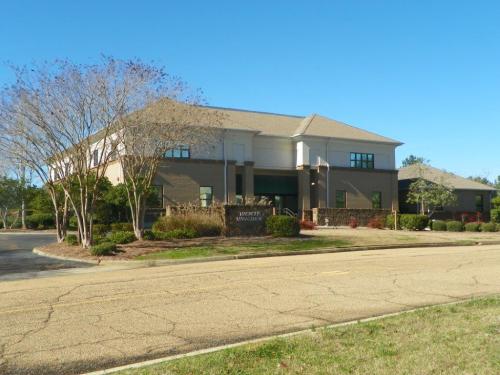
Elton Beebe’s Ridgeland, MS Headquarters

One company, Magnolia Management, gave the Avery Boulevard address on three contributions totaling $10,000 and 3900 Lakeland Drive, Ste. 400 in Jackson, Mississippi, on two others totaling another $10,000.

The contributions date back to Jindal’s first unsuccessful gubernatorial campaign in 2003.

Each of the corporations shares either a physical address or a post office box in Ridgeland.

The remaining $155,000 in nursing home contributions were made by some three dozen Louisiana facilities besides those owned by Beebe. They were scattered throughout Louisiana.

Following are contributions by Beebe, his wife, a business associate and corporations which gave the same Ridgeland address, with the number of contributions and the years the money was given in parenthesis followed by the aggregate amount:

• E.G. (Elton) Beebe: (3 from 2007 to 2011) $15,000;

• Carol Beebe: (2 in 2010 and 2011);

• Lansing Kolb (1 in 2008) $1,000);

• Louisiana Extended Care Centers: (4 from 2003 to 2009) $17,000;

• Magnolia Properties, Inc.: (4 from 2003 to 2011) $14,500;

• Magnolia Manor Properties: (3 from 2009 to 2012) $7,500;

• Magnolia Management Services of Louisiana: (3 from 2003 to 2010) $12,500;

• Magnolia Management of Louisiana: (2 in 2008 and 2009) $5,000;

• Magnolia Management Corp.: (5 from 2003 to 2011) $20,000;

• Magnolia Health Service of Louisiana: (2 in 2007 and 2008) $7,000;

• Medico, Inc.: (4 from 2003 to 2009) $15,000;

• Administrative Systems, Inc.: (3 from 2007 to 2010) $10,000;

• Provider Professional Services: (3 from 2007 to 2010) $10,000;

• HR Property Investments, LLC: (3 from 2010 to 2012) $10,000;

• Southern Magnolia, LLC: (3 from 2010 to 2012) $10,000;

• Transmed, LLC: (2 in 2011 and 1012) $7,500;

• Lena Heritage, LLC: (3 from 2010 to 2012) $10,000;

• Lake Charles Properties: (1 in 2012) $5,000;

• Extended Care Associates: (4 from 2003 to 2009) $15,000;

• EGB, LLC: (3 in 2010 and 2011) $5,000;

• Account Management Services, Inc.: (1 in 2010) $2,500;

• AGF, LLC: (2 in 2010 and 2011) $5,000;

• Caddo Property, LLC: )2 in 2010 and 2011): $5,000;

• Alexandria Investments, LLC: (3 in 2008 and 2011).

Contributions of $2,500 each were all made by 10 of the corporations and another contributed $3,000, all on the same day: Oct. 4, 2010.

Five corporations also made contributions of $5,000 each and another gave $2,500, all on Oct. 24, 2012, a year after Jindal won re-election to his second term. That $27,500 in contributions feeds speculation that Jindal is building up a campaign war chest for a run at a national office.

Here are the other nursing homes and the amounts contributed to Jindal campaigns:

• Alpine Guest Care of Ruston: $8,000;

• Courtyard Manor Nursing Care of Lafayette: $6,000;

• Golden Age of Welsh; $9,000;

• Golden Age Nursing Center of Jena: $2,000;

• St. Agnes Healthcare of Breaux Bridge: $5,000;

• Booker T. Washington Guest Care of Shreveport: $8,000;

• Ringgold Care Center: $2,000;

• Colonial Oaks Guest Care Center of Bossier City: $8,000;

• The Guest Care Center at Spring Lake, Shreveport: $7,000;

• Pilgrim Manor Guest Care of Bossier City: $8,000;

• St. Martin De Porres Multi-Care Center of Lake Charles: $3,000;

• Norhridge Care Center of Pineville: $2,850;

• Savoy Care Center of Mamou: $5,500;

• Morgan City Health Care Center: $2,500;

• The Woodlands Healthcare Center, Leesville: $3,000;

• Franklin Health Care Center: $2,500;

• Matthews Memorial Health Care Center, Alexandria: $1,000;

• Crescent City Health Care Center, Mandeville: $1,000;

• West Carroll Care Center, Oak Grove: $1,000;

• Pinecrest Healthcare Center, Bernice: $1,000;

• Riverview Care Center, Bossier City: $2,000;

• Basile Care Center: $700;

• Guest House Properties, Winnfield: $7,500;

• The Guest House, Shreveport: $8,000;

• Louisiana Guest House, Alexandria: $1,425;

• West Monroe Guest House: $6,800;

• Rayville Guest House: $500;

• Rosepine Retirement & Rehabilitation Center: $6,450;

• River Oaks Retirement Manor, Lafayette: $6,000;

• De Soto Retirement & Rehabilitation, Mansfield: $4,350;

• Kinder Retirement & Rehabilitation: $4,950;

• Sabine Retirement & Rehabilitation Center, Many: $4,700;

• DeRidder Retirement & Rehabilitation Center; $4,450;

• River Oaks Retirement Manor, Lafayette: $6,000;

• The Retirement Center, White Plains, N.Y.: $3,000;

• The Retirement Center, Baton Rouge: $1,000.

These contributions did not include and separate contributions that may have been made by owners of these nursing homes.

Let’s review:

The Medicaid Trust Fund for the Elderly has been reduced by half since Jindal took office.

Only interest and investment revenue from the Medicaid Trust Fund for the Elderly is supposed to be used to pay for nursing home care and other Medicaid expenses.

More than $300 million of the fund’s principal has been used to keep nursing home Medicaid rates afloat.

Nursing homes and their owners have contributed more than $380,000 to Jindal’s three gubernatorial campaigns.

With Jindal, it always seems to come down to a single precept: follow the money.

Read Full Post »

“We approached the state…about how we might be able to help solve the problem with Southeast closing.”

—Meridian Behavioral Health Systems CEO Wes Mason, discussing his company’s selection as the private firm to take over operations of the privatized Southeast Louisiana Hospital (SELH) last October.

“Meridian was the only company that met all of DHH’s requirements and expectations…”

—DHH Public Information Officer Ken Pastorick, on the selection of Meridian, which operates Northlake Behavioral Health System, formerly SELH. (Northlake has been notified by the Center for Medicare & Medicaid Services that deficiencies at the facility have caused it to lose eligibility to participate in Medicare.)

Read Full Post »

« Newer Posts - Older Posts »