Feeds:
Posts
Comments

Archive for the ‘Economy’ Category

“The true measure of any society can be found in how it treats its most vulnerable members.” (Mahatma Ghandi)

“If you don’t want your tax dollars to help the poor, then stop saying you want a country based on Christian values. Because you don’t.” (Comedian John Fugelsang, sometimes mistakenly attributed to former President Jimmy Carter)

“A bunch of rich people convincing poor people to vote for rich people by telling the poor people that other poor people are the reason they’re poor.” (NOLA.com comment, Oct. 14, 2015)


By guest columnist Earthmother

           Not being an economist, there is much I do not understand about macro-economics.  But as an observer, I have some questions that I hope some of you who do understand economic structure can help me comprehend.

(Disclaimer: I am not an ascetic and have not followed Jesus’ teaching to sell all that I have and give the proceeds to the poor. We’ve worked hard, have a nice home and nice things, way more than we need.  I try to remember that money is not the root of evil—the love of money is. In most ways I’m no different from any other middle class American.)

I get the thinking behind the desire of the “one percenters/oligarchs” (or whatever we choose to call the wealthy ultra conservatives) for a poor educational system for the masses while their own children attend outstanding non-public schools. This creates a latter day feudal, Dark Ages situation where people who are kept ignorant and uneducated are easier to control, and provide an unending source of cheap labor. With no critical thinking skills, the disadvantaged vote as they are told by overlord politicians and the hate media….never realizing that they themselves are members of “The Other” that the hatemongers are telling them are the reason their lives are difficult. (Here’s a sad little rabbit trail—to a suggestion that a woman speak to her school board member, she replied in fear, “Am I allowed to speak to elected people?  Will I get fired from my job or punished?”)

Several journeys to Third World type countries make one highly sensitive to socio-political trends that could result in similar conditions in this great country of ours. Here’s a brief, firsthand glimpse of what a nation looks like when the wealthy can afford all the luxuries the world offers while the majority of the population cannot afford the basic necessities of life.

With a minimal tax base and small government, there are few government services, and those are often corrupt.  Many streets are littered with garbage; people live in housing sometimes made of scraps, cardboard and tin—with no electricity or indoor plumbing. Children and adults, dressed in rags, beg for food or change, eat from garbage dumps, and root through trash for anything of use. People who get sick or injured often die because they are unable to afford basic healthcare; there is no government “safety net.”

People of all ages walk for a day to see a missionary doctor in a schoolhouse, then walk for a day back home. People bathe in and drink from polluted streams of water; they are infested with parasites, and die from infections that could be prevented with over-the-counter medicines but which are out of their reach.

When you’ve bought food for toddlers abandoned to the streets because the parents cannot afford to feed them, worked in an orphanage and talked to children who were rescued as army personnel and fun-loving civilians rid neighborhoods of “vermin” street children, you cherish you own kids more and pray such things could never happen at home.  (Google “street children shot” if you think this is melodramatic.) Women have babies they can’t afford to feed, in patriarchal societies where women have few rights and no access to birth control and family planning services, and are beaten if they say no. Men abandon their families en masse either to work far away or just to avoid their responsibility. Women have little education or job skills to be able to support themselves and their children. Even scarce jobs in skilled labor areas such as welding and construction pay paltry wages, leading to illegal immigration.

Louisiana already looks much like a Third World country in many ways. The litter problem is a startling similarity. We have cities with neighborhoods with lovely homes, world class restaurants and attractions, sprawling university campuses that turn out graduates who go on to lucrative careers in prestigious fields.

But we are also a national leader in several less attractive quality-of-life areas: poverty, chronic disease, AIDS and STDs, violent crime and income inequality, and we remain near-last in education and literacy, health care accessibility and outcomes, life expectancy and economic parity. There is a possible correlation between Louisiana’s high poverty rate and poor education, etc., and the fact that we also have the highest percentage of the population incarcerated in the U.S., which has the highest per capita incarceration rate in the world, gives us the dubious distinction of being the prison capital of the entire world.

Add an unfair, regressive  tax system, wages kept low so that people at the top can take home more, a criminal justice system that appears designed to perpetuate poverty,  uncaring and/or ineffective leaders, all agenda-driven and backed by a sophisticated and effective propaganda machine, and we have a Third World-style society in the making.

So finally to my questions: Since the one-percenters already have more money than they can spend in several lifetimes, and the servant class is already sufficient in number to care for them, how does it benefit them to impoverish large numbers of people and create a huge underclass? With no money to buy things, the poor can’t purchase the goods and services to keep the wealthy wealthy.

Why inflict the unpleasant sights of abject poverty on their families?  (Seeing these things is very disturbing if one has a heart at all.) Often the “let them eat cake” people don’t notice the poor and disadvantaged in our midst. No one has explained that people who are hungry, poorly nourished with non-nutritious foods, and chronically ill, are not good students or employees.

If not motivated by altruism, what about the purely pragmatic idea that throwing a bone to the underclass keeps the upper class safe in their homes and safe from people who have little and want to take theirs in order to survive. If you read local and national news it should come as no surprise that we already have a huge problem resulting from the struggle between the Haves and the Have-Nots.

Does denial of healthcare services to the less advantaged provide more and better care for the wealthy? Does paying a living wage and allowing employees to work enough hours to qualify for benefits and earn enough to pay the rent and buy food somehow diminish the rich?  Why destroy traditional corporate pension plans and also attempt to cut Social Security benefits, so that retirees fall into poverty and lose their dignity?

How does it make sense to deny birth control and family planning services to poor women, then penalize them for getting pregnant by curtailing pre-natal care and seeking to withhold nutrition assistance to mothers and children? Why continue to insist that cost-free abstinence-only is all that’s needed to prevent pregnancy, when it’s proven to be rather unrealistic? Has anyone reasoned that when women are abstinent, theoretically their male significant others are, too? Just ask Sen. Bill Cassidy’s teen daughter if it works, and ask never-married spokeswoman-in-chief Bristol Palin how that abstinence thing is working out for her and her growing family.

Why do smart people ignore the failure of Friedman Chicago School economics, wherever it’s been implemented, worldwide? (Hint: read Naomi Klein Shock Doctrine.)

It would be naïve not to acknowledge the fact that every dollar (or euro, kroner, peso, lempira, or whatever) not given up by the wealthy in the form of reasonable taxes or fair wages and benefits for employees is another dollar in their bank account. Employers’ base pay rates on the value they place on work, and employers certainly have that right. What does it say about one’s attitude about the inherent value of people who perform menial task—those who clean their toilets, secure their property, and cook and serve their food? When is more than enough enough? And why is it desirable and moral to deny everyone else a reasonable standard of living?

Seriously, what is the rationale for the rich wanting to keep other people down?   How does it benefit them? How does it enhance their lives, or take anything from them if other people have sufficient resources to live on? I was taught that the U.S. classless society was different from other countries where aristocrats controlled the peasants. Was that teaching wrong or just invalidated by human nature?

When did the term “common good” become socialist/un-American/anti-capitalist? When did it become alright to take funds from needy children, the poor, the sick, the disabled, and give those tax dollars to the rich in the form of corporate welfare, including sports franchises and motorsports tracks owned by mega-millionaires? Why do free market capitalists thinks it’s their right to demand government handouts to grow their wealth instead of investing their own money?

Awaiting enlightenment from folks wiser and more educated than I.


Read Full Post »

JINDAL OPINION ON ASSIMILATION(CLICK ON IMAGE TO ENLARGE)

There is an interesting parallel to be drawn from Bobby Jindal’s less than earth shaking tax plan in which he advocates raising taxes on the poor (in apparent violation of his Grover Norquist no-tax pledge) while granting even further tax cuts for the wealthy (in harmonious accord with Norquist). https://www.bobbyjindal.com/tax/?utm_source=SilverpopMailing&utm_medium=email&utm_campaign=100915_MS_TaxPlan%20(1)&utm_content=&spMailingID=23715672&spUserID=MTI1NzExOTg5NzE1S0&spJobID=660993528&spReportId=NjYwOTkzNTI4S0

For this comparison, we have Earthmother to thank for pointing this out to us:

  • Jindal’s tax plan is an overt appeal to the infamous 1 percent, the upper crust of society who have the resources to hire the best tax lawyers and CPAs in order to find as many tax loopholes as humanly possible to fine even more tax breaks.
  • Jindal continues to poll around 1 percent in Iowa despite his desperate, often comical, always absurd attempts to draw attention to himself in his ludicrous effort to gain traction.
  • Ergo, Jindal’s tax plan is obviously designed to appeal to the 1 percent in Iowa who favor his candidacy.

http://www.salon.com/2015/10/08/bobby_jindal_surges_in_the_hating_poor_people_primary_the_regressive_tax_plan_thats_propelling_him_to_the_top/?utm_source=twitter&utm_medium=socialflow

News flash, Bobby: 1 percent’s not going to cut it any more than your giving away state hospitals is going to solve the state’s health care problems.

One percent’s not going to get you elected any more than your repetitive cuts to higher education are going to help students struggling to pay higher tuition.

Bobby, you are on a fool’s errand and you’re either too stubborn to admit you don’t have a chance, or you’re blinded by unbridled ambition, delusional….or just stupid.

Your propensity to have—and worse, your willingness to offer to the world—your opinion on every subject, trivial or important, with or without basis (mostly without), long ago grew insipidly thin.

And still you persist.

You persist in saying that there should be no hyphenated Americans and you persist in saying immigration without assimilation is invasion and that those entering this country should learn our language and go to work.

I guess that shows that nothing has changed much over the past 523 years.

Today (Monday, October 12) is Columbus Day, so let’s examine what his arrival meant to the natives of North America. When Columbus landed on the island of San Salvador in 1492, he wrote to the king and queen of Spain that he found natives who “love their neighbors as themselves” whose manners were “decorous and praiseworthy.”

He also wrote, according to Dee Brown in his book Bury My Heart at Wounded Knee that the indigenous people should be “made to work, sow and do all that is necessary and to adopt our ways.” Columbus even kidnapped 10 of the friendly San Salvador native Taino tribesmen and carted them off to Spain so they could be introduced to the white man’s ways.

One of them died soon after arriving in Spain but not before he was baptized, sending the Spaniards into a state of religious euphoria in the knowledge that they had made it possible for the first Indian to enter heaven.

As a diplomatic expression of their willingness to assimilate, other European explorers who followed Columbus looted and burned villages. They kidnapped hundreds of men, women and children and sold them into slavery. In a generation, the Europeans had ravaged the island, killed the vegetation and its inhabitants—natives, animals, birds and fish—and turned San Salvador into a wasteland…and then they abandoned it.

How’s that for assimilation, Bobby?

The most outrageous utterance in a long string of outrageous utterances, however, was his unsolicited opinion concerning the recent mass shooting at Umpqua Community College in Oregon. http://abcnews.go.com/Politics/louisiana-gov-bobby-jindal-defends-comments-blaming-oregon/story?id=34403499

“The killer’s father is now lecturing us on the need for gun control and he says he has no idea how or where his son got the guns,” Jindal wrote in yet another of his inane op-eds. “Of course he doesn’t know. You know why he doesn’t know? Because he is not, and has never been in his son’s life. He is a complete failure as a father, he should be embarrassed to even show his face in public. He’s the problem here.”

Well, Bobby, let’s examine your record, particularly your last term. You have not and have never been in our lives. You have spent the entirety of your last four years in Iowa. When you weren’t there physically, you were there in spirit, there in your far-fetched, ambitious, implausible dreams.

You have been a complete failure as a governor, a leader, and an inspiration to 4.6 million citizens of Louisiana. When you were elected, you carried the hopes and dreams of a better Louisiana into the governor’s office. You promptly discarded those hopes and dreams in favor of an unrealistic pursuit of your own impossible hopes and dreams.

You should be embarrassed to even show your face in public in Louisiana, much less choose to build your post-political home in Baton Rouge.

In short, you’re the problem here.

But hey, don’t sweat it, Bobby. You still have an unshakable lock on your 1 percent.


Read Full Post »

In a state drowning in consulting contracts, what’s one more?

Bobby Jindal is a lame duck governor who long ago set his sights on bigger and better things. He has abdicated every aspect of his office except the salary, free housing and state police security that go with the title. In reality, he has turned the reins of state government over to subordinates who are equally distracted in exploring their own future employment prospects.

His only concerns in almost eight years in office, besides setting himself up to run for President, have been (a) appointing generous campaign donors to positions on state boards and commissions and (b) privatizing state agencies by handing them over to political supporters.

To that end there has been a proliferation of consulting contracts during the Jindal years. The legislative auditor reported in May that there were 19,000 state contracts totaling more than $21 billion.

So as his term enters its final months and as Commissioner of Administration Kristy Nichols has less than a month before moving on to do for Ochsner Health System what she’s done for the state, what’s another $500,000?

LouisianaVoice has learned that Nichols signed off on a $497,000 contract with ComPsych Corp. and its affiliate, FMLASource, Inc. of Chicago, to administer the state’s Family and Medical Leave Act (FMLA) program. FMLA CONTRACT

It is no small irony that Nichols signed off on the contract on May 19, less than two weeks after the legislative auditor’s report of May 6 which was highly critical of the manner in which contracts are issued with little or no oversight.

The latest contract removes the responsibility for approving FMLA for state employees and hands it over to yet another private contractor.

Apparently FMLA was just one more thing the Jindal administration has determined state employees are incapable of administering—even though they have done so since the act was approved by Congress in 1993.

Because no state employees stand to lose their jobs over this latest move, the contract would seem to simply be another consulting contract doled out by the administration, obligating the state to more unnecessary expenditures.

Whether it’s farming out the Office of Risk Management, Office of Group Benefits, funding voucher and charter schools, or implementing prison or hospital privatization—it’s obvious that Jindal has been following the game plan of the American Legislative Exchange Council (ALEC) to the letter. That plan calls for privatizing virtually every facet of state government. If you don’t think the repeated cuts to higher education and health care were calculated moves toward ALEC’s goals, think again.

The contract runs from May 17, 2015 through May 16, 2016, and the state agreed to pay FMLAServices $1.45 per state employee per month up to the yearly maximum of $497,222.

Agencies for which FMLAServices will administer FMLA include the:

  • Division of Administration;
  • Department of Economic Development;
  • Department of Corrections;
  • Department of Public Safety;
  • Office of Juvenile Justice;
  • Department of Health and Hospitals;
  • Department of Children and Family Services;
  • Department of Revenue;
  • Department of Transportation and Development.

The legislative auditor’s report noted that there is really no way of accurately tracking the number or amount of state contracts. STATE CONTRACTS AUDIT REPORT

“As of November 2014, Louisiana had at least 14,693 active contracts totaling approximately $21.3 billion in CFMS. However, CFMS, which is used by OCR to track and monitor Executive Branch agency contract information, does not contain every state contract.

“Although CFMS, which is a part of the Integrated Statewide Information System (ISIS), tracks most contracts, primarily Executive Branch agencies use this system. For example, Louisiana State University obtained its own procurement tracking system within the last year, and most state regulatory boards and commissions do not use CFMS (Contract Financial Management System). As a result, there is no centralized database where legislators and other stakeholders can easily determine the actual number and dollar amount of all state contracts. Therefore, the total number and dollar amount of existing state contracts as of November 2014 could be much higher.”

The audit report also said:

  • State law (R.S. 39:1490) requires that OCR (Office of Contractual Review) adopt rules and regulations for the procurement, management, control, and disposition of all professional, personal, consulting, and social services contracts required by state agencies. According to OCR, it reviews these types of contracts for appropriateness of contract terms and language, signature authorities, evidence of funding and compliance with applicable laws, regulations, executive orders, and policies. OCR also reviews agencies’ procurement processes against competitive solicitation requirements of law. The contracting entity is responsible for justifying the need for the contract and conducting a cost-benefit analysis if required.
  • However, state law does not require that a centralized entity approve all state contracts.
  • According to the CFMS User Guide, OCR is only required to approve seven of the 20 possible contract types in CFMS. The remaining 13 types accounted for 8,068 contracts totaling approximately $6.2 billion as of November 2014. Exhibit 2 lists the 20 types of contracts in
  • CFMS and whether or not OCR is required to approve each type, including the total number and dollar amount of these contracts.
  • In fiscal year 2014, 72 agencies approved 4,599 contracts totaling more than $278 million.

The Office of Contractual Review was since been merged with the Office of State Procurement last Jan. 1.


Read Full Post »

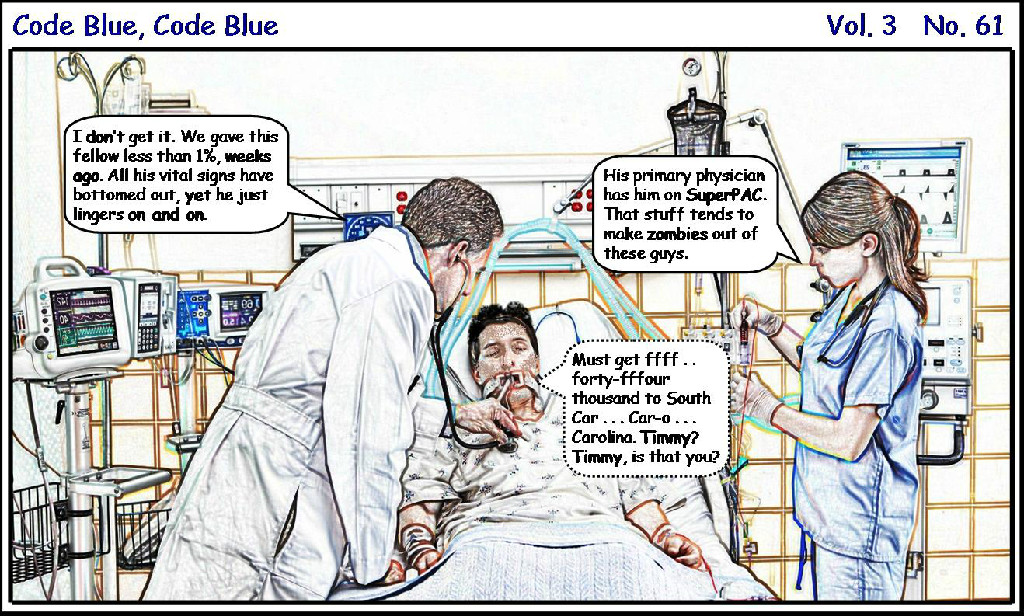
JINDAL ON LIFE SUPPORT

We couldn’t resist this one from our favorite cartoonist. (CLICK ON IMAGE TO ENLARGE)

The timing could not have been better—or worse, depending upon your perspective.

But all things considered, Wednesday was a bad day for a certain Louisiana governor flailing away in a doomed quest for the Republican presidential nomination.

If he posed so much as a remote threat against any of his Republican opponents for the Republican presidential nomination, today’s events would surely be used against him in an campaign ad blitz. But he doesn’t and they won’t.

On the one hand, there was the survey released Wednesday (Sept. 24) by 24/7 Wall Street, the service that publishes all sorts of survey results from the best-selling cars to the worst-performing state governments. The latest survey shows Louisiana to be the fifth worst-educated state in the nation.

On the other, there was the story, also on Wednesday, that said Louisiana’s public colleges and universities have been told to “be prudent” with their current budgets—a not-so veiled way of saying get ready for more budget cuts.

The U.S., in case you haven’t been paying attention, has some of the most expensive college educations in the world—and the expenses have risen to record highs, the survey said. In fact, the cost of a college education has increased faster than the rate of inflation—24 percent just since 2012,

Only 22.9 percent of adults in Louisiana hold at least a bachelor’s degree, which ranks 46th in the nation and well below the national average of more than 30 percent. That puts the state two notches behind Alabama’s 23.5 percent and ranked higher than only Kentucky (22.2 percent), Arkansas (21.4 percent), Mississippi (21.1 percent), and West Virginia (19.2 percent). Massachusetts had the highest with 41.2 percent of its adults having attained at least a bachelor’s degree.

In fact, Louisiana ranks just ahead of our next door neighbor in so many surveys that rumor has it there may be a bill introduced in the next legislative session to change the state’s motto from “Union, Justice and Confidence” to “Hey, At Least We Aren’t Mississippi.”

Louisiana had the fourth lowest percentage (83.6 percent) of high school graduates.

Louisiana also ranked seventh lowest with a median household income of $44,555 in 2014 and even those among the 22.9 had the seventh lowest median earnings ($46,903) for bachelor degree holders. Even more depressing is the fact that the median income for holders of bachelor’s degrees managed to pull the overall median average up by less than $2,500 per year.

Nearly one in five Louisianians live below the poverty line, the third highest poverty rate in the nation. This, in a state with three of the 10 busiest ports in the nation (including the busiest, the Port of South Louisiana, and the 4th and 10th busiest, New Orleans and Baton Rouge) and three of the nation’s largest refineries (Marathon in Garyville, Exxon in Baton Rouge, and Citgo in Lake Charles).

Moreover, the state is embarrassingly rich in chemical plants, oil and gas reserves, sulfur, agriculture and seafood. But still we consistently lag behind the rest of the nation in every conceivable measure of progress and prosperity.

And yet, here we are, teetering at the edge of yet another midyear budget shortfall, or as State Treasurer John Kennedy said, “We have hit the trifecta, but not in a good way.” He was talking about the news that we have just learned that we’re going to have to make up for last fiscal year which ended June 30 with a deficit (though Bobby Jindal and Commissioner of Administration Kristy Nichols won’t say how much). Together, Kennedy said, the combined shortfalls for last fiscal year and the current year combine to paint a bleak picture for next year as well, as the combined deficit is expected to approach $1 billion.

(Note to Kristy: Don’t let the door hit you on the backside as you exit next month on the way to grab your golden parachute with Ochsner Health System.)

Though the Jindal administration isn’t saying much about the latest crisis (you have to wonder how Bobby will spin this in his fiscal responsibility message on the GOP presidential campaign trail), Kennedy at least doesn’t duck the issue. He estimates it to be more than $100 million.

This budgetary news comes on top of the Medicaid shortfall of more than $300 million, a TOPS fund which is projected to be $19 million short and word that Jindal’s ill-fated hospital privatization plan has hit yet another major setback.

LSU, citing a breach of the public purpose, terminated its cooperative endeavor agreement with the Biomedical Research Foundation of Northwest Louisiana (BRF) barely two years after the foundation took over operation of two north Louisiana hospitals.

Saying all avenues to resolve differences had been exhausted, LSU President F. King Alexander said that Academic Health of North Louisiana Hospital Management Co., Inc., will take over operation of University Health Shreveport and University Health Conway.

It was so bad for Jindal that he missed a golden opportunity when the Pope spoke to a joint session of Congress on Wednesday.

When President Obama visited New Orleans on the 10th anniversary of Hurricane Katrina last month, Jindal sent a message asking that the President not talk about climate change when he came here. But when he had the opportunity to offer that same advice to Pope Francis, Jindal, a Roman Catholic, remained mute.

Perhaps he was just too busy traveling around Iowa telling anyone who would listen (that would be Timmy Teepell and Kyle Plotkin) what a great job he has done as governor of Louisiana and how he is uniquely qualified to run the country.

We are reminded of the Winston Churchill quote about Clement Atlee that could be adapted so easily to our governor: An empty taxi pulled up in front of the Iowa caucus and Bobby Jindal got out.

Read Full Post »

The next time you see a couple of state troopers escorting Les Miles or Nick Saban at an LSU or Alabama football game, don’t get angry that the coach, surrounded by about 100 beefy football players, feels the need for additional protection from fans. It turns out they’re not there to protect the coaches; they’re there to carry their bulging wallets.

Of the highest paid public employees in each state, 40 are college football and basketball coaches who combined, pull in an eye-popping $129.1 million, according to 24/7 Wall Street, a service that provides research in several areas of business, education, economics and politics.

That’s an average of $3.225 million per year.

The remaining 10 highest paid were mostly in academics, including four college presidents, three state medical school professionals, a nursing supervisor, a commissioner of higher education and an associate professor.

Of the 40 coaches, only six—four football coaches and two basketball coaches—are paid less than $1 million a year and one of those, University of Massachusetts basketball coach Derek Kellogg, receives $994,500 per year.

The 28 football coaches make a combined $95.6 million, an average of $3.41 million per year in salary while the 12 basketball coaches combined to make $33.5 million, an average of $2.79 million annually.

The University of Alabama’s Nick Saban had been the highest-paid football coach at $6.95 million but the University of Michigan is paying first-year coach Jim Harbaugh a whopping $7 million a year. LSU’s Les Miles is paid $4.3 million a year.

For the most part, of course, their salaries are not primarily funded by taxpayers. Generally, their paychecks are underwritten by foundations supported by ticket sales and advertising deals. Harbaugh, for example, receives only $500,000 of his $7 million package from the school.

Still, the disparity in the salaries of coaches and typical state employees is enough to rankle some state employees. At Boise State University, for example, both the football and basketball coaches make a more modest salary of $500,000 but that is still more than 10 times the $40,000 or less earned by more than a third of Idaho state employees.

To counter criticism of the high salaries, some college athletic programs point out that successful coaches can bring a university tens of millions of dollars in revenue. Saban is an example of that. Before he was named head coach at ‘Bama, the school’s athletic program brought in $68 million. In 2013-2014, revenue was $153 million.

Still, critics say that athletic programs at the top tier schools like Alabama, constitute a business and coaches should not receive a cent of public funds in salary.

Which may have prompted the fable of a coach’s retort (and we paraphrase here): “I never saw anyone pay to watch a chemistry class.”

Here is the list of each state’s highest paid public employee:

ALABAMA:                NICK SABAN                FOOTBALL COACH              $6.95 M

ALASKA:                    JAMES JOHNSEN      COLLEGE PRES.                    $325,000

ARIZONA:                  SEAN MILLER            BASKETBALLCOACH          $3.07 M

ARKANSAS                BRET BIELEMA         FOOTBALL COACH              $4 M

CALIFORNIA             JAMES MORA            FOOTBALL COACH              $3.35 M

COLORADO               MIKE MacINTYRE     FOOTBALL COACH              $2.01 M

CONNECTICUT          KEVIN OLLIE             BASKETBALL COACH         $3 M

DELAWARE               EKEOMA WOGU       NURSING SUPERVISOR      $236,156

FLORIDA                    JIMBO FISHER          FOOTBALL COACH              $5 M

GEORGIA                   MARK RICHT             FOOTBALL COACH              $4 M

HAWAII                      NORM CHOW             FOOTBALL COACH              $550,000

IDAHO                        BRYAN HARSIN         FOOTBALL COACH              $800,000

ILLINOIS                    JOHN GROCE             BASKETBALL COACH          $1.7 M

INDIANA                    TOM CREAN              BASKETBALL COACH          $3.05 M

IOWA                          KIRK FERENTZ          FOOTBALL COACH              $4.08 M

KANSAS                     BILL SELF                    BASKETBALL COACH          $4.75 M

KENTUCKY               JOHN CALIPARI        BASKETBALL COACH          $6.01 M

LOUISIANA                LES MILES                  FOOTBALL COACH              $4.3 M

MAINE                        SUSAN HUNTER        COLLEGE PRESIDENT        $250,000

MARYLAND              MARK TURGEON        BASKETBALL COACH          $2.248 M

MASSACHUSETTS     DEREK KELLOGG     BASKETBALL COACH        $994,500

MICHIGAN                 JIM HARBAUGH        FOOTBALL COACH              $7 M

MINNESOTA              JERRY KILL                  FOOTBALL COACH              $2.5 M

MISSISSIPPI                HUGH FREEZE           FOOTBALL COACH           $4.3 M

MISSOURI                  GERY PINKEL               FOOTBALL COACH           $4.02 M

MONTANA                 CLAY CHRISTIAN     COMM. HIGHER ED              $351,000

NEBRASKA                MIKE RILEY               FOOTBALL COACH              $2.7 M

NEVADA                     KAYVAN KHIABANI   ASSOC. PROFESSOR          $981,475

NEW HAMPSHIRE   MARK HUDDLESTON   COLLEGE PRES.             $333,658

NEW JERSEY             KYLE FLOOD             FOOTBALL COACH              $1.25 M

NEW MEXICO            BOB DAVIE                FOOTBALL COACH              $772,690

NEW YORK                SHASHIKANT LELE  MED SCH. DEPT. CHAIR    $551,000

NORTH CAROLINA MARK GOTTFRIED   BASKETBALL COACH          $2.06 M

NORTH DAKOTA ROBERT STICCA       UNIV. SURGERY CHAIR      $758,000

OHIO                           URBAN MEYER         FOOTBALL COACH              $5.8 M

OKLAHOMA              BOB STOOPS              FOOTBALL COACH              $5.25 M

OREGON                    MARK HELFRICH      FOOTBALL COACH              $3.15 M

PENNSYLVANIA       JAMES FRANKLIN    FOOTBALL COACH              $4.1 M

RHODE ISLAND        DAN HURLEY            BASKETBALL COACH          $627,500

SOUTH CAROLINA  STEVE SPURRIER     FOOTBALL COACH              $4 M

SOUTH DAKOTA     MARY NETTLEMAN MED. SCHOOL DEAN           $500,000

TENNESSEE               BUTCH JONES           FOOTBALL COACH              $2.96 M

TEXAS                         CHARLIE STRONG    FOOTBALL COACH              $5.1 M

UTAH              KYLE WHITTINGHAM          FOOTBALL COACH              $2.6 M

VERMONT                  TOM SULLIVAN        COLLEGE PRES.                    $429,093

VIRGINIA                   FRANK BEAMER       FOOTBALL COACH              $2.42 M

WASHINGTON           MIKE LEACH             FOOTBALL COACH              $2.75 M

WEST VIRGINIA        BOB HUGGINS       BASKETBALL COACH          $3.25 M

WISCONSIN               BO RYAN                   BASKETBALL COACH          $2.75 M

WYOMING                 CRAIG BOHL             FOOTBALL COACH              $832,000

28 FOOTBALL COACHES:             $95.6 MILLION ($3.41 MILLION AVERAGE)

12 BASKETBALL COACHES:         $33.5 MILLION ($2.79 MILLION AVERAGE)

50 TOTAL COACHES:                     $129.1 MILLION ($3.225 MILLION AVERAGE)

10 ACADEMIC, OTHER:                 $4.72 MILLION ($472,000 AVERAGE)

TOTAL:                                              $133.73 MILLION ($2.67 MILLION)

Read Full Post »

« Newer Posts - Older Posts »