Feeds:
Posts
Comments

Archive for the ‘Campaign Contributions’ Category

Louisiana Secretary of State Tom Schedler and former Secretary of the Department of Health and Hospitals (DHH) David Hood recently expressed their surprise that the Medicaid Trust Fund for the Elderly has shrunk from $830 million to $410 million under the administration of Gov. Bobby Jindal.

The fund balance is expected to drop to $250 million or less by the end of the current fiscal year (June 30, 2014) and at the present rate of depletion, could be gone in its entirety by the end of Jindal’s term of office, leaving the next governor with having to close a huge health care financing gap.

Schedler and Hood shouldn’t be surprised. In fact, by now they should expect no less from Jindal who, despite his 2003 campaign promises to the contrary, has consistently dipped into one-time money to pay recurring expenses in an effort to plug gaping deficit holes in the state budget.
null
null

The original intent of the fund was to use only the interest and investment earnings to provide a stream of funding to pay for nursing home care and other health care services.

Revenue in the fund was to be used as a source of state matching funds for Medicaid funds to make enhanced payments to local government-owned health care facilities.

In fact, a 2012 constitutional amendment to “prohibit monies in the Medicaid Trust Fund for the Elderly from being used or appropriated for other purposes when adjustments are made to eliminate a state deficit” was approved by voters by a 71 percent to 29 percent margin (1.3 million to 527,000).

The amendment specifically prohibits dollars in the trust fund from being used for anything other than the intended purposes and “not (for) helping to balance the state budget” and “to constitutionally protect a specific fund from being raided to help make up for shortfalls in state revenue,” according to the Council for a Better Louisiana (CABL).

Ironically, CABL took no position on the constitutional amendment prior to the election, calling it “unnecessary.”

But Jindal has consistently worked to cut mental health benefits through closure of Southeast Louisiana Hospital (SELH) in Mandeville, elimination of Early Childhood Supports and Services, vetoing funds for the developmentally disabled and even resorting to using personal email accounts to plot strategy on Medicaid cuts.

About $300 million of the money has been spent to stop cuts to the rates paid to private nursing homes for the care of Medicaid patients, according to DHH Undersecretary Jerry Phillips.

In the current budget year that began July 1, Louisiana nursing homes, which have some 29,000 residents, are slated to receive $893 million in state and federal Medicaid payments with $184 million to come from the elderly trust fund used to attract about $500 million in federal matching funds.

It should come as no surprise that with all the cuts to Medicaid, mental health treatment, early childhood support and funds for the developmentally disabled, Jindal would ensure uninterrupted funding for private nursing homes.

Jindal, after all, has received more than $380,000 in campaign contributions from nursing homes and nursing home owners.

Of that amount, $228,500 came from a single source—Elton Beebe of Ridgeland, Mississippi. Beebe, who owns several Louisiana nursing homes, funneled campaign contributions to Jindal through himself, family members, business associates and 21 nursing homes and corporations controlled by him.

The corporations list P.O. Box 6015 and 6016 or 763 Avery Blvd. North as their address. Beebe himself gave P.O. Box 6015 as the address on two of his contributions of $5,000 each and 763 Avery Blvd. North on another $5,000 contribution.
null
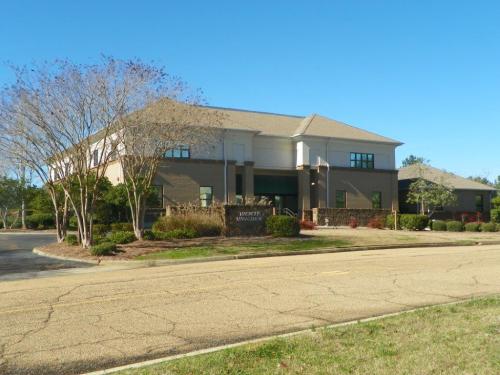
Elton Beebe’s Ridgeland, MS Headquarters

One company, Magnolia Management, gave the Avery Boulevard address on three contributions totaling $10,000 and 3900 Lakeland Drive, Ste. 400 in Jackson, Mississippi, on two others totaling another $10,000.

The contributions date back to Jindal’s first unsuccessful gubernatorial campaign in 2003.

Each of the corporations shares either a physical address or a post office box in Ridgeland.

The remaining $155,000 in nursing home contributions were made by some three dozen Louisiana facilities besides those owned by Beebe. They were scattered throughout Louisiana.

Following are contributions by Beebe, his wife, a business associate and corporations which gave the same Ridgeland address, with the number of contributions and the years the money was given in parenthesis followed by the aggregate amount:

• E.G. (Elton) Beebe: (3 from 2007 to 2011) $15,000;

• Carol Beebe: (2 in 2010 and 2011);

• Lansing Kolb (1 in 2008) $1,000);

• Louisiana Extended Care Centers: (4 from 2003 to 2009) $17,000;

• Magnolia Properties, Inc.: (4 from 2003 to 2011) $14,500;

• Magnolia Manor Properties: (3 from 2009 to 2012) $7,500;

• Magnolia Management Services of Louisiana: (3 from 2003 to 2010) $12,500;

• Magnolia Management of Louisiana: (2 in 2008 and 2009) $5,000;

• Magnolia Management Corp.: (5 from 2003 to 2011) $20,000;

• Magnolia Health Service of Louisiana: (2 in 2007 and 2008) $7,000;

• Medico, Inc.: (4 from 2003 to 2009) $15,000;

• Administrative Systems, Inc.: (3 from 2007 to 2010) $10,000;

• Provider Professional Services: (3 from 2007 to 2010) $10,000;

• HR Property Investments, LLC: (3 from 2010 to 2012) $10,000;

• Southern Magnolia, LLC: (3 from 2010 to 2012) $10,000;

• Transmed, LLC: (2 in 2011 and 1012) $7,500;

• Lena Heritage, LLC: (3 from 2010 to 2012) $10,000;

• Lake Charles Properties: (1 in 2012) $5,000;

• Extended Care Associates: (4 from 2003 to 2009) $15,000;

• EGB, LLC: (3 in 2010 and 2011) $5,000;

• Account Management Services, Inc.: (1 in 2010) $2,500;

• AGF, LLC: (2 in 2010 and 2011) $5,000;

• Caddo Property, LLC: )2 in 2010 and 2011): $5,000;

• Alexandria Investments, LLC: (3 in 2008 and 2011).

Contributions of $2,500 each were all made by 10 of the corporations and another contributed $3,000, all on the same day: Oct. 4, 2010.

Five corporations also made contributions of $5,000 each and another gave $2,500, all on Oct. 24, 2012, a year after Jindal won re-election to his second term. That $27,500 in contributions feeds speculation that Jindal is building up a campaign war chest for a run at a national office.

Here are the other nursing homes and the amounts contributed to Jindal campaigns:

• Alpine Guest Care of Ruston: $8,000;

• Courtyard Manor Nursing Care of Lafayette: $6,000;

• Golden Age of Welsh; $9,000;

• Golden Age Nursing Center of Jena: $2,000;

• St. Agnes Healthcare of Breaux Bridge: $5,000;

• Booker T. Washington Guest Care of Shreveport: $8,000;

• Ringgold Care Center: $2,000;

• Colonial Oaks Guest Care Center of Bossier City: $8,000;

• The Guest Care Center at Spring Lake, Shreveport: $7,000;

• Pilgrim Manor Guest Care of Bossier City: $8,000;

• St. Martin De Porres Multi-Care Center of Lake Charles: $3,000;

• Norhridge Care Center of Pineville: $2,850;

• Savoy Care Center of Mamou: $5,500;

• Morgan City Health Care Center: $2,500;

• The Woodlands Healthcare Center, Leesville: $3,000;

• Franklin Health Care Center: $2,500;

• Matthews Memorial Health Care Center, Alexandria: $1,000;

• Crescent City Health Care Center, Mandeville: $1,000;

• West Carroll Care Center, Oak Grove: $1,000;

• Pinecrest Healthcare Center, Bernice: $1,000;

• Riverview Care Center, Bossier City: $2,000;

• Basile Care Center: $700;

• Guest House Properties, Winnfield: $7,500;

• The Guest House, Shreveport: $8,000;

• Louisiana Guest House, Alexandria: $1,425;

• West Monroe Guest House: $6,800;

• Rayville Guest House: $500;

• Rosepine Retirement & Rehabilitation Center: $6,450;

• River Oaks Retirement Manor, Lafayette: $6,000;

• De Soto Retirement & Rehabilitation, Mansfield: $4,350;

• Kinder Retirement & Rehabilitation: $4,950;

• Sabine Retirement & Rehabilitation Center, Many: $4,700;

• DeRidder Retirement & Rehabilitation Center; $4,450;

• River Oaks Retirement Manor, Lafayette: $6,000;

• The Retirement Center, White Plains, N.Y.: $3,000;

• The Retirement Center, Baton Rouge: $1,000.

These contributions did not include and separate contributions that may have been made by owners of these nursing homes.

Let’s review:

The Medicaid Trust Fund for the Elderly has been reduced by half since Jindal took office.

Only interest and investment revenue from the Medicaid Trust Fund for the Elderly is supposed to be used to pay for nursing home care and other Medicaid expenses.

More than $300 million of the fund’s principal has been used to keep nursing home Medicaid rates afloat.

Nursing homes and their owners have contributed more than $380,000 to Jindal’s three gubernatorial campaigns.

With Jindal, it always seems to come down to a single precept: follow the money.

Read Full Post »

Carl Shetler is a survivor and now he serves on the University of Louisiana Board of Supervisors after having helped place one of the universities he now helps govern on NCAA probation a quarter-century ago.

For three years, in 1971-1974, Shetler served as an assistant coach and main recruiter for the McNeese State University (MSU) basketball team during his tenure.

You’d think he would know better than to openly flaunt NCAA rules but it was learned that others took ACT tests for two prospective basketball players.

Edmond Lawrence, who first said he would sign with the University of Southwestern Louisiana (USL—now the University of Louisiana Lafayette), changed his mind after he was promised money if he would sign with McNeese.

Shetler and then head basketball coach Bill Reigel were fired in 1974 but in 1986 Shetler, who by then owned an automobile dealership, was among a group of Lake Charles businessmen who provided illegal jobs, money and cars to McNeese basketball players.

The other businessmen, as identified in a June 15, 1992 letter from McNeese Athletic Director Robert Hayes to SLC Commissioner Bill Belknap, included Henry Carter, owner of a local Popeye’s Chicken franchise; Johnny Abraham, owner of a Lakes Charles grocery story; local attorney William Baggett, former construction company owner Bobby Nicholson and Bob Keyes, whom Hayes said he did not know.

Joe Dumars, who would go on to star with the Detroit Pistons, was one of those who received money from the boosters.

Another player, Mike Marshall who transferred from the University of Kansas to McNeese, said he was paid “thousands of dollars” by Cowboy boosters when he played for McNeese.

The NCAA and Southland Conference (SLC) Commissioner Dick Oliver placed McNeese on two years’ probation in 1987 and the SLC forced McNeese to disassociate itself from Shetler and the other businessmen.

McNeese was also forced to forfeit rights to all revenue generated by SLC members during the 1986-87 and 1987-88 academic years in men’s basketball and its number of scholarships was reduced to 11 for both years.

The NCAA further instructed the university:

• For each of the “disassociated boosters,” please indicate what steps were taken by the institution to advise them of the conference penalty. Please include with your response the dates such action occurred and all relevant written material including, but not limited to copies of correspondence to the disassociated boosters, internal memorandum and news releases;

• For each of the “disassociated boosters,” please indicate what ongoing efforts were made by the institution to ensure that the university’s relationship with these individuals remained severed. Please include all copies of all relevant written materials;

• For each of the “disassociated boosters,” please indicate each and every contribution, whether monetary or otherwise, made by them to the McNeese athletics department, an athletics booster organization of McNeese, or any other non-profit association affiliated with McNeese. In connection with this request, please provide a list for the years 1986-97, 1987-88, 1988-89, 1989-90 and 1990-91 of all individuals making contributions, whether monetary or otherwise, the McNeese athletics departments, an athletics booster organization of McNeese, or any other non-profit association affiliated with McNeese;

• For each of the “disassociated boosters,” please indicate whether they have employed McNeese student-athletes. In connection with this response, please provide a list of all those employed and (the) dates of employment;

• For each of the “disassociated boosters,” please indicate whether they have been involved in the promotion of McNeese athletics in any way including, but not limited to, membership in booster organizations, associations with coaching staff members, attendance at booster functions, advertising in McNeese publications, signage at McNeese facilities or the sponsorship of radio/television programming involving McNeese or any staff member of McNeese.

But even that crackdown didn’t last. Shetler, through former athletic director Sonny Watkins and MSU President Robert Hebert, was soon calling the shots again.

His presence was so obvious that MSU soon began to mean Mr. Shetler’s University, one reporter wrote at the time. Coaches and athletic directors came and went—all while Shetler called the shots from his auto dealership on LA. 14. Another joke emerged as Northeast Louisiana University and USL were changing their names to the University of Louisiana Monroe (ULM) and University of Louisiana Lafayette (ULL), the same reporter wrote: McNeese, the line went, would become the University of Louisiana at Highway 14.

Shetler even prevailed upon Hebert to hire Kirby Bruchhaus as head football coach. Bruchhaus resigned after only one season when it was revealed that he regularly bet on professional and college football games, a major NCAA violation.

So how is it that Shetler, who has displayed little concern for rules, came to be appointed not once, but twice, to the University of Louisiana System Board?

He was first appointed by former Gov. Edwin Edwards in June of 1992, less than two weeks after Hayes’ letter to the SLC that identified the businessmen who paid McNeese players. His appointment took effect on Jan. 1, 1993. Shetler even served as board chairman and chairman of the athletic committee where he was in charge of overseeing the very rules he so openly violated.

Parenthetically, in case you think the names Edwards and Shetler ring a bell, they do. Shetler’s son, Ricky Shetler was a casino consultant and close friend of Edwards’ son, Stephen Edwards and when the cheese got binding in his 1998 federal grail, the younger Shetler turned on his friend, cutting a deal with prosecutors to testify against Stephen in exchange for a lighter sentence.

Carl Shetler was again appointed to the board in July of 2008, this time by Jindal.

That raises the obvious question: did anyone in Jindal’s camp make even a token effort to vet this appointment?

The same question could be asked of Edwards.

The difference, of course, is Edwards never hid behind a façade of wholesomeness and all things good. He was a rogue and didn’t care who knew it. It was that candor that endeared him to voters.

Jindal, on the other hand, tries to project an aura of respectability and goodness, a “gold standard” of ethics, if you will.

So where was the application of that “gold standard” in this case?

For that answer, as always, follow the money.

Shetler, besides lavishing money on athletes at McNeese, is not above tossing a little cabbage in the direction of Jindal.

Shetler, Rosier Shetler (same address), Shetler Rental Service, Shetler Rental Properties and McDrig’s, Inc. (same post office box as Shetler Rental Properties) all combined to pour some $48,000 into Jindal’s gubernatorial campaigns of 2003, 2007 and 2011.

Read Full Post »

Depending upon which source you consult, there are from four to six essential components of a contract that make the document legally binding.

The LSU Board of Stuporvisors apparently is unaware of any of them.

• There first must be an offer.

Okay, this one’s a little broad. There was an offer…of sorts. The Biomedical Research Foundation of Northwest Louisiana offered to assume administrative and operational control of the LSU Medical Center in Shreveport and E.A. Conway Medical Center in Monroe.

Likewise, Southern Regional Medical Center and Terrebonne General Medical Center offered to manage the Leonard J. Chabert Medical Center in Houma and Lake Charles Memorial Hospital offered to take over in-patient care and medical education from W.O. Moss Medical Center which will cease operating as a hospital.

But after that, it gets a little sticky:

• There must be an acceptance.

Acceptance is defined as an “unconditional agreement to the precise terms and conditions of an offer.”

To that end, the Board of Stuporvisors came off looking like Larry, Moe and Curly trying to match business acumen with Warren Buffett.

Or Jethro Bodine in negotiations with Donald Trump. You get the picture

The Board of Stuporvisors’ approach to this major enterprise was more akin to the manner in which car dealers attempt to sell a major consumer product with the cheesiest, most offensive television ads possible.

Simply put, there were no specifics in the contract—only 50 or so blank pages to be filled in later.

• Consideration: the payment exchanged for the promise(s) contained in the contract.

Without a specific offer, there can be no financial terms (consideration) and accordingly, no acceptance.

• Termination Clause: allow a contract to be ended without cause, though some courts have held that the clause cannot be invoked without cause.

So thus far, we have no specific offer, no financial terms (consideration) and no termination clause—only an acceptance of a vague offer—all of which brings up the fifth component of a legal contract:

• A contract must be recognized as valid by the courts and subject to the court’s ability to compel compliance.

It’s hard to imagine a contract being recognized as valid by any court anywhere (except possibly in Louisiana) where there is no specific offer, no acceptance of a specific offer, no financial terms and no termination clause.

Finally, we have the strongest, most binding qualifier of all for a legal contract:

• Competent Parties: parties to a contract must be competent and authorized to enter into a contract.

Wow, that’s a toughie.

Competent?

Hell, the LSU Board of Stuporvisors just gave away the store. How competent is that?

Competent?

Let’s ask a few simple questions of the board members, seven of whom own their own businesses, three are in government/public service, one is a banker, one is a publisher, one is a doctor and one is an attorney:

• Would you, as an executive, doctor, banker, attorney or business owner, allow your company, firm, practice, publication, or bank to enter into a contract with no stipulations, no conditions, no financial considerations—all to be filled in at a later date by someone other than yourself, after the contract has been signed by all parties?

We didn’t think so. So, why would you commit LSU and the State of Louisiana to such an ill-advised agreement?

Competent?

The LSU Board of Stuporvisors just named as the new president of the state’s flagship university a man whose highest academic achievement was that of assistant professor before he succeeded his father to the presidency of Murray State University in Kentucky as if he was the heir to some throne and then was named by his personal friend and benefactor, the chancellor of the University of California system, as president of California State at Long Beach. How competent is that?

Competent?

The Board of Stuporvisors put up a determined fight to keep secret the list of candidates for the LSU presidency.

It’s almost as if they were guarding a highly classified state secret.

Or hiding something.

What could they have been hiding?

Who knows? With the propensity for secrecy that has become the trademark of the Jindal administration, everything is concealed from view. Remember, it was Gov. Bobby Jindal who invented the term “deliberative process” as an all-encompassing term to protect his office from the public’s right to know what its government is up to.

It is Jindal’s Department of Education that has been sued at least three times in efforts to pry public information out of that shadowy department.

It was in Jindal’s Department of Health and Hospitals (DHH) that a controversial $184 million contract was awarded to the former employer of then-DHH Secretary Bruce Greenstein—a contract that is now under the microscope of federal investigators.

One has to wonder at this point how hard a legal battle the Board of Stuporvisors would wage against efforts to determine specifics of the hospital contracts.

Why are we so jaded, so cynical?

We’re not; we’re realistic, pragmatic. We connect the dots. Let’s review.

• Item: The Biomedical Research Foundation of Northwest Louisiana offered to assume administrative and operational control of the LSU Medical Center in Shreveport and E.A. Conway Medical Center in Monroe.

• Item: The President and CEO of the Biomedical Research Foundation of Northwest Louisiana is John F. George, Jr., M.D.

• Item: John F. George, Jr., M.D., is a member of the LSU Board of Stuporvisors.

• Item: John F. George, Jr., M.D., made two contributions of $5,000 each to Jindal’s 2007 and 2008 campaigns.

• Item: The Jindal administration dismissed talk of a conflict of interest by pointing out that George will not receive a salary as president and CEO of the foundation, thereby allowing him to remain as a (voting) member of the LSU Board of Stuporvisors.

• Item: On Oct. 25, 1996, the Louisiana State Board of Ethics ruled that Natchitoches Times Publisher Lovan Thomas was prohibited from participating in a decision by the Board of Trustees for State Colleges and Universities to contract with the Times for printing services and that the participating question “cannot be cured by recusal since (state law) prohibits an appointed member of a board from curing a participating problem through disqualification.”

And lest we forget, there are always those pesky campaign contribution reports that members of many boards and commissions must wish we would forget.

We won’t. We can’t.

Let’s take a quick look at those who found it in their hearts to support Jindal financially and were subsequently rewarded with coveted seats on the LSU Board of Stuporvisors:

• Hank Danos: $18,500;

• Robert “Bobby” Yarborough (former Jindal Campaign Treasurer): $45,000;

• Scott Ballard: $5,000 from his company, WOW Café & Winery Franchising;

• James E. Moore: $21,000 from Moore and his company, the Marriott Courtyard of Monroe;

• Stanley Jacobs: $10,000 from Jacobs and his wife;

• Scott Angelle: $4,000;

• Ray Lasseigne: $17,232 from Lasseigne and his company, TMR Exploration;

• Blake Chatelain: $28,000 from Chatelain and his wife;

• Rolfe McCollister (former Jindal Campaign Manager): $18,000;

• Jack Lawton, Jr.: $61,000 from Lawton, his business interests and family members;

• Chester Lee Mallett: $15,000;

• John George: $10,000.

What’s even more difficult to fathom is that 12 of the 15 members of the LSU Board of Stuporvisors actually coughed up more than a quarter-million dollars for the privilege of serving as a pack of submissive lap dogs for the governor—obviously with no will of their own.

So now, salary or no, George is allowed to serve as President and CEO of the foundation while also serving as a voting member of the LSU Board of Stuporvisors which, in its collective wisdom, has just approved a contract for his foundation to take over the LSU Medical Center in Shreveport and E.A. Conway Medical Center in Monroe—a contract with millions of dollars and hundreds of state jobs at stake—and a contract which contains 50 blank pages but which also:

• contains no specific offer;

• contains no acceptance of a specific offer;

• contains no termination clause and from all appearances to our admittedly layman’s mind;

• is susceptible to a challenge by some indignant taxpayer(s) or group of affected hospital employees in that it could be interpreted as invalid because of the court’s inability to compel compliance, and

• has no competent parties—at least on the LSU Board of Stuporvisors’ side of the bargaining table.

Read Full Post »

State officials apparently sees no problem when it comes to rushing through legislation that affects tens of thousands of Louisiana public school students or locking Louisiana into long-term tax relief for industries with little or no tangible benefits to the state but less than three months after its passage, a program approved by the Louisiana Public Service Commission (PSC) to give consumers an avenue to reduce energy costs may be scrapped.

The PSC is scheduled to vote on Wednesday to repeal the statewide energy-efficiency program to develop ways to cut down on power consumption to help save money for hundreds of thousands of homeowners and businesses.

Utilities would be required to file annual reports with the PSC that provide energy savings estimates and annual load reductions. The first phase, Quick Start, is scheduled to last a little less than four years from which point utilities will develop longer-term plans.

The problem? The program is expected to cost utilities between $25 million and $30 million. And guess who pours money into the campaigns of PSC members?

So now, while the ink is still wet on the regulation approved last Dec. 12, new PSC Chairman Eric Skrmetta (R-Metairie), himself the recipient of $45,000 in campaign contributions from energy-related firms and political action committees, has deemed that the ugly break for low- and middle-income consumers is a bad, bad thing and should be repealed henceforth.

It’s okay to hand out $5 billion a year in corporate tax breaks, exemptions, waivers and rebates but apparently taboo to take any action beneficial to consumers.

Remember what they say about money and B.S. and talking and walking.

Forty-six states currently offer Energy Efficiency programs to help consumers save energy costs (a program beneficial to everyone except the utility companies).

Heavy industrial users, which make up about half of Entergy’s Louisiana power consumption, are ineligible to participate if they use more than five megawatts of electricity, or about five times the average household consumption.

The initiative passed by 4-1 vote in December with Skrmetta voting in favor despite his stated opposition.

Contact numbers for PSC members are:

Eric Skrmetta (Metairie): 504-846-6930
Scott Angelle (Baton Rouge): 225-342-6900
Lambert Boissiere (New Orleans): 504-680-9529
Clyde Holloway (Forest Hill): 318-748-4715
Foster Campbell (Elm Grove): 318-676-7464

Read Full Post »

The burning paradox that is Gov. Bobby Jindal comes down to this: for someone who so obviously loves and embraces the private sector, it’s curious that he has never earned his livelihood in it.

Yes, we know that he “worked” for four whole months for McKinsey & Co. in 1994 but that could hardly be considered as the private sector since the firm primarily serves as a training ground for future bureaucrats and elected public servants.

To paraphrase a 1981 line from actor Burt Reynolds at his Friars Club roast, he’d probably like to thank the little people for putting him into office—but he’d never associate with them.

Of course, should he ever decide to re-enter the private sector and if Jim Parsons should decide to leave the CBS sitcom The Big Bang Theory, Jindal could step right into the role of Dr. Sheldon Cooper and never miss a beat.

Sheldon Cooper, in case you are not a regular viewer (you can catch the show on CBS at 7 p.m. Thursdays or reruns on Tuesdays at 7 p.m. on TBS), is the glue that holds the popular show together. He is academically brilliant (as most would concede Jindal to be) but completely unable to relate to mere mortals (as all would have to agree is a persona that fits Jindal like a glove).

Sheldon is a fount of book knowledge, possessed of an eidetic memory and able to spout figures, dates and statistics with the comparative ease of reciting one’s ABCs but is unable—or unwilling—to perform the simple task of driving a car.

Jindal is a fount of book knowledge, possessed of an eidetic memory and able to spout figures, dates and statistics with the comparative ease….well you get the picture.

Sheldon is completely and totally devoid of human emotion, is unfeeling and unable to communicate in a normal conversation because he has no empathy for his fellow human being. Even in casual conversation, it is impossible for him to avoid insulting the intelligence of those around him, be they peers or subordinates.

Jindal is similarly lacking in those same qualities and likewise cannot speak without offending—be it civil service employees, department heads or fellow Republicans whom he now publicly refers to as being stupid.

Sheldon, when playing board games or video games with his friends, is prone to make up his own rules as he goes along—much to the consternation of Leonard, Raj and Howard, his three friends on the show.

Jindal also is not above tweaking the rules to his advantage as in his exempting the governor’s office from the state’s public records laws—much to the consternation of the media.

But most striking of all the similarities between the two: Sheldon is stubborn and steadfastly refuses to admit to the prospect that he could ever be wrong—about anything.

Jindal, too, is mulishly stubborn and just as steadfastly refuses to entertain the thought that he might be wrong about anything—a trait that goes at least as far back as middle school, according to a former teacher who described him as unwilling to accept correction even then.

But back to Jindal’s undying devotion to the private sector:

His is a strange relationship indeed.

Visit the home a professor, and you’re likely to find shelves upon shelves of books. Visit a hunter and you will find hunting rifles and mounted deer, elk and moose heads. Same with fishermen and the mounted bass that adorn their den walls.

Visit an aficionado of the private sector like, say, the governor of Louisiana and you’re likely to find…photos of smiling campaign contributors.

But you would never find him putting in a typical 8 to 5 day in a cubicle or toiling away in the workaday world like the rest of us. That is so far beneath him as to be comical to even consider.

No, he would never stoop to such a low level. That is for people who can be manipulated, used and even fired at will—by people like him.

Instead, Jindal chooses to reciprocate the private sector’s political campaign contribution largesse by selling off the state, piece by piece, agency by agency to his corporate benefactors while at the same time, selling out hard-working, dedicated state workers without so much as a second thought or a thank you.

The private sector is Jindal’s benefactor, not his employer. Accordingly, he must pander to the corporate suits like Rupert Murdoch, K12, Dell Computers, Marathon Oil, Wireless Generation, Altria, Hospital Corp. of America, Magellan Health Services, Meridian, CNSI, Information Management Consultants, Innovative Emergency Management, Anheuser-Busch, Corrections Corp. of America, AT&T, Koch Industries, the entire membership of the American Legislative Exchange Council (ALEC), and most of his appointees to prestigious boards and commissions.

No, Bobby Jindal would never earn—has never earned—his living from the private sector.

But make no mistake about it: he owes his political existence to corporate America and the private sector.

And he believes with equal conviction that he owes nothing to state employees or the public sector.

Yes, he could step right in and fill Jim Parsons’ role as Sheldon and the difference would be negligible—except for the obvious cultural imbalance that would create.

Read Full Post »

« Newer Posts - Older Posts »