Feeds:
Posts
Comments

Archive for the ‘Attorney General’ Category

High school civics classes taught us about the checks and balances of government. You know, the three branches: the executive, the judiciary, and the legislative, each of which is supposed to serve as a safeguard against abuses by the other two.

In addition to those, at the state level at least, we have the Office of Inspector General, the Legislative Auditor, and the Attorney General—except that the Constitutional Convention of 1974, thanks to the muscle-flexing of the district attorneys, hamstrung the attorney general from intruding on the turf of the DA’s unless specifically invited to do so.

Another little-known fact about the attorney general is that the office is set up to defend, not prosecute, state agency heads who run afoul of the law. That’s why you see enormous expenditures on the part of the Louisiana Office of Risk Management when an agency head is sued for, say, failure to provide public records when requested or even when an agency head is accused of criminal wrongdoing. ORM, the state’s insurance agency, pays defense attorneys who are contracted by the attorney general’s office. Thus, as long as someone else is footing the bill, the incentive is for the public official to duke it out in court.

So, with all these safeguards in place, how is it that a quiet amendment was sneaked through the legislature 11 years ago that gives legislators control over the expenditure of tens of millions of dollars most folks, including the Legislative Auditor’s Office and those whose job it was to draft bill amendments, didn’t even know existed?

Well, we gave you the answer when we said “sneaked.” These types of bills are done very quietly, with zero fanfare but with laser-like efficiency.

Here’s the wording of that amendment:

R.S. 24:39(D) is amended and reenacted to expand the uses of the monies in the Legislative Capitol Technology Enhancement Fund to include supporting all other operations and activities consistent with the authorized mission of the Legislative Budgetary Control Council. This provision is effective June 7, 2012.” (Emphasis ours.)

The Legislative Capitol WHAT fund?!!!?

Legislative Budgetary Control Council?!!?

What is the Legislative Capitol Technology Enhancement Fund and who are the members of this Legislative Budgetary Control Council?

The members of the Budgetary Control Council are:

  • Sen. John Alario, Co-chair;
  • Rep. Taylor Barras, Co-chair;
  • Rep. Michael Danahay;
  • Rep. Cameron Henry;
  • Rep. Walt Leger, III;
  • Rep. Gregory Miller;
  • Sen. Eric LaFleur;
  • Sen. Gerald Long;
  • Sen. Karen Carter Peterson;
  • Sen. Gregory Tarver.

We also found the 2008 act that created the Legislative Capitol Technology Enhancement Fund which gives legislators a helluva lot of discretion over funds no one knew existed—especially with the slipping in of that 2012 amendment that gives them carte blanche control over a helluva lot of money.

Here is the wording of R.S. 24:39, including the key Section D:

RS 24:39     

Legislative Capitol Technology Enhancement Fund

  1.  There is hereby created in the state treasury, as a special fund, the Legislative Capitol Technology Enhancement Fund, hereinafter referred to as the “fund”.
  2.  The state treasurer is hereby authorized and directed to transfer ten million dollars from the state general fund to the Legislative Capitol Technology Enhancement Fund on June 30, 2008, and on July first of each fiscal year beginning July 1, 2009.  The legislature may appropriate, allocate, or transfer additional monies to the fund if it deems necessary to accomplish the purposes of the fund.
  3.  Monies in the fund shall be invested by the treasurer in the same manner as monies in the state general fund and any interest earned on the investment of monies in the fund shall be credited to the fund.  All unexpended and unencumbered monies in the fund at the end of the fiscal year shall remain in the fund.
  4.  Monies in the fund shall be available for appropriation to and use by the Legislative Budgetary Control Council, hereinafter referred to as the “council”.  Such appropriations shall be used by the council solely to fund construction, improvements, maintenance, renovations, repairs, and necessary additions to the House chamber, Senate chamber, legislative committee meeting rooms, and other legislative rooms, offices, and areas in the Capitol Complex for audio-visual upgrades and technology enhancements and for supporting all other operations and activities consistent with the authorized mission of the council.

In 2010, Clifford Williams, who said he worked as a legislative staffer in the Legislature’s Amendment Room where his job was to draft amendments to bills, said, “I was not even aware of this provision until I was asked to do an amendment involving this provision one day.”

He said a legislator came in that day and requested the transfer of $5 million to some other long-forgotten project. “To tell the truth, I not only don’t remember what he said he wanted the money for, I don’t even recall the legislator’s name. But this was the first time I ever heard of this fund, which is nothing more than a slush fund for legislators’ use with virtually no oversight. It’s money that exists outside the regular legislative budget,” he said.

In 2012, just four short years after the initial $10 million appropriation, the fund had a balance of more than $32 million. Here is an analysis of the fund for the fiscal year ended June 30, 2012:

FINANCIAL HIGHLIGHTS

The Council’s net assets increased by $20,161,763. This resulted primarily from significant increases in appropriations in the current year for the Legislative Capitol Technology Enhancement Fund and the State Capitol HVAC Replacement and Renovations project, as well as decreases in expenditures due to the completion of various projects.

 The general revenues of the Council were $32,749,917, which is an increase of $16,741,476 from the prior year. The significant increase is a result of additional appropriations received in the current year for projects and renovations. Prior year revenues did not include appropriations for the Technology Enhancement projects and Capitol renovations.

The total expenditures/expenses of the Council were $11,577,183, which is a decrease of $7,173,036 from the prior year. The decrease is a result of capital outlay expenditures for the Technology Enhancement projects and Capitol renovations decreasing due to project completions in the current year.

The other financing uses of the Council were $1,010,971, which is an increase of $283,007.

So, as the state struggles with budgetary shortfalls, looming deficits and near-certain budget cutbacks, it’s comforting to know the Legislature has solidified its financial future through legislation sneaked through the process with such skill that even Legislative Auditor Daryl Purpera was caught unaware Monday when asked about the fund.

Just another way, folks, that your legislators continue to look out for their own interests (parties, fine dining, campaign cash) while leaving you and your concerns choking in the dust.

As the late C.B. Forgotston would’ve said, you can’t make this stuff up.

And the party goes on.
Read Full Post »

Were political considerations behind separate decisions by a state district judge to prohibit a contractor from seeking public records or a Second Circuit Court of Appeal judge to overturn a $20 million judgment against the Louisiana Department of Transportation and Development (DOTD)?

While definitive answers are difficult, there does seem to be sufficient reason to suspect that the lines between the judicial and administrative branches of government may have been blurred by the Second Circuit Chief Judge’s decision to negate the award to a contractor who a 12-person jury unanimously decided had been put out of business because he refused to acquiesce to attempts of bribery, extortion and conspiracy.

Judge Henry N. Brown, by assigning the case to himself and then writing the decision despite the fact his father had been a DOTD civil engineer for more than 40 years, may have placed federal funding for Louisiana highway projects in jeopardy.

And the RULING by 14th Judicial District Court Judge David A. Ritchie prohibiting Breaux Bridge contractor Billy Broussard from making legitimate public records requests of the Calcasieu Parish Police Jury or of the Calcasieu Parish Gravity Drainage District 8 would appear to be patently unconstitutional based solely on the state statute that gives any citizen of Louisiana the unfettered right to make public records requests of any public agency.

In Broussard’s case, he was contracted by Gravity Drainage District 8 to clean debris from Indian Bayou following Hurricane Rita in 2005. Work done by his company was to be paid by FEMA. Gravity Drainage District 8 instructed Broussard to also remove pre-storm debris from the bottom of the bayou, telling him that FEMA would pay for all his work.

FEMA, however, refused to pay for the pre-storm cleanup and Gravity Drainage District 8 subsequently refused to pony up. Broussard, represented then by attorney Jeff Landry, since elected Attorney General, filed a lien against the drainage district.

When Broussard lost his case before Judge Ritchie, he continued to pursue his claim and submitted this PUBLIC RECORDS REQUEST to the drainage district and to the police jury. Those efforts resulted in a heavy-handed LETTER from attorney Russell J. Stutes, Jr., which threatened Broussard with “jail time” if he persisted in his “harassment” of Calcasieu public officials.

And the injunction barring Broussard from future records requests, instead of being filed as a separate court document, was sought under the original lawsuit by Broussard, which presumably, if Stutes’s own letter is to be believed, was a final and thus, closed case. That tactic assured that Broussard would be brought before the original judge, i.e. Ritchie, who was already predisposed to rule against Broussard, no matter how valid a claim he had.

That was such a blatant maneuver that it left no lingering doubts that the cards were stacked against Broussard from the get-go. Everything was tied up in a neat little package, with a pretty bow attached. And Broussard was left holding a $2 million bag—and assessed court costs of $60,000 to boot.

In Jeff Mercer’s case, federal STATUTE U.S. Title 49 specifically prohibits discrimination against Disadvantaged Business Enterprises (DBE). It further requires that all states receiving federal funding for transportation projects must have a DBE program.

Mercer, a Mangham contractor, sued DOTD after claiming that DOTD withheld more than $11 million owed him after he rebuffed shakedown efforts from a DOTD inspector who demanded that Mercer “put some green” in his hand and that he could “make things difficult” for him.

Mercer suffers from epilepsy, which qualified him for protection from discrimination under Title 49.

His attorney, David Doughty of Rayville, feels that Brown should never have assigned the case to himself, nor should he have been the one to write the opinion. Needless to say, Doughty does not agree with the decision. He has filed an APPLICATION FOR REHEARING in the hope of having Brown removed from the case.

LouisianaVoice conducted a search this LIST OF CASES REVERSED BY 2ND CIRCUIT and the Mercer case was the only one of 57 reversals decided by a jury.

So it all boils down to a simple equation: how much justice can you afford?

When an average citizen like Broussard or Mercer goes up against the system, things can be overwhelming and they can get that way in a hurry.

Because the government, be it DOTD, represented by the Louisiana Attorney General’s office, or a local gravity drainage district, represented by the district attorney, has a decided advantage in terms of manpower and financial resources, giving the individual little realistic chance of prevailing.

In Broussard’s case, he did not. Mercer, at least, won at the trial court level, but the process can wear anyone down and that’s just what the state relied upon when it appealed.

With virtually unlimited resources (I worked for the Office of Risk Management for 20 years and I saw how an original $10,000 defense contract can balloon to $100,000 or more with few questions asked), the government can simply hunker down for the long haul while starving out the plaintiff with delays, interrogatories, requests for production, expert costs, court reporter costs, filing fees and attorney fees. Keeping the meter running on costs is the most effective defense going.

The same applies, of course, to attempts to fight large corporations in court. Huge legal staffs with virtually unlimited budgets and campaign contributions to judges at the right levels all too often make the pursuit of justice a futile chase.

And when you move from the civil to the criminal courts where low income defendants are represented by underfunded indigent defender boards, the contrast is even more profound—and tragic, hence a big reason for Louisiana’s high incarceration rate.

The idea of equal treatment in the eyes of the law is a myth and for those seeking remedies to wrongdoing before an impartial court, it is often a cruel joke.

Read Full Post »

A question for Public Service Commissioner Mike Francis:

How much is enough?

And that’s not a rhetorical question. We really want to know what your limits are.

According to Francis, a wealthy man in his own right, he should be entitled to a free lunch.

Literally.

You see, the political campaigns of Public Service Commission (PSC) members, the Louisiana Insurance Commissioner and judges at every level are financed in large part by the very ones they regulate or do business with on a daily basis.

But apparently that association is not cozy enough for Francis, who wants to remove all restrictions on accepting free meals from representatives of utilities, motor carriers, and others regulated by the PSC.

Granted, the PSC purports to hold itself to a higher standard than actual ethics rules allow. Legally, elected officials are allowed to accept up to $60 per day in food and beverage under the guise of “business” lunches or dinners. But, as Baton Rouge Advocate columnist and resident curmudgeon JAMES GILL writes, the PSC, at the urging of members Foster Campbell and Lambert Boissiere, rammed through a rule barring all freeloading.

That didn’t sit well with Francis, who is financially solvent enough to daily feed the entire commission out of his petty cash account.

Saying he wanted the commission to be run like a business, he sniffed that a working lunch is “pretty standard procedure in the real work world.”

Our question to Francis then is this: since when is government run like a business? Businesses are run to make a profit; government is run to provide services for its citizens. The two concepts are like the rails on a railroad track: they never cross though they often do appear to converge.

And then there is our follow up question to Mr. Francis: isn’t it enough that you manage to extract huge sums of money from the industries you regulate in the form of campaign contributions? Why would you need a free lunch on top of that?

After all, your campaign finance reports indicate you received $5,000 from AT&T, $5,000 from ENPAC (Entergy’s political action committee), $5,000 from Atmos Energy Corp. PAC, $2,500 from the Louisiana Rural Electric Cooperative, $2,500 from Dynamic Environmental Services, $2,500 from ADR Electric, $2,500 from carbon producing company Rain CII, $2,500 from Davis Oil principal William Mills, III, $2,500 each from Jones Walker and the Long law firms, each of whom represents oil and energy interests. There are plenty others but those are the primary purchasers of the Francis Free Lunch.

LouisianaVoice would like to offer a substitute motion to the Francis Free Lunch proposal. It will never be approved, but here goes:

Let’s enact a law, strictly enforced, that will prohibit campaign contributions from any entity that is governed, regulated, or otherwise overseen by those elected to the Public Service Commission, the Louisiana Insurance Commission, judgeships at all levels, Attorney General, and Agriculture Commissioner.

  • No electric or gas companies, oil and gas transmission companies, or trucking and bus companies or rail companies could give a dime to Public Service Commission candidates.
  • Lawyers would be prohibited from contributing to candidates for judge or Attorney General.
  • Insurance companies would not be allowed to make contributions to candidates for Insurance Commissioner.
  • Likewise, companies like Monsanto, DuPont, Dow, Syngenta, Bayer and BASF, who control 75% of the world pesticides market, and Factory farms like Tyson and Cargill, which account for 72 percent of poultry production, 43 percent of egg production, and 55 percent of pork production worldwide, could no longer attempt to influence legislation through contributions to candidates for Agriculture Commissioner.
  • Members of the Board of Elementary and Secondary Education (BESE) could no longer accept contributions from individuals or companies affiliated in any way, shape or form with education.

While we’re at it, the Lieutenant Governor’s office oversees tourism in the state. In fact, that’s about all that office does. So why should we allow candidates for Lieutenant Governor to accept campaign contributions from hotels, convention centers, and the like?

This concept could be taken even further to bar contributions from special interests to legislators who sit on committee that consider bills that affect those interests. Education Committee members, like BESE members, could not accept funds from Bill Gates or from any charter, voucher or online school operators, for example.

Like we said, it’ll never happen. That would be meaningful campaign reform. This is Louisiana. And never the twain shall meet. The American Legislative Exchange Council (ALEC) would see to that.

But wouldn’t it be fun to watch candidates scramble for campaign funds if such restrictions were to be implemented?

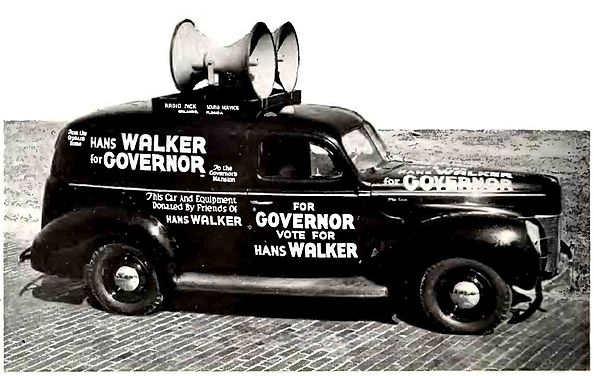
We might even see a return of the campaign sound trucks of the Earl Long era rolling up and down the main streets of our cities and towns after all the TV advertising money dries up.

Ah, nostalgia.

Read Full Post »

It’s such a truism that it’s almost a cliché: if you don’t like the news, shoot the messenger.

That is precisely the scenario that is unfolding as this is being written, according to three separate reports received today by LouisianaVoice.

  • The first is an unsubstantiated (to this point, at least) report that LouisianaVoice is about to be named a defendant in a defamation/libel suit by certain employees of the Louisiana Department of Public Safety and Corrections.

That would be the Louisiana State Police (LSP), since those are virtually the only DPS personnel I’ve written about.

And if they want to play that game, I’m more than ready because any litigation on their part will open them up for discovery of every questionable, unethical or illegal act they have ever committed during their entire careers. If they don’t have a little dirty laundry they don’t want exposed, then bring it on.

Anyone can sue and whenever feathers are ruffled, the potential for litigation is a given, but it does not come without risks on the part of the plaintiffs. They will be propounded with more interrogatories and requests for documents than they ever thought possible.

But the other two actions, in my opinion, are far more ominous.

  • A terse email from one person says simply, “Rest assured, he (State Police Superintendent Mike Edmonson) has already begun trying to destroy you. He is frantically trying to learn who emailed you.”
  • That’s a normal reaction by someone backed into a corner but for the third message received today by telephone. The caller said simply, “LSP has IT (Information Technology section) being paid overtime in efforts to determine who is communicating with LouisianaVoice and who is the ‘Trooper Underground.’”

If Edmonson is indeed finished at LSP as several sources have indicated, then there are two possible explanations about the timing of these efforts. One is they were initiated prior to the serving of those 18 subpoenas and while he was still trying to hang on to his job by discrediting his critics—and most likely cleaning house of those he deemed to be malcontents.

The second possible explanation is that as he exits, he fully intends to pull others down with him. And if the right (for Edmonson) person is appointed to succeed him, it will be a seamless transition and the witch hunt will continue unabated and heads will roll with collateral damage hopefully extending to the pesky media, i.e. bloggers.

And just to clear the air a little, LouisianaVoice is a Web blog which covers the entire spectrum of Louisiana politics and Trooper Underground is a Facebook blog that concentrates on matters of concern exclusively to Louisiana State Troopers and retired troopers. We are separate entities.

The ones behind this effort should know that if this is true, and they’re doing this without a valid search warrant, there well could be serious legal (read civil and criminal) repercussions for their actions.

Be that as it may, the efforts to out whistleblowers and to discredit those who report waste, favoritism, fraud, and other nefarious activities within the agency charged with protecting the state’s citizens presents a chilling prospect not just for LouisianaVoice or the Trooper Underground, but for all of us.

This is reminiscent of Terrebonne Parish Sheriff Jerry Larpenter’s raid on the home of a Houma blogger because the blogger, a city policeman, dared to criticize Larpenter. More puzzling even than the sheriff’s efforts to silence a critic fully protected under the First Amendment was the fact that a sitting judge actually signed the search warrant. Thankfully, it was quickly ruled unconstitutional by an appeal court.

It’s also reminiscent of a number of other tyrants, dictators, despots and demagogues down through history. Names like Joe McCarthy and Richard Nixon come immediately to mind. There are others who ruled entire countries and waged wars while silencing critics. You know who they are.

These are the acts of desperate people who will go to any end to exact revenge on those who, unable to improve things from within, go outside the agency for help. Whether or you agree with them, were it not for the Baton Rouge Advocate (see its recent outstanding series on the Louisiana State Penitentiary at Angola), New Orleans TV reporter Lee Zurik, retired TV reporter Ken Booth, Lamar White’s CenLamar, Bob Mann’s Something Like the Truth, Robert Burns’ Sound Off Louisiana and yes, LouisianaVoice, to whom could these people turn?

The Attorney General? He’s too busy running for governor. The East Baton Rouge Parish District Attorney? We don’t know where the hell he is. The Louisiana Office of Inspector General? (Insert chortles, yuks and guffaws here).

So, let them come after us. We’re ready. If we go down, we go down swinging.

Lawsuits can be filed in both directions.

Read Full Post »

1399909

Bloomberg News Service on March 1 published a STORY that said global megabanks have paid $321 billion in fines for such non-banking-like practices as money laundering, market manipulation and even terrorist financing since the market crash of 2008.

And while $321 billion may sound impressive, Bloomberg failed to mention that because of those same banks, President George W. Bush had little choice but to sign the Emergency Economic Stabilization Act of 2008 that pumped more than twice that amount, $700 billion of taxpayer bailout funds, into the failed banks that precipitated the Great Recession of 2008.

Most financial advisers would describe that as a negative return on investment.

Adding insult to injury, $1.6 billion of that $700 billion was used to award multi-million dollar bonuses to CEOs of the very firms that got us into the mess to begin with. http://www.cbsnews.com/news/16b-of-bank-bailout-went-to-execs/

Bloomberg also failed to mention that those fines had little effect on those who perpetuated the crimes but did have a significant impact on stockholders and retirees, those, in other words, who had nothing to do with the massive fraud carried out on such a grand scale.

In fact, in 2010, former Countrywide Financial CEO Angelo Mozilo was fined $22.5 million and ordered to pay another $45 million in restitution as his penalty for reaping a profit of $141.7 million from stock sale, according to Mary Kreiner Ramirez and Steven A. Ramirez, authors of The Case for the Corporate Death Penalty (New York University Press, 2017). So, despite the penalties, he walked away with a net gain $74.2 million, or a 52 percent return, sending a clear signal his peers that “crime does in fact pay,” the authors wrote.

There are also two questions Bloomberg neglected to address:

  1. What the total cost of the runaway greed and reckless actions of firms like AIG, Lehman Brothers, Merrill Lynch, Goldman Sachs, Citigroup, Countrywide, and J.P. Morgan to stockholders, retirees and American taxpayers in general?
  2. How many top tier officers at these firms who condoned, encouraged and/or actively participated in the illegal practices went to jail?

The answer to the first question is an eye-popping $15 trillion, according to Ramirez and Ramirez.

The answer to the second question is just as unbelievable: ONE.

In fact, as of Jan. 28, that last date that STATISTICS were updated by the Bureau of Prisons, there were exactly 555 people serving federal jail sentences for banking, insurance, embezzlement and counterfeiting. That comes to .3 percent (three-tenths of one percent) of the total federal prison population.

By contrast, there were 82,109 in federal prison for non-violent drug offenses (46.4 percent of the total), and 14,853 imprisoned on immigration charges (8.4 percent).

At this point it might be fair to ask just who did the most lasting damage to the nation’s economy?

It would also be fair to question why, if only one Wall Street banker went to jail, how is that there are 555 imprisoned for banking- and insurance-related offenses? The answer to that is those offenders, situated on Main Street instead of Wall Street, lacked the political clout in Washington that the leaders of the megabanks enjoyed.

Is that an over-simplification of the circumstances? Probably, but it’s interesting to compare the actions of different White House administrations in handling financial crises.

President Obama’s first Attorney General, Eric Holder, in his “too big to fail” proclamation, said, “I am concerned that the size of some of these institutions becomes so large that it does become difficult for us to prosecute them when we are hit with indications…it (prosecution) will have a negative impact on the economy.”

Obama, for his part, said, “One of the biggest problems about the…financial crisis and the whole subprime lending fiasco is that a lot of that stuff wasn’t necessarily illegal, it was just immoral or inappropriate or reckless.”

Wasn’t necessarily illegal? Both statements stretch credulity to its breaking point and are in themselves, disgraceful because federal laws were clearly broken knowingly and willfully.

It wasn’t always that way. For example, in the wake of the savings and loan crisis of the 1980s and 1990s, more than 1,100 bankers were indicted and 839 were convicted.

Enron, the seventh-largest company in the U.S. at the turn of the century, is another example of how the feds went after those who played fast and loose with the rules. President George H.W. Bush called on Enron CEO Kenneth Lay to run the World Economic Summit in Houston in 1990 and in 1992, Lay co-chaired the reelection campaign of Bush the First.

Enron and its affiliates also contributed more than $888,000 to the Republican National Committee in 2000, the year that George W. Bush was elected President and another $1.3 million to the Republican Party. Lay and his wife personally contributed $238,000 to George W. Bush campaigns and inauguration celebrations and raised another $100,000 from friends. To the younger Bush, Lay was known as “Kenny boy.”

Still, Enron and its top executives were not immune from prosecution by Bush the Second.

Despite the access to the highest levels of government enjoyed by Enron and Lay, he and Jeff Skilling, his successor as Enron CEO, were indicted by the Department of Justice in 2004 and though the two combined to spend some $60 million on their defense, Lay was convicted on all counts and Skilling on 19 of 28 counts of securities fraud.

George W. Bush’s Attorney General John Ashcroft recused himself from the Enron investigation because Enron and Lay both were major financial supporters in Ashcroft’s Missouri unsuccessful Senate re-election campaign. His chief of staff, David Ayers, also took himself out of the investigation of Enron. That was as it should have been.

Enron’s accounting firm, Arthur Andersen, was convicted of shredding Enron documents and both Enron and Arthur Andersen soon ceased to exist.

The same fate befell CenTrust Savings Bank, Drexel Burnham Lambert investment bank, and WorldCom—all because of flagrant violations of federal securities laws and each was prosecuted by the administrations of the two Bushes. WorldCom, in fact, was the largest bankruptcy in history when it went under in 2002.

Evidently, those firms were not considered too big to fail.

By contrast, Obama’s Attorney General Holder and Lanny Breuer, chief of the Department of Justice (DOJ) Criminal Division, did not remove themselves from DOJ’s investigation of the investment banks that brought on the Great Recession of 2008. This despite the fact that both men had worked for the same law firm of Covington & Burling which included among its clients such eminent Wall Street banking firms as Bank of America (Countrywide’s successor), Citigroup, and JP Morgan Chase.

In fact, at the time Holder was tapped as attorney general, he was co-chairing Covington & Burling’s white-collar defense unit. Good training in case you’re ever called on to investigate your former bosses.

Breuer returned to Covington & Burling in 2013 followed by his boss Holder in July 2015, giving Holder at least a reason for his strained, if not borderline unprincipled logic for not pursuing criminal indictments against the megabanks.

Following Holder’s departure, Deputy Attorney General Sally Quillian Yates (Remember her? She’s the one President Trump fired after she refused to enforce his illegal immigration order) issued a DOJ memo (turns out she was pretty good at memos that cut right to the chase) on Sept. 9, 2015, that reversed Holder and Breuer’s DOJ policy toward pursuing individual accountability, both criminally and civilly, for corporate wrongdoing. The memorandum said the policy change was to maximize DOJ’s “ability to deter misconduct and to hold those who engage in it accountable.”

The comparison between the approaches of two Bushes and Obama to bankers’ disdain for securities laws to the detriment of the entire country represents a stark role reversal for the perceived political philosophies of the Republican and Democratic administrations.

And now, President Trump has expressed his determination to roll back the Dodd-Frank bill passed after the 2008 recession for the express purpose of preventing a recurrence of the runaway greed that nearly wrecked the world economy.

In fact, he wants to remove all regulation of Wall Street banks, quite possibly the most dangerous single cartel in American society.

Read Full Post »

« Newer Posts - Older Posts »


