Feeds:
Posts
Comments

Archive for May, 2021

An editorial cartoon on Wednesday said that the Ringling Circus was boycotting Arizona, citing the “unfair competition from the vote audit circus” because it had “the best clowns.”

You can now add Louisiana to that list of boycotts by Ringling because there’s just no way their clowns can hold the line when pitted against certain of our legislators.

Take Reps. Valerie Hodges (R-Denham Springs), Ray Garofalo (R-Chalmette), Kathy Edmonston (R-Gonzales), and Mark Wright (R-Covington). Somebody please take them.

Okay, old joke but what the House Education Committee did on Wednesday was certainly no laughing matter, though all three should have been wearing big, oversized shoes, red noses and orange wigs. In fact, that goes for all eight committee members who voted to report Hodges’ House Bill 352 favorably.

Committee Chair Garofalo, as noted by committee member Rep. Ken Brass (D-Vacherie), somehow managed to spend the entirety of the testimony on the bill in another committee room but still managed to make it back in time to vote in favor of the bill – without benefit of hearing any of the testimony. Meanwhile, he left it to Wright, who had problems with committee procedure and the rules of order, to preside over the debate.

So, what’s the big deal about HB 352? The answer is self-proclaimed historian/author DAVID BARTON of Dallas, Texas, and his outfit called Wallbuilders. Wallbangers might be a better name for it.

Wallbuilders is a company that offers a line of textbooks that purport to teach American history and civics but with a decided flair for omitting the uglier aspects of our history like Native American genocide, SLAVERY and such messy details as our third President fathering children by a slave woman. In fact, one of its books, THE FOUNDING FATHERS AND SLAVERY, places the blame for slavery in this country on Great Britain, claiming that “…the Founders vigorously complained against the fact that Great Britain had forcefully imposed upon the Colonies the evil of slavery. For example, Thomas Jefferson heavily criticized that British policy.”

Good to know. The book goes on to say that “even the Virginia Founders were not responsible for slavery, but actually tried to dismantle the institution.” Perhaps that explains how Richmond became the Capital of the Confederacy.

It wouldn’t surprise me one bit if Wallbuilders’ updated history books put the onus on the Southern Poverty Law Center for the Jan. 6 insurrection at the U.S. Capital.

Hodges, testifying on behalf of her bill, co-authored by Rep. Edmonston, assured committee members that because she served as a missionary in Mexico for a couple of decades, she knows “how it feels to be judged by the color of my skin.”

Seriously? How about in your own country, Rep. Hodges? Ever been judged by the color of your skin in the good ol’ US of A?

But I digress. Among other things, HB 352 mandates the teaching of:

  • The “Founding Principles (capitalized, no less) of the United States of America” (somewhat subjective as those founding principles (capitalized) will presumably be what Wallbuilders deems them to be;
  • Federalism and the Federalist Papers;
  • American exceptionalism;
  • Globalism and the United Nations;
  • Immigration policy;
  • Due process and equal justice under the law (something that most probably should be taught many of our political leaders who seem to believe they are a law unto themselves).

“Textbooks and instructional materials…shall accurately reflect the contributions and achievements of ordinary Americans and promote an understanding of the history and values of the people of the United States and Louisiana, including the free enterprise system, the benefits of capitalism, private property, constitutional liberties, the value of a constitutional republic and traditional standards of moral values,” the bill says.

It also says, “Political activism of one point of view over another has no place in formal education…” That’s rather strange coming from Hodges considering she once endorsed the concept of church-affiliated schools receiving state charters – until an Islamic school in New Orleans applied for one. She nearly popped a blood vessel over that, declaring she had not meant her endorsement of faith-based schools to extend quite that far.

Not said, but certainly understood, considering Barton’s presence and endorsement testimony at Wednesday’s hearing was that Wallbuilders stands to reap a windfall should HB 352 become law. Why else do you think Barton would make an appearance to push the bill other than to see the Board of Elementary and Secondary Education (BESE) forced to approve his books for grades one through 12?

Representatives from the Louisiana State Department of Education and BESE, by the way, were on hand to oppose the bill – to no avail.

And then there’s that bill by committee chair Garofalo that’s sort of hanging out there in limbo because he was sufficiently stupid as to piss off the legislative Black Caucus with his insensitive remark that his HB 564 would allow educators to teach “the good” about “slavery.”

Uh…and what good would that be, Garofalo? All those good ol’ blues and spiritual songs? Sewanee River? Old Man River?

Like Hodges, Garofalo lives in some kind of dream world. His bill would prohibit the teaching of so-called “divisive concepts” like the myth that the U.S. or the gret stet of Looziana is “fundamentally, institutionally or systemically racist or sexist.”

Really, Rep. Garofalo? And the fact that there is no systemic racism or sexism would explain why Blacks are much more likely to be pulled over by police and why women earn approximately 60 cents to ever dollar a male makes for performing the same job?

Perhaps the complete absence of sexism would explain why LSU finds itself in quite the legal pickle over its handling of sexual harassment complaints on campus. You think maybe?

No racism? Well, that surely explains all those private and charter schools popping up all over the state, now, doesn’t it? They certainly weren’t created so the poor and black kids could be dumped into low-performing public schools while all those middle- and upper-class kids trotted off to their private or charter schools, were they?

And all those dirt-poor Native American reservations just couldn’t be a symbol of systemic racism. Nor could the attacks on Islamic citizens, Asians, and the demands that Latinos “speak English.” (Would you ever suggest to a member of the Sicilian Mafia that he “speak English”?)

Don’t believe me? Well, read on to the bottom of page 4 of Garofalo’s bill: “…[A] charter school …and the school’s officers and employees shall be exempt from all statutory mandates or other statutory requirements that are applicable to public schools and to public school officers and employees…”

Well, that certainly clashes with that provision in Hodges’ HB352 that stipulates that there shall be “equal justice under the law.”

Read Full Post »

A Louisiana legislator whose umbilical cord is attached intransigently and unapologetically to the oil and gas industry (no conflict there) authored a couple of bills in the current session which would do far more to protect the industry than it does Louisiana citizens or its environment.

House bills 617 and 549 would, in order, (a) make Louisiana a “fossil fuel sanctuary” in defiance of President Biden’s environmental plans and (b) change the status of natural gas pipelines from “transport vehicles” to “facilities,” a subtle difference in vernacular that would remove the authority of State Police to impose FINES against pipeline companies for failing to report natural gas leaks in a timely manner.

And while The Guardian, the superb British publication, REPORTED on HB 617 by State Rep. Danny McCormick (R-Oil City), the House has already given near-unanimous (97-0, with seven representatives not voting) approval of HB 549, which would drastically change the reporting requirements on and responsibility for natural gas leaks.

Both bills by McCormick, who Guardian reporter Sara Sneath pointed out runs M&M Oil and who before becoming a legislator, was a member of the Louisiana Oil and Gas Association, the powerful industry lobbying group, dovetail nicely with Louisiana’s long tradition of fealty to the petrochemical industry in Louisiana but which appear to run counter to the health interests of his constituents and to protection of Louisiana’s air quality.

Calumet Refinery, for example, was hit in 2013 with a $326,000 fine for nine air violations and a group of oil companies, including Calumet, offered residents of a mostly Black neighborhood in his district a paltry $2.7 million to SETTLE several lawsuits over health problems suffered by 703 plaintiffs that had dragged on for decades.

U.S. Sen. Bill Cassidy may express his anger at Biden’s description of the corridor along the Mississippi River between Baton Rouge and New Orleans as “cancer alley,” but facts are facts, no matter how inconvenient they may be. The corridor had that name – with good reason – long before Biden appeared on the scene even as vice president in the Barack Obama administration.

Because of fears that the EPA could revoke the state’s authority to enforce federal rules and possibly because of the Legislative Fiscal Office’s estimate of the possible lost of nearly $7.3 million in federal funds, McCormick’s fossil fuel sanctuary bill was tabled. That didn’t prevent him from sniffing, “I don’t know who would have a problem with it (the bill), honestly.”

But the House passage of his HB 549 raises new fears with attorney Isaac Jackson who says an obscure state statute could shield oil and gas companies from legal liability for damages they might cause. Unreported gas leaks that spark explosions could be a classic example of the unintended consequences of LA R.S. 30:51.

Jackson, who is a former general counsel for the Louisiana Department of Natural Resources, a former assistant attorney general and a former employee of Exxon, says it would be difficult to portray him as anti-oil and gas.

“At the same time,” he said, “I am concerned that the oil and gas/petrochemical lobby has wielded so much influence with regulators and legislators that laws have been shaped to have certain oil and gas companies avoid liability for damages they admit to causing.  I can tell you from first-hand experience in the industry that most oilfield operators are good operators.  But these laws are designed to protect only the few, worst ones. That’s not how the law should work.

“This is why I am concerned about a curious law of unclear intention, unclear origin, with no legislative history, and which is broadly worded in a dangerous way. The law’s key language is not typical of other laws. The vague wording of the law makes it susceptible to disagreement in how it might apply. But that uncertainty is also what makes it dangerous,” he said.

A plain reading of Revised Statute 30:51 indicates that it creates what Jackson calls a “secret” three-year countdown clock within which a state or local official must sue an oil and gas operator to enforce a penalty, otherwise known in legal circles as prescription. “That alone is enough to raise one’s eyebrows,” Jackson said. 

Under normal Louisiana law, the countdown clock for holding the violator responsible would begin only upon the regulator learning of the violation. But this odd law starts the clock regardless of any knowledge to the regulator. Instead, the law uses the curious term “made known” and states that the clock begins when an operator “makes known” a violation to the state attorney general. “What does it even mean to ‘make known’ to the attorney general?” Jackson asked rhetorically. “A postcard? An oral statement made in passing? A formal letter? No one knows because the law is so oddly worded.”

Left unsaid by Jackson was the well-known predisposition of the current attorney general to protect the oil and gas industry at all costs. AG JEFF LANDRY has consistently FOUGHT EFFORTS by Gov. John Bel Edwards and individual parishes to hold the industry accountable for the vast damage it has inflicted on Louisiana’s coastal wetlands.

“Here’s a good question for those who doubt the possible implications of this law: if this is not a get-out-of-jail free card to bad industry actors, then what actually is the alternative purpose and effect of the law?” Jackson asked.

He said the state must be honest with itself. “In the oil and gas context, bad operators do not write to notify their local and parish officials when the operator commits a violation for the same reason citizens do not write letters to the police to self-report speeding violations. With this law on the books, bad operators have a perverse incentive to cover up violations and quietly notify the attorney general, knowing that he may not alert local governments and state regulators,” he said. 

“This is a bad law and it should be changed. Until it is changed, local district attorneys should advise local and parish government clients of the dangers associated with Revised Statute 30:51 and push the attorney general for a formal policy ensuring that the public and officials are notified of each violation “made known” to the attorney general. And unless district attorneys warn their clients of the dangers associated with this law they perhaps risk falling short of their obligation under Revised Statute 16:2(C) to render faithful and efficient services.”

Read Full Post »

The Louisiana Sheriffs’ Association (LSA) is apparently on-board with House Bill 609 but not without some good old-fashioned horse trading, aka deal-making.

HB 609, by State Rep. Edmond Jordan (D-Baton Rouge), would tear down the wall of so-called qualified immunity that for years has protected law enforcement officers from lawsuits when they commit misconduct, violate an individual’s rights or break the law.

Qualified immunity exists under both federal and state statutes and extends immunity from lawsuits to prosecutors as well and courts have generally UPHELD THE PRINCIPLE even though the concept is mentioned nowhere in the Constitution or the Bill of Rights. The unofficial doctrine has fueled the frustration of human rights activists.

Jordan’s bill would change that and while the deaths of George Floyd and Breonna Taylor have sparked the national debate over qualified immunity, it is a LOUISIANA CASE that lies at the heart of his bill.

The crux of HB 609 says, “No element of qualified immunity shall be available to peace officers as a defense to liability for claims brought under the laws of Louisiana for wrongful death, physical injury or personal injury inflicted by peace officers through any use of physical force in a manner determined by the court to be unreasonable.”

The proposed law would apply to commissioned police officers, sheriffs, deputy sheriffs, marshals, deputy marshals, correction officers, constables, wildlife enforcement agents, state park wardens, probation and parole officers, military police officers, security personnel employed by the Louisiana Supreme Court or any Louisiana court of appeal, officers, employees, contract workers or volunteers with any prison, jail, work release facility, or correctional institution.

So, what are the conditions laid out by LSA in exchange for its support of the bill?

If you guessed money, you’d be correct.

When all these sheriffs in Louisiana cast longing eyes at the per diem paid to house prisoners, the race was on to build more and bigger local prisons to accommodate state inmates. The fact that the new facilities would allow the sheriffs to offer jobs in their respective parishes was a convenient plus, politically speaking.

But when the feds upped the ante by paying a lot more to house illegal immigrants, those same civic-minded sheriffs cast aside state prisoners in favor of the federal detainees, who brought in bigger bucks.

Many of the sheriffs even farmed out the operations of their local jails to private companies while cutting themselves in for a share of the easy money. The former sheriff of St. Tammany Parish got himself into a peck of trouble for setting up a deputy’s family to run the parish prison and in St. Bernard Parish, the sheriff simply over-built his prison, costing the parish a lot of money for building housing far fewer than its capacity. The sheriff of East Carroll Parish actually went to jail over his scheme to build and run four private prisons.

 Some even established their own work-release programs whereby prisoners were leased to local concerns which paid the inmates minimum wage. Of course, the sheriffs and private companies RAKED OFF A SHARE of the prisoners’ meager earnings as recompense for running the programs – never mind the state was already paying them to house the prisoners.

And just to ensure they could get most of what the prisoners were able to keep for themselves, commissaries were established that charged OUTRAGEOUS PRICES for Honey Buns and soft drinks.

Not wanting to leave any money on the table, phone systems were set up whereby extortion-level prices were charged for collect phone calls home to loved ones.

If you ordered my book Louisiana’s Rogue Sheriffs: A Culture of Corruption, you might find yourself wondering why the LSA doesn’t do more to clean up its image instead of spending time trying to enrich its members. (You can order the book for $30 by clicking on the yellow DONATE button to the right of this post or by sending a check to LouisianaVoice, P.O. Box 922, Denham Springs, Louisiana 70727.)

So, in exchange for its “support” of Jordan’s bill, the LSA wants to increase the per diem for housing state prisoners from $24 to $30 and is demanding to be allowed to charge even more for snacks and drinks from local commissaries.

And an increase in the already high prices of collect phone calls is reportedly also among the LSA’s wish list for its support of what should be a basic right in the first place.

And all this time, we thought scalping was illegal.

Read Full Post »

It’s finally here.

After years in the research and writing that saw thousands of pages of records rescued from a historic flood, my fifth book, Murder on the Teche: A True Story of Money and a Flawed Investigation is now available.

Dr. Robert Chastant, a highly successful and widely respected New Iberia orthodontist, was brutally murdered on Dec. 13, 2010 at his horse farm near his home. The killer, a Mexican illegal who worked for Chastant, was quickly apprehended and confessed to killing the doctor with a claw hammer. But, he told authorities, he was paid $1,000 by Chastant’s wife, Laurie, to kill her husband. Her possible motive? The difference between approximately $80,000 she would have received under a pre-nuptial agreement and more than $2 million in insurance and benefits.

Murder on the Teche contains the classic ingredients: money, a love triangle, murder and a bitter fight among Chastant’s third wife Laurie and his children. The inexperienced, bumbling investigators who overlooked or ignored obvious clues that may have revealed the involvement of a second person did little to alleviate tensions.

Laurie Chastant was never questioned as a suspect in the murder. Was it ineptness on the part of the Iberia Parish Sheriff’s Office or did the fact that Laurie’s father was – and is – a sheriff’s deputy in a nearby parish who had worked with Iberia Parish Sheriff Louis Ackal when both were Louisiana State Troopers influence authorities to consider Viera the lone killer?

I undertook this book after being contacted by Dr. Chastant’s brother, Paul Chastant, an architect living in Texas. He directed me to Lafayette attorney James Daniels, who represented his brother’s estate in the myriad legal fights. Daniels graciously provided me with boxes of legal documents which were sitting on the floor of my den when 33 inches of river water invaded my home in the flood of 2016. As I dejectedly stared at the soaked documents, my heroic wife Betty said, “Well, let’s get busy drying them out.” We then laid every single page on 8X4 plywood sheets in the hot August sun. The result was we saved every single page. While not in the best of shape, they were usable.

The result was this book, which you can order from me for $20 (the $17.95 price, plus shipping) by clicking on the yellow DONATE button to the right of this post to pay by credit card or you can mail a check to Tom Aswell, P.O. Box 922, Denham Springs, Louisiana 70727. (This is not a donation to the LouisianaVoice fundraiser: I promised no more of that until September. This is separate and apart from the LouisianaVoice non-profit.)

You may also order by clicking on the CAVALIER HOUSE ad on this page. That will take you to the web page of Cavalier House Book Sellers in Denham Springs.

Finally, you may order direct from DVille Press, my publisher, by clicking on www.dvillepress.com

Whichever method you choose, I sincerely hope you enjoy the book.

Read Full Post »

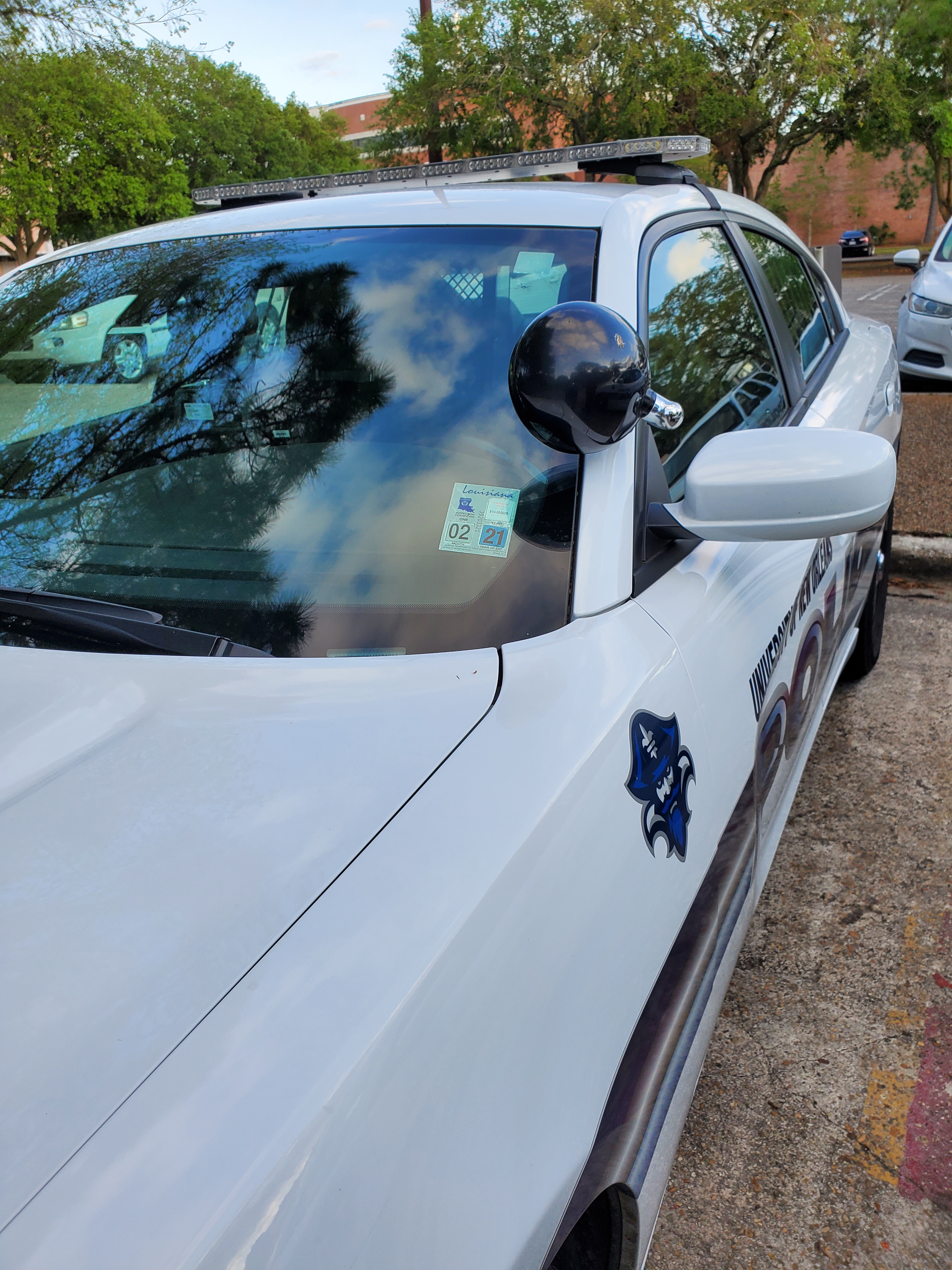
If you encounter an emergency at the University of New Orleans and find that you need police assistance, you probably need to pick a time during which an armed Police Officer Standards and Training (P.O.S.T.)-certified officer may respond in a safe vehicle.

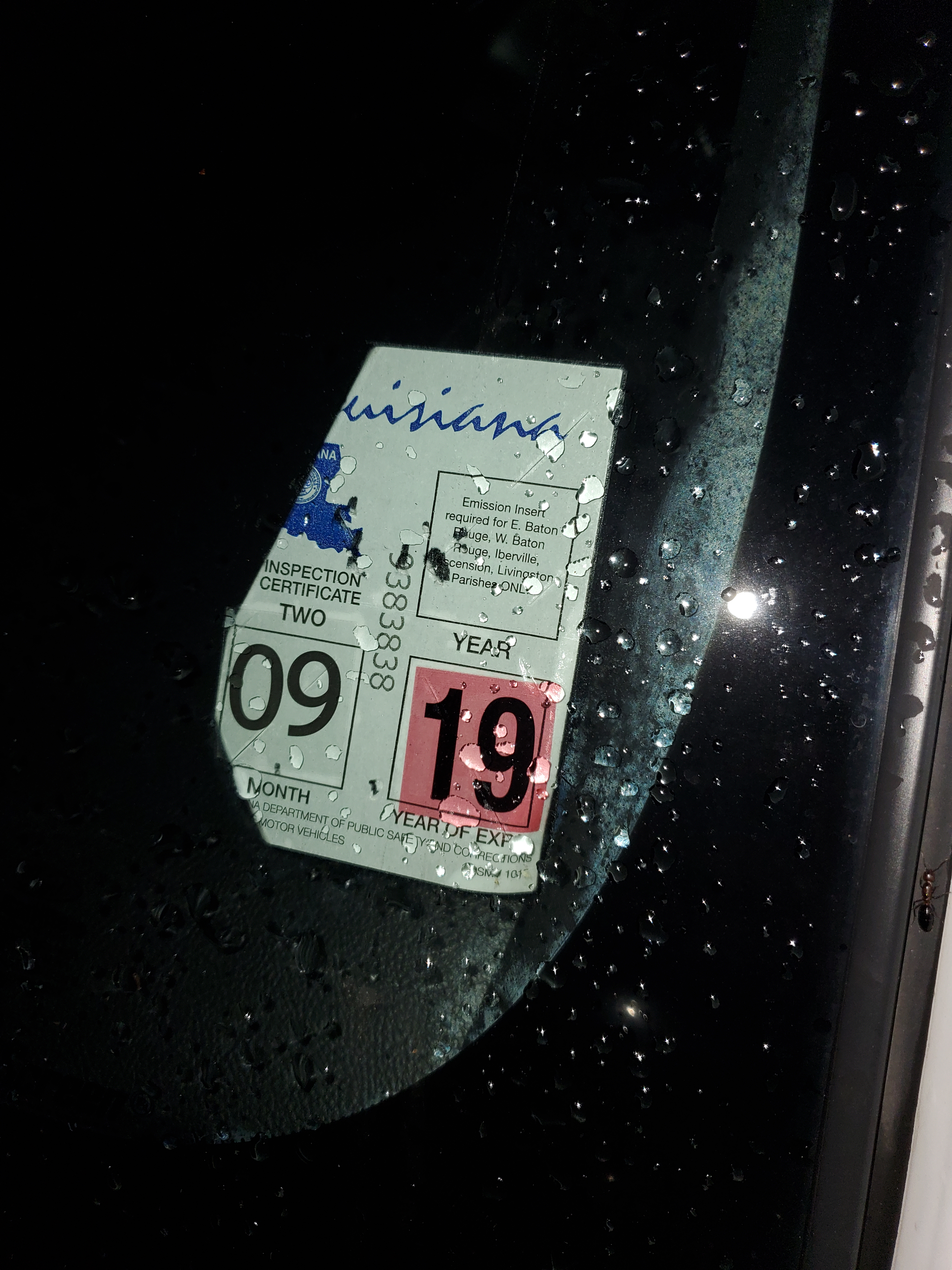
Otherwise, you may get a non-certified, unarmed officer/teacher who is driving a vehicle with no license plate and an expired inspection sticker.

Rick James Saephan resigned after three years as a campus police officer at UNO, saying, “I have just had enough” of seeing and hearing “many disturbing things that goes (sic) on within the police department.”

Saephan said at least one officer who has no arrest powers because of a lack of P.O.S.T certification “has been arresting and putting charges against the UNO community for the past 10 years.” A lieutenant who is not P.O.S.T. certified is allowed to be armed against regulations, he said.

He said when he submitted his resignation to Police Chief Harrington, the chief “became irate” and threatened to give bad performance reviews to any prospective employer who called him for a reference.

Several officers, including a lieutenant, are allowed to work on advanced degrees while on the clock as officers, he said.

LouisianaVoice was provided photos of two police vehicles which had no license plates or temporary tags. Another had an inspection sticker that expired in February of this year and still another’s inspection sticker expired in September of 2019.

I wonder if UNO police write tickets for students whose vehicles are caught on campus with expired inspection stickers or worse, no license plates?

Harrington’s Chief’s Welcome posted on the department’s web page said:

“Welcome to the University of New Orleans campus. The Department of Public Safety and Security’s number one goal is the safety of all students, faculty, staff, and visitors to our campus. The dedicated professionals of the department work hard to achieve that goal and to make this university the safest in the country. Police officers in the Department of Public Safety and Security have completed the State of Louisiana Police Officers Standards and Training and are commissioned by the Louisiana Department of Public Safety and Corrections. Security officers are trained in dispatch, security, and parking control. Our administrative staff is here to assist our community in obtaining parking decals and answering questions about parking.

“Members of this department are highly trained and experienced officers who continue to receive additional training in areas such as anti-bias awareness, constitutional community policing, cultural awareness, racial profiling, crisis intervention, and the LGBT community, in order to further the goals of the university community in educating our students. We want you to feel secure and safe when on our campus, and our diverse staff of well-trained professionals are crucial in achieving that goal.”

LouisianaVoice conducted a survey of Louisiana universities to determine how many officers in the various departments were P.O.S.T. certified. Harrington said UNO “currently has 14 P.O.S.T. certified police officers and five officers who are not P.O.S.T. certified.”

Other responses:

All of the LA Tech Police Departments patrol/response officers are POST certified. 

In the case of a newly hired officer/employee who is not POST certified, that person would be limited to only dispatch duty until able to attend a POST academy. 

Chief Randal Hermes

All of our patrol/response personnel are P.O.S.T. certified.

Northwestern State University

Mr. Aswell,

LSUE Police and Security has a staff of 5.  Myself and one other are POST certified police officers. The other three are unarmed security staff

CAPT. CORY LALONDE

Director of Police

Louisiana State University Eunice

All of ours at LSU are POST certified

Ernie Ballard III
Media Relations Director  

Thank you for your email. Southeastern has 24 sworn officers and all 24 are POST certified. 
Tiffany Chavers-Edwards, M.S.

Southeastern Louisiana University Police Department

All of our officers are POST certified.

Billy Abrams
Lieutenant
UL Lafayette Police Dept.

Read Full Post »

« Newer Posts - Older Posts »