Feeds:
Posts
Comments

The $500 million savings report by Alvarez & Marsal (A&M) was finally released on Monday only minutes before adjournment of the 2014 legislative session—and, conveniently for the administration, too late for critical feedback from lawmakers.

http://doa.louisiana.gov/doa/PressReleases/LA_GEMS_FINAL_REPORT.pdf

So, what makes this one any different than the others, given the fact that the A&M report acknowledges that Louisiana “has a long history of performance reviews, dating back to one performed by the Treen administration in the early 1980s?” Well, for one, the punctuation, spelling and grammatical errors contained in the report indicate that it was thrown together rather hastily to satisfy a state-imposed deadline for completion.

Of course the report was cranked out by “experts,” and as an old friend so accurately reminded us, an expert is someone with a briefcase from out of town.

The 425-page report, produced under a $5 million contract, while projecting a savings of $2.7 billion over five years (an average of $540 million a year), the substance of the report was sufficiently ambiguous to render the document as just so much:

(a)    Useless trendy jargon and snappy catch phrases like synergy, stakeholders, and core analytics to give the report the appearance of a pseudo-academic tome;

(b)   Eyewash;

(c)    Window dressing;

(d)   Regurgitation of previous studies by previous administrations that are now gathering dust on a shelf somewhere;

(e)    All of the above.

Three things were immediately evident with only a cursory review of the report:

  • Two offices that have been privatized by the administration as a means of savings and efficiency—the Office of Risk Management and the Office of Group Benefits—were subjected to rather close scrutiny by A&M which identified a host of ideas to make both offices more cost efficient. And we thought all along the administration had assured us of great cost savings and efficiency as its reasons for privatization in the first place. Yet A&M, in its report, claims its recommendations can save OGB another $1.05 billion while ORM can save an additional $128 million through implementation of recommendations contained in the report.
  • While A&M met extensively with and took suggestions from state employees who were tasked by the administration with coming up with savings ideas as far back as last September, not one word of acknowledgement is given to those employees in the report, prompting one employee to wonder, “Why the hell can these New Yorkers take my ideas and work and resell them to the state?” Of course the report did give a tip of the hat to Commissioner of Administration Kristy Nichols for her assistance in overseeing “all aspects of the state’s participation.” We suppose that will have to suffice.
  • Though virtually every office operating under the auspices of the Division of Administration came under the watchful eye of the A&M suits, not a single recommendation for increased efficiency and/or cost savings was offered up for the Governor’s Office itself. The closest A&M got to the governor’s office was the Office of General Counsel, the legal office of the Division of Administration. The obvious conclusion to be drawn from that is that the Governor’s Office is already operating at peak efficiency and minimum waste.

Most of the projected cost savings were based on assumptions for which A&M offered little or no supporting data other than arbitrary estimates and suppositions that could have been produced at a fraction of the report’s $11,760 per-page cost.

The report acknowledged that Louisiana already has the highest Medicaid recovery rate in the nation with $124 million in improper payments recovered but nevertheless listed as one of its recommendations that the Department of Health and Hospitals (DHH) “reduce improper payment in the Medicaid program.”

Seriously? Who would’ve thought that might be a way to save money?

Other suggestions included in the study by agency and projected savings (in parentheses):

DHH ($234.1 million)

  • Establish more cost-effective pediatric day health care programs and services;
  • Maximize intermediate care facility (ICF) bed occupancy rates;
  • Shift the administrative management of uninsured population from state management organization to local governing entities (Municipal and parish governments better take a long, hard look at that recommendation);
  • Improve the process and rate of transition of individuals with age-related and developmental disabilities from nursing facilities and hospitals. (So just where are those age-related and those with developmental disabled individuals being transitioned to? Are they to be removed from state facilities as a cost-saving move? And they accused Obama of creating death panels with the Affordable Care Act?)

Department of Transportation and Development (DOTD) ($99 million)

  • Expand advertising revenue for roads, bridges and rest stops;
  • Reduce the construction equipment fleet;
  • Convert some of vehicle fleet to natural gas (for this we needed a consultant?)
  • Reduce cost overruns with quality assurance/quality control engineering firm (another consulting contract);
  • Utilize one-inch thin asphalt overlay (and after reducing the construction equipment fleet we can change the names of our state routes from highways to obstacle courses).

Department of Corrections: ($105.3 million)

  • Expand certified treatment and rehabilitation program;
  • Expand re-entry program;
  • Increase use of self-reporting.

Department of Revenue and Taxation ($333.4 million)

  • Re-build audit staff positions depleted because of retirements and hiring freezes;
  • Increase compliance efficiency and reduce backlog of litigated cases

Department of Public Safety ($45.4 million)

  • Centralize state police patrol communications
  • Consolidate state police patrol command position;
  • Optimize state police patrol shifts
  • Expand Department of Public Safety span of control.

Office of Juvenile Justice ($44.2 million)

  • Increase probation and parole officers’ caseloads (Seriously? Do these clowns have even a remote idea of what these officers’ job is like? The caseloads have increased steadily and there have been no pay raises for what, five years now? For even suggesting that, those A&M suits should be horse whipped with a horse.);
  • Relocate youth from Jetson Center to other Office of Juvenile Justice (OJJ) facilities (so, just how out of touch was A&M to have not known the Jetson Center was closed in January?);
  • Increase OJJ span of control.

Department of Children and Family Services ($2 million)

  • Continue to implement innovative strategies intended to reduce;
  • Safely decrease the time children spend in state custody.

Louisiana Economic Development ($142.9 million);

  • Adjust fees for inflation;
  • Enhance review process for Motion Picture Tax Credits;
  • Enterprise Zone benefits and audit review process;
  • Consolidate Louisiana Economic Development (LED) offices into one government-owned facility (What? No privatization?).

Human Capital Management ($65.9 million)

  • Creation of agency workforce and succession plans;
  • Redesign of job families through creation of a competency model;
  • Improve the administration of Family and Medical Leave (FMLA) across agencies;
  • Review overtime policies;
  • Increase span of control for agency supervisors.

Office of General Counsel ($3.825 million)

A&M noted that the Office of the General Counsel (that would be the in-house legal counsel—they hate being called that—for the Division of Administration) “is responsible for ensuring that the commissioner’s statutory duty to respond to public record requests in a timely and legal manner is carried out.”

This was a favorite part of the entire report for us. The DOA Office of the General Counsel has historically delayed responding to public record requests of LouisianaVoice far beyond any reasonable—or legal—time limits. Louisiana’s public records statutes require an immediate access to public records unless they are unavailable in which case the custodian of the record must, according to law, respond in writing as to when they will be available within three working days. It is not at all unusual for the Office of the General Counsel to drag his feet for weeks on end before producing requested records.

But A&M has solved that knotty little problem by pointing out that as the custodian of the DOA’s public records, “it is the commissioner’s (Kristy Nichols) responsibility to receive and process public records.”

A&M’s recommendation that the Office of the General Counsel can generate its five-year cost savings simply by:

Increasing the organization efficiency of the office, ($1.975 million) and

Increasing the efficiency of document review process and reducing internal and external attorney costs ($1.85 million).

That, of course, raises the burning question of what will happen to Jimmy Faircloth?

Other suggested savings came under:

  • Procurement ($234.8 million);
  • Facilities Management and Real Estate ($70.9 million), and
  • Provider Management ($2.2 million).

“I am so proud of this report,” gushed Nichols. “These are real, common sense solutions that will not only save money for the people of Louisiana, but will improve the way we operate.”

Question, Kristy: If they are such “real, common sense solutions,” why has this administration in six-plus years experienced this epiphany before now?

Another question: If these suggestions, which you say were “thoroughly vetted,” are going to save money for us and make our lives better through better operations, where has Jindal, his cabinet secretaries, undersecretaries, deputy secretaries department heads, managers and great legal minds been all this time? Wasn’t it their job to give us the biggest bang for the buck? (Oops, that’s three questions.)

Oh, well, let’s go for broke here. Fourth question: Who “vetted” these wonderful ideas? If the vetting was done by those already on the state payroll, why didn’t those employees perform the task in the first place instead of blowing $5 million on this report that a second year economic major at LSU could have written?

Fifth question: Does the administration—and by extension, A&M—hold employee morale in such low regard that it was not considered as a factor in facilitating more efficient job performance across the board? Improved employee morale would seem to be conducive to cost savings, yet it was never addressed even once in the entire 425-page document. That omission speaks volumes.

And finally, if you are “so proud of this report,” why was it that you reportedly tossed an A&M representative out of your office with the admonishment that he’d better find something after he initially reported to you that his consulting firm was having trouble coming up the $500 million savings?

Could this explain why some of the “savings” appear to have been plucked out of thin air?
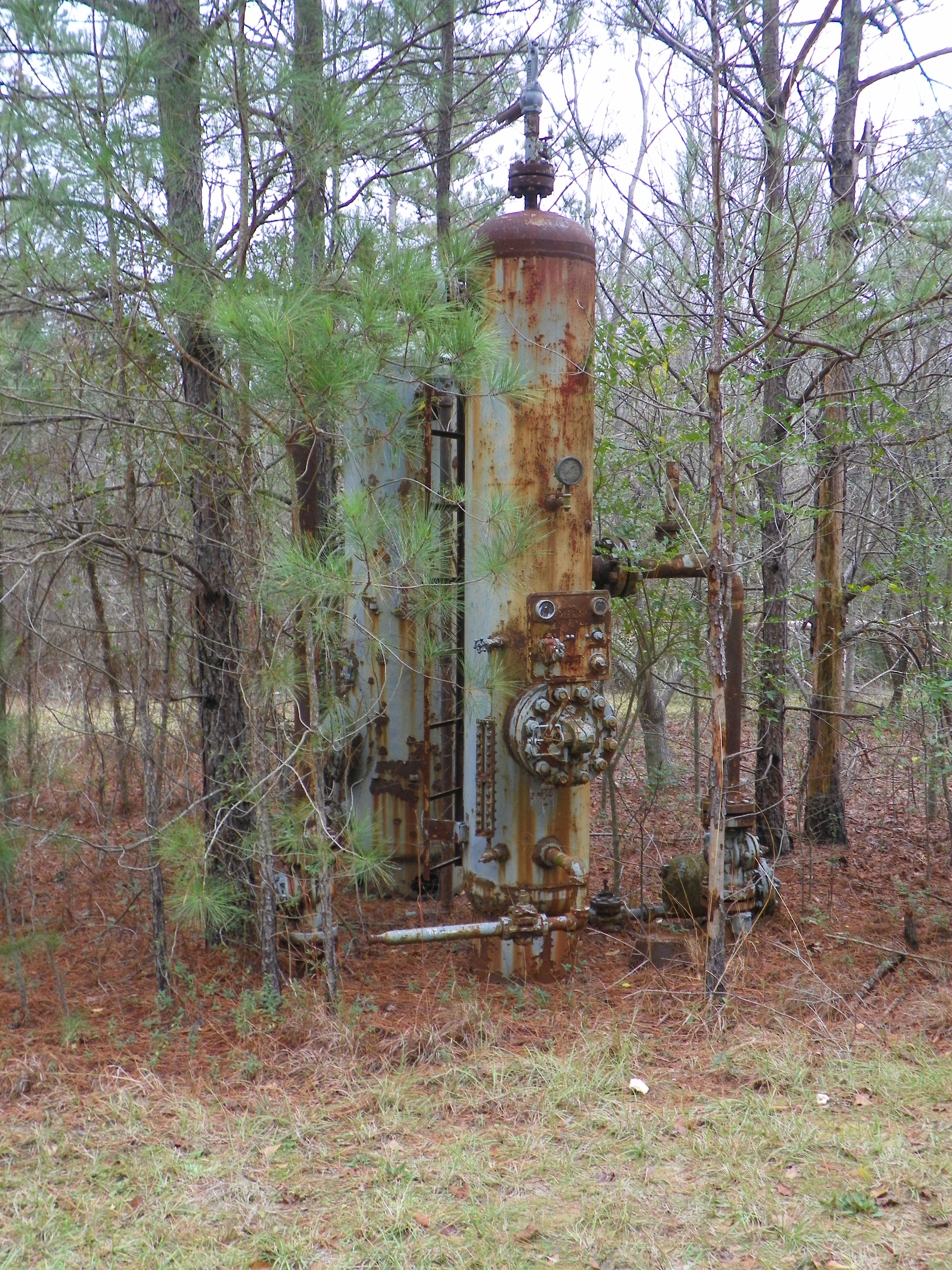
100_0620

Abandoned gas well equipment on private property near Ruston.

If there was still any lingering doubt after the passage of SB 469 that Gov. Bobby Jindal and the Louisiana Legislature are in an unholy alliance to give big oil carte blanche to rape the landscape while pillaging the state’s resources, that doubt should be erased with the release Monday of a state audit of the Office of Conservation, Louisiana Department of Natural Resources.

The audit report, released by Legislative Auditor Daryl Purpera, reveals that:

  • Current Office of Conservation regulations, unlike other states, do not require that all oil and gas drilling operators provide financial security on their wells;
  • Financial security amounts outlined in agency regulations are insufficient to cover the cost of plugging most wells;
  • The office did not inspect 53 percent of oil and gas wells in accordance with timeframes established by the commission over a six-year period and did not inspect 25 percent at all;
  • The office has failed to develop an effective enforcement process to “sufficiently and consistently” address noncompliance which might deter operators from committing subsequent violations;
  • Violations were not identified or addressed in a timely manner when identified nor did it conduct re-inspections to determine if fines were in order;
  • Approximately $471,000 in penalties were not assessed in fiscal years 2011 and 2012;
  • Current procedures do not effectively identify inactive wells and because operators are not required to report actual production by well, individual well production amounts cannot be verified;
  • The Office of Conservation did not consistently ensure that inactive wells were plugged within 90 days as required by state regulations.
  • During fiscal year 2008 through 2013, the office did not issue compliance orders to plug 416 (86 percent) of 482 wells designated as having no future utility;
  • Because of insufficient regulations, 5,239 of 11,269 wells (46.5 percent) were found to be inactive for more than 10 years and are at risk of becoming orphaned.

Orphan wells are abandoned oil and gas wells for which no responsible operator can be located or such operator has failed to maintain the well site in accordance with state regulations, the audit report said.

The laissez-faire attitude of enforcement on the part of the state has given rise to ever-growing numbers of abandoned wells throughout Louisiana and the Office of Conservation has neglected to conduct required inspections of orphaned wells. Of 270 wells orphaned from September 2010 to April 2013, the office failed to inspect 124 (46 percent) of those within the required 90 days and 87 of those 124 (70 percent) were not inspected at all as of July 2013. “Conducting inspections is important to ensure that wells are appropriately prioritized for plugging and that conditions at the sell site do not pose a risk to the environment,” the audit report said.

The Office of Conservation has recovered only $3.6 million from 13 previous operators who abandoned wells since 1993, the audit said. Lax enforcement of standards for which penalties for violations can run as high as $5,000 per day resulted in the collection of only about $900,000 for the six-year period of 2008 through 2013.

This lack of enforcement has had two results: millions of dollars are left uncollected for violations and operators are reluctant to take corrective measures even when cited. Accordingly, Office of Conservation enforcement does not deter operators from experiencing subsequent violations, the report said.

In fact, the audit report said, the Office of Conservation cannot even identify the actual number or type of violations cited on inspections.

Meanwhile, as of July 2013, there are 2,846 unplugged orphaned wills scattered across the state with the heaviest concentration in northwest Louisiana and along the Louisiana coast.

In management’s response to the audit, Commissioner of Conservation James Welsh said his office “takes the job of regulating the oil and gas industry seriously” and that his office is already in the process of addressing several of the concerns listed in the report.

“Conservation staff and management have been diligent in working to resolve these issues and will continue seeking a means to do so that does not create unintended consequences such as sharply increasing the rate of wells having to be declared orphaned,” he said.

Welsh, in his eight-page management response, agreed with all 21 recommendations of the audit report.

But with the honeymoon between the administration and big oil rolling blissfully along, it is doubtful that things will really change. Why should they?

On the one hand, operators have no incentive to clean up after themselves because of the practice by the Office of Conservation of winking and looking the other way when operators walk away from wells. There are few inspections and even fewer violations, and compliance orders are practically non-existent, so why bother?

On the other hand, just in case some rogue state agency like the Southeast Louisiana Flood Protection Authority-East (SLFPA-E) decides to take it upon itself to seek redress from 97 oil, gas and pipeline companies for the carnage they have wreaked on our coastal waters, all they have to do is throw money at the legislators and Gov. Bobby Jindal to be sure that such efforts are thwarted before they get out of the starting gate.

Altogether, the 144 current legislators and Jindal have raked in about $6 million in campaign contributions from big oil.

Yes, that’s a chunk of change but for the oil companies—ExxonMobil’s 2013 fourth quarter earnings (net profit) were $8.35 billion (That’s just three months)—it’s chump change.

Had that lawsuit by SLFPA-E been allowed to go forward, God forbid, even if the oil companies prevailed, they would have spent in legal fees alone far in more than the $6 million that they invested in those campaign contributions as a hedge against such an inconvenience.

Had they lost the lawsuit, however, the cost would have been in the billions of dollars, so what’s $6 million among friends? A mere pittance.

So now the legislators and Jindal can continue to accept big oil’s money, take smug satisfaction in their illegitimate marriage for the welfare of their benefactors and slap each other on the back for their brilliant legislative maneuvers. The oil companies now have a free pass to continue to destroy the Louisiana marshes and landscape and everyone, as my grandfather used to say, is happy as a dead pig in the sunshine. Everyone, that is, except the losers.

The losers?

Oh, that’s the citizens of Louisiana but who gives a crap about them?

The next election is more than a year away and their memories are so short.


That citation of Dual Trucking Co. by the Montana Department of Environmental Equality for dumping oilfield radioactive waste from the nearby Bakken Oilfield, it turns out, is not the only problem State Rep. Gordon Dove (R-Houma) has experienced with environmental authorities, LouisianaVoice has learned.

Vacco Marine, Inc., a company owned by Dove, who chairs the House Committee on Natural Resources and Environment, has been the subject of several investigations, negative reports, citations, and compliance orders by and from the Louisiana Department of Environmental Quality (DEQ) over a period of several years, records show.

Last week, while presiding over a meeting of the Natural Resources Committee, he joined 12 other members in passing an amendment to SB 469 that made the prohibition against suing oil companies for damages to the state’s wetlands and marshes retroactive. The amended version of the bill has since been approved by both the full House and Senate and awaits the signature of Gov. Bobby Jindal.

Dove also serves as a member of the Louisiana Coastal Protection and Restoration Authority.

Following are a few of the issues in which Dove and his company, Vacco Marine, have been involved:

  • May 12, 1989: DEQ, Office of Water Resources, Water Pollution Control Division inspection found evidence that various substances, including diesel and sludge, were being buried and that the practice had been ongoing “for a while.”


  • April 28, 1994: Same office found “several areas of limestone and ground contaminated with oil” and that a ditch which drained into Bayou Grand Caillou was “contaminated with hydrocarbons.” Dove was ordered to remove contaminated sediment, remove all contaminated ground in proximity of spills and to prevent future spillage.


  • Sept. 12, 1996: Vacco Marine was issued a compliance order by DEQ’s Hazardous Waste Division after an inspection in December of 1995 resulted in three separate violations relating to solid waste.


  • Oct. 6, 2004: U.S. Environmental Protection Agency (EPA) issued a complaint and consent agreement pursuant to the EPA’s compliance evaluation inspection of Sept. 23, 2003. Vacco Marine paid $6,593 in civil penalties to EPA on Jan. 14, 2005, for unspecified violations. The agreement also noted that Vacco would be subject to further enforcement action and additional penalties of up to $32,500 per day for continued noncompliance. The agreement also stipulated that Vacco could be enjoined from further generation, transportation, storage of disposal of hazardous waste if violations persisted.


  • Feb. 24, 2010: A DEQ inspection found 10 separate violations including incorrect logging of mercury, cut electrical and air lines, failure to log wastes received at the facility, and a lack of a Stormwater Water Pollution Prevention plan, among others. The 177-page inspection report included numerous photographs of conditions at Vacco Marine. Those included photos of open ditches that contained effluent and which drained into the Houma Navigational Canal.


  • April 11, 2012: DEQ compliance order and notice of potential penalty issued on the basis of DEQ finding that Vacco Marine had failed to develop and implement a Storm Water Pollution Prevention Plan as ordered in 2010. The DEQ order further noted that Vacco Marine had neglected to comply with other requirements, including the filing of required reports and permit applications. Vacco Marine also was found in violation of the requirement to record flow from its facility and, in fact, the flow meter was inoperable. Even when in service, the flow meter was found to have been installed incorrectly so that it could not accurate record flow rates. Other violations noted included failure to submit a noncompliance report, exceeding effluent limitations, incorrect reporting of Butyl Benzyl Phthalate outfall.


Even though Dove’s company was ordered to come into compliance with DEQ regulations, no penalties were imposed on Vacco Marine.

Could this have been because of his powerful position as chairman of the House Natural Resources and Environment?

Could it be that he received special consideration because of his position as a legislator?

That, of course, is difficult to say. But it certainly should not be hard to see the potential danger of placing an individual as chairman of a legislative committee that oversees the very agency that regulates his business—especially when that individual has such a spotted record of compliance as Rep. Gordon Dove.

That makes about as much sense as allowing him to chair that same committee and allowing him to vote on SB 469 after he received nearly $29,000 in campaign contributions from the oil and gas industry.

It makes about as much sense as Gov. Jindal’s apparent belief that the state ethics laws are meant to apply to some but not others as he signed into law a bill to allow former State Sen. Francis Heitmeier to lobby the Legislature despite the fact that his brother, David Heitmeier, is currently a state senator—in open violation of the state ethics law that prohibits members of lawmakers’ families from lobbying the legislature.

It makes about as much sense as allowing the LSU Board of Stuporvisors to enter into a contract with a company run by an LSU Board member to operate two LSU hospitals in north Louisiana.

It makes about as much sense as allowing Board of Elementary and Secondary Education (BESE) President Chas Roemer to vote on charter school issues despite the fact that his sister is executive director of the Louisiana Association of Public Charter Schools.

It makes about as much sense as allowing BESE and the Louisiana Department of Education to enter into multi-million contracts with Teach For America (TFA) even as Kira Orange Jones sits as a member of BESE and serves as executive director of TFA Greater New Orleans-Louisiana Delta.

Where I grew up in north Louisiana, we called that letting the fox guard the henhouse.

In Baton Rouge, apparently it’s just called Jindaltics.

As expected, the Louisiana Senate voted 25-11 on Friday to accept the House amendment to SB 459, which made the prohibition against governmental entities’ ability to seek redress from 97 oil, gas and pipeline companies for the damages inflicted on Louisiana’s erstwhile freshwater marshlands, effectively sealing the fate of efforts by the Southeast Louisiana Flood Protection Authority-East (SLFPA-E) to hold the companies accountable for their actions.

The amendment, passed earlier by the House in a 59-39 vote made SB 469 retroactive, which is tantamount to killing the SLFPA-E litigation, prompting Ret. Gen. Russel Honeré to observe, “The flag of the oil companies still flies over the Louisiana Capitol.”

But in passing SB 469, which Gov. Bobby Jindal is almost certain to sign into law, given his backing of the bill, the Louisiana Legislature may have pulled the proverbial rug from under Louisiana coastal city and parish governments, according to a five-page analysis of the bill by Robert R.M. Verchick of the Loyola University New Orleans College of Law.

Also participating in drafting the report on the potential repercussions of the bill were Zygmunt J.B. Plater, professor, Boston College Law School and former Chairman of the State of Alaska Oil Spill Commission’s Legal Task Force; William Andreen, professor of law, University of Alabama School of Law, and Christine A. Klein, professor and director, LL.M. Program in Environmental & Land Use Law, Levin College of Law, University of Florida.

Among other the bill by Sens. Bret Allain and Robert Adley (who have received $632,000 in contributions from oil and gas interests—$597,950 for Adley and $34,140 for Allain), provides:

  • Except as provided in this Subpart [the state coastal zone management law], no state or local governmental entity shall have, nor may pursue, any right or cause of action arising from any activity subject to permitting under R.S. 49:214.21 et seq. [the state coastal zone management law], 33 U.S.C. 1344 [§ 404 dredge or fill permitting under the Clean Water Act][,] or 33 U.S.C. 408 [the Rivers and Harbors Act] in the coastal area as defined by R.S. 49:214.2, or arising from or related to any use as defined by R.S. 49:214.23(13), regardless of the date such use or activity occurred (emphasis theirs).

That provision of the bill would appear to again place the state at odds with federal statutes, specifically the congressional Oil Pollution Act of 1990 (OPA) which says, in part:

  • Notwithstanding any other provision or rule of law, and subject to the provisions of this Act, each responsible party for a vessel or a facility from which oil is discharged, or which poses the substantial threat of a discharge of oil, into or upon the navigable waters or adjoining shorelines or the exclusive economic zone is liable for the removal costs and damages…

Moreover, federal statute says that the list of recoverable costs and damages includes economic losses and natural resource damages incurred by state and local governments. Damages under the federal statute shall include:

  • Damages for injury to, destruction of, loss of, or loss of use of, natural resources, including the reasonable costs of assessing the damage, which shall be recoverable by a United States trustee, a state trustee, an Indian tribe trustee, or a foreign trustee;
  • Damages equal to the net loss of taxes, royalties, rents, fees, or net profit shares due to the injury, destruction, or loss of real property, personal property, or natural resources, which shall be recoverable by the Government of the United States, a State, or a political subdivision thereof.
  • Damages for net costs of providing increased or additional public services during or after removal activities, including protection from fire, safety, or health hazards, caused by a discharge of oil, which shall be recoverable by a State, or a political subdivision of a State.

So what does all that have to do with local governmental entities?

Simply this: because SB 469 would limit the types of claims that state and local governmental entities may pursue, the report says. This means if BP should raise defenses of claims from the BP spill of 2010 based on SB 469 and even only partially succeed, “the results would needlessly deprive Louisiana and its communities of precious revenue and cause considerable embarrassment of state leaders” because it specifically excludes economic or natural resource damage claims under OPA, according to the report which was signed by Verchick.

Economic damages and damages from the loss of natural resources comprise the very basis of pending claims against BP, Verchick says.

In its OPA suit against BP, for example, Jefferson Parish has claimed that it has suffered, among other things:

  • Ecological damage;
  • Damage to the quality of life of its citizens;
  • Loss of sales tax revenues, use tax revenues, parish tax revenues, inventory tax revenues, hotel and motel tax revenues, severance tax revenues, royalties, rents and fees;
  • Increased costs of providing services to the citizens of Jefferson Parish;
  • Damage to the natural resources of Jefferson parish;
  • Increased costs for the monitoring of the health of its citizens and the treatment of physical and emotional problems related to the oil spill;
  • Increased costs for debt service;
  • Loss of fees for permits and licenses;
  • Loss of fines and forfeitures income;
  • Increased administrative costs.

State senators who represent Jefferson Parish who voted for SB 469 in its amended form and the amount of campaign contributions they have received from oil and gas interests (in parentheses) are:

  • John Alario, Senate President: $124,400;
  • David Heitmeier: $44,300
  • Jean-Paul Morrell: $87,800;
  • Gary Smith: $87,600.

TOTAL: $344,100 (Ave: $86,000 each).

Alario is a Republican while the other three are each Democrats, which illustrates that the money of big oil can purchases allegiances on each side of the aisle.

House members from Jefferson Parish who voted for the amended bill and their oil and gas contributions (in parentheses) include:

  • Bryan Adams: $9,000;
  • Robert Billiot: $32,800;
  • Jerry Gisclair: $3,750;
  • Cameron Henry: $30,000
  • Christopher Leopold: $29,800;
  • Nick Lorusso: $21,700;
  • Julie Stokes: $20,000.

TOTAL: $147,050 (Ave. $21,000 each).

GRAND TOTAL, HOUSE AND SENATE: $491,150 (Ave. $44.650 each).

“Because SB 469 works retroactively, it could undo all of these claims,” Verchick said.

If Jindal signs the bill into law, it would also apply prospectively. “So if, say, one of the supertankers offloading at the state’s offshore oil port caught fire and started pouring oil into Lafourche Parish, or if a major pipeline in Plaquemines Parish ruptured, or an oil rig anywhere in state coastal waters blew up, as BP’s Deepwater Horizon did, then no parish or city that was affected would be able to bring a claim for economic losses, not even if it cost taxpayers millions—or billions—of dollars,” he said.

Louisiana produces nearly 1.25 million barrels of crude oil per day. It hosts the world’s only offshore superport for oil and gas tankers and is crisscrossed by more than 100,000 miles of oil and gas pipelines. “Does Gov. Jindal really want to sign a law that could immunize the oil and gas industry from paying for economic losses caused by any oil spill (however reckless the behavior) in the state’s coastal zone?” Verchick asked in his report.

He said Jindal, in the opening week of hurricane season, should consider the terrible risk the law would impose on fragile communities along the Louisiana coast. “Whatever one thinks about SLFPAE’s lawsuit, such expansive action cannot be justified. It’s like bombing the Gulf of Mexico to catch a single snapper,” he said.

The report said the most significant risk could be the aftermath of future oil spill events that may occur wholly within Louisiana’s coastal zone, including potential ruptures in any of the more than 125,000 miles of oil and gas pipelines in Louisiana or a spill occurring at the Louisiana Offshore Oil Port (LOOP), the largest point of entry for waterborne crude oil entering the U.S., or from a tanker rupture similar to the Exxon Valdez spill.

“We emphasize that this is a significant litigation risk faced by the state and local governments should SB 469 be signed into law,” he said. State and local governments will also have counter-arguments that they can raise, namely that SB 469’s prohibitions will trigger conflict-preemption such that OPA’s damages provisions will take precedence over the prohibitory language of SB 469.

“Implied preemption can also take the form of conflict preemption where complying with both federal law and state law is impossible or where the state law ‘creates an unacceptable “obstacle to the accomplishment and execution of the full purposes and objectives of Congress.”

Arguably, the application of SB 469 to prevent certain state or local governmental entities from pursuing the full panoply of damages available under OPA may present such an obstacle and could be found by a court to be conflict-preempted,” Verchick said.

“These open questions present a significant litigation risk to such governmental entity claims. A court could plausibly interpret SB 469 to dismiss or limit damage claims, now before the court, that the state and its subdivisions have brought against BP. Regardless of how the court ultimately rules, the very existence of these eventualities will devalue the plaintiffs’ settlement posture and perhaps lengthen the time those governmental entities will go without recompense for these categories of economic loss,” the report concluded.

But it isn’t very likely that much thought will be given to the implications cited by Verchick; legislators and Jindal will be far too busy counting the $6 million or so they have received in big oil campaign contributions to give the report anything more than a cursory perusal.

Here is the way the Senate voted on the amended version of SB 469 which kills the SLFPA-E litigation:

YEAS

Alario

Adley

Allain

Amedee

Buffington

Chabert

Claitor

Cortez

Donahue

Erdey

Gallot

Heitmeier

Johns

Long

Morrell

Morrish

Peacock

Perry

Riser

Smith, G.

Smith, J.

Tarver

Thompson

Walsworth

White

Total – 25

NAYS

Appel

Broome

Brown

Crowe

Dorsey-Colomb

Kostelka

Martiny

Mills

Murray

Nevers

Peterson

Total – 11

ABSENT

Guillory

LaFleur

Ward

Total — 3

As a refresher from our previous post, for a complete list of campaign contributions from oil and gas interests to our 144 current legislators as compiled by Moss Robeson, click here: Copy of Campaign Contributions

“The flag of the oil companies still flies over the Louisiana Capitol today.”

—General Russel Honoré, US Army (Ret.), leader of Louisiana’s GreenArmy, and candidate for governor, commenting on the Louisiana House’s vote Thursday to not only kill future lawsuits against oil companies by levee boards, but to make such prohibition retroactive. The vote kills efforts by the Southeast Louisiana Flood Protection Authority-East (SELPA-E) to force 97 oil and gas companies to repair the damage they have inflicted on Louisiana’s coastline and marshes over decades of pollution and misuse,.


“Thank all the people who worked to try make the oil industry obey the law and the legislators who voted to do so. I think many of the legislators who voted to kill the lawsuit know perfectly well that they were doing the wrong thing. This fight is not over. We will see you in court. And we will see you at the next election. Apparently a majority of the legislators believe that the oil and gas industry actually is above the law, which is an interesting concept to embrace in the United States.”

—John Barry, teagued by Jindal as vice president of SFLPA-E, and who has continued to fight on behalf of the lawsuit filed last July by SFLPA-E, on the action by the House.

