Feeds:
Posts
Comments

LouisianaVoice has expressed concerns about the industrial tax incentives, aka giveaway programs, for years. It has been our contention that while welfare cheats are an easy target for criticism, the money lost to fraudulent welfare and Medicaid recipients is eclipsed by the billions of dollars stolen from taxpayers in the form of industrial tax exemptions, incentives, and credits.

Of course, the Louisiana Association of Business and Industry would never concede that fact. Instead, they use the stage magician’s tactic of misdirection by claiming runaway lawsuits, organized labor, higher wages (they are especially terrified of an increase in the $7.25 minimum wage) and poor public education performance are to blame for Louisiana’s economic and social ills.

Never (not once) will one hear LABI point to poverty as a cause of the state’s low ranking in everything good and high ranking in everything bad. Never (not once) will one hear LABI, the local chambers of commerce, or the Louisiana Office of Economic Development call attention to the billions of dollars in relief given businesses and industry—from Wal Mart to Exxon—in the form of corporate welfare—leaving it to working Louisianans to pick up the check.

And all you have to do to understand how this has occurred is to follow the money in the form of campaign contributions to legislators and governors and visit the State Capitol during a legislative session and try—just try—to count the lobbyists. Better yet, you may do better by counting lobbyists and legislators following adjournment each night as they gather for steaks, lobster and adult beverages at Sullivan’s or Ruth’s Chris—compliments of lobbyists’ expense accounts.

And while LouisianaVoice has attempted to call attention to this piracy, an outfit called Together Louisiana has put together a 15-minute video presentation that brings the picture into sharp, stark focus. The contrast between two separate economies living side by side is stunning.

Stephen Winham, retired director of Louisiana’s Executive Budget Office called the video “a super good presentation of facts our decision-makers choose to ignore as they have for many, many decades.”

Winham went a step further in saying, “Our leaders seem to think we are all too dumb to understand this—and that’s a positive assessment. A more jaundiced view would be that they don’t want us to understand it.

“All we can do is keep on keeping on with our individual attempts to communicate this and let our elected officials know that we do understand and that we hold them responsible and accountable. Unfortunately, when I attempt to talk about this with individuals and groups, their eyes glaze over within minutes. I’m not going to stop trying, though, and neither should anybody else.

“I am happy to have this information in such a tight presentation,” Winham said.

So, with that, here is that video:


And if that’s not enough to convince you, THIS STORY was posted late Friday.


On Monday (Nov. 13), Public Service Commissioner Foster Campbell issued a glowing PRESS RELEASE in which he announced what he described as a project to provide high-speed internet service to more than 54,000 homes and businesses in the 24-parish PSC District 5.

Yet, only two months earlier, Campbell had appeared before the Claiborne Parish Police Jury to publicly trash a proposal by Claiborne Electric Cooperative to provide even faster and more comprehensive internet service to an estimated 65,000 homes and businesses in its five-parish service area—at a comparable customer cost.

Campbell, an Elm Grove populist Democrat who lost to John Kennedy in the 2016 U.S. Senate race, who lost to Bobby Jindal in the 2007 governor’s election and who three times ran unsuccessfully for the U.S. House from Louisiana’s 4th congressional district, seems to be running for something again but there don’t seem to be any other offices for him to seek.

In September, he presented his timeline of events concerning the approval process for Claiborne’s proposed high-speed broad internet service. One cooperative member who was present for that performance described Campbell’s remarks as “hyperbole,” adding that many of Foster’s claims “were outright wrong.”

“Then when he had his say, for which he caught a lot of flak from citizens in attendance, he promptly left as (Claiborne CEO) Mark Brown was given the opportunity to present his side of the situation,” the member said, pointing out that he is neither an employee nor a board member of Claiborne Electric. He asked that his name not be used.

“There was a marked difference in the points of view with Mr. Brown’s position being a lot more straightforward and fact-based,” he said. “That Campbell made his accusations and factually incorrect statements and then left without hearing Mr. Brown’s EXPLANATION was one of the rudest displays I’ve seen in a public forum.”

In his press release, Campbell said the “Connect America” program of the Federal Communications Commission (FCC) “is helping fiber, wireless and satellite internet providers meet the need for broadband service in unserved or underserved areas of North Louisiana.”

He said that FCC records indicate that 54,580 homes and businesses in his PSC district are eligible for high-speed internet service funded by Connect America.

That represents just a fraction of almost a million people—325,000 households—in the 24 parishes.

What Campbell describes as “high speed” internet is a download speed of 10 megabytes per second and an upload speed of one megabyte per second at an estimated cost of $60 per month per customer.

Claiborne’s proposal calls for the same $60 monthly rate for 50 megabytes to one gigabyte of service for 10,000 more customers in the five-parishes of Bienville, Claiborne, Lincoln, Union and Webster than for Campbell’s entire 24 parish district.

Campbell claims that if the Claiborne project fails, customers would be on the hook for the costs, ignoring the fact that the proposal calls for a construction phase-in that would allow the project to be scrapped if it did not meet projections.

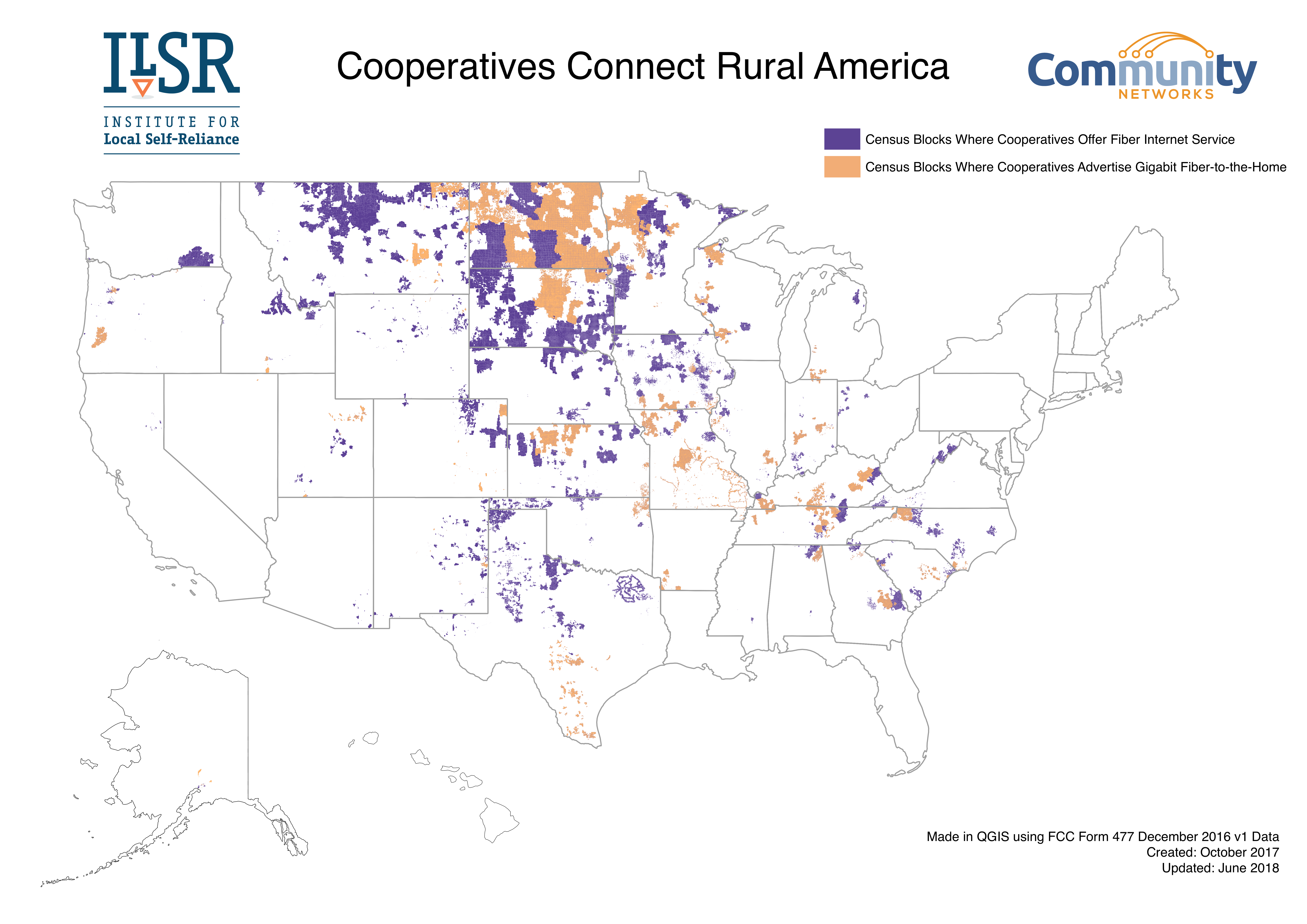
“Foster Campbell ignores the fact the 69 co-ops around the country have already done projects like that proposed by Claiborne and none of those have failed,” the Homer member said. “He also ignores that about 75 other co-ops around the country are in the process of starting fiber optic systems.”
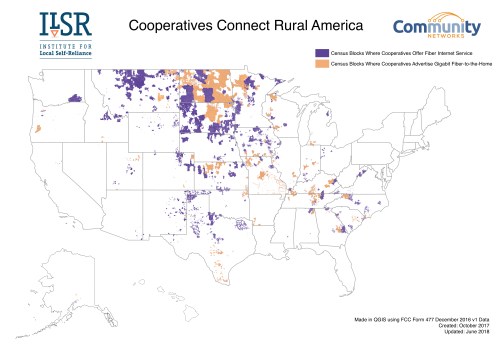
(CLICK ON IMAGE TO ENLARGE)

Foster’s behavior is a strange reversal of traditional Democratic support for electric cooperatives begun under the administration of Franklin Roosevelt and championed by such notables as Lyndon Johnson. In fact, Foster’s rhetoric is reminiscent of Bobby Jindal’s REJECTION of that $80 million Commerce Department grant to install high-speed broadband internet for Louisiana’s rural parishes back in 2011.

In that case, Jindal was in lockstep with the AMERICAN LEGISLATIVE EXCHANGE COUNCIL (ALEC) which in 2010 had staked out its opposition to federal encroachment onto the turf of private business despite the fact that private business had been painfully slow in responding to the needs of rural America dating back to the early days of electric power and telephone service.

And therefore, since AT&T was a member of ALEC and since AT&T was opposed to the grant, therefore, so was Jindal. In Jindal’s case, AT&T had also made a six-figure contribution to his wife’s charitable foundation, giving Jindal another reason to take up the ALEC banner.

AT&T, in fact, even took the City of Lafayette to court to fight the city’s efforts to construct its own fiber optic high speed broadband internet system. It was a costly fight for both sides but Lafayette eventually emerged victorious despite AT&T’s best efforts.

Foster Campbell, in his press release noted that AT&T would be responsible for $17.2 million, or 79 percent of the FCC-funded broadband expansion into PSC District 5 while CenturyLink of Monroe would have responsibility for $3.9 million (18 percent) of the cost and satellite provider ViaSat would spend $1.5 million (3 percent).

So, why is Campbell now sounding so downright Jindalesque in his opposition to Claiborne Electric?

For that answer, one would have to take the advice FBI agent Mark Felt, aka Deep Throat, gave to reporter Bob Woodward during the Washington Post’s investigation of Nixon and Watergate:

Follow the money.

  • CenturyLink made two $1,000 contributions to Campbell’s various state campaign fund in 2011 and 2012, according to Louisiana Ethics Commission records.
  • Glen F. Post, III, of Farmerville in Union Parish, is President of CenturyLink. He personally contributed $11,500 to Campbell between 2003 and 2014.
  • Stacy Goff is Executive Vice-President of CenturyLink. He chipped in another $500 for Campbell in 2005.
  • AT&T gave $10,000 to Campbell in campaign contributions between 2003 and 2010.
  • William G. “Bud” Courson and James W. Nickel of Baton Rouge are registered lobbyists for AT&T. Their firm, Courson Nickel, LLC of Baton Rouge, contributed $2,000 to Campbell from 2002 to 2014.

CENTURYTEL

COURSON NICKEL

Post contributed another $3,000 to Campbell’s unsuccessful Senate campaign in 2016 and Nickel and Courson also contributed $500 and $1,000, respectively, to that campaign, federal campaign finance records show.

Altogether, Foster Campbell had at least 30,500 reasons to oppose Claiborne Electric’s proposal to provide high speed broadband internet service to its members.

Because he indisputably had skin in the game, he should have recused himself from the discussion in order to avoid any conflict of interests.

Therein lies the problem of regulators accepting contributions from those they regulate.
In the annals of pure comedic performances, few could rival the record of Louisiana Attorney General Jeff Landry.

But now it appears he is making a valiant attempt to surpass his own record of slapstick routines.

According to Baton Rouge Advocate reporter Elizabeth Crisp, who has a solid record for accuracy and spot-on political analysis, Landry may have pulled off the seemingly impossible feat of actually making it onto the short list to succeed U.S. Attorney General Jeff Sessions who resigned under intense pressure from Donald Trump last Friday. You can see her story  HERE.

Of course, if Landry were to actually be nominated it would (a) be in total keeping with the unbroken line of absurd appointments and nominations by Trump and (b) turn the practical joke heretofore limited to the borders of the gret stet of Looziana onto the rest of the nation.

And we thought the Keebler Elf had some screwy legal interpretations. Landry, should he be nominated against all odds and be confirmed against even greater odds, would give new meaning to the term court jester.

He’s probably the only lawyer alive who could be out-maneuvered in court by Jethro Bodine.

This is the same Jeff Landry who, while in private practice prior to his election as Louisiana’s top legal scholar (insert laugh track here), was ridiculed in open court by a state judge for his sloppy legal work in improperly filing a lien on behalf of one of his only existing clients with the presiding judge admonishing the client to “Pick your lawyer carefully.”

But as Crisp pointed out, he is also the same Jeff Landry who has been invited to the Trump White House on several occasions, the same Jeff Landry who has a close relationship with former U.S. Rep. Mick Mulvaney, now Director of the Office of Management and Budget, and the same Jeff Landry whose annual alligator hunt fundraiser was attended by First Son Donnie Junior (I’d love to have had a photo of Donnie in hip waders).

And with this president, who knows? Landry is just qualified enough as a Trump bootlicker and unqualified enough as an attorney to pull it off.

And that would be a cruel joke indeed.

We’re number one.

For 28 straight years.

Nick Saban can’t make that claim about Alabama.

Even more alarming: for an incredible 28 straight years, Louisiana leads the country in STATEWIDE murder rates.

Twenty. Eight. Straight. Years.

Thanks in large part to the state’s three largest cities: New Orleans, Baton Rouge and SHREVEPORT.

Because of the somewhat dated data, this might seem to be a non-story.

On the other hand, unless the trend has reversed itself dramatically, the findings remain dishearteningly and disturbingly relevant.

And so far, there seems to be no indication of any such reversal.

For the years 2015-2016, New Orleans had the highest per capita firearm homicide rate in the nation—four times the national rate and twice those of Chicago and Detroit, the so-called murder capitals of America.

Figures published by 24/7 Wall St., an independent research company that publishes some 30 reports daily, shows that New Orleans had 404 firearm homicides, a rate of 16.6 per 100,000 population. The national rate was 4.4 per 100,000 while Detroit and Chicago had firearm homicide rates of 8.2 and 8.1 per 100,000 population, respectively.

You can see the entire report HERE.

Even more disturbing, however, and not addressed by 24/7 Wall St. because of its smaller size, were the figures for BATON ROUGE, which had 62 firearm homicides in 2016, a rate of 32 per 100,000. But in 2017, that figure skyrocketed to 106 firearm killings for a rate of 46 per 100,000 population.

And already in 2018, there have been 73 firearm-related homicides in Baton Rouge and authorities seem powerless to stem the tide of firearm violence.

There are periodic Take Back the Neighborhood and Take Back the Night rallies and elected officials and law enforcement personnel make their token appearances, but those displays do little to bring peace to the neighborhoods jarred by what must seem like nightly outbursts of violence.

Rallies, political posturing and lip service just doesn’t seem to be cutting it.

They work about as well as the canned condolences uttered by all those elected officials who take time out of their busy campaign fund-raising schedules to offer TAPs (thoughts and prayers).

It just doesn’t get any better for Iberia Parish Sheriff Louis Ackal.

Already having paid out approximately $3 million in settlements and judgments, which equate to something north of $25,000 per month for every month of his 10-year tenure as the high sheriff, he may be on the hook for even more civil liability claims.

The myriad of legal problems, both civil and criminal, should be enough to raise eyebrows among the Iberia electorate, prod the local newspaper into some serious investigative reporting (or even straightforward news reporting), and cause Ackal’s insurance carriers to take a long, hard look at the risks with this department and perhaps cancel his coverage.

Without actually conducting a parish-by-parish analysis, it would seem a safe bet to say that the IPSO’s liability payouts far outstrip any parish of comparable size and perhaps those of many larger parishes.

Simply put, Iberia Parish can no longer afford Louis Ackal. He’s far too high-maintenance.

The highest-profile case, of course, is that of Victor White, III, the 20-year-old who died when deputies said he got hold of a gun and shot himself in the chest—all while in a sheriff’s department patrol car and with his hands cuffed behind his back.

The Louisiana Sheriffs’ Law Enforcement Program (LSLEP), in response to a public records request, reported that $508,079.23 was paid on behalf of member sheriffs by LSLEP and the Louisiana Sheriffs’ Association’s insurance carrier providing excess coverage to LSLEP during the six-month period of Jan. 1, 2018 through June 30, 2018.

Of that $508,000 paid out in judgments and settlements, $122,500, or 24 percent, was paid to White’s family. That’s almost one-fourth of all judgments/settlements for the 26 parishes covered by LSLEP.

The latest award was for $41,000 to a New Iberia woman who said she was pushed over a porch rail, pepper-sprayed and stripped naked in 2012 when she was 34 weeks pregnant.

Ackal still has nine civil LAWSUITS pending against him at the present time.

