Feeds:
Posts
Comments

It must be nice when you can get the rules written just for you.

There must come a time when even the most disinterested, blasé, apolitical person living has to look up from whatever else occupies his interest and say, “Wait a damned minute. This just ain’t right and we’re not gonna do it.”

Or, as Peter Finch as Howard Beale in the classic movie Network would say: “I’m mad as hell and I’m not going to take it anymore!”

Just when you think you heard the last of Mike Edmonson, the erstwhile Superintendent of State Police, he comes back to haunt us and taunt us.

Remember way back in 2014 when LouisianaVoice first made you aware of SB 294, signed into law by Bobby Jindal as ACT 859? The bill, authored by Sen. Jean-Paul J. Morrell (D-New Orleans),  appeared only to deal with procedures for formal, written complaints made against police officers.

But thanks to a little back room deal between Edmonson Chief of Staff Charles Dupuy and State Sen. Neil Riser (R-Columbia and an announced candidate for State Treasurer), a last-minute amendment was tacked onto that bill that, contrary to verbal assurances to legislators that the bill would cause no financial impact, would have actually given Edmonson an additional $50,000 or so in retirement income.

Thanks to a timely anonymous letter informing us of the amendment, we were able to break the story and the resulting furor over that was such that State Sen. Dan Claitor (R-Baton Rouge) filed suit in 19th Judicial District Court to block the raise that Edmonson was already being forced to disavow. District Court Judge Janice Clark threw out the law.

Why?

Because Edmonson voluntarily and of his own free will chose some years earlier to lock his retirement in at $76,000 by entering into the state’s Deferred Retirement Option Plan (DROP) while he was still at the rank of captain. That decision, which is considered irrevocable, locked in his retirement at a rate based on his captain’s pay while netting him a higher salary at the time.

But now he’s back and because of a rather complicated quirk in the law—applicable, apparently, only to State Police—it appears he will get that extra retirement income after all—not $76,000 as dictated by his decision to enter DROP way back when, but $128,559, according to Jim Mustian’s Baton Rouge ADVOCATE online story.

Here is the way Retirement says it’s calculated, according to one retired Trooper:

Act 1160 relative to the re-computation of the pre-DROP benefit and the pre-DROP final average compensation applies to you if (1) you participated in DROP on or before June 30, 2001, 2) continued in state police employment after participation in DROP without a break in service, and (3) remained in such continuous employment on or after July 1, 2001. These special provisions do not apply to members who retired on or before July 1, 2001.

If You Entered DROP With 25 Years or More of Hard State Trooper Service:

Pre-DROP Benefit – If you meet the criteria set forth in (1), (2), and (3) above, and you entered DROP with 25 years or more of hard state trooper service, you are eligible for a re-computation of your pre-DROP benefit at 3 1/3% multiplied by the number of years of service to your credit prior to your effective date of participation in DROP, and further multiplied by your final average salary as computed when you entered DROP.

Post-DROP Benefit – Your post-DROP benefit will be calculated at 31/3% multiplied by the number of years of service to your credit after DROP participation, and further multiplied by your final average compensation. The final average compensation used will be the average determined at the beginning of DROP, or, a new current final average if you worked for an additional 12 or 36 months (based on your hire date).

If You Entered DROP With Less Than 25 Years of Hard State Trooper Service:

Pre-DROP Benefit – If you meet the requirements stated above and you entered DROP with less than 25 years of hard state trooper service, you may also be eligible for a re-computation of your final average compensation based on your hard 25th year of trooper service (or your highest 12-month average if you have not reached your 25th year) for the purpose of determining your new pre-DROP benefit. This re-computation of the final average salary will be based on any 12-month period of service (but limited to the first 25 years) while a member of LSPRS regardless of hire date.

Post-DROP Benefit – Your Post-DROP benefit will be calculated at 3 1/3% multiplied by the number of years of service to your credit after DROP participation, and further multiplied by the greater of 1) your final average salary as determined when we recomputed your pre-DROP benefit, or 2) your current final average compensation based on a 12-month average regardless of hire date.

The sum of any re-computed pre and post DROP retirement benefit shall not exceed 100% of your current final average compensation.

For purposes of determining the average compensation based on the first 25 years, (1) “state trooper service” does not include military service purchased, actuarially transferred service, or reciprocally recognized service, or any form of purchase of service credit, and (2) “average salary” does not include overtime, expenses, clothing allowances, or any remuneration resulting from military service.

If you are eligible for a re-computation under Act 1160, this does not change the amounts credited to your DROP account. The re-computation is for the monthly benefit amount you receive upon retirement only.

Got it?

Didn’t think so.

But the overriding question that’s impossible shake is this: If this rule existed, why was it necessary back in 2014 to try and sneak the benefit increase through the legislature as an amendment to an otherwise harmless bill?

Something doesn’t pass the smell test here and when you take a look at the makeup of the State Police Retirement System’s Board of TRUSTEES, six of whom are either active or retired State Troopers, the odor doesn’t get any better.

The bottom line here is this:

Whether or not special provisions are in place for State Troopers to circumvent the irrevocable provisions of DROP, if the State Police Retirement System’s Board of Trustees goes forward with giving Edmonson this $128,559, every single state employee who ever opted to enter DROP at any time should retain legal counsel and go after the additional retirement funds to which he or she is entitled.

 

“As an outsider (not living in Louisiana) doing disaster work in Louisiana, corruption is one element that defines Louisiana’s culture. There are many beautiful elements to your culture; corruption is not one of them. The voters talk about corruption as most people talk about their favorite sports team. You need to change it.”

—A reader whose comment says more about the ethos of corruption and the resignation to low expectations of our state leaders than anything anyone else could ever write. We should all be embarrassed and outraged over the manner in which the flood recovery is being handled.

Here’s a story no one saw coming:

There’s political chicanery afoot in Baton Rouge.

Who’d-a-thunk it?

Okay all that was said tongue-in-cheek.

Unfortunately.

The truth is, we’ve become so inured to political sleaze in Louisiana politics that it’s become difficult to be either surprised or outraged, leaving only indifference as our emotion of choice.

All the ingredients are in place for graft, corruption, and exploitation and there are plenty of those more than willing to take advantage of the opportunity:

  • A contract to manage Louisiana’s flood recovery program worth anywhere from 16 percent to 22 percent of $1.6 billion in federal funds;
  • A former state senator, Larry Bankston, convicted two decades ago on two counts of racketeering who now advises the State Contractor Licensing Board that has managed to insert itself into the debate over the proposed contract;
  • Claims of bid irregularities by a losing bidder;
  • Support of that claim by Bankston who neglected to mention that his son worked for one of the losing bidders;
  • Cancellation by the state of the $250,000 contract so that it may be re-advertised;
  • A potential 2019 gubernatorial candidate questioning the propriety of Bankston’s employment by that state board;
  • Up to 150,000 homes and nearly half-a-million residents affected by Louisiana floods in 2016, many of whom are still waiting for the political inertia called Restore Louisiana to start things moving so they can get back into their flooded homes.

Anytime there’s big money involved, especially federal money, the potential always exists for political and legal jockeying and manipulation. The temptation can be overwhelming.

Stephen Winham recently wrote a column for LouisianaVoice on this very subject: https://louisianavoice.com/2017/03/18/forget-blaming-fema-guest-columnist-area-reporters-correctly-place-fault-with-state-for-flood-recovery-failures/

The fact that the plight of the state’s flood victims has been obscured, seemingly forgotten, in the process of too-long delayed recovery only makes the state of affairs all the more shameful and disgusting. But when you have no voice, you are quickly forgotten in the scramble for big bucks.

And the bigger the bucks, the more greed manifests itself. And the more the greed, the less focus there is on the victims. That’s the way it’s always been and apparently that’s the way it will always be.

And hardly addressed is the issue of just what the deliverables on such a contract would be. Here we have companies crawling all over each other in order to obtain a contract which represents 20 percent of the total allocation for flood recovery.

And those companies won’t put up the first piece of drywall or sheetrock. They won’t perform any plumbing or electrical work. They won’t install any flooring or apply the first coat of paint, nor will they hammer the first nail. In short, they will do nothing meaningful toward flood recovery other than to approve payments to those who do the actual work.

But they will collect up to 20 percent of the recovery money—likely more if they can succeed at the usual practice of coming back for a contract amendment a few months down the road.

This story has received fairly significant play in the Baton Rouge area but if you’ve not kept up with The Advocate’s coverage, here’s essentially what has transpired:

A team led by IEM, a North Carolina company affiliated with several Baton Rouge engineering and consulting firms, easily had the best score—by at least 16 points—among the five teams submitting proposals and also quoted the lowest price—$250 million.

But PDRM, led by CSRS of Baton Rouge, whose bid was $65 million higher, filed an official complaint with the State Licensing Board for Contractors, pointing out that IEM did not possess a commercial contractor’s license at the time of its bid.

The Request for Proposals issued by the state, however, said only that bidding companies had to possess a license or be able to obtain one. IEM did, in fact, obtain a license prior to the time bids were opened. Ironically, PDRM, the company which blew the whistle on IEM, did not possess a contractor’s license at the time it submitted its bid either.

Bankston, legal counsel for the licensing board, opined that eligible bidders needed a contractor’s license at the time of bid submissions—and the licensing board agreed. The following day, March 17, the state decided to CANCEL IEM’s contract and re-bid the project.

By offering the opinion that he did, apparently disqualifying both IEM and PDRM in the process, the winning bid would have then gone to the third lowest bidder had not the administration decided to pull the plug on the whole thing and start over.

That third company whose bid was $350 million, $100 million higher than IEM, was Rebuild Louisiana Now and was led by a Texas firm called SLS. SLS also owns a company called DRC Emergency Services. Bankston’s son, Benjamin Bankston, works as regional manager for DRC. Larry Bankston said he was unaware his son’s firm had any relationship to any of the bidding companies when he wrote his opinion.

DRC had its own legal problems back in 2012 over payments and gratuities the company was accused of giving former Plaquemines Parish Sheriff Jiff Hingle after the firm received two CONTRACTS from the then-sheriff totaling more than $3 million.

In March 2002, the Louisiana Supreme Court REVOKED Bankston’s law license after his conviction on two counts of racketeering in 1997 in connection with then-State Sen. Bankston’s sham rental of his Gulf Shores condo to video poker operator Fred Goodson for $1,555 per week.

Bankston’s conviction was UPHELD by the U.S. First Circuit Court of Appeals in July 1999.

Contracting board Chairman Lee Mallett of Iowa, said he retains “full confidence” in Bankston.

Louisiana Attorney General Jeff Landry DISAGREES. But Landry’s desire to run for governor against John Bel Edwards in 2019 is the worst-kept secret in Baton Rouge, so he’s going to do and say anything he can to embarrass the governor.

U.S. Rep. Garret Graves, also being mentioned as a potential opponent for Edwards in two years and who was instrumental in obtaining federal flood recover money for Louisiana, also takes issue with the decision to cancel the IEM contract and to start the bid process all over.

“This is very disappointing news,” Graves said, adding that the decision will only serve to further delay needed flood relief funds. “It is impossible to explain to flood victims why $1.6 billion in recovery dollars are stuck in the bureaucracy while homes remain gutted, molded and uninsulated.”

Graves said obtaining the federal money “wasn’t easy and now every time we talk to the Appropriations Committee and leadership folks, they cite the fact that we haven’t spent what we already received. It’s a concern absolutely.”

That politicians, lawyers and contractors would put their own interests ahead of those of people who have been forced out of their homes—some for a year now—only serves to drive home the point that while there has been a change of administrations in Louisiana, nothing really has changed.

Yep, there’s political chicanery afoot in Baton Rouge.

Who’d-a-thunk it?

A question for Public Service Commissioner Mike Francis:

How much is enough?

And that’s not a rhetorical question. We really want to know what your limits are.

According to Francis, a wealthy man in his own right, he should be entitled to a free lunch.

Literally.

You see, the political campaigns of Public Service Commission (PSC) members, the Louisiana Insurance Commissioner and judges at every level are financed in large part by the very ones they regulate or do business with on a daily basis.

But apparently that association is not cozy enough for Francis, who wants to remove all restrictions on accepting free meals from representatives of utilities, motor carriers, and others regulated by the PSC.

Granted, the PSC purports to hold itself to a higher standard than actual ethics rules allow. Legally, elected officials are allowed to accept up to $60 per day in food and beverage under the guise of “business” lunches or dinners. But, as Baton Rouge Advocate columnist and resident curmudgeon JAMES GILL writes, the PSC, at the urging of members Foster Campbell and Lambert Boissiere, rammed through a rule barring all freeloading.

That didn’t sit well with Francis, who is financially solvent enough to daily feed the entire commission out of his petty cash account.

Saying he wanted the commission to be run like a business, he sniffed that a working lunch is “pretty standard procedure in the real work world.”

Our question to Francis then is this: since when is government run like a business? Businesses are run to make a profit; government is run to provide services for its citizens. The two concepts are like the rails on a railroad track: they never cross though they often do appear to converge.

And then there is our follow up question to Mr. Francis: isn’t it enough that you manage to extract huge sums of money from the industries you regulate in the form of campaign contributions? Why would you need a free lunch on top of that?

After all, your campaign finance reports indicate you received $5,000 from AT&T, $5,000 from ENPAC (Entergy’s political action committee), $5,000 from Atmos Energy Corp. PAC, $2,500 from the Louisiana Rural Electric Cooperative, $2,500 from Dynamic Environmental Services, $2,500 from ADR Electric, $2,500 from carbon producing company Rain CII, $2,500 from Davis Oil principal William Mills, III, $2,500 each from Jones Walker and the Long law firms, each of whom represents oil and energy interests. There are plenty others but those are the primary purchasers of the Francis Free Lunch.

LouisianaVoice would like to offer a substitute motion to the Francis Free Lunch proposal. It will never be approved, but here goes:

Let’s enact a law, strictly enforced, that will prohibit campaign contributions from any entity that is governed, regulated, or otherwise overseen by those elected to the Public Service Commission, the Louisiana Insurance Commission, judgeships at all levels, Attorney General, and Agriculture Commissioner.

  • No electric or gas companies, oil and gas transmission companies, or trucking and bus companies or rail companies could give a dime to Public Service Commission candidates.
  • Lawyers would be prohibited from contributing to candidates for judge or Attorney General.
  • Insurance companies would not be allowed to make contributions to candidates for Insurance Commissioner.
  • Likewise, companies like Monsanto, DuPont, Dow, Syngenta, Bayer and BASF, who control 75% of the world pesticides market, and Factory farms like Tyson and Cargill, which account for 72 percent of poultry production, 43 percent of egg production, and 55 percent of pork production worldwide, could no longer attempt to influence legislation through contributions to candidates for Agriculture Commissioner.
  • Members of the Board of Elementary and Secondary Education (BESE) could no longer accept contributions from individuals or companies affiliated in any way, shape or form with education.

While we’re at it, the Lieutenant Governor’s office oversees tourism in the state. In fact, that’s about all that office does. So why should we allow candidates for Lieutenant Governor to accept campaign contributions from hotels, convention centers, and the like?

This concept could be taken even further to bar contributions from special interests to legislators who sit on committee that consider bills that affect those interests. Education Committee members, like BESE members, could not accept funds from Bill Gates or from any charter, voucher or online school operators, for example.

Like we said, it’ll never happen. That would be meaningful campaign reform. This is Louisiana. And never the twain shall meet. The American Legislative Exchange Council (ALEC) would see to that.

But wouldn’t it be fun to watch candidates scramble for campaign funds if such restrictions were to be implemented?

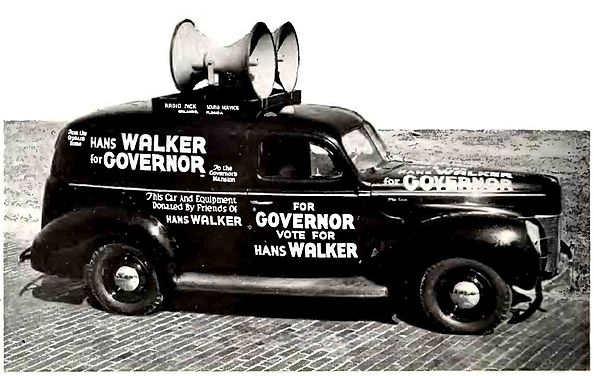
We might even see a return of the campaign sound trucks of the Earl Long era rolling up and down the main streets of our cities and towns after all the TV advertising money dries up.

Ah, nostalgia.

A 26-year Louisiana State Police (LSP) veteran from North Louisiana has been named by Gov. John Bel Edwards as the interim Superintendent of State Police to succeed Col. Mike Edmonson as State Police Superintendent, the governor’s office announced on Tuesday.

But the inside word received by LouisianaVoice is that the interim part of Maj. Kevin Reeves’ new title may be short-lived as Edwards is expected to name him the permanent superintendent in time for confirmation by the State Senate in June. State law requires the Louisiana State Police superintendent to be a trooper from within the agency’s ranks.

Reeves, a native of Baton Rouge, is a 1990 graduate of Louisiana Tech University in Ruston and currently resides in Jonesboro.

He began his career at the LSP in 1990 when he was assigned to motorcycle patrols with Troop A in Baton Rouge. His career took him to Troop F in Monroe in 1993, where he served as a squad leader for the mobile field force and as a case agent and undercover agent on narcotics investigations and operations for the Bureau of Investigations.

In 2008, he became the Troop Commander of Troop F before assuming the role of Command Inspector of Patrol Operations and Commander of Statewide Mobile Field Force Team in 2013. Major Reeves is married to Kristi Hall Reeves and they have three children – Kaleb, Kyle and Klayton. He currently makes $150,000 per year.

Reeves is scheduled to meet with Edwards on Thursday to discuss the transition in LSP administration.

His most pressing objective will be to shore up morale among the state’s 1,500 rank and file State Troopers who, despite generous pay raises, have continued to express dismay in the way in which the Baton Rouge headquarters, under its current leadership, had taken on the appearance of a frat house instead of a professional organization.

LouisianaVoice has learned that one of Edmonson’s inner circle, Lt. Col. Charles Dupuy, though bitter at not being named Edmonson’s successor, will nevertheless be retained as Reeves’ Chief of Staff.

“That’s bad,” said one retired state trooper.

It was not immediately known if Reeves had the backing of the Louisiana Sheriffs’ Association and if so, if the retention of Dupuy was a trade-off for that support. The sheriffs were said to have been lobbying hard for Dupuy.

A veteran State Trooper described Reeves as “common sense, ethical, respected, respectable, and just as good as or better than any other choice as a permanent replacement for Edmonson. He makes good, solid decisions in the face of complicated issues when everyone else cannot. Essentially, he is polar opposite of Mike Edmonson.”

Reeves, for his part, said, “I would like to establish an atmosphere where we’re inclusive of our personnel and we encourage them to come forth with their concerns,” he said. “I am going to try to reach out to all of our employees and take that message to them.”

He said he welcomes inquiries that are ongoing by the FBI and auditors from the Division of Administration as investigations into State Police travel records and campaign contributions by the Louisiana State Troopers Association (LSTA) continue. “We need to be transparent,” he said.

LouisianaVoice also received reports, confirmed by the Legislative Auditor’s office that representatives from the that office have been in place at LSP for more than a week to carry out an audit requested by State Rep. Blake Miguez (R-Erath). An unconfirmed report also said that the FBI appeared Tuesday at the State Police Office of Management and Finance, currently overseen by Lt. Col. Jason Starnes who was promoted and placed in that position just last August.

State Legislative Auditor Daryl Purpera reached out to LouisianaVoice in an effort at full disclosure Tuesday to say that the wife of Mike Edmonson’s  brother, State Police Maj. Paul Edmonson, is an auditor in his office but will take no part on the audit. “She brought it up in a meeting in our office,” Purpera said. “Our office, of course, has fire walls to separate any of our people from sensitive situations such as this.”

Edmonson, meanwhile, will host a farewell breakfast in the LSP cafeteria Friday from 7:30 to 9:30 a.m. as he concludes 36 years with LSP, the last nine as superintendent.
