Feeds:
Posts
Comments

1399909

Bloomberg News Service on March 1 published a STORY that said global megabanks have paid $321 billion in fines for such non-banking-like practices as money laundering, market manipulation and even terrorist financing since the market crash of 2008.

And while $321 billion may sound impressive, Bloomberg failed to mention that because of those same banks, President George W. Bush had little choice but to sign the Emergency Economic Stabilization Act of 2008 that pumped more than twice that amount, $700 billion of taxpayer bailout funds, into the failed banks that precipitated the Great Recession of 2008.

Most financial advisers would describe that as a negative return on investment.

Adding insult to injury, $1.6 billion of that $700 billion was used to award multi-million dollar bonuses to CEOs of the very firms that got us into the mess to begin with. http://www.cbsnews.com/news/16b-of-bank-bailout-went-to-execs/

Bloomberg also failed to mention that those fines had little effect on those who perpetuated the crimes but did have a significant impact on stockholders and retirees, those, in other words, who had nothing to do with the massive fraud carried out on such a grand scale.

In fact, in 2010, former Countrywide Financial CEO Angelo Mozilo was fined $22.5 million and ordered to pay another $45 million in restitution as his penalty for reaping a profit of $141.7 million from stock sale, according to Mary Kreiner Ramirez and Steven A. Ramirez, authors of The Case for the Corporate Death Penalty (New York University Press, 2017). So, despite the penalties, he walked away with a net gain $74.2 million, or a 52 percent return, sending a clear signal his peers that “crime does in fact pay,” the authors wrote.

There are also two questions Bloomberg neglected to address:

  1. What the total cost of the runaway greed and reckless actions of firms like AIG, Lehman Brothers, Merrill Lynch, Goldman Sachs, Citigroup, Countrywide, and J.P. Morgan to stockholders, retirees and American taxpayers in general?
  2. How many top tier officers at these firms who condoned, encouraged and/or actively participated in the illegal practices went to jail?

The answer to the first question is an eye-popping $15 trillion, according to Ramirez and Ramirez.

The answer to the second question is just as unbelievable: ONE.

In fact, as of Jan. 28, that last date that STATISTICS were updated by the Bureau of Prisons, there were exactly 555 people serving federal jail sentences for banking, insurance, embezzlement and counterfeiting. That comes to .3 percent (three-tenths of one percent) of the total federal prison population.

By contrast, there were 82,109 in federal prison for non-violent drug offenses (46.4 percent of the total), and 14,853 imprisoned on immigration charges (8.4 percent).

At this point it might be fair to ask just who did the most lasting damage to the nation’s economy?

It would also be fair to question why, if only one Wall Street banker went to jail, how is that there are 555 imprisoned for banking- and insurance-related offenses? The answer to that is those offenders, situated on Main Street instead of Wall Street, lacked the political clout in Washington that the leaders of the megabanks enjoyed.

Is that an over-simplification of the circumstances? Probably, but it’s interesting to compare the actions of different White House administrations in handling financial crises.

President Obama’s first Attorney General, Eric Holder, in his “too big to fail” proclamation, said, “I am concerned that the size of some of these institutions becomes so large that it does become difficult for us to prosecute them when we are hit with indications…it (prosecution) will have a negative impact on the economy.”

Obama, for his part, said, “One of the biggest problems about the…financial crisis and the whole subprime lending fiasco is that a lot of that stuff wasn’t necessarily illegal, it was just immoral or inappropriate or reckless.”

Wasn’t necessarily illegal? Both statements stretch credulity to its breaking point and are in themselves, disgraceful because federal laws were clearly broken knowingly and willfully.

It wasn’t always that way. For example, in the wake of the savings and loan crisis of the 1980s and 1990s, more than 1,100 bankers were indicted and 839 were convicted.

Enron, the seventh-largest company in the U.S. at the turn of the century, is another example of how the feds went after those who played fast and loose with the rules. President George H.W. Bush called on Enron CEO Kenneth Lay to run the World Economic Summit in Houston in 1990 and in 1992, Lay co-chaired the reelection campaign of Bush the First.

Enron and its affiliates also contributed more than $888,000 to the Republican National Committee in 2000, the year that George W. Bush was elected President and another $1.3 million to the Republican Party. Lay and his wife personally contributed $238,000 to George W. Bush campaigns and inauguration celebrations and raised another $100,000 from friends. To the younger Bush, Lay was known as “Kenny boy.”

Still, Enron and its top executives were not immune from prosecution by Bush the Second.

Despite the access to the highest levels of government enjoyed by Enron and Lay, he and Jeff Skilling, his successor as Enron CEO, were indicted by the Department of Justice in 2004 and though the two combined to spend some $60 million on their defense, Lay was convicted on all counts and Skilling on 19 of 28 counts of securities fraud.

George W. Bush’s Attorney General John Ashcroft recused himself from the Enron investigation because Enron and Lay both were major financial supporters in Ashcroft’s Missouri unsuccessful Senate re-election campaign. His chief of staff, David Ayers, also took himself out of the investigation of Enron. That was as it should have been.

Enron’s accounting firm, Arthur Andersen, was convicted of shredding Enron documents and both Enron and Arthur Andersen soon ceased to exist.

The same fate befell CenTrust Savings Bank, Drexel Burnham Lambert investment bank, and WorldCom—all because of flagrant violations of federal securities laws and each was prosecuted by the administrations of the two Bushes. WorldCom, in fact, was the largest bankruptcy in history when it went under in 2002.

Evidently, those firms were not considered too big to fail.

By contrast, Obama’s Attorney General Holder and Lanny Breuer, chief of the Department of Justice (DOJ) Criminal Division, did not remove themselves from DOJ’s investigation of the investment banks that brought on the Great Recession of 2008. This despite the fact that both men had worked for the same law firm of Covington & Burling which included among its clients such eminent Wall Street banking firms as Bank of America (Countrywide’s successor), Citigroup, and JP Morgan Chase.

In fact, at the time Holder was tapped as attorney general, he was co-chairing Covington & Burling’s white-collar defense unit. Good training in case you’re ever called on to investigate your former bosses.

Breuer returned to Covington & Burling in 2013 followed by his boss Holder in July 2015, giving Holder at least a reason for his strained, if not borderline unprincipled logic for not pursuing criminal indictments against the megabanks.

Following Holder’s departure, Deputy Attorney General Sally Quillian Yates (Remember her? She’s the one President Trump fired after she refused to enforce his illegal immigration order) issued a DOJ memo (turns out she was pretty good at memos that cut right to the chase) on Sept. 9, 2015, that reversed Holder and Breuer’s DOJ policy toward pursuing individual accountability, both criminally and civilly, for corporate wrongdoing. The memorandum said the policy change was to maximize DOJ’s “ability to deter misconduct and to hold those who engage in it accountable.”

The comparison between the approaches of two Bushes and Obama to bankers’ disdain for securities laws to the detriment of the entire country represents a stark role reversal for the perceived political philosophies of the Republican and Democratic administrations.

And now, President Trump has expressed his determination to roll back the Dodd-Frank bill passed after the 2008 recession for the express purpose of preventing a recurrence of the runaway greed that nearly wrecked the world economy.

In fact, he wants to remove all regulation of Wall Street banks, quite possibly the most dangerous single cartel in American society.

Already accused by a few letter writers of being anti-law enforcement, I’m probably not going to score many points with this post. In fact, I’ll probably be accused of being a jihadist.

But before I do, let me assure readers that I am firmly in favor of good, fair, even-handed law enforcement. Without law enforcement, there would be anarchy. Nothing we hold dear—our family, friends, possessions, homes, our very lives—would ever be considered safe.

And I’m Methodist.

So, no, I am not opposed to law enforcement to any degree. And unlike the occasional legislator who introduces some whacko anti-speed trap bill because he got pulled over in some hamlet while en route to conduct important state business, I’m not critical of State Police because I got a ticket I didn’t think I deserved (though I am disposed to run-on sentences). In fact, the last ticket I got was some 11 years ago—and it was from a local constable, not a State Trooper, for speeding. And you know what? I was speeding. And instead of calling the local mayor to get it fixed, I paid the fine.

But this column is not about State Police. And it certainly isn’t about me.

Instead, it’s about a guy named John Guandolo.

Never heard of him? Understandable. Let me enlighten you.

John Guandolo is a disgraced FBI agent who was fired after sleeping with a confidential source and then trying to keep it, well… confidential. Actually, Lori Mody was the FBI’s star witness in its case against then-Democratic Congressman William Jefferson.

Mody was wired to secretly record conversations with Jefferson and Guandolo was her handler—in more ways than one—who drove her to her meetings with the congressman.

After her meetings with Jefferson, at which Mody also delivered cash to him, she and Guandolo apparently would go undercover again—in a more literal sense.

His idiotic indiscretions nearly wrecked the government’s case against Jefferson who was ultimately convicted.

JAMES GILL wrote an interesting piece about Guandolo two years ago. He said Guandolo’s expertise was in counterterrorism, which made him an odd choice to become Mody’s handler.

It is his background, or perhaps more aptly, his obsession with Islamic terrorism, that brings us to report Guandolo’s whereabouts today.

He now runs an outfit called Understand the Threat (UTT, or more appropriately, UTTerly hysterical fear-mongering ) and goes around the country charging big bucks for folks to hear him expound on the threat of an Islamic attack looming behind every telephone pole in much the same manner as old Joe McCarthy made his name in the 1950s outing perceived communists from the State Department, Hollywood, newspapers and any other organization that caught his eye.

Just last week, Guandolo took his road show to HAMMOND in Tangipahoa Parish where he gave a closed-door presentation to prosecutors and law enforcement officials—probably consisting of a few deputies of Sheriff Daniel Edwards, Gov. John Bel Edwards’ brother. A few months before that, he was in St. Charles Parish spewing the same rhetoric.

That Guandolo is still able to train law enforcement officers following his breach of duty and ethics and his subsequent firing by the FBI should be a red flag for all law enforcement agencies and to those who elect them.

Nevertheless, his relentless pursuit of big bucks jihadists continues unabated.

Next week (Tuesday through Thursday, March 7-9) he will be at the historic Hotel Bentley in Alexandria, according to an ADVERTISEMENT in the Louisiana Tactical Police Officers’ Association (LTPOA), a little-known organization headquartered in Alexandria.

Frankly, the Bentley deserves better.

The three-day event “will blend overt anti-Muslim bigotry with tactics on investigating the alleged ‘jihadi’ and ‘Muslim Brotherhood’ threat in Louisiana.

(Odd that the Muslim Brotherhood should come up. Grover Norquist, author of that the infamous “no-new-tax” pledge that Bobby Jindal and half the Louisiana Legislature signed, is himself said to be a proponent of the Muslim Brotherhood. His wife is Islamic but no one has accused her—or Norquist—of sponsoring terrorism.)

Some of the scheduled highlights of the Rapides event include:

  • Going over scenarios on how local law enforcement can “identify and pursue” so-called jihadis’ (sic) in local jurisdictions (you’d think whoever wrote this would learn to spell jihadist);
  • Cover “training scenarios” on how to “investigate known Muslim Brotherhood entities in their areas;”
  • Breaking off into “Investigative Teams” and running through “a number of training scenarios, discussions, and exercises” on how to “investigate known Muslim Brotherhood entities in their areas;”
  • “Instruction on doctrinal Sharia (Islamic Law)” and “how jihadis (sic) use Sharia in furtherance of their operations;
  • Run “through the process of building affidavits, discuss how to educate local city/district attorneys on this threat, and will be given resources to take with them to further their education.”

If you scroll down this SCHEDULE, you can see he goes all over the country spreading his venom and has even been shut down in a few of his appearances.

The Rapides Parish event will be the third UTT training seminar held in Louisiana in recent months. As mentioned earlier, it was the St. Charles Parish Sheriff hosting the event last September. Last week it was the Tangipahoa Parish District Attorney and next week the Rapides DA. The question is this: are the sessions are being held because Louisiana is a hot spot for Islamic terrorist activity or because Louisiana officials are just saps for giving taxpayer money to a fast-talking snake oil salesman?

The cost of this seminar is $12,500, according to Rapides DA Phillip Terrell. About 180 law enforcement officials are presently registered which equals less than $25 per officer per day for their training and education.

“We are surprised at the objections to this training seminar sponsored by the Rapides District Attorney’ Office,” Terrell said in defense of the expenditure to rid Central Louisiana of the radical Islamic scourge. “It is simply to educate our law enforcement community to the potential of terrorism faced by our nation. It is critical that we do everything in our power to protect our community from any threat whether it is drug dealing, violent crime or terrorism.

“If this training saves one Life, it is worth it,” he sniffed.

Hey, Mr. Terrell, it’s not so much the fact that you’re trying to keep local law enforcement types education to potential threats, even imaginary ones, if that’s how you want to run your office; it’s who you have chosen to do the educating.

The hatred of every conceivable minority that now infects this country is a festering wound that does not need to be exposed to the filth and contamination of the John Guandolo strain of bacteria. What he is selling is not a cure; it’s fear—a fear that focuses laser-sharp on only one target.

Yes, there is an immigration problem and yes, there are terrorists on the loose in this country. And while some may indeed be Islamic (Ft. Hood, Boston, Orlando, San Bernardino come to mind), more—many more—of those are of a lighter skin who profess a Protestant faith and who attack Jews, Hispanics, Blacks, Asians, and yes, Islamics.

Timothy McVeigh and Terry Nichols were not Islamic. Neither was Unabomber Ted Kaczynski. Nor is the KKK.

The Charleston church shootings, the Wisconsin Sikh temple shooting, the Centennial Olympic Park bombing, last week’s shooting of two Indians, lynchings—all acts of terrorism carried out not by Islamics but by whites.

Attacking one perceived problem while ignoring the others is not a solution. To that end what Guandolo is selling is not productive or useful.

It’s exploitation, pure and simple—exploitation by a disgraced former member of the law enforcement community.

And he’s being aided and abetted by…the law enforcement community.

You can’t make this stuff up—(C.B. Forgotston)

Motivated solely by curiosity I asked a long-time respected (now retired nuts & bolts) reporter in Monroe, Louisiana, recently if the media there had covered the still exploding scandal involving the hierarchy of the Louisiana State Police and the Governor’s alleged “stacking” of the LSP Commission which acts as a kind of Civil Service Board in order to allegedly protect the top people at LSP accused of various improprieties. Coverage of this has occupied a lot of television air time in south Louisiana for the past week or so along with plenty of space in the major newspapers in that region of the state. Herewith, a verbatim transcript of that conversation:

Me: “Has the Monroe media reported ANY of the Louisiana State Police Scandal?”

Retired newspaperman: “Not only NO, but HELL no!”

Me: “Why do you suppose that is?”

Retired newspaperman: “There really are no local media left.”

I’d mark that as a sad commentary for an area the size of Monroe-West Monroe which boasts three network-affiliated television stations, a Gannett daily, and at least two community-oriented weeklies. It’s enough to make you wonder if this is the kind of thinking that could put northeast Louisiana back behind the infamous “cowhide curtain.”

—Email received by LouisianaVoice from retired Monroe investigative reporter Ken Booth, now living in Arizona.

Anyone who thought retired State Police Lieutenant Leon “Bucky” Millet would eventually get tired of calling out State Police Superintendent Mike Edmonson, the Louisiana State Troopers Association (LSTA) or the Louisiana State Police Commission (LSPC) just doesn’t know Bucky Millet—or wife Vivian, for that matter.

Both have been fixtures at LSPC’s monthly meetings for more than a year now, driving in all the way from Lake Arthur, and at times have been a real pain in the posteriors for the commission. Millet has warned commissioners on more than one occasions that continuing to allow Edmonson to stack the commission with his lap dogs will eventually come to no good. Looking back, his repeated warnings have suddenly gone from the predictions of a disgruntled retiree to the prophetic words of someone with unerringly keen insight—and foresight.

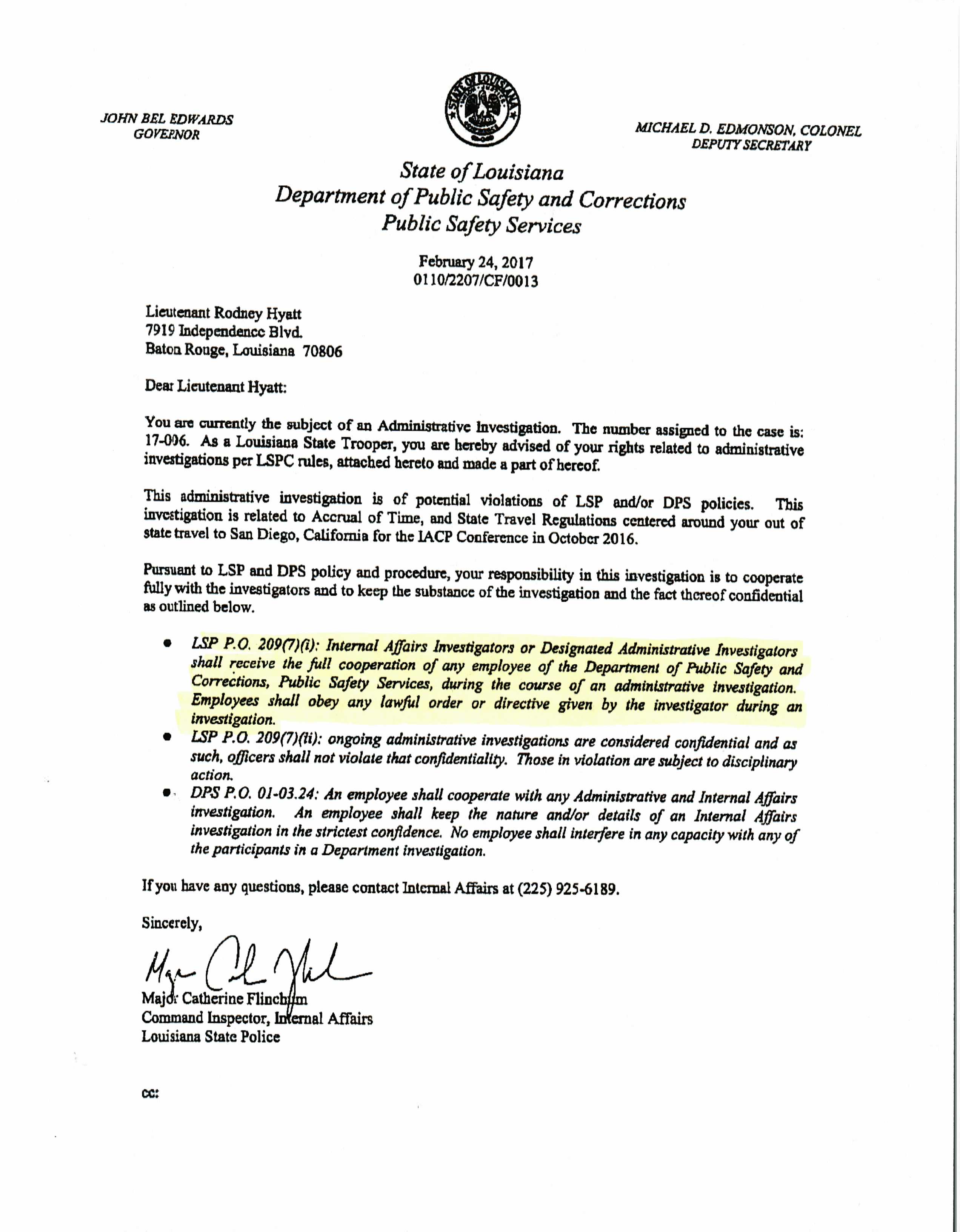
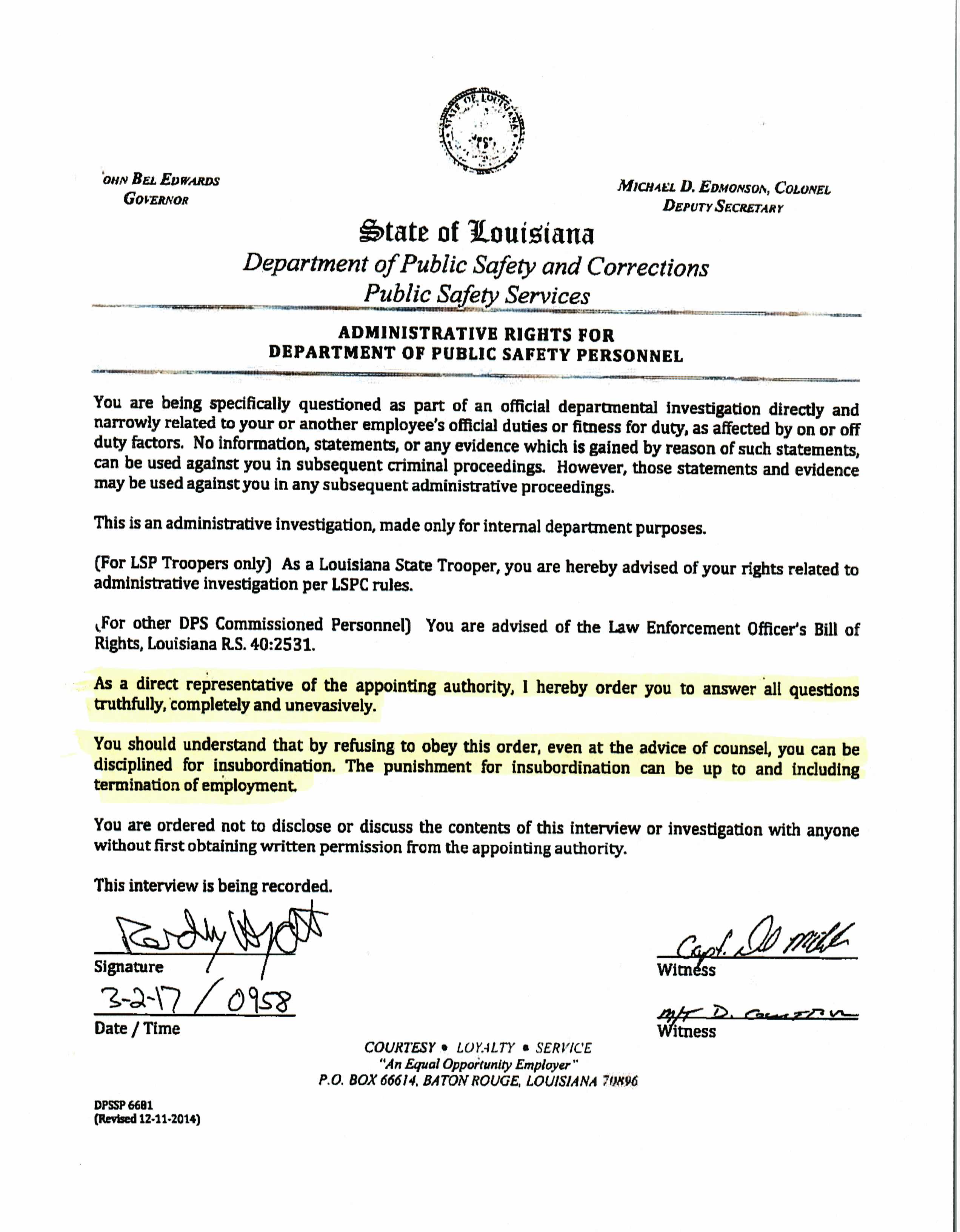
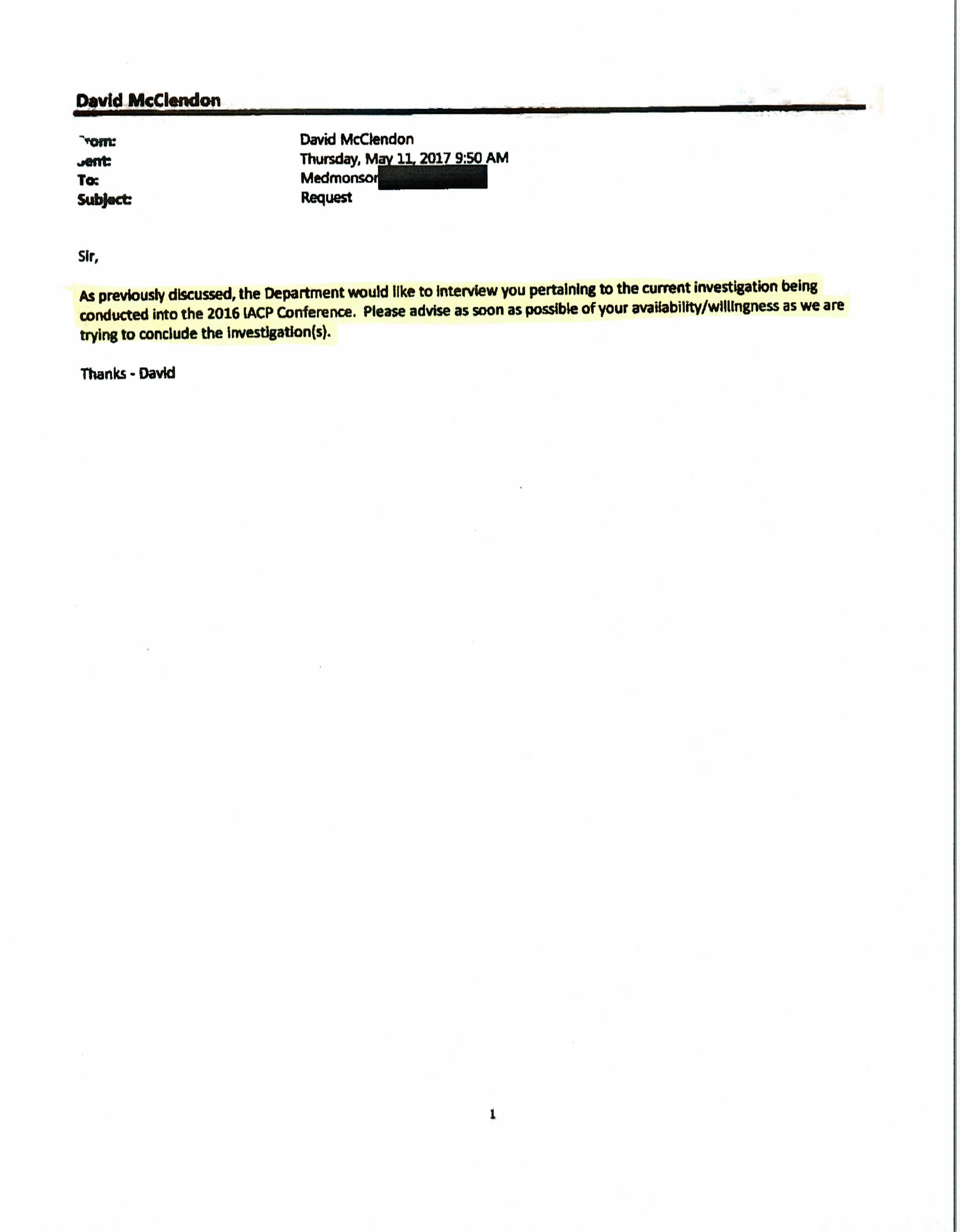
Millet, fed up with the direction being taken by the organization he once served so proudly, has now fired off formal complaints to Gov. John Bel Edwards, Attorney General Jeff Landry, Inspector General Stephen Street, State Police Lt. Col. Murphy of the Louisiana Department of Public Safety’s (DPS) Bureau of Investigations, and East Baton Rouge Parish District Attorney Hillar Moore.

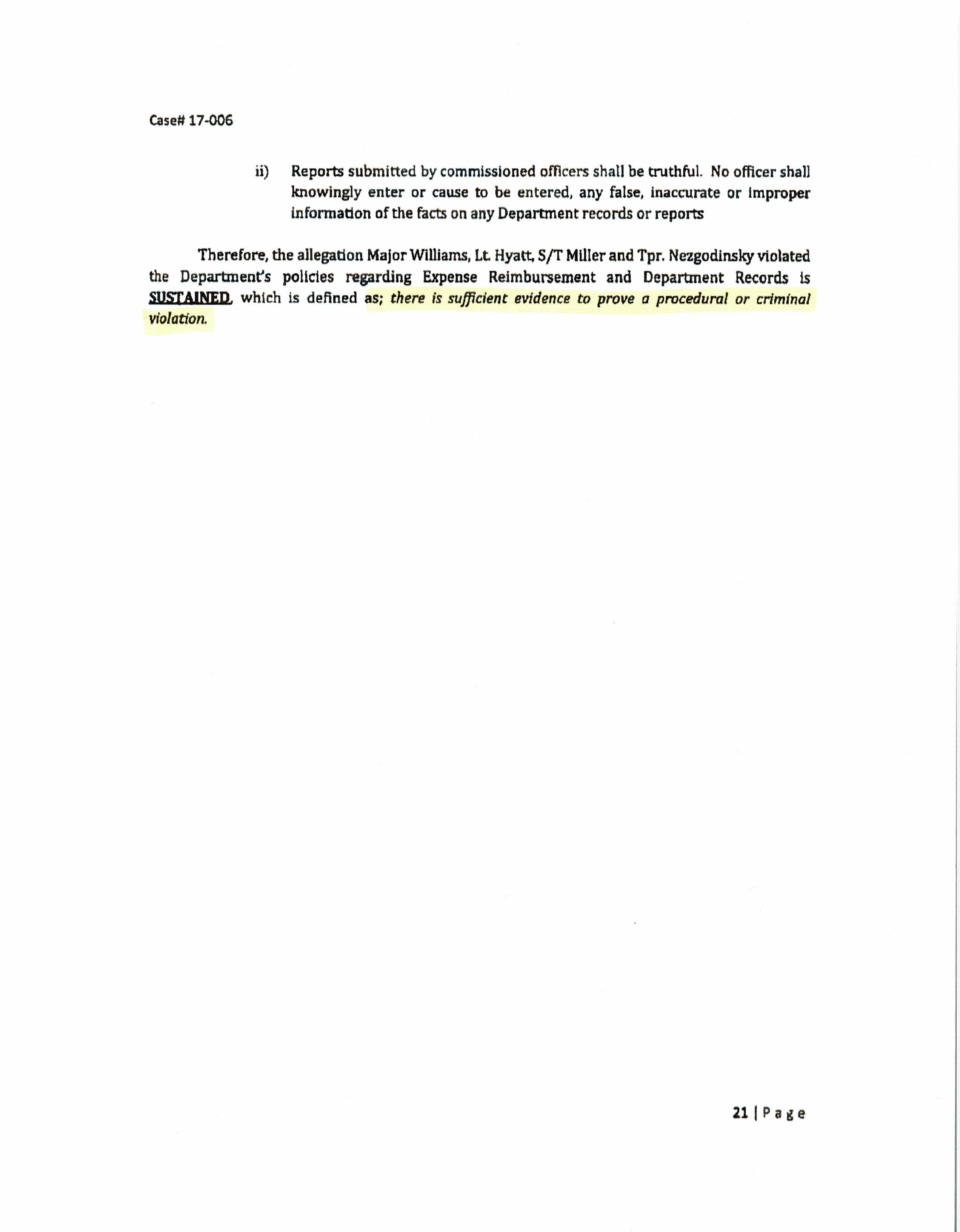
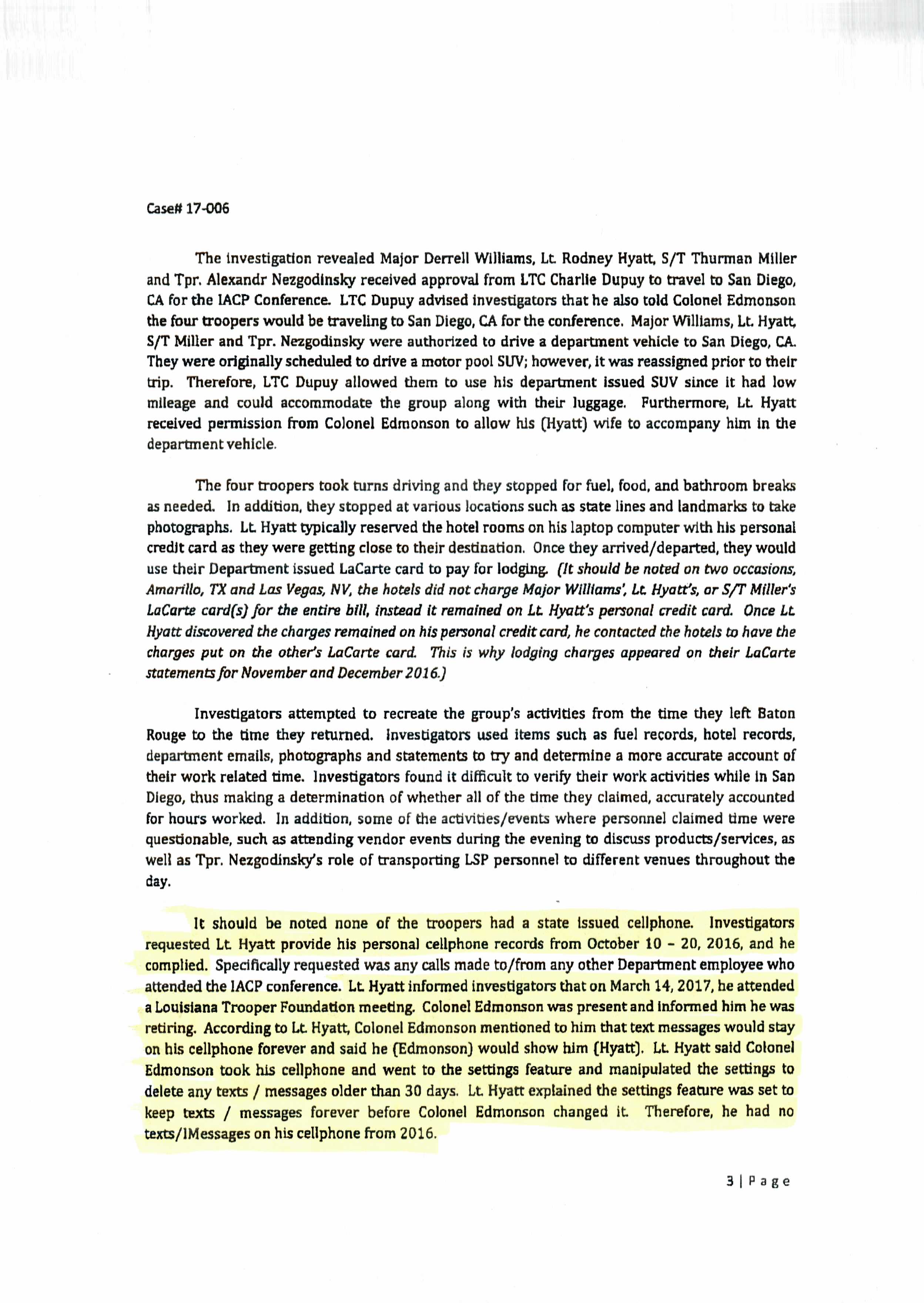
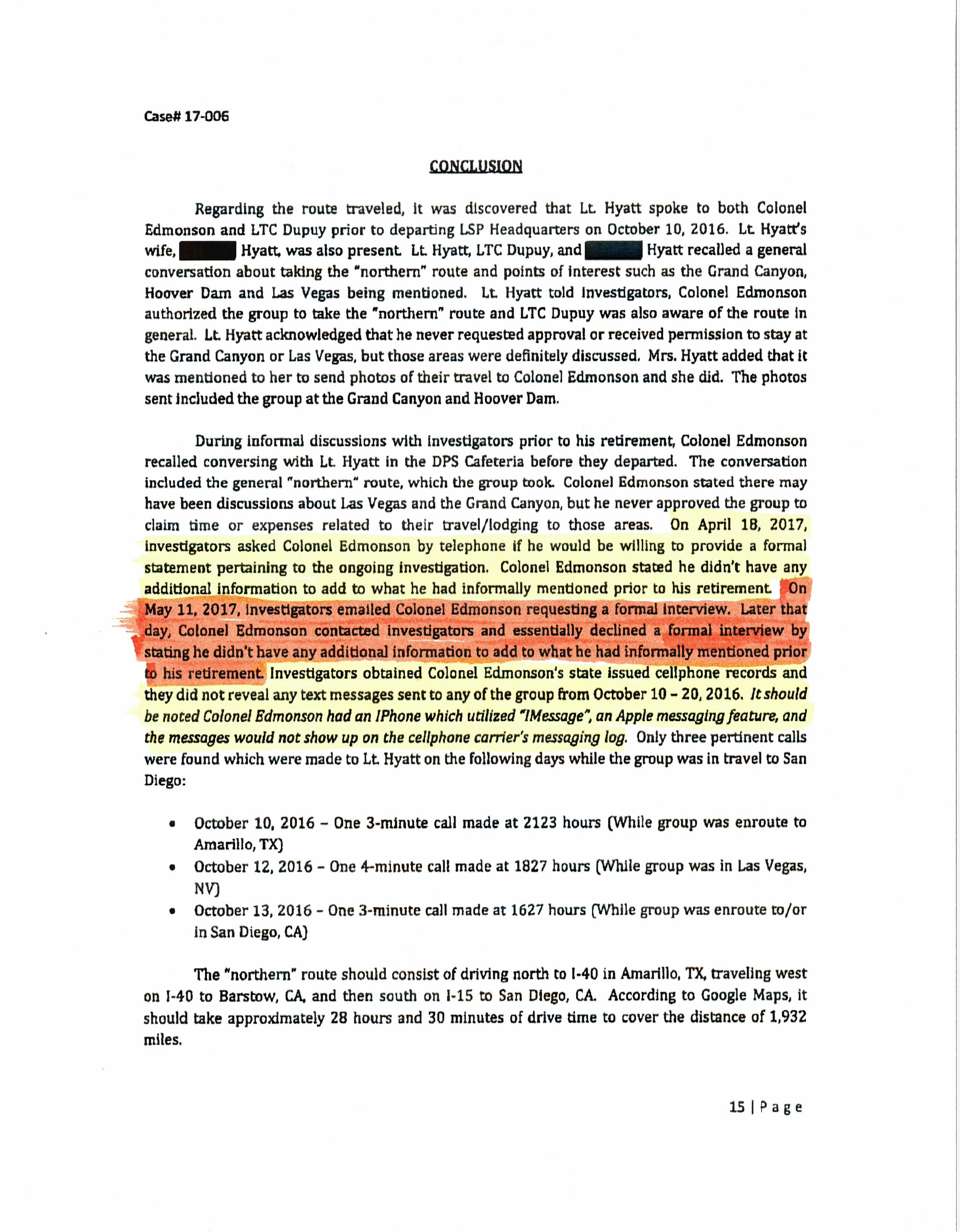
In his separate letter to each of the five, he called for an investigation of possible malfeasance and payroll fraud on the part of four State Troopers who took an unmarked State Police vehicle to California last October.

While LSPC Chairman State Trooper T.J. Doss and other commissioners have chosen to ignore his monthly warnings and have been generally dismissive of his questions the way a busy parent would dismiss a child’s questions, the LSPC now finds itself in the uncomfortable position of observing from the sidelines as a formal investigation gets underway of the very agency it is supposed to have been overseeing.

That investigation by auditors from the Division of Administration (DOA) was ordered by Gov. John Bel Edwards after it was learned that Edmonson had 15 of his subordinates (including the four who drove the vehicle assigned to Deputy Superintendent Charles Dupuy) to San Diego to witness Edmonson receiving an award for which a former State Trooper of the Year was originally nominated. LSP headquarters, meanwhile, is using an earlier 2015 unsuccessful nomination of Edmonson for the award as justification for stiffing Maj. Carl Saizan’s nomination.

It’s not as if the LSTA hasn’t tried to silence the affable Millet. After Millet and three other retirees challenged the association’s laundering more than $45,000 in illegal campaign contributions through its executive director’s personal checking account, LSTA took quick action. After it became evident that they weren’t going away, the association, without explanation or comment, simply revoked their memberships.

LSTA is supposed to be an association of active and retired state troopers established to work to benefit troopers, retirees and their families and to work for better conditions for troopers. But it’s evident those benefits extend only to those who keep their mouths shut. Apparently, there is some hidden clause in its bylaws that prohibits dissention among the ranks.

Again, if that move was intended to silence Millet, it only backfired by making him even more vocal and more determined than ever to ask questions and to challenge decisions. He has proven himself to be a nettlesome irritation over the pathetic, so-called “investigation” of the LSTA members who authorized the contributions, as well as the association’s endorsement of Edwards—its first-ever political endorsement.

Natchitoches attorney, former legislator and political ally of Edwards Taylor Townsend was hired by the LSPC under a $75,000 contract to conduct the pseudo-investigation after commission legal counsel Lenore Feeney said she could not conduct such an investigation. Neither, apparently, could Townsend, even though that didn’t prevent him from accepting payments under his contract. The final product of his investigation was not a written report as one might reasonably expect, but simply an oral recommendation that “no action be taken.” Not exactly the most bang for the buck.

Like the San Diego trip’s $72,000 costs in travel, lodging, meals and salary, Townsend’s contract stands as another $75,000 frittered away with nothing, repeat, nothing to show for it.

Doss and his allies on the commission must have thought they’d dodged a bullet despite fellow commissioner Lloyd Grafton’s observation that the entire affair looked a lot like “money laundering” to him. He should know. Grafton, a former federal DEA agent who was instrumental in thwarting a coup d’état in the Caribbean island nation of Dominica, is no stranger to sniffing out money laundering. He eventually resigned from the commission in disgust over what he called a “lack of integrity.”

Millet, tired of constantly having to bicker with Doss and other commission members, has now taken the next logical step, spurred on by that San Diego episode, in filing his complaint.

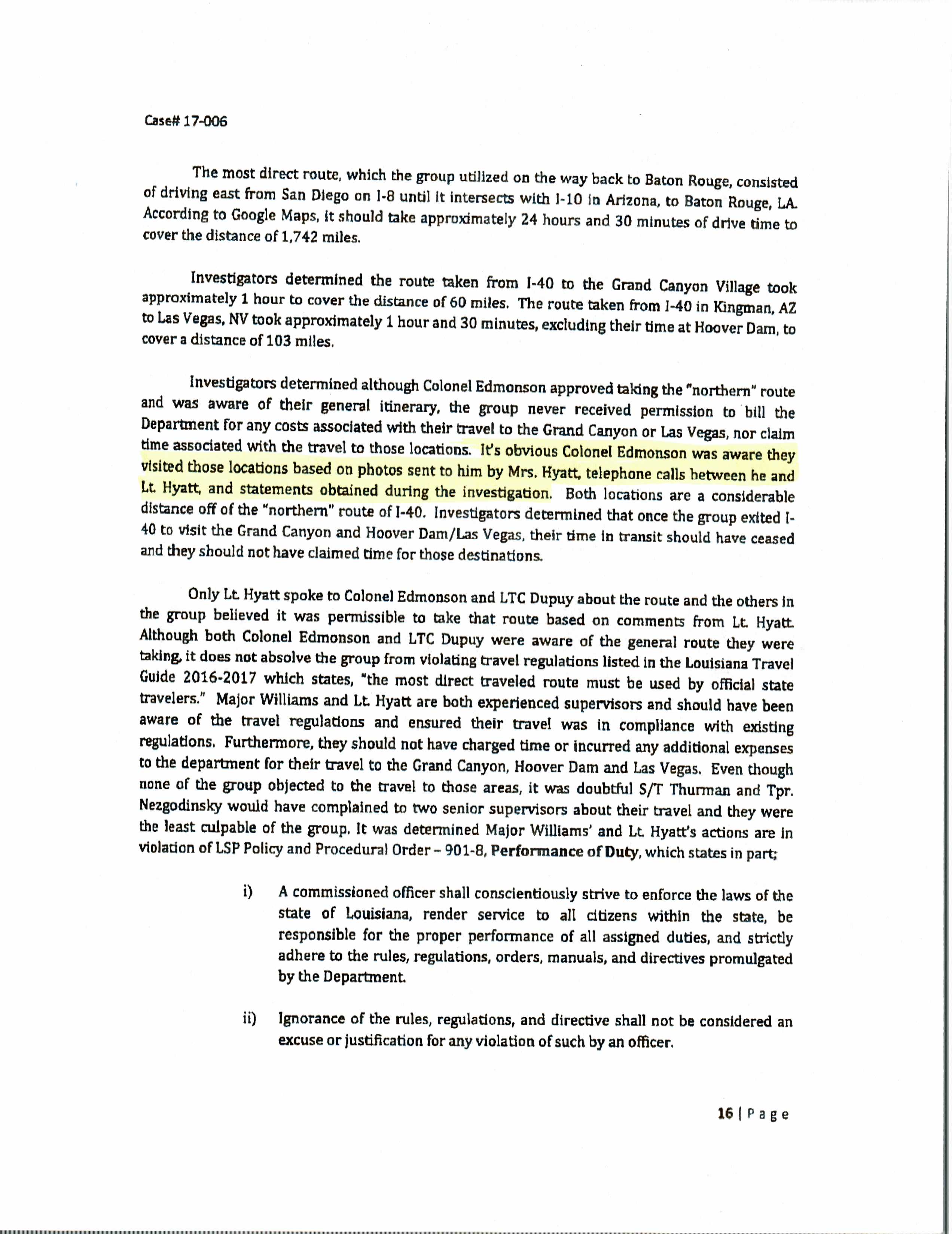
While he is asking for an investigation of the four who drove, it is critical to remember they took a vehicle permanently assigned to Edmonson’s second-in-command—pretty clear evidence that they didn’t act on their own volition but were instructed to drive some 2,000 miles in order to help bolster Edmonson’s ego. That raises the question of who ordered the four to pile into that Expedition and head west?

Accordingly, no investigation should be held without including Edmonson (who had to have ordered them to drive the vehicle) and Dupuy, whose vehicle was used—obviously with his permission.

But Millet is more concerned about the overtime charged by each of the four, including 12 hours each for seven days of travel. Two legs of their trip, from the Grand Canyon to Las Vegas, and from Las Vegas to San Diego were trips of about 250 miles or so that should have taken about four hours each but for which each man charged 12 hours. That’s 96 total hours—32 hours at overtime rates—to travel about 500 miles.

While it’s probably a waste of time to ask Street to conduct an investigation given the effectiveness displayed by his office over the past several years, any investigation undertaken by Paul would be even more fruitless; he’s being asked to investigate the actions of Edmonson, his boss. That ain’t happening.

But if Landry launches his own investigation, the results should be fascinating when compared to that of the governor’s office, given the acrimonious relationship between the two offices and given Landry’s obvious desire to run against Edwards in 2019.

But all of those will pale in comparison to the ticklish position T.J. Doss will find himself in if Millet does the expected and requests another investigation—by the LSPC.

We have speculated on this site several times in the recent past as to what Doss, a state trooper who owes his position as commission chairman to Edmonson (not to mention his job), will do if called upon to investigate his boss.

As the late C.B. Forgotston would say if he were still with us: You can’t make this stuff up.

 By Stephen Winham, Guest Columnist

“… Already long ago, from when we sold our vote to no man, the People have abdicated our duties; for the People who once upon a time handed out military command, high civil office, legions — everything, now restrains itself and anxiously hopes for just two things: bread and circuses”

Juvenal [circa 100 AD], Satire 10.77–81

“Bread and circuses” (or bread and games; from Latin: panem et circenses) is metonymic for a superficial means of appeasement. In the case of politics, the phrase is used to describe the generation of public approval, not through exemplary or excellent public service or public policy, but through diversion; distraction; or the mere satisfaction of the immediate, shallow requirements of a populace, as an offered “palliative“… The phrase also implies the erosion or ignorance of civic duty amongst the concerns of the commoner.

—Wikipedia


Have these words of a Roman poet, written 1900 years ago, ever been more relevant to our country and state?  And, this is hardly satire.  In Louisiana’s government, we still get the circuses (the just-ended special legislative session, for example), but they are not nearly so much fun as they were in the past. They also no longer provide the level of distraction our elected officials expect.  Our leaders still provide the bread, too, though too many are left with the heels – and we are not always sure even they are distributed equitably.

Just as our country is clearly divided, our state is becoming increasingly partisan. Confronted with precisely the same problems, the two sides view them as if they exist in alternate realities.  The factions do not seek to find common ground.  They might compromise, but that is hardly the same thing.

In the most recent session of the legislature a purported compromise on how to best patch the state’s budget for the remainder of this year resulted from an agreement by the administration to accept the effect of a very questionable House Concurrent Resolution that will, if we believe the proponents, be a great “reform” and will magically free up almost a hundred million dollars in state general fund for the fiscal year that begins July 1, 2017 – money, mind you, that was always there for the taking, just never captured.  Sound just a little suspicious?

How does this magic work and how does it differ from past gimmicks, you might well ask?  Well, unlike some of those, it really does free up general fund, but it also cuts other constitutional and statutorily dedicated funding, notably including the Transportation Trust Fund.  The Transportation Trust Fund has already been criticized for not being used more on roads and bridges desperately in need of repair – and now we are going to take another $15-$18 million of it to pay part of our General Obligation (not highway) Debt service?  And, lest we forget, TTF funds match Federal Highway funds so the potential impact is greater than the amount diverted. Is this your concept of “reform?”  It certainly is not mine.

The Bond Security and Redemption Fund ensures our general obligation debt service will always get paid first. It is the subject of HCR1 of the special session.  Money constantly (and somewhat theoretically) flows through it on the way to the general fund from which we have typically paid general debt service. I consider the fund a practical fiction because it would only have actual effect if somebody ever pressed the “stop” button and froze it to draw the necessary amount for debt service. However, its existence enhances our bond ratings. There is a legitimate concern that messing with it in any way can jeopardize our ratings, not because it places the payment of debt service in danger, but simply because we have started messing with it at all. The fact we have recently had to borrow short-term to meet current obligations is further evidence we should leave the BSRF alone. To the extent confidence in our fiscal status is eroded, and our ratings decline, we must pay more to service our debt.

House Speaker Barras, the author of the concurrent resolution that directs this miracle reform is a banker.  He certainly knows all these things.  Let’s put the best face possible on the resolution and assume he wanted its passage to ensure the special session did not close with absolutely no action toward addressing our long-range problems – which would have been the case in its absence.  This proposal had been made before and rejected by the administration for the reasons above and others – reasons I consider valid.

Could using the resolution as a bargaining chip have been a power play more than anything else?  Barras was not JBE’s pick for Speaker of the House.  The Republicans in the house are flexing their muscles in a faint attempt to emulate the partisanship of their national counterparts. Did they rally around the speaker to get in JBE’s face with this one?  Could this distraction have also been the center ring performance in this special session – a small act in a small session with bigger acts like those in past sessions to come when the Greatest Show on Earth returns to Baton Rouge in April?

Let’s face it.  Nobody has done anything that comes close to solving our overall budget problem.  Our roads and other infrastructure are crumbling, our state services are becoming increasingly mediocre and, in the case of some life-and-death situations, dangerously ineffective.  Worse, most everybody seems to be ignoring the fact that we face a $1.2 billion (gee, why does that number sound so familiar?) gap in Fiscal Year 2018-2019 when the temporary sales taxes used to bandage the budget the last time we hit the wall expire.

The latest of literally dozens of past blue ribbon groups tasked with providing options for fixing the state’s fiscal problems, the Task Force on Structural Changes in Budget and Tax Policy, issued its final report, to little fanfare, on January 27, 2017.  Some of the best minds in our state participated in this study and it provides solid recommendations based on current information.  Our leaders need only choose among them.  I commend its reading to you.  Why has this report not become part of the circus yet – Is it too dull to have entertainment value?  Do our leaders believe we cannot be convinced by (or even understand) facts?  Do they believe illusion, misdirection and confusion are always better and that we are easily fooled?

Commissioner of Administration Jay Dardenne was a key participant in the task force.  When the Fiscal Year 2017-2018 executive budget was presented, the governor and Commissioner Dardenne declined to say what they might ultimately suggest as the solution to our problem.  They also said, as they have in the past, this is not the budget they want to see implemented.  Well, if it isn’t, what is?

If the cuts presented in the governor’s proposed budget, most notably to TOPS, are not realistic – not something we can all live with – what cuts are?  We don’t know because, despite protestations to the contrary, we have not seen a truly honest budget in many years – one that says, “Okay, Louisiana, you don’t want to pay more taxes, here are the things we are going to permanently cut and we are going to stand behind them to the end.”  This is very different from: “Well, shucks, here’s some things that will balance the budget, but we don’t want to do them and neither do you, so what have you got to offer as an alternative?”

Representative John Schroder has taken the position the governor should present a realistic plan he is willing to stand behind to provide the legislature with a realistic starting point.  The governor seems to be saying no such plan exists.  So, if the governor doesn’t have a plan and neither does the legislature, where does that leave us?

Our governor has greater control over the budget than is the case in some other states.  Representative Schroder has a point, but the simple fact is the legislature, not the governor, holds the power of appropriation and many, including me, consider it to be its greatest power. The governor can recommend things all day long, but he cannot enact appropriations or taxes.

Speaking of taxes, why are so many of our citizens convinced they already pay too much in taxes for what they get from the government?  Look no further than LouisianaVoice, The ADVOCATE, nola.com, almost any television or radio station and what do you read, see, and hear?

Every day we are bombarded with tales of waste, corruption, theft, etc. in our state departments.  Are you going to tell me nothing can be done about this?  Am I to believe lightening would strike JBE and our other elected officials dead if they dared expect the people they appoint to run these programs as effectively and efficiently as possible and to demand accountability for their failures?  I’m not talking about the simple act of firing those who are doing a poor job.  That doesn’t accomplish anything if the replacement continues the practices of the predecessor. I am talking about expecting officials to have integrity and to know enough about the operations of their departments to stop these things from happening in the first place.

I honestly and truly believe people are willing to pay for things from which they see benefits and that they believe are providing maximum value – the marketplace proves this.  Every effort must be made to instill confidence in our government’s ability to manage our resources in the best way possible.  Sure, its goals are different – government exists to provide services, not make a profit, but that is no excuse for not performing to the highest standards possible.

I don’t know about you, but I am finding the circus less than entertaining and I can provide my own bread for the most part.  Others have given up on the circus, but need help from its owners.  It is past time those owners accept their responsibilities – and it is up to us to lean on them to do so every chance we get – beginning right now and continuing in earnest during the next legislative session.  Our leaders need to all look at what is happening to the real Ringling Brothers Circus and realize it could happen to them – and, much worse, to us.