
Is there no one with the cajones to tell him how incredibly stupid he looks?
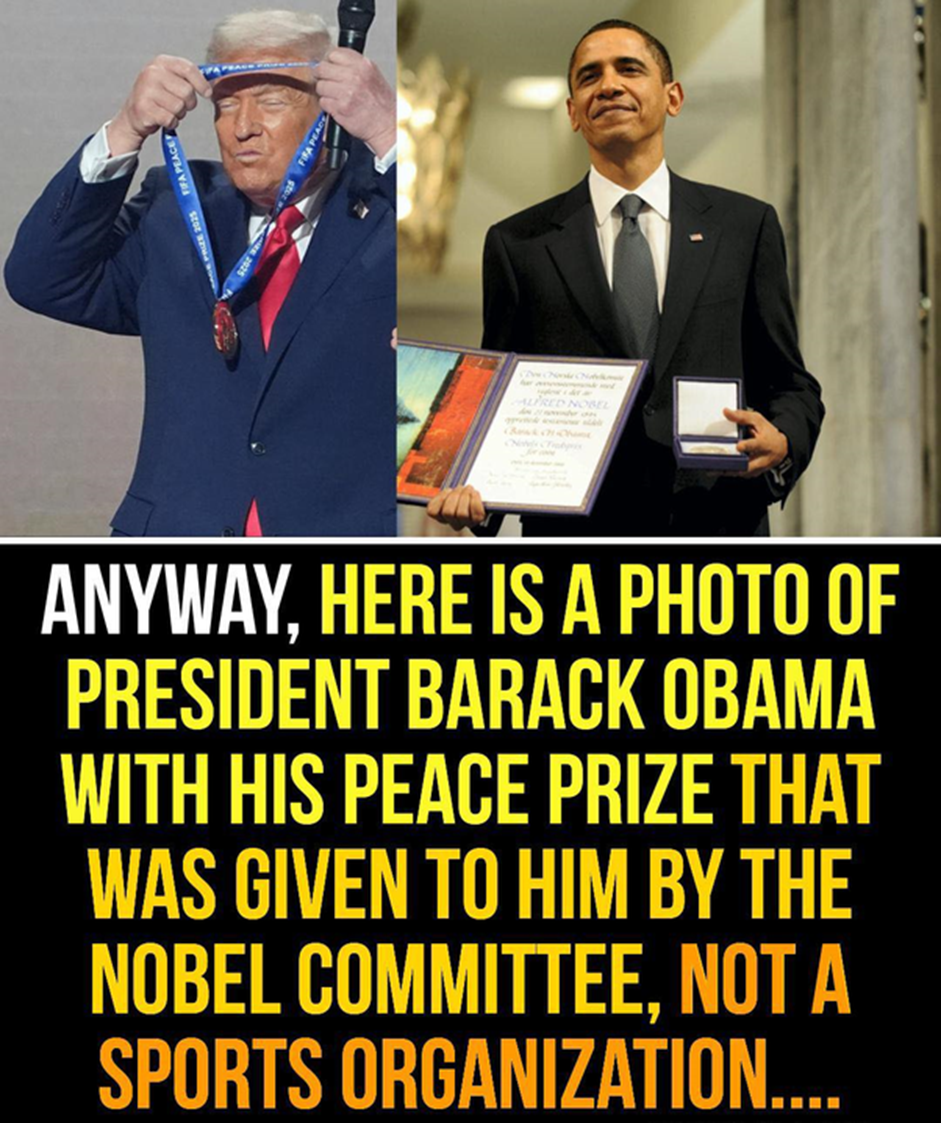
Is there no one with the cajones to tell him how incredibly stupid he looks?
Posted in Uncategorized | Leave a Comment »

Question: On the Nomination (Confirmation: Peter Hegseth, of Tennessee, to be Secretary of Defense )
Vote Number: 15
Vote Date: January 24, 2025, 08:57 PM
Required For Majority: 1/2
Vote Result: Nomination Confirmed
Nomination Number: PN11-7
Nomination Description: Peter Hegseth, of Tennessee, to be Secretary of Defense
Vote Counts:
YEAs50
NAYs
50
Vice President of the United States Voted
Yea
Alabama:
Britt (R-AL), Yea
Tuberville (R-AL), Yea
Alaska:
Murkowski (R-AK), Nay
Sullivan (R-AK), Yea
Arizona:
Gallego (D-AZ), Nay
Kelly (D-AZ), Nay
Arkansas:
Boozman (R-AR), Yea
Cotton (R-AR), Yea
California:
Padilla (D-CA), Nay
Schiff (D-CA), Nay
Colorado:
Bennet (D-CO), Nay
Hickenlooper (D-CO), Nay
Connecticut:
Blumenthal (D-CT), Nay
Murphy (D-CT), Nay
Delaware:
Blunt Rochester (D-DE), Nay
Coons (D-DE), Nay
Florida:
Moody (R-FL), Yea
Scott (R-FL), Yea
Georgia:
Ossoff (D-GA), Nay
Warnock (D-GA), Nay
Hawaii:
Hirono (D-HI), Nay
Schatz (D-HI), Nay
Idaho:
Crapo (R-ID), Yea
Risch (R-ID), Yea
Illinois:
Duckworth (D-IL), Nay
Durbin (D-IL), Nay
Indiana:
Banks (R-IN), Yea
Young (R-IN), Yea
Iowa:
Ernst (R-IA), Yea
Grassley (R-IA), Yea
Kansas:
Marshall (R-KS), Yea
Moran (R-KS), Yea
Kentucky:
McConnell (R-KY), Nay
Paul (R-KY), Yea
Louisiana:
Cassidy (R-LA), Yea
Kennedy (R-LA), Yea
Maine:
Collins (R-ME), Nay
King (I-ME), Nay
Maryland:
Alsobrooks (D-MD), Nay
Van Hollen (D-MD), Nay
Massachusetts:
Markey (D-MA), Nay
Warren (D-MA), Nay
Michigan:
Peters (D-MI), Nay
Slotkin (D-MI), Nay
Minnesota:
Klobuchar (D-MN), Nay
Smith (D-MN), Nay
Mississippi:
Hyde-Smith (R-MS), Yea
Wicker (R-MS), Yea
Missouri:
Hawley (R-MO), Yea
Schmitt (R-MO), Yea
Montana:
Daines (R-MT), Yea
Sheehy (R-MT), Yea
Nebraska:
Fischer (R-NE), Yea
Ricketts (R-NE), Yea
Nevada:
Cortez Masto (D-NV), Nay
Rosen (D-NV), Nay
New Hampshire:
Hassan (D-NH), Nay
Shaheen (D-NH), Nay
New Jersey:
Booker (D-NJ), Nay
Kim (D-NJ), Nay
New Mexico:
Heinrich (D-NM), Nay
Lujan (D-NM), Nay
New York:
Gillibrand (D-NY), Nay
Schumer (D-NY), Nay
North Carolina:
Budd (R-NC), Yea
Tillis (R-NC), Yea
North Dakota:
Cramer (R-ND), Yea
Hoeven (R-ND), Yea
Ohio:
Husted (R-OH), Yea
Moreno (R-OH), Yea
Oklahoma:
Lankford (R-OK), Yea
Mullin (R-OK), Yea
Oregon:
Merkley (D-OR), Nay
Wyden (D-OR), Nay
Pennsylvania:
Fetterman (D-PA), Nay
McCormick (R-PA), Yea
Rhode Island:
Reed (D-RI), Nay
Whitehouse (D-RI), Nay
South Carolina:
Graham (R-SC), Yea
Scott (R-SC), Yea
South Dakota:
Rounds (R-SD), Yea
Thune (R-SD), Yea
Tennessee:
Blackburn (R-TN), Yea
Hagerty (R-TN), Yea
Texas:
Cornyn (R-TX), Yea
Cruz (R-TX), Yea
Utah:
Curtis (R-UT), Yea
Lee (R-UT), Yea
Vermont:
Sanders (I-VT), Nay
Welch (D-VT), Nay
Virginia:
Kaine (D-VA), Nay
Warner (D-VA), Nay
Washington:
Cantwell (D-WA), Nay
Murray (D-WA), Nay
West Virginia:
Capito (R-WV), Yea
Justice (R-WV), Yea
Wisconsin:
Baldwin (D-WI), Nay
Johnson (R-WI), Yea
Wyoming:
Barrasso (R-WY), Yea
Lummis (R-WY), Yea
Posted in Uncategorized | 1 Comment »
I’m not a betting man. The last big bet (for me, that is) I wagered was in January 1969 when I gave the New York Jets and 19 points against my beloved Baltimore Colts. Nineteen points, by the way is what the oddsmakers were giving, so I went with the pros. Turns out the Jets didn’t need any of those points. Final score: Jets 16, Colts 7 and I was out $20, a considerable sum for me at the time.
Thus, lesson learned. Until now, that is.
I’m about to stick my neck out again, though I’m not giving odds or points this time.
News broke this morning that the FBI has ARRESTED A SUSPECT in its investigation into the planting of pipe bombs near the national headquarters of the Republican and Democratic headquarters in Washington on Jan. 5, 2021 in the mashup to the Jan. 6 Capitol riots.
Kudos to the FBI—it took only three years and 338 days to make the pinch of one Brian Cole, age and address unavailable as this is being written.
Here’s my bet:
Our Dear Leader, the Mango Mussolini, aka Agent Orange, aka PEDO-POTUS, will grant a full pardon, proclaiming the investigation and subsequent criminal charges to be a sham, an attempt to embarrass him and a horrific persecution of a fine patriot.
I mean, if he can pardon other Jan. 6 rioters, embezzlers, con artists, fraudsters and drug dealers, what’s a little pipe bomb.
This is a buffoon who likes to second-guess judges, juries, prosecutors, law enforcement officials and evidence in issuing wholesale pardons and commutation of sentences so, what’s to stop him from setting another one free while he simultaneously carries out his law-and-order crusade in America’s cities with indiscriminate arrests and combats drug smuggling in Venezuela by murdering men in international waters?
Any takers on my bet?
Posted in Uncategorized | 5 Comments »
Editor’s Note: There are quite a few words and phrases highlighted and underlined in BOLDFACE, ALL-CAPS GREEN in the following post. For the as yet uninitiated, those are links to other stories that corroborate what I write. Click on those links to read the stories to which I refer.
With profound apologies to Col. Mulberry Sellers in Mark Twain’s 1892 novel The American Claimant, Thar’s gold in them thar jails.
Louisiana already had the highest incarceration rate in the civilized world even before the crackdown on undocumented people by the Mango Mussolini and Immigration and Customs Enforcement (ICE).
But with Department of Homeland Security (the parent agency of ICE) sweeps and wholesale deportation—sometimes of U.S. citizens—the upsurge is a financial windfall for the state, a couple of dozen sheriffs’ departments and for-profit private prisons.
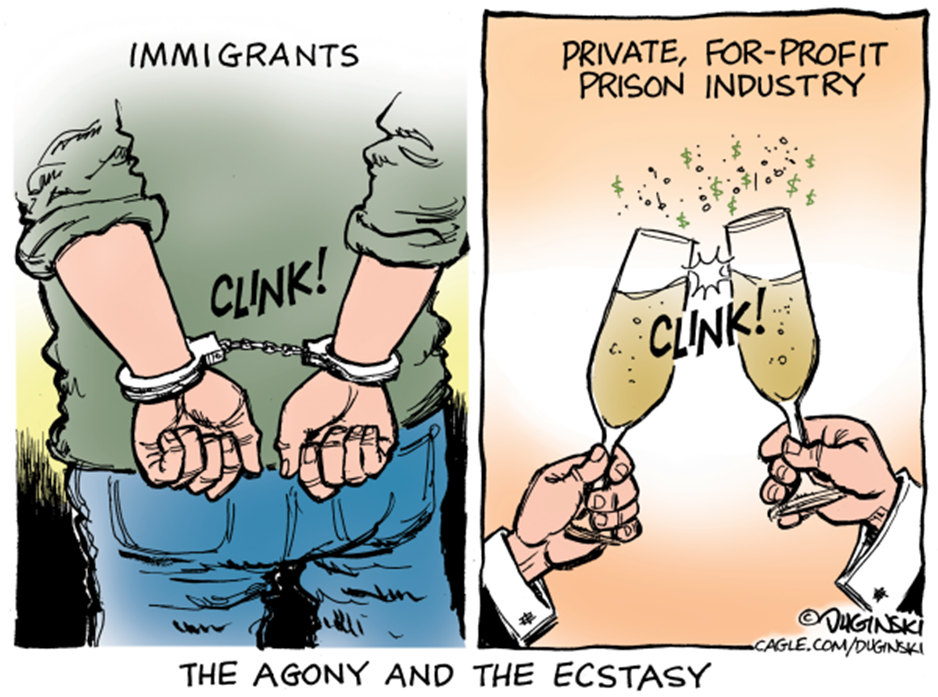
BAYOU.TRUTHS on Tik Tok pretty much tells the story of Louisiana’s detention centers:
Louisiana is the epicenter of Trump’s massive deportation activity for one simple reason, the podcast says—money.
The raids across the country are “tearing families apart” on the one hand and in Louisiana, on the other hand, “they’re filling budget holes” and quietly building an entire economy around the crackdown. It’s no coincidence that the REMOTE LOUISIANA FACILITIES are hours away from expert legal immigration legal counsel and hundreds of miles from family members.
The state now holds about 10,000 IMMIGRANTS in ICE custody on any given day, MORE THAN ANYWHERE ELSE IN AMERICA, the podcast says. “And here’s the part no one talks about:
“The federal government pays Louisiana jails and sheriff’s offices $70 to $90 per detainee per day, sometimes more.” That equates to payments of $700,000 to $900,000 per day spread across the state. When you do the math, you start to see why the SOUTH and in particular, Louisiana’s rural parishes, are welcoming Trump’s immigration crackdown with open arms.
Some of these jails in places like Richwood, Riverbend, LaSalle, Winn and Jackson Parish, which previously sat half-empty, now are raking in millions of dollars per year in federal detention contracts. In some parishes, ICE money makes up as much as 25 percent of the entire local budget.
Sheriffs capitalize politically by hiring staff (read: political patronage, i.e. padding political influence), purchase equipment and to upgrade facilities. But one of the areas that is often neglected is the GENERAL CONDITION of the detainees. Louisiana’s immigration detention system has been CITED for medical neglect, violence, falsified records, unsafe condition and even deaths. LouisianaVoice HAS WRITTEN ABOUT some of those, including a whistleblower’s complaint about NONCONSENSUAL HYSTERECTOMIES performed on female detainees at a privately-run ICE facility in Georgia…
The plain and simple fact is that because these prisons are most often run by private operators like LaSalle or GEO or local sheriffs, there is little oversight and even less accountability.
They are, in two words, cash cows. And it’s not improving. Trump’s latest directive is intended to ramp up arrests so that ICE may maximize its detention capacity. As a result, even more parishes and private prisons are GETTING IN LINE for the federal largesse.
“So, while the headlines talk about raids in big cities,” the podcast concludes, “the engine powering this crackdown runs straight through Louisiana’s back roads, rural jails and sheriffs’ offices because every detainee represents another federal dropped into a system Louisiana can’t afford to lose.”
And it’s doubly important to remember that all this is being done to these thousands upon thousands of detainees without the constitutional guarantee of due process (You’ll find that in the Fifth and 14th Amendments).
Gives the last line of the Pledge of Allegiance, “With Liberty and justice for all” hollow ring, doesn’t it?
Now, if they’d change that to “With government by the few and profits for the oligarchy…”
Posted in Uncategorized | Leave a Comment »
Editor’s Note: There are quite a few words and phrases highlighted and underlined in CAPITAL BOLDFACE GREEN in the following post. For the as yet uninitiated, those are links to other stories that corroborate what I write. Click on those links to read the stories to which I refer.
Even as Donald Trump, aka the Mango Mussolini, goes about intimidating, INVESTIGATING and indicting POLITICAL ENEMIES with little evidence or with unqualified prosecutors, he simultaneously grants pardons and commutes sentences for FORMER MEMBERS OF CONGRESS and POLITICAL ALLIES convicted of FRAUD, drugs, even, ironically, HUMAN SEX TRAFFICKING.
Sometimes he even launches investigations of crimes for which his own political allies and/or cabinet members may be COMPLICIT—not that that he allows that pesky little fact to be a deterrent.
Of course, it would be unfair to single out only Trump for his spate of pardons when former President Joe Biden commuted the sentence of a PENNSYLVANIA JUDGE who was convicted of participating in the notorious “cash for kids” scheme of wholesale sentencing of juveniles to privately-run detention centers in exchange for bribes.
But Trump appears to have elevated the practice of pardons for cash to a new level. Nursing home magnate, for example, sentenced to three years for defrauding the government of $38 million (a light sentence in itself), he was pardoned by Trump after seven months and only after paying two lobbyist $960,000 to seek the federal pardon—a luxury not readily available to the average prison inmate. Kinda gives the lie to his claimed love of “the little people.”
Basically, it’s an affirmation to the axiom “Money talks, B.S. walks,” though Trump, as is his wont, has denied any ties to the payments and his granting of the pardon.
At the same time that he is pardoning SWINDLERS (his latest pardon recipient took 10,000 investors for about $1.6 billion) and CON MEN, he is murdering VENEZUELANS on open seas who he claims—without providing any evidence—are members of drug cartels (can you say VENEZUELAN OIL, boys and girls?).

…And thar’s black gold in that thar Venezuela. But the story of how Donald Trump is using the unsubstantiated claim of drug cartels to launch a war with that country, just remember the weapons of mass destruction claim leading up to an insane 20-year, $5.8 trillion Mideast/Afghanistan wars. At the same time Trump’s murdering so-called members of the Venezuelan drug cartel. Does anyone else see the irony in granting pardons to real DRUG SMUGGLERS?
He also is pardoning traffickers, WAR CRIMINALS and rioters from the Jan. 6, 2021 Capitol INSURRECTION (many of whom were later charged with NEW CRIMES). Trump finds times to prioritize the pursuit of political enemies by weaponizing Attorney General Pam Bondi and the Department of Justice—most often to bad outcomes for his administration.
And before any of you jump in to say Trump was unaware of whom he was pardoning, may I remind you that if you’re going to invoke that as a defense, you’re making two simultaneous admissions: that Trump was a dumbass (actually, that’s a given) for not knowing and that you are equally gullible for defending him on those grounds.
After ordering and failing to convince one U.S. attorney to indict former FBI Director Jack Smith and New York Attorney General Letitia James, he had Bondi appoint an inexperienced—and certainly unqualified—attorney, Lindsey Halligan, who would do his bidding. The result was what most experts thought it would be for a weak case against the two. The cases were THROWN OUT.
After Halligan more or less bypassed the grand jury in issuing the indictments—illegally, it turned out—U.S. District Judge Cameron McGowan also ruled that Halligan was also appointed illegally. Was that an embarrassment for Trump, et al? Nope. Bondi immediately announced she would appeal. This bunch of clowns doesn’t learn lessons easily.
No Sooner had Trump gone after Comey and James than he turned his sights on U.S. Rep. ERIC STALWELL, Federal Reserve board member LISA COOK and former U.S. Rep. ADAM SCHIFF of mortgage fraud—the same offense he accused Cook of. . Trump’s victims are beginning to fight back, however. Stalwell has since filed a LAWSUIT against the director of the Housing Finance Agency.
Those “investigations” are quite likely to go the same way as the Comey/James prosecutions.
But undeterred, Trump has now upped the ante immeasurably with accusation of SEDITION (“punishable by death”) leveled against DEMOCRATIC VETERANS in Congress, particularly one in particular—Sen. Mark Kelly, a combat veteran (something Agent Orange knows nothing about) and a former astronaut. Their offense? Citing an oath that members of the military must take proclaiming that they do not have to carry out illegal orders.
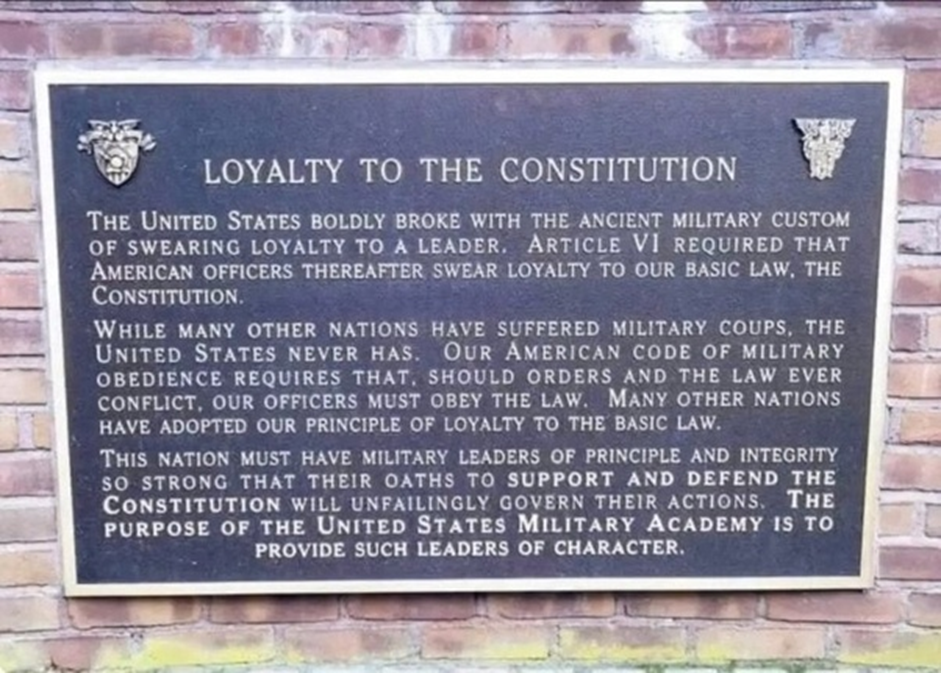
Plaque in Constitution Corner of U.S. Military Academy erected by the Class of 1943–a class, by the way, with considerably more class than Agent Orange or boozer Hegseth.
Did you ever see a piggy with egg on its face? How about two simultaneous piggies? That’s about what we’re getting ready to witness when this foolhardy effort by PEDO-POTUS falls flatter than roadkill possum.

By taking on someone with the reputation and creds of Mark Kelly, Trump is about to find out just what it means to step over a line, to go a bridge too far. There are some battles even this pretentious buffoon cannot hope to win.
If there was ever a doubt, this ill-chosen fight has revealed him to be a clueless fool.
I defy you to find a single person in Trump’s cabinet who is qualified for his or her position. One single, qualified individual, that’s all I ask. Just one. (Stormy Daniels doesn’t count: she’s not a cabinet member.)
But hey, this is what justice looks like in this administration.
Posted in Uncategorized | 1 Comment »





 $2.50 each or three for $6.00
 Louisiana Voice