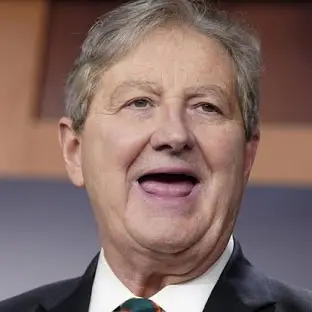
Well, folks, it’s official now. IMPOTUS may now rename our nation’s capital as he did the Gulf of Mexico. After the U.S. vote with Russia, North Korea, Iran and 14 other Moscow allies against a UN resolution condemning Russian aggression against Ukraine, there’s no further need to refer Washington, D.C. as anything other than West Moscow.
And by its crushing silence, the U.S. Congress, with its Repugnantcan majorities in both chambers, is fully complicit in the abandonment of our European of our allies, of democracy and of every principle this country once stood for.
There is no longer any purpose in pretending that America is the “shining city on the hill” which Ronald Reagan once claimed.
The closest thing we’ve heard in the way of protest against Donald Trump’s whoring himself out to Putin is when Kennedy said Putin made Jeffrey Dahmer look like Mother Theresa. That was something of a rebuke of Trump but other than that, there’s been nothing but silence from our senators and representatives.
- Steve Scalise: nothing
- Clay Higgins: nothing
- Mike Johnson: nothing
- Julia Letlow: nothing
- Cleo Fields: nothing
- Troy Carter; nothing
- Bill Cassidy: nothing
- John Kennedy: platitudes
In high school typing class, there was a practice sentence we were all required to type. It went like this:
Now is the time for all good men to come to the aid of our country.
It was an exercise that required us to hit nearly every letter of the alphabet.
But it is also a sentence that says much about the heart and soul of America.
It wasn’t so long ago that Reagan took on the Soviet Union and, we thought at the time, defeated communism. It was a time when the Republican Party was the vociferous opponent of Moscow and the Democrats were looked on as less than sufficiently rigid in its opposition.
Trump has turned all that on its head and now we have him, backed by nearly every Republican member of Congress, playing footsie with Russia, North Korea and Iran. And every single one of them should know that given the opportunity, Putin will turn on us in a heartbeat and without blinking an eye.
The current climate begs the questions of just what does Putin really have on Trump and what concessions will Trump ultimately cede to that despot?
And to think, he’s been in office for only a month.
Now is indeed the time for all good men to act.
Posted in Politics | 7 Comments »
If tough-talking Clay Higgins or wannabe philosopher John Kennedy or self-righteous Mike Johnson or Steve KKK Scalise or flip-flopping Bill Cassidy really had a backbone between them, if they had a scintilla of the concern they profess to have for their constituents, each one would hold an open town hall meeting back home in their respective home bases.
You will not see John Kennedy or any of the others hold a town hall meeting. Ain’t gonna happen. Kennedy would rather sit up there in Washington and pontificate for whichever TV camera is pointed in his direction and Johnson can’t stray too far from his puppetmaster with the orange hair. To tell the truth, Kennedy’s homilies, his down-home Will Rogers impersonations are starting to wear a little thin as is Johnson’s fear of going to the rest room without IMPOTUS’s permission.
But they are not about to risk incurring the wrath of a veteran who has lost benefits to Elon Musk’s rampage. They don’t want to face farmers who are in jeopardy of losing supplements. And they certainly doesn’t want to have to answer hard questions fron consumers wondering why prices continue to rise and are like to rise even more when Trump’s tariffs are enacted.
Come to think of it, has Kennedy ever held a town hall meeting since his election in 2016?
Posted in Politics | 1 Comment »
It seems that I’ve been accused of being overly critical to the point of being caustic in my antagonism toward Donald Trump and Jeff Landry.
That charge is patently unfair. I’m every bit as critical of John Kennedy, Clay Higgins, Mike Johnson, Michael Lunsford and anyone else, even law enforcement (all of whom I find increasingly difficult to respect), if they take any position or action that tramples on anyone’s rights.
In the spirit of full disclosure, however, I have to say I was encouraged by Kennedy’s COMMENTS on Wednesday in which he disagreed, if somewhat mildly, with Trump who said Ukraine started the conflict with Russia. Kennedy even went to far as to say that Vladimir Putin “makes Jeffrey Dahmer look like Mother Theresa.”
My contempt is equal opportunity in every respect. District attorneys, judges, preachers and priests who abuse children, those who would limit the rights of women and minorities and those who assume they are free to destroy our democracy – whether they’re elected or not.
But insofar as my animosity towards Landry and Trump is concerned, I suppose I have to plead guilty. But gee, it comes so easily.
When a president calls the press the enemy of the people and when a governor (actually, he was attorney general at the time) sues an individual whose sin was making a legitimate request for public records, then yes, I’m gonna call them out. Every time.
Landry, by the way, LOST THAT LAWSUIT and was ordered to provide the records. But as soon as he removed his hand from the Bible after being sworn in as governor, he initiated efforts that, with the help of a malleable legislature, ultimately were successful in placing strict limitations on the access to public records.
I believe it was Lyndon Johnson who once said when you’re explaining, you’re losing. Could’ve been LBJ, could’ve been Truman, could’ve been any astute politician. Regardless, it seems Landry may have fallen into that trap over letters he received from elementary school students in Tangipahoa Parish.
The guv got his feathers all ruffled over the letters that addressed climate change, something that Landry perceives as a hoax (probably because Trump told him to think so). Anyhoo, Landry showed us in spades just how thin-skinned he really is when he WENT PUBIC WITH THE LETTERS, accusing the teacher of grooming, indoctrinating the children by pushing an agenda.
I always thought the best teachers were the ones who taught you to observe the world around you, to ask questions and to challenge injustices. But I guess that’s just me.
Funny, but I’m willing to bet he would not have reacted in such a manner if the letters had requested him to oppose litter on the state highways, or some other pressing issue like maybe requiring the LSU football and basketball teams to be present for the playing of the national anthem, or posting the Ten Commandments in classrooms. Talk about indoctrination…
Anyway, he surely was doing a lot of ‘splaining in his attack on that teacher.
There’s no way to prove it because he would never admit it, but I suspect his thumbprints are all over the Louisiana Public Service Commission’s vote to remove member Davante Lewis as vice chair. That was after Lewis, a gay black man, had the temerity to call Landry an a**hole after Landry created a social media post ridiculing former Health and Human Services Secretary Dr. Rachel Levine by contrasting her with her successor, Robert F. Kennedy, Jr. Levine is the first openly transgender person to hold a federal government post requiring Senate confirmation. (I’m as straight as they come, but does anyone really think that Kennedy was a good choice to look after our healthcare?)
Given Landry’s reactions to criticism on the LSU campus, it would certainly follow a pattern of retribution by this governor against his critics.
So basically, what we have is a governor who considers himself free to hold people up to ridicule and scorn but that same freedom apparently does not extend to others.
At any rate, by a 3-2 vote, the PSC removed Lewis and replaced him with commission member ERIC SKRMETTA, who has his own POLITICAL BAGGAGE.
Before I even looked, I knew precisely how the vote had gone, who that second vote was who voted against the motion to replace Lewis.
The maverick on the commission is a man who has always voted his conscience, political considerations be damned. Foster Campbell, never one to knuckle under to political pressure, voted to support Lewis in opposition to member Mike Francis’s motion. I’m hesitant to praise any politician but truth be told, we could use a few more like Foster Campbell and a lot fewer like Jeff Landry, Clay Higgins, et al.
LOUISIANA ILLUMINATOR had this to say: “I’ve seen other things happen here that were just as bad,” Campbell said, recounting an incident in which he alleges Francis once stood behind him with a poster that said “Bull***t” while Campbell was speaking in front of a camera. Francis denied the allegations (and as Earl Long would’ve said, defied the alligators).
Normally, I would say that when it all comes crashing down, I’ll have the last laugh but I’m fearful there is nothing to laugh at when the very future of democracy is in peril.
So, to the critics, I guess I’m explaining myself but I am critical of political hypocrisy because I really find double standards somewhat distasteful.
If, by explaining myself, I’ve become a loser, so be it. But at least, I can hold my head high in the knowledge that my priorities are for the welfare of this country and my state, whereas Landry and Trump are mere political creatures who long ago ditched their principles and sold out to a political party.
Posted in Politics | 5 Comments »
Fraud in the US Congress is nothing new. Republican J.R. Majewski campaigned for a congressional seat in Ohio in 2022 as an Air Force combat veteran who deployed to Afghanistan following the 9/11 terrorist attacks. The truth was he never saw Afghanistan and instead of combat, he helped to load planes at an air base in US ally Qatar, far from the fighting.
Madison Cawthon was elected to the House from North Carolina in 2020 despite consistently contradicting himself on his background and qualifications.
Matt Gaetz won election in Florida and stories surfaced almost immediately about sex with underage girls, drug use and other controversies.
But for pure brass, no one could surpass the forged credentials of GEORGE SANTOS whose lies about his background were so perverse that it got him expelled from Congress.
But now, though, comes word that Louisiana may well have its very own professional chameleon in the person of former US Rep. and now State Surgeon General Ralph Abraham, thanks to a little old-fashioned journalistic digging by New Orleans Public Radio station WWNO.
Abraham, Louisiana’s top public health official, it seems, may have misrepresented his own credentials in claiming in several state communications and web platforms to be a family medicine doctor.
True enough, he is a veterinarian and owner of a couple of north Louisiana pharmacies but those to not equate to board certification as a “practicing family medicine physician” in Richland Parish, as stated on his official online Health Department BIOGRAPHY.
Similar qualifications are found in other publications, including a NEWSLETTER for Medicaid providers.
Earlier this month Abraham issued an edict to state health workers to cease promoting seasonal vaccines such as influenza and pneumonia and even posted on the Department of Health website (alongside his questionable qualification perhaps?) a letter criticizing the state’s COVID response.
Parish health units, he assures us, will continue to stock vaccines but they aren’t allowed to promote mass vaccination.
“Rather than instructing individuals to receive any and all vaccines, LDH staff should communicate data regarding the reduced risk of disease, hospitalization, and death associated with a vaccine and encourage individuals to discuss considerations for vaccination with their healthcare provider,” Abraham wrote in his communication, obtained by The New Orleans Advocate.
Abraham was appointed by Jeff Landry who apparently did not do a very good job of vetting his health czar. The guv deftly deflected inquiries about the new directive, the first such that has been reduced to writing. Instead, he referred questions to the Department of Health, which, of course, would never speak up without a nod from Landry and most certainly would never be critical of any program promoted by the administration despite the face that “Staff at Louisiana’s health department fear the new policy undermines their efforts to protect the public, and violates the fundamental mission of public health: to prevent illness and disease by following the science,” according to NATIONAL PUBLIC RADIO.
You can read the full story on WWNO by clicking HERE.
Posted in Politics | 5 Comments »
-
Join 3,516 other subscribers
Got a tip?
Follow Us
Support Us
Read my books!



Read more Books!


Meta
