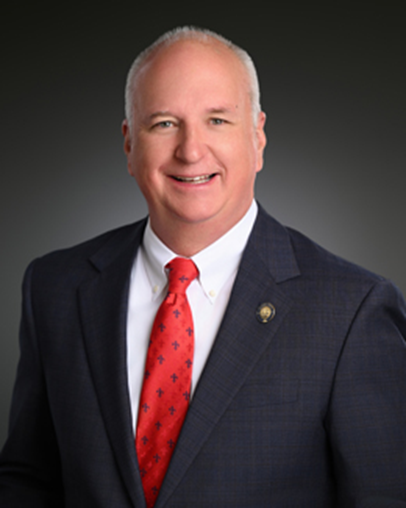
State Sen. John C. “Jay” Morris may not be a billionaire, he’s not POTUS and there’s no evidence he’s a philanderer.
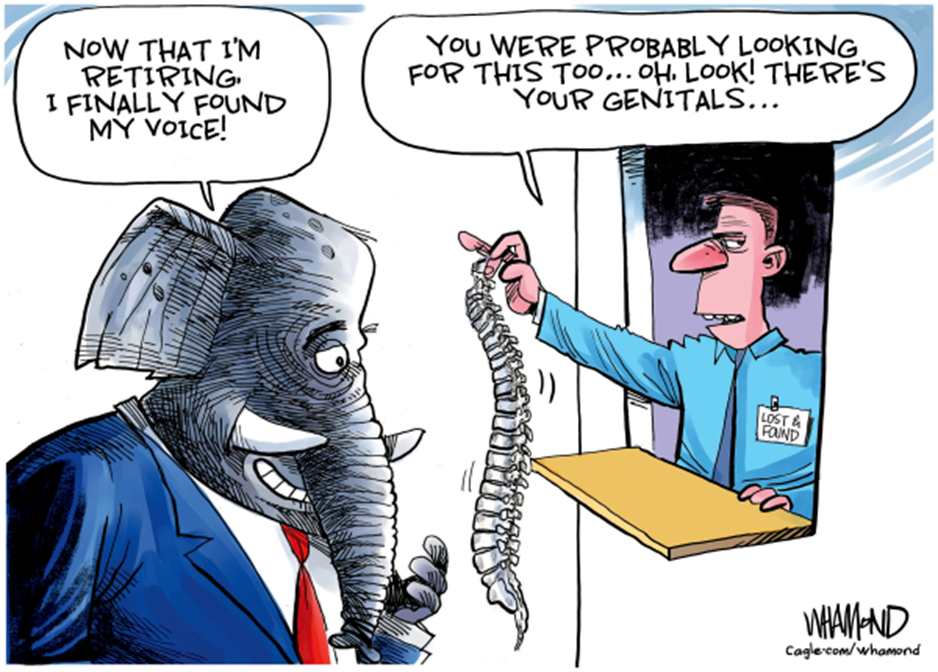
But he is a member of the Trump Party (formerly called the Republican Party) and he seems to have this thing about wanting to suppress/dilute/eliminate the African-American vote and to carry out a political vendetta-type campaign against the (Orleans Parish, at least) judicial system.
And there is enough circumstantial evidence—despite his claims to the contrary—that he used his office as a state senator to his financial benefit and that he sponsored (and voted for) legislation that worked to strengthen his bottom line. There was enough smoke to attract the attention of Britain’s most prestigious publication, THE GUARDIAN,which boldly goes where most Louisiana media dare not go.
Call it business smarts or opportunism or even brazen insider-trading, but don’t call it coincidence.
It can’t be all happenstance that Morris:
Signed on as co-sponsor to a pair of senate bills that would make him even richer;
That he co-sponsored legislation that freed up a state agency to enter into deals that would benefit him financially;
That he lobbied the Public Service Commission for approval for Meta to build one of the largest datacenters in the world in Rayville, just outside his senatorial district;
That he neglected to inform anyone of his business connections to the legislation;
That he would subsequently become a vendor for one of the entities he lobbied for, making him even more money in the process.
So, the skeptic might ask, why would he co-sponsor legislation in another senatorial district?
Well, you see, there’s this one last thing: he owns a lot of land over in Richland Parish and he’s been buying and selling acreage to all the right people since the datacenter project began. In fact, much of it (80 acres, in fact) is just across the street from the project site. Less than two months after Morris signed the deed to purchase the land, a senate committee he sits began considering a second bill that would give the Louisiana Economic Department the authority to sell state-owned property and within a month or so, Morris had signed on as cosponsor and voted for passage of the 2024 bill. That was SB 494 by Sen. Beth Mizel (R-Franklinton). The bill had smooth sailing in the HOUSE, passing by a 91-3 vote and by a unanimous 37-0 vote in the SENATEand Gov. Landry signed it into law (Act 590).
Morris, undeterred by the appearance of impropriety, instead of recusing himself, voted for both bills despite his business interests in their passage. He subsequently monetized the deal even more by turning the property into a dirt quarry for use on the Meta job site. Wow. How fortunate for him to have been in the right place at the right time.
During the entire process of legislative proceedings, Morris never once mentioned that he had a financial interest in what was—and is—the state’s largest economic development project. “A lot of my colleagues know that I have land holdings in Richland Parish, some of which are near the Meta site,” Morris sniffed. But no…I didn’t put it in the record and announce it. But there was nothing to require me to do that and I don’t know why I would need to do that.”
Wait. What? “A lot of his colleagues” knew of the connections and yet no one in the Loozeraner Legislature asked a single question about what appears to one important person to be an obvious conflict of interest. That speaks volumes about the ethos of his “colleagues” and sounds very much like the way Republicans in Congress address the ethical lapses of Trump. Funny how that works. Must be a Republican thing—or maybe just a Louisiana thing.
La Koshia Roberts, a former chair and the longest currently-serving member of the Louisiana Board of Ethics which investigates potential ethical misconduct by government officials (investigates, yes, but does nothing for the most part since being rendered virtually powerless by former Gov. Bobby Jindal way back in 2008), said, “The fact that he actually voted and didn’t recuse himself is a major concern of mine. He should not have voted for it.
Morris even reached way back to the mid-29th century when he described those who have complained about dust from the construction project as being “from out of state” a-la local politicians’ claims of “outside agitators” during the Civil Rights struggles of the 1950s and ‘60s.
Morris lobbied PSC member Jean-Paul Coussan for approval of a $3.2 billion plan by Entergy to construct 100 miles of high-voltage transmission lines for the datacenter. The commission approved Entergy’s proposal by a 4-1 vote and four weeks later, Morris and his business partners signed agreements to sell nearly 300 acres to Entergy for construction of one of the company’s methane-fueled power stations for the datacenter which is named Hyperion.
Morris said he didn’t reveal his dealings with Entergy “because I was under an NDA (nondisclosure agreement).”
Well, that’s a pretty convenient escape hatch.
That, of course, is the very purpose of NDAs: to shield the activities of public officials from public scrutiny—and sadly, it’s working.
NDAs have increasingly become a sore point with Louisiana voters and a state district judge recently ruled that Ascension Parish must open its NDAs for public disclosure, a decision that is being appealed. The fact that they hide from public view agreements such as that between Morris and Entergy and his property investments with the datacenter is the driving force behind the opposition to the documents which state and local officials have signed in every one of the state’s 64 parishes.
Morris, if you will recall, is also the one who has introduced the new congressional redistricting map that eliminates one of the state’s two Black congressional districts, diluting African-American representation to one-sixth of the state whose population is one-third Black.
He likewise is the senator who introduced legislation to reduce the number of judges and to eliminate one elected clerk of court position in Orleans Parish despite being located some 300 miles from New Orleans.
Both The Guardian and The Illuminator are exemplary in what real investigative reporting should be and in their coverage of the dark underbelly of Louisiana politics. Good to know that outstanding journalism still exists.
Author and poet Robert Louis Stevenson wrote, “Everybody, sooner or later, sits down to a banquet of consequences.” But the modern world shows us that not “everybody” faces the consequences of their choices. At least not in this life. No more obvious example exists than the President of the United States.
The litany of consequences Trump has escaped would take days to write from the bankruptcies and lawsuits he has faced as a private businessman to Jan. 6 to his involvement with Jeffrey Epstein to the slush fund he wants to establish with our tax dollars to pay off criminal cronies and lawbreaking sycophants. And Trump wants even more than escaping consequences. He wants to guarantee he never faces any. The slush fund his corrupt Department of Justice set up for him also includes a provision the IRS will never audit his taxes. The “Republican” party is trying to find ways to give it to him.
Nor are examples confined to Trump or politicians. The uber wealthy routinely buy their way out of consequences. The Sackler family comes to mind. The family owned Purdue Pharmaceuticals and addicted America to Oxycontin with false testing, kickbacks, and lies. But “consequences” for the Sackler family amounted to dissolving the company and paying a $4.5B fine. Did that leave the Sacklers impoverished? Well they have nine years to pay out the fine and are worth more than $11B so none are going hungry anytime soon. Or going to prison.
But consequences still apply for some. Ask Bill Cassidy or Thomas Massie. Ask Calvin Duncan who spent 25 years in prison for a murder he didn’t commit because of a corrupt prosecutor. Duncan taught himself law, eventually won his release, ran for office and was elected in a landslide. But there are consequences for Duncan – consequences for being a living example of the corruption in the Louisiana judicial system. The Louisiana legislature – on a motion from a West Monroe politician – voted to eliminate Duncan’s New Orleans city office.
Still, for the powerful, for the wealthy, for the connected there are few consequences, if any.
And recently we had a good example of that right here at home. LSU has hired former head coach Ed Orgeron as a special assistant to head coach Lane Kiffin.
Orgeron led LSU to arguably the greatest season in college football history complete with Heisman winner, undefeated record, and national championship. Every LSU fan will be forever grateful to Ed Orgeron for that season of football. But then it went south. Orgeron seemingly let his success go to his head. He embarrassed himself and LSU with his personal life antics and let the program deteriorate in the process. When he was fired midway through the 2021 season he made a snarky comment about giving him the money and telling him which door to walk out of. By the end of that season LSU football had only 39 scholarship players to field a team with for a bowl game. Post 2019 LSU won a combined eleven football games in two years under Orgeron.
But now Orgeron is back at LSU. Because there are no consequences for the favored, the connected, or your good buddy. Only for the poor saps without power, money, or important friends. Early reactions seem positive from fans. The glory of 2019 still shines bright. If any doubts are raised they are drowned out by pleas for a second chance and redemption. But second chances shouldn’t automatically mean third and fourth chances, too. And redemption can be found out of the spotlight as much as in it. Orgeron was a head coach at Ole Miss, unsuccessfully, and got a second chance at LSU – more of a second chance than he maybe first thought. Les Miles hired him as a defensive line coach but through a series of events most are already familiar with Orgeron was named interim head coach in 2016 and permanently named following that season. Second chances indeed. And redemption on a grand scale. The 2019 season was nothing short of magical, a season for the ages. No one will ever be able to take that from Orgeron. But then came the aftermath and the eventual firing.
In the grand scheme of things LSU hiring Orgeron is less than a drop in a bucket, but so indicative of what ails our modern society. What lessons are learned from examples such as this? Live for yourself. Make selfish choices. Hurt people. Cause financial harm. Leave with the money and some snark. But don’t worry. In a few years we’ll all act like it never happened. There’s no need to fret over a lack of morals or ethics. No need to reward honesty or punish dishonesty. It’s all about maxing out your own desires in the right-here-and-right-now. And those who are successful are celebrated, even elected president. They are certainly rewarded with endless opportunity to do it all again. In politics, in business, in sports. In all aspects of modern life.
And what of the rest of us. Those without power, money or connected friends? For the rest of us cynicism sets in. We begin to accept it all as normal, not something we can do anything about. Hope for the future becomes a victim of the times. A sense of helplessness, even despair, slowly becomes the norm. We feel defeated. There is something inherently wrong with escaping the consequences of your choices and each of us feels it in our bones. It offends us on a cellular level. If there are no consequences then selfishness is the only worthy pursuit. But consequences should be absolute. Redemption can be possible. But reward and celebration should follow redemption, not follow the absence of consequences.
Perhaps Orgeron seeks redemption at LSU. Or maybe he just wants a stepping stone back into coaching. Either way his good buddy Lane Kiffin is helping him out. Anyone at LSU who might have objected has been sent packing. And if it doesn’t work out Orgeron still has that $13 million buyout. He’s not going hungry anytime soon, either. Because that’s just the way the world turns in 2026.
Remember the story about sneaky state senators and information-hoarding House members and crafty city and parish officials and the glut of nondisclosure agreements (NDAs) that have sprung up in every single parish in the gret stet of Loozeraner in an underhanded tactic to keep state voters in the dark about generous tax breaks and information on controversial multi-billion-dollar data centers popping up?
Remember how LOUISIANA ILLUMINATOR was the first news service in the state to devote the time and energy to tell us how we were being kept in the dark by these agreements that sealed off our access to otherwise public information?
Then, Lake Charles TV station KPLC scored a coup when it obtained a copy of a seven-page NDA signed between an unnamed corporate entity, State Sen. Jeremy Steine and Louisiana Economic Development (LED) Secretary Chris Stelly.
Well, it turns out there may be a crack in that wall of silence. A state district judge has ordered that Ascension Parish must release NDAs between officials and business leaders related to industrial development projects.
Naturally, the parish, which is all about transparency, is appealing. But if the order is allowed to stand—and it most likely won’t, knowing how the Louisiana Supreme Court leans politically—it could have a ripple effect throughout all 64 parishes.
One of the plaintiffs seeking to see what the NDAs contain, Ashley Graignard, president of Rural Roots Louisiana, was pretty succinct in asking the not-necessarily-rhetorical question: “If these projects are truly in the best interest of the people, why are so many documents hidden behind secrecy?
Judge Cody Martin agreed, ruling that neither of the public records exemptions claimed by parish officials are applicable
“The burden of proving protection from production of documents is on the custodian who is bound by law to produce said documents,” Martin wrote in his ruling. Ascension Parish, he said “has not met its burden in doing so.”
The NDAs are just one of several ATTACKS ON PUBLIC RECORDS by the Jeff Landry administration with no letup in sight.
It was Landry, after all who, as attorney general, FILED A LAWSUIT against a reporter who had the temerity to submit a public records request to the AG’s office.
It’s a legal tactic called Strategic Litigation Against Public Participation (SLAPP) being employed more frequently by public officials as a means of discouraging requests for public information.
If there’s anything to be learned by the Jackson and Calcasieu Parish sheriff’s departments, it’s you don’t piss off people by abducting or killing their pets.
In Calcasieu Parish, Justin and Christine Granger of Lake Charles have filed suit in federal court against the sheriff’s office, Sheriff Gary “Stitch” Guillory and Deputy Jordan Trahan after Trahan entered the Granger’s property on an unrelated call and ended up shooting and killing the family dog.
While no litigation has yet been filed in Jackson Parish, the possibility looms over the department after Tommy McDougald’s two pet cats were trapped and hauled away by the Village of Hodge and while the action was not taken specifically by the sheriff’s department, the Hodge mayor is a former deputy sheriff and McDougald is having a bit of trouble in getting the sheriff’s department to cooperate in investigating his complaint.
Trahan was responding to a “traffic complaint” last Aug. 1 but when he came upon the scene, there was no traffic violation observed, says the lawsuit. So, he pulled onto the Granger driveway and exited his patrol car to “leave a card.”
“For reasons unknown to [the Grangers], Trahan discharged his department-issued firearm and shot [the Granger’s] family dog affectionately named tank, killing him in his own yard.”
The lawsuit says Trahan entered the Granger property without cause “as there was no visible traffic violations subject to the complaint called in.” The lawsuit does not identify the person who initially reported the traffic violation.
“It was not until Christine Granger returned home that morning with numerous Calcasieu Parish Sheriff’s Office units surrounding her home that she was told by a second deputy of the tragedy involving her family pet,” the petition says.
The Grangers made a public records request for both cam footage but the lawsuit says it is believed that deputies deliberately “turned off their respective body cameras and/or their audio and on that same day, Aug. 4, they were informed by the sheriff’s department that release of personal information on deputies, including home addresses, was prohibited—information for which the Grangers say they never asked.
The lawsuit says the five-year-old Rottweiler had never shown hostility toward other people and even if he had, Trahan “could have employed non-lethal methods to restrain Tank rather than shooting and killing, but neither attempted nor exhausted such methods.”
It’s not that unusual to find macho cops gunning down dogs as tiny as chihuahuas for no reason other than sport. A quick GOOGLE SEARCH found incidents in Little Rock, San Antonio and other locations. It’s obviously a case of gig game-hunter envy.
Meanwhile, back in Hodge, some 200 miles or so to the north central part of the state, Mayor Gerald Palmer, a retired Jackson Parish deputy who McDougald says has “a history of Civil Rights violations,” finds himself on the hot seat because of the village’s non-response to McDougald’s inquiries about his cats. The conflict between the sheriff’s office and the Hodge village attorney hasn’t helped assuage the feelings of McDougald.
He says when his wife left for work on April 8, she observed a town worker bating a life trap at the corner of their neighbor’s carport and when he and his wife returned home from work, their two pet cats were missing. It turns out, his neighbor told him, Mayor Palmer had requested permission to set the traps, baited with sardines only six feet from the McDougald property line, in order to catch “feral cats.”
When McDougald began trying to find his cats, he was told, “They were caught,” and Palmer told him, “We hauled them far off. You should have kept your pets in your yard.” (of course, when you bait a trap with sardines, you’re going to attract every cat in the neighborhood). McDougald also learned that the village was in violation of its own 1993 ordinance that requires the village to maintain a complete registry of every animal impounded.
Sheriff’s department Chief Deputy Stephen Watts, in response to McDougald’s inquiry about that registry, replied, “…[W]e are in the process of determining whether the referenced records exist and, if so, the appropriate steps for obtaining and reviewing them.”
But village attorney wrote McDougald on April 23 to say the village the “has no animal control or hold logs and Jackson Parish has no animal control or shelter” and “[T]here are no public emails dealing with animal control other than your email and people emailing the village because of your publication on Facebook of what you believe is the situation.”
The sheriff’s department, meanwhile, has been less than enthusiastic in following up on his complaint, waiting a full 21 days to load his sworn complaint into a departmental file. McDougald, meanwhile, has taken his complaint to the Louisiana Attorney General and the Louisiana Legislative Auditor.
He obviously doesn’t intend to let this matter of cat abduction go.
LouisianaVoice runs on independence, not advertising. No subscription fees — just the stories Louisiana politicians don't want told. If that's worth something to you, we'd appreciate your support.