Feeds:
Posts
Comments

Archive for the ‘Politics’ Category

It has been nearly four years and more than one million words since the inception of LouisianaVoice and today we have readers in every state. We constantly receive information and tips from readers that often lead to groundbreaking stories about backroom deals in state government that affect our lives on a daily basis.

Along the way, the Washington Post named LouisianaVoice as one of only two Louisiana-based blogs among the top 100 state political blogs in the nation (Bob Mann’s Something Like the Truth was the other). We hope that our stories have helped keep some of our political leaders in check but if not, we hope just as fervently that we have shown a bright light on their activities.

Unfortunately, while the growing number of tips has expanded our coverage, it also has increased our operational costs substantially.

And because we don’t charge a subscription fee or accept cheesy advertising that offers secret cancer cures, methods in which to cut gasoline bills or high blood pressure breakthroughs, we have only one other source of revenue: your donations.

We have been reluctant to ask for donations from our readers, but we have reached a point that we need to add at least one, perhaps two additional reporters to keep up with the abundance of stories about what your elected and appointed officials do behind closed doors.

If you like the service we provide and would like to see our reporting on an expanded basis, please click on the “Donate” button on the right and contribute whatever amount you would like either by PayPal or credit card.

If you prefer, you may pay by check, of course. Please make checks payable to Capital News Service/LouisianaVoice. Our address is:

107 North College West

Denham Springs, LA. 70726

Your loyalty to LouisianaVoice is both humbling and greatly appreciated.

Read Full Post »

When LouisianaVoice broke the story about the stealth agreement between the Louisiana Department of Education (DOE) and Rupert Murdoch’s News Corp. whereby DOE would provide News Corp. with personal information on Louisiana’s public school students for use by a company affiliated with the Bill and Melinda Gates Foundation, the resulting firestorm resulted in cancellation of the agreement.

Or did it?

Remember, too, that it was Murdoch who, in 2010, speaking of the enormous business opportunity in public education awaiting corporate America, said, “When it comes to K through 12 education, we see a $500 billion sector in the U.S.”

In June of 2012, Erin Bendily, assistant deputy superintendent for departmental support and former education policy adviser to Gov. Bobby Jindal emailed Louisiana Superintendent of Education John White:

“I think we need to start with a very strong introduction and embed more CCSS (Common Core State Standards) alignment/integration throughout. This sounds harsh, but we should show that our current/old educator evaluation system is crap and the new system is stellar.”

Common Core, passed by the Legislature, was vetoed last Friday by Jindal who, like John Kerry and the $87 billion supplemental appropriation for military operations in Iraq and Afghanistan in 2002, was for it before he was against it, but the controversy continues. Remember, it was our old friend Dave “Lefty” Lefkowith, that super commuter who flies back and forth between Baton Rouge and his Los Angeles home on a weekly basis, who first advised White to “forget” about communicating with the media or public about departmental plans to launch DOE’s Course Choice program in March 2013.

On Jan. 2, 2013, White emailed Lefkowith at 6:19 p.m., asking, “How we doing on communications? We have a huge launch in two months.”

“We just decided amongst ourselves: ‘Forget it,’” Lefkowith responded at 7:20 p.m. “Problem with that?”

“Fair,” White responded one minute later.

But at 6:53 p.m., 34 minutes after White’s email to Lefkowith and 27 minutes before Lefkowith’s response, White emailed Ken Bradford, assistant superintendent for the department’s Office of Content: “Okay. Time to start the blitz, as we roll up to launch.”

It was, however, the spate of emails scattered throughout the 119 pages of documents referencing the Shared Learning Collaborative (SLC), a project of the Gates Foundation that provided the link between the department and Murdoch and his News Corp. operation. Those emails confirmed the department’s intent to enter sensitive student and teacher information into a massive electronic data bank being built by Wireless Generation, a subsidiary of News Corp.

“Over the next few months, the Gates Foundation plans to turn over all this personal data to another, as yet unnamed corporation, headed by Iwan Streichenberger, former marketing director of a(n) (Atlanta) company called Promethean that sells whiteboard,” according to a news release by Class Size Matters, http://www.classsizematters.org/ a non-profit organization that advocates for class size reduction of New York City’s public schools.

It was that revelation that should cause Louisiana citizens in general and parents of school children in particular the most cause for alarm.

Class Size Matters in January of 2013 released a copy of a 68-page contract between SLC and the New York State Educational Department which said in part that there would be no guarantee that data would not be susceptible to intrusion or hacking, though “reasonable and appropriate measures” would be taken to protect information.

Remember that “reasonable and appropriate measures” claim. It comes into play later.

The Gates contract also allows for the unrestricted subcontracting of duties and obligations covered under the agreement.

Remembers Gates as well; it, too, becomes important momentarily.

Fast forward to March of this year.

“The Louisiana Department of Education, in partnership with 15 other states, conducted the first phase of the PARCC Field Test March 24-April 11,” came the boast from DOE.

“More than 24,000 students in grades 3-8 successfully completed the Field Test: 24,415 students across 76 Local Education Agencies (LEA) participated in the Field Test, many of whom practiced for the Field Test’s look and feel by using the tutorial and sample test questions published by the Department,” DOE said. “All students who participated in the Field Test had the opportunity to experience the new technology features of the assessment, and many reported that the new features were engaging and easy to use, which enabled them to more easily complete the assessment.”

But a report in the Arizona Daily Independent on Monday by Brad McQueen, a former Common Core insider and currently a public school teacher in Tucson and author of The Cult of Common Core, offered some disturbing revelations about the field test.

http://www.arizonadailyindependent.com/2014/06/16/parcc-field-tests-had-major-data-security-flaws-and-of-course-they-knew-all-about-it/

McQueen said PARCC, the Common Core testing company, “knew it had major data security flaws in its computer-based field tests, administered by Pearson Testing this past spring…but they went ahead with the field test anyway.”

He cited an email from PARCC to all PARCC states on March 12 that said:

“The down time between when students are exited from the secure test mode in TestNav (the online test platform) and when the proctor resumes the testing leaves a gap that is a security risk.”

http://www.arizonadailyindependent.com/wp-content/uploads/2014/06/2Internet-Explorer-Accelerator-Issue-with-TestNav-8.pdf

There were also flaws external to the PARCC computerized test that posed additional threats to student data security when using certain versions of Internet Explorer with the Accelerator feature, he wrote:

Common applications like anti-virus updating, screensavers, pop-up blockers, or the computers accessing other programs had the capacity to exit the student from the test, thereby exposing them to data security risks until they were manually logged back onto the test by the test administrator.

“Sounds like there were loads of ways for your kids’ data security to be breached during the PARCC field test, huh?” he wrote. But PARCC, Pearson and state departments of education, instead of delaying or cancelling the field tests in order to correct the flaws, stayed on schedule, keeping the security flaws a secret.

In other words, choosing profits over security.

DOE currently has a $1.2 million contract with Pearson that calls for the company to “provide authorized testing center licensure for each public high school in (the) state of Louisiana that is part of the statewide Microsoft IT Academy.”

Now, let’s return to Gates and those “reasonable and appropriate measures.”

Glenn Greenwald, a reporter for London’s Guardian newspaper, has a new book entitled No Place to Hide. The book is about Edward Snowden and his leak to Greenwald about the National Security Agency’s widespread, almost universal, indiscriminate spying on Americans as well as foreigners whether or not they posed a threat to U.S. security.

CLICK ON IMAGE

Among those thousands upon thousands of pages of leaked documents were several emails that revealed Microsoft’s complicity in the NSA’s hacking into our telephone, email and other electronic communications.

In late 2011, Microsoft purchased Skype, the internet-based telephone and chat service, assuring us at the time that “Skype is committed to respecting your privacy and the confidentiality of your personal data, traffic, and communications content.”

The perception, however, was far different than the reality; NSA, it turned out, was given carte blanche access to Skype data as an NSA email proudly proclaimed on March 4, 2013:

“SSO (Special Source Operations, a division of the NSA) expects to receive buddy lists, credit card info, call data records, user account info, and other material.”

Another Snowden-leaked NSA email, dated Dec. 26, 2012, said, in part:

“MS (Microsoft), working with the FBI, developed a surveillance capability to deal with the new SSL (one of the most common Internet cryptographic protocols designed to protect hacking). These solutions were successfully tested and went live 12 Dec. 2012.”

Still another document, Greenwald wrote, “describes further collaboration between Microsoft and the FBI, as that agency also sought to ensure that new Outlook features did not interfere with its surveillance habits. ‘The FBI Data Intercept Technology Unit (DITU—just the name sounds intimidating and ominous) team is working with Microsoft to understand an additional feature in Outlook.com which allows users to create email aliases, which may affect our tasking process…There are compartmented and other activities underway to mitigate these problems.’”

If that is not sufficiently chilling to cast extreme doubt on data sharing, PARCC, and any other such proposals being put forward by Microsoft, InBloom, former New York City School Chancellor Joel Klein, News Corp. and any other individual or entity that wishes to profiteer off public education, then you are part of the problem.

Read Full Post »
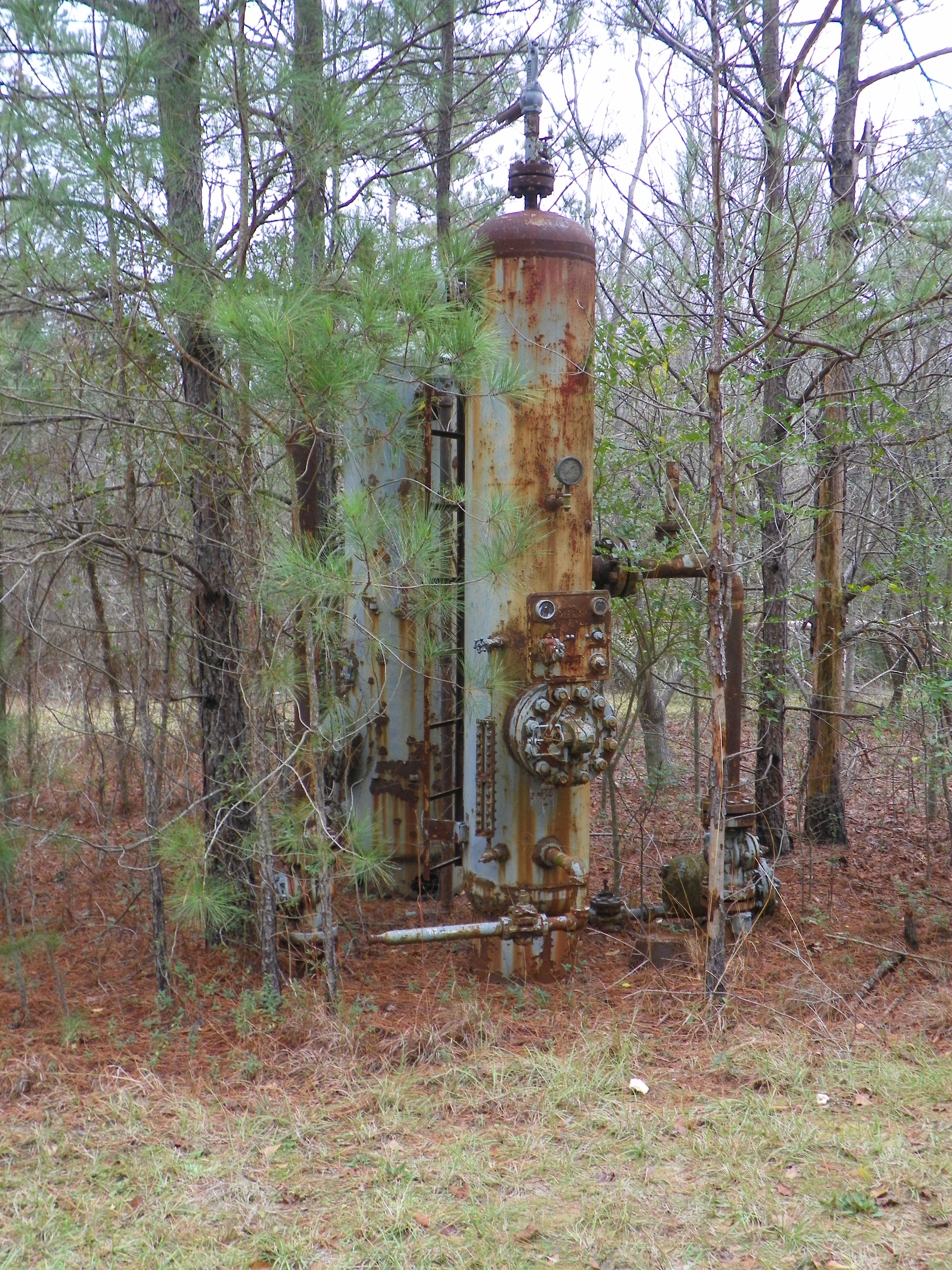
100_0620

Abandoned gas well equipment on private property near Ruston.

If there was still any lingering doubt after the passage of SB 469 that Gov. Bobby Jindal and the Louisiana Legislature are in an unholy alliance to give big oil carte blanche to rape the landscape while pillaging the state’s resources, that doubt should be erased with the release Monday of a state audit of the Office of Conservation, Louisiana Department of Natural Resources.

The audit report, released by Legislative Auditor Daryl Purpera, reveals that:

  • Current Office of Conservation regulations, unlike other states, do not require that all oil and gas drilling operators provide financial security on their wells;
  • Financial security amounts outlined in agency regulations are insufficient to cover the cost of plugging most wells;
  • The office did not inspect 53 percent of oil and gas wells in accordance with timeframes established by the commission over a six-year period and did not inspect 25 percent at all;
  • The office has failed to develop an effective enforcement process to “sufficiently and consistently” address noncompliance which might deter operators from committing subsequent violations;
  • Violations were not identified or addressed in a timely manner when identified nor did it conduct re-inspections to determine if fines were in order;
  • Approximately $471,000 in penalties were not assessed in fiscal years 2011 and 2012;
  • Current procedures do not effectively identify inactive wells and because operators are not required to report actual production by well, individual well production amounts cannot be verified;
  • The Office of Conservation did not consistently ensure that inactive wells were plugged within 90 days as required by state regulations.
  • During fiscal year 2008 through 2013, the office did not issue compliance orders to plug 416 (86 percent) of 482 wells designated as having no future utility;
  • Because of insufficient regulations, 5,239 of 11,269 wells (46.5 percent) were found to be inactive for more than 10 years and are at risk of becoming orphaned.

Orphan wells are abandoned oil and gas wells for which no responsible operator can be located or such operator has failed to maintain the well site in accordance with state regulations, the audit report said.

The laissez-faire attitude of enforcement on the part of the state has given rise to ever-growing numbers of abandoned wells throughout Louisiana and the Office of Conservation has neglected to conduct required inspections of orphaned wells. Of 270 wells orphaned from September 2010 to April 2013, the office failed to inspect 124 (46 percent) of those within the required 90 days and 87 of those 124 (70 percent) were not inspected at all as of July 2013. “Conducting inspections is important to ensure that wells are appropriately prioritized for plugging and that conditions at the sell site do not pose a risk to the environment,” the audit report said.

The Office of Conservation has recovered only $3.6 million from 13 previous operators who abandoned wells since 1993, the audit said. Lax enforcement of standards for which penalties for violations can run as high as $5,000 per day resulted in the collection of only about $900,000 for the six-year period of 2008 through 2013.

This lack of enforcement has had two results: millions of dollars are left uncollected for violations and operators are reluctant to take corrective measures even when cited. Accordingly, Office of Conservation enforcement does not deter operators from experiencing subsequent violations, the report said.

In fact, the audit report said, the Office of Conservation cannot even identify the actual number or type of violations cited on inspections.

Meanwhile, as of July 2013, there are 2,846 unplugged orphaned wills scattered across the state with the heaviest concentration in northwest Louisiana and along the Louisiana coast.

In management’s response to the audit, Commissioner of Conservation James Welsh said his office “takes the job of regulating the oil and gas industry seriously” and that his office is already in the process of addressing several of the concerns listed in the report.

“Conservation staff and management have been diligent in working to resolve these issues and will continue seeking a means to do so that does not create unintended consequences such as sharply increasing the rate of wells having to be declared orphaned,” he said.

Welsh, in his eight-page management response, agreed with all 21 recommendations of the audit report.

But with the honeymoon between the administration and big oil rolling blissfully along, it is doubtful that things will really change. Why should they?

On the one hand, operators have no incentive to clean up after themselves because of the practice by the Office of Conservation of winking and looking the other way when operators walk away from wells. There are few inspections and even fewer violations, and compliance orders are practically non-existent, so why bother?

On the other hand, just in case some rogue state agency like the Southeast Louisiana Flood Protection Authority-East (SLFPA-E) decides to take it upon itself to seek redress from 97 oil, gas and pipeline companies for the carnage they have wreaked on our coastal waters, all they have to do is throw money at the legislators and Gov. Bobby Jindal to be sure that such efforts are thwarted before they get out of the starting gate.

Altogether, the 144 current legislators and Jindal have raked in about $6 million in campaign contributions from big oil.

Yes, that’s a chunk of change but for the oil companies—ExxonMobil’s 2013 fourth quarter earnings (net profit) were $8.35 billion (That’s just three months)—it’s chump change.

Had that lawsuit by SLFPA-E been allowed to go forward, God forbid, even if the oil companies prevailed, they would have spent in legal fees alone far in more than the $6 million that they invested in those campaign contributions as a hedge against such an inconvenience.

Had they lost the lawsuit, however, the cost would have been in the billions of dollars, so what’s $6 million among friends? A mere pittance.

So now the legislators and Jindal can continue to accept big oil’s money, take smug satisfaction in their illegitimate marriage for the welfare of their benefactors and slap each other on the back for their brilliant legislative maneuvers. The oil companies now have a free pass to continue to destroy the Louisiana marshes and landscape and everyone, as my grandfather used to say, is happy as a dead pig in the sunshine. Everyone, that is, except the losers.

The losers?

Oh, that’s the citizens of Louisiana but who gives a crap about them?

The next election is more than a year away and their memories are so short.


Read Full Post »

We have been getting reports of readers having difficulty in logging onto our blog and of having problems in submitting comments.

If you are experiencing issues with either, email us at:

louisianavoice@cox.net

and we will copy and paste your comments or attempt to re-subscribe you to LouisianaVoice. We value our readers and do not wish to lose anyone or prevent anyone from expressing their viewpoints–whether you agree with us or not.

—Tom Aswell

Read Full Post »

Remember back on June 12, 2011, when Gov. Bobby Jindal vetoed the renewal of a 4-cent cigarette tax that would have cost the state $48 million per year had the legislature, and subsequently the voters, not passed a constitutional amendment to continue the tax?

Remember how Jindal justified the veto by saying he was opposed to any new taxes even though the bill was for the continuation of an existing tax?

Remember how Jindal consistently expressed his opposition to new taxes but had no problem with colleges and universities raising tuition to partially offset drastic budgetary cuts because the increase was a “fee,” not a tax?

Remember how Jindal has continued to voice his opposition to new taxes while at the same time insisting that the privatization of everything but bathroom breaks and performance reviews for state employees would save the state money? (And don’t count those out just yet.)

Well, how about the privatization (okay, the partial privatization) of the Department of Motor Vehicles (DMV) that allows drivers to renew their licenses at one of 108 offices which contract with the state to perform some DMV functions—at an additional charge of $18 over and above the regular $21.50 cost? Employing Jindal’s logic, the $18 is not a new tax, but a surcharge for convenience.

Not much of a savings there, at least from the perspective of those among the 2.9 million motorists in Louisiana who would be popped with the additional fee if they chose a private agent to renew their license.

A Baton Rouge Advocate story on Tuesday (Feb. 18) said the experimental plan has been operational in Metairie and Slidell and is expected in Baton Rouge soon. A Baton Rouge acquaintance, however, says he already encountered the $18 additional fee—a total of $39.50 months ago at one of the privatized kiosks—in Baton Rouge—and opted not to pay in favor of going the traditional route at a state DMV office for the $21.50.

And get this: not a single DMV employee has been laid off. Nor are there any plans to do so, according to State Police Superintendent Mike Edmonson, who calls the private agents “a convenience.”

So where’s the savings in all of this?

A report by the legislative auditor says the program has “saved” the state a minimum of $3.3 million per year but to us it only appears that the new tax…er, fee, has generated an additional $3.3 million for the state. There is a huge difference between generating new revenue and saving money.

If, for example, I purchased a snow blower for the recent Louisiana blizzard of ’14 at a cost of $500 and while it was still in the box, unused because our snowdrifts didn’t justify hauling it out and assembling it, decided to sell it to some poor sucker for $750, have I saved $250 or generated an additional $250 to pay on my maxed-out Visa card?

Well, if you’re like our friend who refused to play the game, there is that $18 savings he realized by staying with the state-run DMV office.

Read Full Post »

« Newer Posts - Older Posts »

