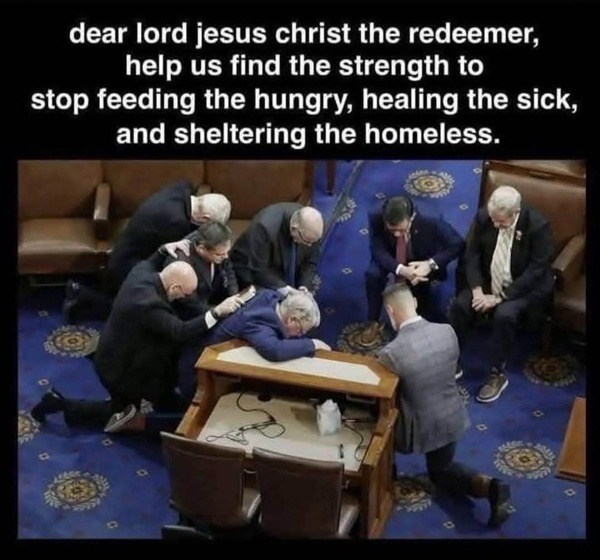
If there has eve, EVER, been a president more tone-deaf to the plight of working Americans than one Donald J. Trump, I’m at a loss to name him.
He makes Marie Antoinette look like Mother Teresa; Herbert Hoover appear as Abe Lincoln and George W. Bush endowed with the wisdom of Thomas Jefferson.
Okay, that last one was a bit of a stretch, but you get the picture. Donald Trump is completely, totally and unequivocally out of touch with Americans, most especially his own constituency.
After all, of all Americans, the great working class, which comprises the bulk of his maniacal support base, are the very ones suffering the greatest under the strain of increased prices across the board of consumer goods,
The crushing inflationary economy is hurting virtually everyone but the wealthiest, of course. Yet, with approximately 30-35 percent of Americans, his support has been unflagging—and that’s the real mystery.
As Americans struggle to put food on the table and fuel in their vehicles and to pay those tariffs Trump insists foreign countries are paying, he is blowing through taxpayer dollars like a drunken sailor on shore leave. Ballrooms, arches, reflecting pools, jet plane renovations, golf course upgrades, wars—it seems to make no difference to him. Spend, spend, spend. After all, it’s not coming out of his pocket.
Not only that, he continues to enrich himself off the office he holds to the tune of $2.4 billion so far this term—a clear violation of the Emoluments Clause.
And now, without so much as a second thought, he has decided, apparently on impulse, that he needs an entirely new fleet of Cadillac Escalades. Two hundred fifty of them.
Want to know how he justified the purchase of 250 new Escalades for his motorcades? Here’s what he said: “We look sharp in those Escalades. Our guys are very spoiled. They’re very spoiled. They like the Escalade. So do I.”
Does that sound like someone who is concerned about the welfare of Americans?
The Guardian called it “fiddling with car specifications while Rome burns.”
J.D. Vance, of course, is no better. He ordered the Secret Service to have a helicopter take his elementary school-aged son to golf practice. Only inclement weather prevented that from happening.
Kash Patel has used $60 million military jets to travel to concerts to see his girlfriend perform.
So, MAGHATS, take comfort in knowing that Trump is spending more than $300,000 per unit to purchase and customize 250 Cadillac Escalades (that’s a total outlay of $75 million, folks) for his motorcades because he “looks good” in them.
Rest easy that Vance uses military helicopters to take his kid to golf practice while the children of typical MAGHATS are shuttled around by moms in minivans to soccer practice but Patel can commandeer a $60 million plane to hop around the country to watch his girlfriend perform while the typical MAGHAT has to be content tossing dollar bills on stage while watching his imaginary girlfriend swing around a brass pole.
And don’t worry about “affordability.” It’s just a term invented by the Dumocrats. The American economy is going gangbusters. And we’ve obliterated Iran’s capacity to fight. And Trump won the election in 2020.
Because he says so, that’s why. Anything else is fake news.
While little Jeffey is busy carrying out his vendetta against New Orleans and requiring state employees to sign non-disclosure agreements (NDAs) even as he claims transparency in government, a national survey placed Louisiana dead last in a ranking of all 50 states.
Why, we even ranked below (gasp!) Mississippi (48th), Alaska (49th), Arkansas (45th), West Virginia (44th) and Alabama (43rd).
Of course, Gov. Squeaky Toy will attempt to put a positive spin on Louisiana’s economic, educational and criminal justice systems. For example, when he signed an executive order just yesterday ostensibly aimed at giving New Orleans citizens transparency on how their tax dollars are spent, he ballyhooed, “This new initiative will drive us further towards a responsible government and our progress is evident,” Landry said. “Louisiana now has fewer people on Medicaid rolls than before the previous governor expanded that welfare program.”
“This is a testament to two key factors,” he said. “Our thriving economy that is creating jobs at a historic pace and our determination to protect the needy from the greedy. Louisiana taxpayers deserve transparency and assurance that their money is spent wisely.”
Really? Responsible government? Evident progress? Thriving economy? Transparency? Guv, do you sincerely believe depriving hungry children of food is responsible government? Is it really progress? Or is your response to a distant Trump dog whistle? I mean, I don’t recall there ever being any thought given to a Department of Government Efficiency (DOGE) before Trump and Elon Musk.
You said it, yourself, Guv, when you said Louisiana DOGE has uncovered nearly $1 billion in savings for the state. That’s easy enough when you deprive the sick and poor of medical care and food for their tables.
It’s almost as if you were taking your cue from TACO Don. We never heard the terms fake news, witch hunt or stolen elections until President InEpstein introduced them to our everyday vocabulary ad nauseam. Suddenly, every MAGHAT out there incapable of thinking for himself (including you, Guv.) picked up on the phrases given you by Agent Orange. It’s almost as if you have no terminology of your own and had to borrow from a functional illiterate felonious Liar-in-Chief.
And here’s the best part: you apparently feel the media are not being transparent because they don’t print every single word you utter. Well, Guv, that’s called editing because if we didn’t edit, the flood of gobbledygook from politicians would trigger readers’ B.S. overload switch.
Besides, it’s you who initiated those NDAs, not the media. It’s you who obviously does not want voters to know what you’re doing. So, when you declared on X, “Good government starts with transparency,” if sounded a bit hollow.
46th in Education (you somehow have the state moving up 11 spots on the Nation’s Report Card);
45th in Health Care (thanks to your kicking 200,000 off Medicaid coverage)
49th in Natural Environment (Louisiana’s “Cancer Alley” is FAR MORE DEADLY than previously thought, thanks to the relaxing of protective standards by your administration);
49th in 44th in Economy;
48th in Fiscal Stability;
49th in Infrastructure;
32 in Opportunity
Guv, those are pretty tough rankings to overcome and I don’t think more detainee centers for illegal immigrants are going to help anyone other than the private concerns who lock people in cages for money. And with the proposed datacenters ramping up utility rates and water usage, the jury’s still very much out on any benefits to be derived from the jobs they’re promising.
Of course, we don’t know how many jobs there will be or how many would be permanent, with all those NDAs being passed around.
The headlines are all about the Senate recess and Trump’s desire to see the SAVE Act passed, possibly the most inaccurately devised acronym for a piece of legislation ever to come out of Congress. But while Trump is determined to turn the “world’s greatest deliberative body” into a rubber stamp for his agenda, the SAVE Act isn’t the only bill attempting to advance.
After first saying it was unlikely the Protect College Sports Act (PCSA) would come up for a vote before the August recess Senate Majority Leader John Thune then huddled with the legislation’s sponsors and sent out a revised bill to the commissioner of the Big Ten, Tony Petitti, and the commissioner of the SEC, Greg Sankey, with a deadline of 9:00 a.m. today to respond.
Both conferences let the deadline pass without issuing a statement. But both conferences also have been in constant communication with each other, and have meetings scheduled with university presidents and administrators that will likely continue until some agreement on position is reached.
The sponsors of the bill conceded to many of the conferences’ demands, but did not address all their concerns. It did agree to make the pooling of media rights strictly voluntary regardless of how the majority voted, and without penalty or punishment – a necessary concession if Senators had any hope of getting buy-in from the Big Ten and SEC.
The revised bill also permits a fund for retaining athletic rosters above the agreed upon revenue sharing cap and prevents venture capitalists and the like from buying media rights and creating a “super-league,” both sticking points for the conferences.
But they didn’t get everything they wanted and much of the revision sent to the conferences were still in draft form. Also, a third section has been added addressing historically black colleges and universities (HBCU) but was left completely blank in copies sent out.
The Big Ten is in the midst of its annual Media Days event. Pettiti addressed the media and was asked about the revised bill. He said, more than once, the Big Ten wanted to see the final legislation before committing one way or the other. Sankey issued an almost identical statement. Whether the two conferences will speak publicly on it or not they are obviously aligned and in agreement on what reform is acceptable and what options might be considered.
Senate watchers say missing today’s deadline almost eliminates the chance the bill can come up for a vote before the Senate recess on August 7. That may have been the intent of both Pettiti and Sankey. Petitti said when addressing the media, “When you ask for help, you don’t always get the help you ask for.” No truer words were ever spoken about Congress.
Remember Brendan Sorsby, the Texas Tech quarterback who earlier this summer won an injunction against the NCAA to continue playing even though he had been ruled ineligible for gambling? Immediately following that ruling grandstanding Texas Senate candidate and current Texas AG Ken Paxton threatened the Big XII will legal action if they did not allow Sorsby to play. In return the Big XII conference filed a federal lawsuit against Paxton claiming that as a conference with membership in agreement it could enforce its own rules. Well, Sorsby withdrew from college and dropped his lawsuit. But the Big XII did not drop its lawsuit against Paxton. It is still seeking a ruling it can enforce its own rules.
If the Big XII continues this suit and gets a favorable ruling the SEC and the Big Ten will almost assuredly make plans to leave the NCAA, no longer needing Congress for an antitrust exemption. But whatever legislation gets signed into law will bind those schools nonetheless. The SEC and the Big Ten would love to know how the Big XII lawsuit plays out before committing to any legislation, or even committing to the need for legislation. Currently no date has been scheduled to hear that case.
There are no quick fixes or easy answers. Congress is hellbent on forcing one for obvious reasons – college athletics is racing towards out-of-control and Congress is desperate for something it can hang its hat on. It may yet vote on this bill before it goes on recess. But consider how many Senators represent SEC and Big Ten states. Without the support of both conferences the chances of passage are slim at best. And that doesn’t even take into account the stated opposition of the Congressional Black Caucus, opposed to any legislation – especially impacting athletes at southern universities – in protest of recent Supreme Court rulings on voting rights.
LSU coach Lane Kiffin had his last scheduled public appearance today in Baton Rouge before fall practice starts. LSU players report next week. It might not happen before players report, or games begin, or even this season. But something is going to happen in college athletics and it’s going to bring change. A lot of change. On that, at least, there’s no debate.
Someone always playing Corporation games Who cares they’re always changing Corporation names
Starship, 1985, written by Peter Wolf
The song We Built This City was recorded more than 40 years ago and even that far back the growing trend of monopoly control was abundantly evident.
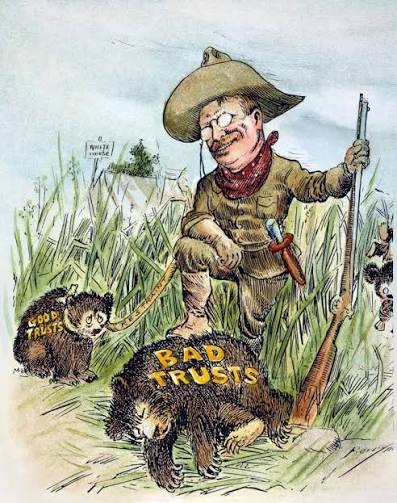
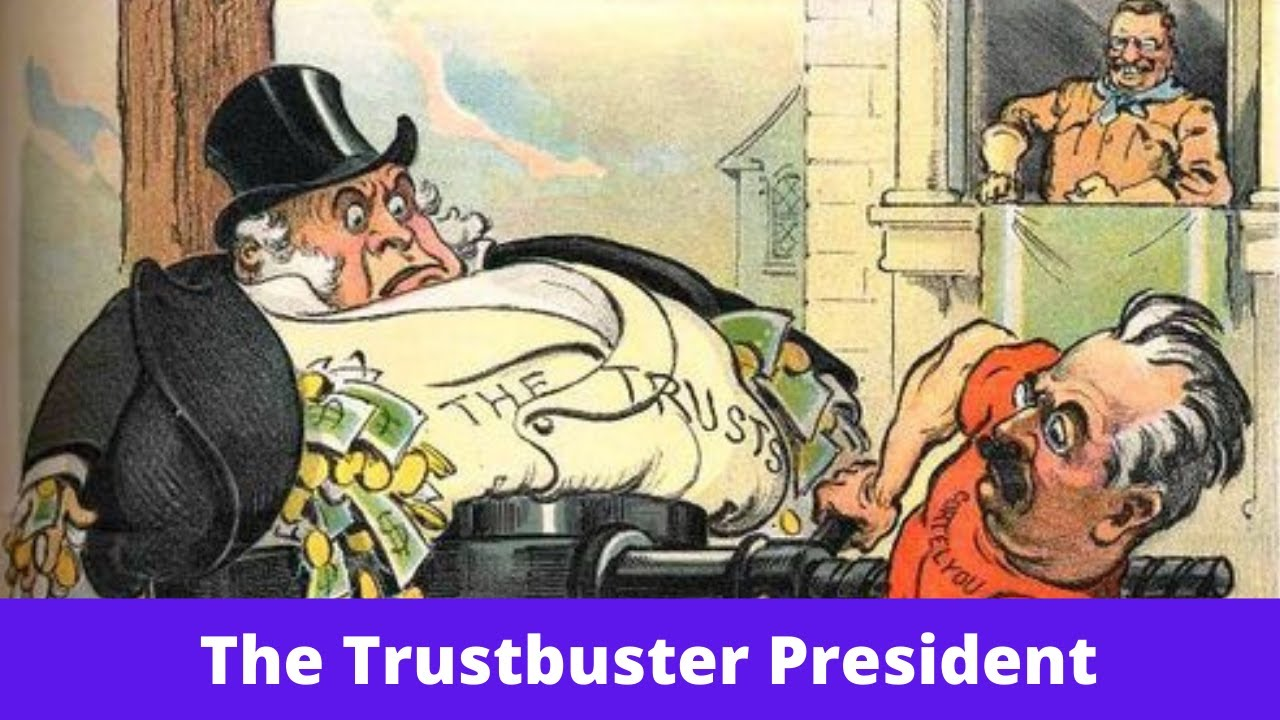
Those who have studied American history (not the version espoused by TACO Bonespurs, but real history) know that it was Teddy Roosevelt who was known as the “trust buster.” but his successor, William Howard Taft, was even more aggressive in his use of the Sherman Act, launching more antitrust cases in his four years than Roosevelt did in his seven-plus years.
The Sherman Antitrust Act of 1890 is a federal law banning monopolies, cartels and trusts in order to protect free competition in the marketplace. The act gave the government the authority to halt unfair business combinations that hurt trade, but with the growing trend of takeovers, mergers and buyouts, the original intention of the act appears to have been long forgotten.
The spate of CORPORATE DEALS that has transpired in recent decades can only mean less competition which in turn, results in fewer choices and higher prices to the consumer.
One of the more alarming trends is the takeover of media by those with an agenda. David Ellison, an avowed MAGA shill, assumed control of Paramount which in turn owned CBS, Showtime and Paramount Pictures (Paramount Skydance had earlier purchased Warner Bros Discovery for $111 billion). The result has been a shakeup of CBS News, including the literal gutting of its showcase, 60 Minutes after Bari Weiss was named Editor-in-Chief. CBS News today is a mere shadow of its former self. Walter Cronkite must be spinning.
Likewise, The Walt Disney Company acquired ABC network way back in 1996. Disney also owns ESPN, Hulu and Disney+. NBC? That network is owned by Comcast through its subsidiary NBCUniversal.
And Disney? Well, Comcast, one of the more active corporations in the buyout sweepstakes, tried to purchase Disney in 2004 for $66 billion ($112.5 billion in today’s dollars) but the deal tanked after both investor and Disney couldn’t agree on the acquisition.
But Comcast did not meet with failure on all attempts. Here are some of its purchases with purchase amounts at the time and today’s dollars in parenthesis:
2018—21st Century Fox, $65 billion ($83.3 billion);
2018—Sky pk., $34 billion ($43.6 billion)
That’s an eye-popping $288.2 billion ($450.2 billion in today’s dollars). Where does all that investment money come from? And where does it go?
Following the acquisitions involving Time, Inc., is a dizzying exercise in itself.
In 1989, Warner Communications purchased Time for $15.2 billion ($39.5 billion in today’s dollars) only to see AOL purchase the newly-named corporation Time-Warner in 2000 for $182 billion ($340.3). But then in 2014 Fox attempted unsuccessfully to purchase Time-Warner for the Blue Light Special price of $80 billion ($108.8 billion) but got stiffed by the Time-Warner Board chose not to engage with Fox honchos.
No matter. That same year, Comcast purchased Time-Warner Cable for $45.2 billion ($81.5 billion). A year later, Charter Communications purchased Time-Warner Cable for $78.7 billion ($105.9 billion). Then in 2016, AT&T acquired Time-Warner for $85.4 billion ($114.6 billion).
It’s almost impossible to follow which corporation controls which board room or vice versa. In 1955, for instance, Monsanto bought Lion Oil for a paltry $550 million ($6.6 billion in today’s dollars) and in 1999, spent 50 times that much when it acquired Pharmacia & Upjohn for $26.5 billion ($51.2 billion).
But wait. A year earlier, in 1998, American Home Products failed in its attempted purchase of Monsanto for $34.4 billion ($68 billion). But in 2015, another failed attempt. This time Monsanto dropped his hostile bid for Syngenta for $46.5 billion ($63.2 billion) only to have Bayer, more famous for its aspirin, purchase Monsanto tor $54.5 billion ($73.1 billion).
The first recorded merger was in 1874 when Honeybrook Coal purchased Wilkesbarre Col and Iron for a mere pittance of $10,000 ($720 million in today’s dollars—talk about inflation!). Of course, it didn’t take long for the prices to begin escalating. The first six-figure acquisition occurred just five years later, in 1899, when American Spirits Manufacturing purchased Kentucky Distilleries and Warehouse Co. for $125,000 which would equate to $4.8 billion today.
The first seven-figure sale came in 1928 when Consolidated Gas Co. of New York purchased Brooklyn Edison for exactly $1 billion ($18.8 billion today).
It wasn’t until 1989, when Kohlberg Kravis Roberts, an investment firm, purchased RJR Nabisco for $31 billion ($80.5 billion) just four years after R.J. Reynolds had purchased Nabisco Brands for $4.9 billion ($14.7 billion), that the money got really serious.
The Great Recession of 2008 appears to have really opened the floodgates. That’s when all those nice Wall Street banks went belly-up because of relaxation of regulations by Ronald Reagan a quarter-of-a-century earlier. Here are the bailout amounts incurred by the U.S. Department of the Treasury and the amounts taxpayers had to contributed in 2008 in actual and (today’s) dollars:
Citigroup, $45 billion ($67.3 billion;
Bank of America, $45 billion ($67.2 billion);
JP Morgan Chase, $25 billion ($37 billion);
Wells Fargo $25, billion ($37 billion);
AIG, $67 billion ($101.4 billion);
That’s a cool $207 billion ($310 billion), although the government was eventually repaid.
Then there was the General Motors bailout in 2009 which cost American taxpayers $49.5 billion ($74.3 billion). Unlike Ford’s $5.9 billion loan which was repaid, GM did not fully repay that $49.5 billion. Instead, the government converted most of the funds into a 61% stake and ultimately recouped approximately $39 billion.
The late Illinois Sen. Everett Dirkson is famous for once having said, “A billion here and a billion there and pretty soon you’re talking about real money.”
Dirkson didn’t live to see the reallyreal money tossed around like beads in a Mardi Gras parade. Earlier this year xAI was purchased by Elon Musk’s SpaceX for $250 billion (with a combined entity valuation of $1.25 trillion).
Vodafone purchased Mannesmann in 1999 for $183 billion ($353.7 billion) and AOL’s 2000 purchase of Time-Warner for $182 billion ($340.3) rank among the largest acquisitions.
All of which should set off all kinds of alarms as we see more and more of America’s economy being cornered by a few conglomerates which threaten the financial ruin of smaller, independent businesses struggling against the behemoths to keep the doors open.
Once those smaller enterprises are choked out—and they most assuredly will be—there will no longer be any incentive whatsoever for the survivors to be competitive or to respond to the concerns of captive clientele.
It’s far past time for the new trust-busters to get busy.
LouisianaVoice runs on independence, not advertising. No subscription fees — just the stories Louisiana politicians don't want told. If that's worth something to you, we'd appreciate your support.